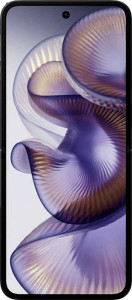
Honor Magic V Flip 2
Xiaomi Mix Flip 2

Honor Magic V Flip 2 Xiaomi Mix Flip 2

Overview

When it comes to premium foldable smartphones, the Honor Magic V Flip 2 and the Xiaomi Mix Flip 2 represent two compelling takes on the flip-phone form factor. Both devices share a solid foundation — folding OLED displays, 120Hz refresh rates, and capable multi-lens cameras — yet they diverge sharply in areas like raw processing power, build durability, and battery performance. Which one deserves a place in your pocket? Read on as we break down every spec that matters.

Common Features

  • Both phones can be folded.
  • Neither phone has a rugged build.
  • Both phones feature an OLED/AMOLED display.
  • Both phones support a 120Hz refresh rate.
  • Neither phone has branded damage-resistant glass.
  • HDR10 support is available on both phones.
  • HDR10+ support is available on both phones.
  • Dolby Vision support is available on both phones.
  • Both phones have a secondary screen.
  • Both phones have a touchscreen.
  • Both phones come with 16GB of RAM and 1024GB of internal storage.
  • Both phones have integrated LTE and 5G support.
  • Both phones run Android 15.
  • Both phones have a dual-lens main camera with optical image stabilization.
  • Both phones have a CMOS sensor and phase-detection autofocus.
  • Both phones support slow-motion video recording.
  • Both phones support wireless charging at 50W and fast wired charging.
  • Neither phone has a removable battery.
  • Both phones have stereo speakers and no 3.5mm audio jack.
  • Both phones support aptX and aptX HD but not LDAC or aptX Lossless.
  • Both phones support Bluetooth 5.4 and NFC.
  • Both phones use dual SIM cards and have no external memory slot.
  • Both phones have a USB Type-C port at USB version 2.
  • Both phones have a download speed of 10000 MBits/s.
  • Both phones have clipboard warnings and location privacy options.
  • Both phones allow blocking of app tracking.
  • Neither phone has Mail Privacy Protection or cross-site tracking blocking.
  • Both phones have theme customization available.
  • Neither phone has a sapphire glass display, curved display, or e-paper display.
  • Both phones have a video light.

Main Differences

  • Water resistance is present on Honor Magic V Flip 2 but not available on Xiaomi Mix Flip 2.
  • Weight is 204g on Honor Magic V Flip 2 and 199g on Xiaomi Mix Flip 2.
  • Thickness is 6.9mm on Honor Magic V Flip 2 and 7.6mm on Xiaomi Mix Flip 2.
  • Width is 75.6mm on Honor Magic V Flip 2 and 73.8mm on Xiaomi Mix Flip 2.
  • Volume is 87.17 cm³ on Honor Magic V Flip 2 and 93.61 cm³ on Xiaomi Mix Flip 2.
  • Screen size is 6.82″ on Honor Magic V Flip 2 and 6.86″ on Xiaomi Mix Flip 2.
  • Pixel density is 458 ppi on Honor Magic V Flip 2 and 460 ppi on Xiaomi Mix Flip 2.
  • Resolution is 1232 x 2868 px on Honor Magic V Flip 2 and 1224 x 2912 px on Xiaomi Mix Flip 2.
  • Always-On Display is available on Xiaomi Mix Flip 2 but not on Honor Magic V Flip 2.
  • Secondary screen resolution is 1200 x 1092px on Honor Magic V Flip 2 and 1208 x 1392px on Xiaomi Mix Flip 2.
  • GPU is Adreno 750 on Honor Magic V Flip 2 and Adreno 830 on Xiaomi Mix Flip 2.
  • Geekbench 6 multi-core score is 7325 on Honor Magic V Flip 2 and 10059 on Xiaomi Mix Flip 2.
  • Geekbench 6 single-core score is 2213 on Honor Magic V Flip 2 and 3234 on Xiaomi Mix Flip 2.
  • GPU clock speed is 900 MHz on Honor Magic V Flip 2 and 1100 MHz on Xiaomi Mix Flip 2.
  • RAM speed is 4800 MHz on Honor Magic V Flip 2 and 5300 MHz on Xiaomi Mix Flip 2.
  • Semiconductor size is 4nm on Honor Magic V Flip 2 and 3nm on Xiaomi Mix Flip 2.
  • Maximum memory bandwidth is 76.6 GB/s on Honor Magic V Flip 2 and 85.1 GB/s on Xiaomi Mix Flip 2.
  • L2 cache is 1MB on Honor Magic V Flip 2 and 12MB on Xiaomi Mix Flip 2.
  • Thermal Design Power is 12.5W on Honor Magic V Flip 2 and 8.2W on Xiaomi Mix Flip 2.
  • Main camera resolution is 200 & 50 MP on Honor Magic V Flip 2 and 50 & 50 MP on Xiaomi Mix Flip 2.
  • Front camera resolution is 50MP on Honor Magic V Flip 2 and 32MP on Xiaomi Mix Flip 2.
  • Optical zoom is 0x on Honor Magic V Flip 2 and 2x on Xiaomi Mix Flip 2.
  • Dolby Vision video recording is supported on Xiaomi Mix Flip 2 but not on Honor Magic V Flip 2.
  • Number of flash LEDs is 2 on Honor Magic V Flip 2 and 1 on Xiaomi Mix Flip 2.
  • Battery capacity is 5500 mAh on Honor Magic V Flip 2 and 5165 mAh on Xiaomi Mix Flip 2.
  • Wired charging speed is 80W on Honor Magic V Flip 2 and 67W on Xiaomi Mix Flip 2.
  • aptX Adaptive support is present on Xiaomi Mix Flip 2 but not available on Honor Magic V Flip 2.
  • Wi-Fi 6E and Wi-Fi 7 support is available on Xiaomi Mix Flip 2 but not on Honor Magic V Flip 2.
  • A barometer is present on Xiaomi Mix Flip 2 but not on Honor Magic V Flip 2.
Specs Comparison
Honor Magic V Flip 2

Honor Magic V Flip 2

Xiaomi Mix Flip 2

Xiaomi Mix Flip 2

Design:
water resistance Water resistant None
weight 204 g 199 g
thickness 6.9 mm 7.6 mm
width 75.6 mm 73.8 mm
height 167.1 mm 166.9 mm
volume 87.166044 cm³ 93.610872 cm³
has a rugged build
can be folded

Both the Honor Magic V Flip 2 and the Xiaomi Mix Flip 2 are foldable clamshell devices with neither offering a rugged build, but their physical profiles differ in meaningful ways. The Honor is noticeably slimmer at 6.9 mm versus the Xiaomi's 7.6 mm, and its lower overall volume (87.2 cm³ vs 93.6 cm³) means it feels more compact and pocketable when unfolded — a real advantage for a device you'll be slipping in and out of tight pockets throughout the day. The Xiaomi counters with a marginally lighter frame at 199 g compared to 204 g, though a 5 g difference is essentially imperceptible in daily use.

The most consequential differentiator in this group is water resistance: the Honor carries a water resistant rating while the Xiaomi offers none. For a premium foldable, this matters significantly — accidental splashes, rain, or humid environments are real-world risks, and having protection provides genuine peace of mind that the Mix Flip 2 simply cannot match.

Overall, the Honor Magic V Flip 2 holds a clear design edge here. Its slimmer, more compact form factor combined with water resistance makes it the more refined and practical package, while the Xiaomi's negligible weight saving does not offset the lack of environmental protection.

Display:
Display type OLED/AMOLED OLED/AMOLED
screen size 6.82" 6.86"
pixel density 458 ppi 460 ppi
resolution 1232 x 2868 px 1224 x 2912 px
refresh rate 120Hz 120Hz
has branded damage-resistant glass
supports HDR10
supports HDR10+
Always-On Display
supports Dolby Vision
Has a secondary screen
resolution (secondary screen) 1200 x 1092px 1208 x 1392px
has a touch screen

At the panel level, these two foldables are nearly indistinguishable. Both use OLED/AMOLED technology with a 120Hz refresh rate and full support for HDR10+ and Dolby Vision, ensuring rich contrast, accurate color, and smooth motion across the board. Screen size (6.82″ vs 6.86″) and pixel density (458 ppi vs 460 ppi) are so close that no real-world visual difference exists between them — both are sharp well beyond the threshold of human perception at normal viewing distances.

Where the Xiaomi Mix Flip 2 pulls ahead is in two practical features. Its Always-On Display — absent on the Honor — lets users glance at time, notifications, and widgets without waking the phone, a convenience that adds up meaningfully over a full day of use. The secondary cover screen also tells a story: the Xiaomi's 1208 x 1392px resolution outpaces the Honor's 1200 x 1092px, indicating a taller, more capable outer panel that can surface more content and usable interface at a glance.

The display category is largely a draw on fundamentals, but the Xiaomi Mix Flip 2 earns a narrow edge through its Always-On Display support and the more generously proportioned secondary screen — two features that translate directly into day-to-day usability advantages for a clamshell form factor where the cover display is a primary interaction surface.

Performance:
internal storage 1024GB 1024GB
RAM 16GB 16GB
GPU name Adreno 750 Adreno 830
CPU speed 3 x 3.15 & 2 x 2.96 & 2 x 2.26 & 1 x 3.3 GHz 2 x 4.32 & 6 x 3.53 GHz
Geekbench 6 result (multi) 7325 10059
Geekbench 6 result (single) 2213 3234
GPU clock speed 900 MHz 1100 MHz
Has integrated LTE
RAM speed 4800 MHz 5300 MHz
semiconductor size 4 nm 3 nm
Supports 64-bit
DirectX version DirectX 12 DirectX 12
Has integrated graphics
OpenGL version 3.2 3.2
OpenGL ES version 3.2 3.2
Uses big.LITTLE technology
CPU threads 8 threads 8 threads
Uses HMP
Has TrustZone
maximum memory bandwidth 76.6 GB/s 85.1 GB/s
OpenCL version 2 3
memory channels 2 2
L2 cache 1 MB 12 MB
maximum memory amount 24GB 24GB
uses multithreading
Thermal Design Power (TDP) 12.5W 8.2W
DDR memory version 5 5
supported displays 1 2
L3 cache 12 MB 8 MB

This is one of the most lopsided categories in the comparison. The Xiaomi Mix Flip 2 runs on a newer, more advanced chip — evident from its 3 nm fabrication process versus the Honor's 4 nm — and the performance gap is anything but subtle. In Geekbench 6, the Xiaomi scores 10,059 multi-core and 3,234 single-core, compared to the Honor's 7,325 and 2,213 respectively. That is roughly a 37% lead in multi-core throughput, which translates to noticeably faster app launches, smoother multitasking, and more headroom for demanding workloads like video editing or sustained gaming sessions.

The GPU story follows the same pattern. The Xiaomi's Adreno 830 runs at 1,100 MHz with higher memory bandwidth (85.1 GB/s vs 76.6 GB/s) and a newer OpenCL 3 implementation, making it meaningfully more capable for graphics-intensive tasks. Crucially, it also achieves this while operating at a lower TDP of 8.2W versus the Honor's 12.5W — meaning the Xiaomi extracts far more performance per watt, which benefits both thermal management and battery endurance under load.

RAM capacity and storage are matched at 16 GB and 1024 GB, so those specs cancel out. The Xiaomi Mix Flip 2 holds an unambiguous and significant performance advantage in this category — driven by a more efficient chip architecture, stronger CPU and GPU benchmarks, and better thermal efficiency across the board.

Cameras:
megapixels (main camera) 200 & 50 MP 50 & 50 MP
wide aperture (main camera) 2 & 1.9f 2.2 & 1.7f
Has a dual-lens (or multi-lens) main camera
megapixels (front camera) 50MP 32MP
has built-in optical image stabilization
Has a dual-tone LED flash
number of flash LEDs 2 1
has a BSI sensor
has a CMOS sensor
has continuous autofocus when recording movies
Has phase-detection autofocus for photos
supports slow-motion video recording
has a built-in HDR mode
has manual exposure
has a flash
optical zoom 0x 2x
has manual ISO
has a serial shot mode
has manual focus
has a front camera
Has laser autofocus
Shoots 360° panorama
has manual white balance
shoots raw
has touch autofocus
has manual shutter speed
can create panoramas in-camera
wide aperture (front camera) 2f 2f
Has timelapse function
Has a front-facing LED flash
has a dual-lens (or multi-lens) front camera
supports HDR10 recording
supports Dolby Vision recording
has a front-facing camera under the display
Has a RGB LED flash
has 3D photo/video recording capabilities

The main camera comparison here is genuinely interesting because the two phones make very different bets. The Honor Magic V Flip 2 leads with a 200 MP primary sensor — a significant pixel count that enables high-detail captures and aggressive cropping in post — while the Xiaomi Mix Flip 2 pairs two 50 MP lenses with a wider secondary aperture of f/1.7, which is better suited for low-light shooting. The Honor's secondary lens at f/1.9 is respectable but narrower, and critically, it offers 0x optical zoom compared to the Xiaomi's 2x optical zoom. In practice, having no optical zoom means the Honor must rely on digital cropping to reach telephoto distances, which degrades image quality — a tangible real-world limitation for travel or portrait photography.

On the front camera, the Honor flips the script with a 50 MP selfie shooter against the Xiaomi's 32 MP, which is a meaningful gap for users who prioritize selfie detail or video calls. For video enthusiasts, the Xiaomi adds Dolby Vision recording support — absent on the Honor — giving it an edge for content creators targeting platforms and displays that support that format.

Splitting this category cleanly is difficult. The Honor wins on raw sensor resolution and selfie capability, while the Xiaomi counters with optical zoom, a brighter secondary aperture, and Dolby Vision video. For most users, the 2x optical zoom on the Xiaomi Mix Flip 2 is the single most practically impactful differentiator here, giving it a slight overall edge in versatility — but selfie-focused users may find the Honor's front camera the more compelling trade-off.

Operating system:
Android version Android 15 Android 15
has clipboard warnings
has location privacy options
has camera/microphone privacy options
has Mail Privacy Protection
has theme customization
can block app tracking
blocks cross-site tracking
has on-device machine learning
has notification permissions
has media picker
Can play games while they download
has dark mode
has Wi-Fi password sharing
has battery health check
has an extra dim mode
has focus modes
has dynamic theming
can offload apps
Has customizable notifications
has Live Text
has full-page screenshots
supports split screen
gets direct OS updates
has PiP
Can be used as a PC
Has sharing intents
has a child lock
Supports widgets
Is free and open source
Has offline voice recognition
has voice commands
Tracks the current position of a mobile device
is a multi-user system
has Quick Start

Rarely does a spec group produce a result this definitive: the Honor Magic V Flip 2 and Xiaomi Mix Flip 2 are in a complete tie on every single operating system data point provided. Both ship with Android 15, and every feature — from privacy controls like location and camera/microphone permissions, to usability tools like dark mode, dynamic theming, split-screen, and Picture-in-Picture — is identical across the board.

Notably, neither device receives direct OS updates from Google, meaning both rely on their respective manufacturers for software rollouts. Neither supports Wi-Fi password sharing, focus modes, or Quick Start — so no advantage exists for either side on the missing features either. The symmetry here is total.

This category is an unambiguous draw. Buyers who weight software experience heavily will need to look beyond these specs — to factors like the manufacturers' update track records or the feel of their custom Android skins — as the raw OS feature set offers no basis for choosing one device over the other.

Battery:
battery power 5500 mAh 5165 mAh
has wireless charging
Supports fast charging
charging speed 80W 67W
wireless charging speed 50W 50W
has a removable battery
has a battery level indicator
has a rechargeable battery

Battery capacity is a clear win for the Honor Magic V Flip 2, which packs a 5,500 mAh cell against the Xiaomi Mix Flip 2's 5,165 mAh. A 335 mAh difference is meaningful in practice — it represents roughly 6% more stored energy, which can translate to an additional 30–45 minutes of screen-on time under typical usage. For a foldable device category still working to prove its endurance credentials, that margin is worth noting.

Wired charging follows the same pattern: the Honor supports 80W fast charging versus the Xiaomi's 67W, meaning the Honor can not only store more energy but replenish it faster. Both devices match exactly on 50W wireless charging, so that avenue offers no differentiation. Neither has a removable battery, which is standard for premium foldables.

The Honor Magic V Flip 2 holds a straightforward advantage in this category — larger capacity and faster wired charging together form a compelling combination for users who prioritize all-day endurance and quick top-ups. The Xiaomi offers no offsetting battery feature to close the gap.

Audio:
has a socket for a 3.5 mm audio jack
has stereo speakers
has aptX
has LDAC
has aptX HD
has aptX Adaptive
has aptX Lossless
Has a radio

Audio hardware is largely matched between these two devices. Neither includes a 3.5 mm headphone jack — unsurprising for slim foldables — and both deliver stereo speakers for front-facing sound. On the wireless audio codec front, both support aptX and aptX HD, the latter enabling near-lossless quality over Bluetooth with compatible headphones, which covers the needs of most wireless listening scenarios.

The single differentiator here is the Xiaomi Mix Flip 2's support for aptX Adaptive, a codec that goes a step further than aptX HD by dynamically adjusting bitrate in real time — delivering lower latency and more resilient audio quality in environments with wireless interference. For users who pair their phone with high-end aptX Adaptive-certified headphones, this is a genuine upgrade in listening experience that the Honor cannot match.

The Xiaomi Mix Flip 2 takes a narrow but real edge in this category. For casual listeners the gap is irrelevant, but audiophiles or users invested in premium Bluetooth audio gear will find the aptX Adaptive support a tangible advantage. Everything else between the two is identical.

Connectivity & Features:
release date August 2025 June 2025
has 5G support
Wi-Fi version Wi-Fi 4 (802.11n), Wi-Fi 5 (802.11ac), Wi-Fi 6 (802.11ax) Wi-Fi 4 (802.11n), Wi-Fi 6 (802.11ax), Wi-Fi 5 (802.11ac), Wi-Fi 6E (802.11ax), Wi-Fi 7 (802.11be)
SIM cards 2 SIM 2 SIM
Bluetooth version 5.4 5.4
has an external memory slot
Has USB Type-C
USB version 2 2
has NFC
download speed 10000 MBits/s 10000 MBits/s
upload speed 3500 MBits/s 3500 MBits/s
Has a fingerprint scanner
has emergency SOS via satellite
has crash detection
is DLNA-certified
has a gyroscope
supports ANT+
Has a heart rate monitor
has GPS
has a compass
supports Wi-Fi
Has an infrared sensor
has an accelerometer
has a cellular module
Has a barometer
has an HDMI output
Uses 3D facial recognition
Has an iris scanner
Stylus included
supports Galileo
Has motion tracking
Has optical tracking
Has a built-in projector

Most of the connectivity fundamentals are shared: both devices offer 5G, Bluetooth 5.4, NFC, dual SIM, USB Type-C, and identical cellular download and upload speeds. Sensors like GPS, gyroscope, accelerometer, and compass are also present on both. The foundation is solid and evenly matched across the board.

Two differences stand out. The more impactful is Wi-Fi: the Honor tops out at Wi-Fi 6, while the Xiaomi Mix Flip 2 extends support to Wi-Fi 6E and Wi-Fi 7. Wi-Fi 7 introduces significantly higher throughput and lower latency, particularly relevant as routers supporting these standards become more common — making the Xiaomi more future-proof for home and office networking. The second difference is the Xiaomi's inclusion of a barometer, absent on the Honor. While niche, a barometer enables more accurate altitude readings and can enhance weather-related apps and outdoor navigation use cases.

The Xiaomi Mix Flip 2 holds the edge in this category. Its Wi-Fi 7 support is the headline advantage — a meaningful differentiator for users on cutting-edge network hardware — and the barometer, while secondary, adds a sensor the Honor simply lacks. Neither gap is a dealbreaker for everyday users, but together they give the Xiaomi a measurable lead in connectivity future-proofing.

Miscellaneous:
has a video light
Has sapphire glass display
Has a curved display
Has an e-paper display

The Miscellaneous category offers no basis for differentiation whatsoever. Every spec in this group — a video light, no sapphire glass, no curved display, and no e-paper display — is identical for both the Honor Magic V Flip 2 and the Xiaomi Mix Flip 2.

This is a complete draw. Buyers will need to weigh the other specification groups covered in this comparison to make their decision, as nothing in this category shifts the balance in either direction.

Comparison Summary & Verdict

After a thorough side-by-side review, both devices prove themselves as serious contenders in the premium foldable market, but they cater to different priorities. The Honor Magic V Flip 2 stands out for users who value water resistance, a larger 5500 mAh battery, faster 80W wired charging, a high-resolution 200 MP main camera, and a 50 MP front camera — making it an excellent pick for photography enthusiasts and heavy daily users who need all-day endurance. The Xiaomi Mix Flip 2, on the other hand, dominates in raw performance with its superior Adreno 830 GPU, a significantly higher Geekbench 6 score, a 3 nm chip, and 12 MB L2 cache, while also adding Wi-Fi 7, Always-On Display, optical zoom, aptX Adaptive audio, and Dolby Vision video recording to its arsenal. Choose the Honor Magic V Flip 2 for durability and camera resolution; choose the Xiaomi Mix Flip 2 for cutting-edge speed and connectivity.

Honor Magic V Flip 2
Buy Honor Magic V Flip 2 if...

Buy the Honor Magic V Flip 2 if you want water resistance, a larger battery with faster 80W charging, and a higher-resolution 200 MP main camera with a 50 MP selfie shooter.

Xiaomi Mix Flip 2
Buy Xiaomi Mix Flip 2 if...

Buy the Xiaomi Mix Flip 2 if you demand top-tier processing performance, Wi-Fi 7 connectivity, optical zoom, Always-On Display, and support for aptX Adaptive and Dolby Vision video recording.