Honor Magic V5
Samsung Galaxy S25 Ultra

Honor Magic V5 Samsung Galaxy S25 Ultra

Overview

Welcome to this in-depth specification face-off between the Honor Magic V5 and the Samsung Galaxy S25 Ultra — two flagship powerhouses that take very different approaches to the premium smartphone experience. While one folds open to reveal a massive display, the other doubles down on camera versatility and software polish. From battery and charging performance to display technology and camera capabilities, this comparison covers every key battleground to help you decide which device truly fits your lifestyle.

Common Features

  • Both products are waterproof and share the same water resistance rating.
  • Neither product has a rugged build.
  • Both products feature an OLED/AMOLED display type.
  • Both products support a 120Hz refresh rate.
  • Dolby Vision support is not available on either product.
  • Both products have a touchscreen display.
  • Both products come with 1024GB of internal storage.
  • Both products are powered by the Qualcomm Snapdragon 8 Elite chipset and feature the Adreno 830 GPU.
  • Both products are built on a 3nm semiconductor process.
  • Both products support DirectX 12 and integrated graphics.
  • Both products have integrated LTE and 5G support.
  • Both products feature RAM running at 5300 MHz.
  • Both products support 64-bit processing.
  • Both products have a multi-lens main camera with built-in optical image stabilization.
  • Both products support slow-motion video recording, continuous autofocus, phase-detection autofocus, HDR mode, and manual exposure.
  • Both products run Android 15 and share the same privacy features including clipboard warnings, location privacy options, and camera/microphone privacy options.
  • Mail Privacy Protection is not available on either product.
  • Both products support wireless charging, fast charging, and reverse wireless charging, and neither has a removable battery.
  • Both products lack a 3.5mm audio jack but feature stereo speakers and support aptX, aptX HD, and LDAC.
  • Neither product has a radio.
  • Both products support 5G, dual SIM with dual eSIM, NFC, USB Type-C, and a fingerprint scanner.
  • Both products support the same download speed of 10000 MBits/s and upload speed of 3500 MBits/s.
  • Neither product has an external memory slot.
  • Both products have a video light, no sapphire glass display, no curved display, and no e-paper display.

Main Differences

  • Weight is 217g on Honor Magic V5 and 218g on Samsung Galaxy S25 Ultra.
  • Thickness is 4.1mm on Honor Magic V5 and 8.2mm on Samsung Galaxy S25 Ultra.
  • Width is 145.9mm on Honor Magic V5 and 77.6mm on Samsung Galaxy S25 Ultra.
  • Height is 156.8mm on Honor Magic V5 and 162.8mm on Samsung Galaxy S25 Ultra.
  • Volume is 93.796192 cm³ on Honor Magic V5 and 103.592896 cm³ on Samsung Galaxy S25 Ultra.
  • IP rating is IP58 on Honor Magic V5 and IP68 on Samsung Galaxy S25 Ultra.
  • Honor Magic V5 can be folded, while Samsung Galaxy S25 Ultra cannot.
  • Screen size is 7.95″ on Honor Magic V5 and 6.9″ on Samsung Galaxy S25 Ultra.
  • Pixel density is 403 ppi on Honor Magic V5 and 498 ppi on Samsung Galaxy S25 Ultra.
  • Resolution is 2172 x 2352 px on Honor Magic V5 and 1440 x 3120 px on Samsung Galaxy S25 Ultra.
  • Typical brightness is 5000 nits on Honor Magic V5 and 2600 nits on Samsung Galaxy S25 Ultra.
  • Damage-resistant glass branding is present on Samsung Galaxy S25 Ultra but not on Honor Magic V5.
  • HDR10 and HDR10+ support is available on Samsung Galaxy S25 Ultra but not on Honor Magic V5.
  • Always-On Display is available on Samsung Galaxy S25 Ultra but not on Honor Magic V5.
  • Honor Magic V5 has a secondary screen, while Samsung Galaxy S25 Ultra does not.
  • RAM is 16GB on Honor Magic V5 and 12GB on Samsung Galaxy S25 Ultra.
  • AnTuTu benchmark score is 2,640,100 on Honor Magic V5 and 2,207,809 on Samsung Galaxy S25 Ultra.
  • CPU speed is 2 x 4.32 & 6 x 3.53 GHz on Honor Magic V5 and 2 x 4.47 & 6 x 3.53 GHz on Samsung Galaxy S25 Ultra.
  • Geekbench 6 multi-core score is 10,059 on Honor Magic V5 and 9,846 on Samsung Galaxy S25 Ultra.
  • Geekbench 6 single-core score is 3,234 on Honor Magic V5 and 3,057 on Samsung Galaxy S25 Ultra.
  • GPU clock speed is 1100 MHz on Honor Magic V5 and 1200 MHz on Samsung Galaxy S25 Ultra.
  • Main camera megapixels are 64 & 50 & 50 MP on Honor Magic V5 and 200 & 50 & 50 & 10 MP on Samsung Galaxy S25 Ultra.
  • Main camera wide aperture is f/2.5, f/2, f/1.6 on Honor Magic V5 and f/1.7, f/3.4, f/1.9, f/2.4 on Samsung Galaxy S25 Ultra.
  • Front camera is 20MP on Honor Magic V5 and 12MP on Samsung Galaxy S25 Ultra.
  • Maximum video resolution is 2160p at 60fps on Honor Magic V5 and 4320p at 30fps on Samsung Galaxy S25 Ultra.
  • Optical zoom is 3x on Honor Magic V5 and 5x on Samsung Galaxy S25 Ultra.
  • Minimum focal length is 13mm on Honor Magic V5 and 24mm on Samsung Galaxy S25 Ultra.
  • Maximum focal length is 70mm on Honor Magic V5 and 111mm on Samsung Galaxy S25 Ultra.
  • BSI sensor, CMOS sensor, dual-tone LED flash, RAW shooting, and manual shutter speed are available on Samsung Galaxy S25 Ultra but not on Honor Magic V5.
  • Cross-site tracking blocking, Wi-Fi password sharing, focus modes, and PC mode are available on Samsung Galaxy S25 Ultra but not on Honor Magic V5.
  • Battery capacity is 5820 mAh on Honor Magic V5 and 5000 mAh on Samsung Galaxy S25 Ultra.
  • Wired charging speed is 66W on Honor Magic V5 and 45W on Samsung Galaxy S25 Ultra.
  • Wireless charging speed is 50W on Honor Magic V5 and 15W on Samsung Galaxy S25 Ultra.
  • Reverse wireless charging speed is 5W on Honor Magic V5 and 4.5W on Samsung Galaxy S25 Ultra.
  • Honor Magic V5 comes with a charger in the box, while Samsung Galaxy S25 Ultra does not.
  • aptX Adaptive support is present on Honor Magic V5 but not on Samsung Galaxy S25 Ultra.
  • Bluetooth version is 6 on Honor Magic V5 and 5.4 on Samsung Galaxy S25 Ultra.
  • USB version is 3.1 on Honor Magic V5 and 3.2 on Samsung Galaxy S25 Ultra.
  • Wi-Fi 6E support is present on both products, but Honor Magic V5 also supports it via a distinct listed standard entry while both share the same Wi-Fi version coverage overall.
  • ANT+ support is available on Samsung Galaxy S25 Ultra but not on Honor Magic V5.
  • A stylus is included with Samsung Galaxy S25 Ultra but not with Honor Magic V5.
Specs Comparison
Honor Magic V5

Honor Magic V5

Samsung Galaxy S25 Ultra

Samsung Galaxy S25 Ultra

Design:
water resistance Waterproof Waterproof
weight 217 g 218 g
thickness 4.1 mm 8.2 mm
width 145.9 mm 77.6 mm
height 156.8 mm 162.8 mm
volume 93.796192 cm³ 103.592896 cm³
Ingress Protection (IP) rating IP58 IP68
has a rugged build
can be folded

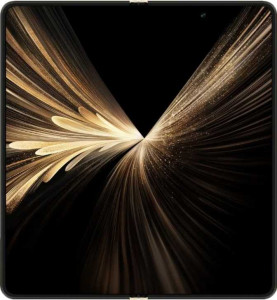
The most defining design difference here is form factor: the Honor Magic V5 is a foldable, while the Samsung Galaxy S25 Ultra is a traditional candy-bar slab. This shapes everything else. When unfolded, the Magic V5 spreads to a 145.9 mm width — nearly twice as wide as the S25 Ultra's 77.6 mm — offering a tablet-like display footprint in a phone. Yet despite this expanded surface, Honor engineers have achieved a remarkable 4.1 mm thickness in the unfolded state, compared to the S25 Ultra's 8.2 mm. In practice, the Magic V5 is genuinely half as thin when open, which is an impressive structural feat for a foldable.

Weight tells a surprisingly level story: both devices land at essentially the same mass — 217 g vs 218 g — meaning the Magic V5 does not impose the weight penalty that earlier foldables were notorious for. However, once folded, its volume and bulk will be higher than the spec sheet suggests, since the hinge mechanism doubles the thickness. The S25 Ultra's 103.6 cm³ volume versus the Magic V5's 93.8 cm³ (unfolded) reflects the Ultra's taller, narrower, and thicker profile rather than a compact advantage.

On durability, the S25 Ultra holds a clear edge: its IP68 rating certifies submersion in up to 1.5 m of fresh water for 30 minutes, while the Magic V5's IP58 rating sets a lower bar — typically shallower or shorter submersion tolerance. For users who regularly encounter rain, spills, or poolside use, that single digit difference is meaningful real-world protection. Overall, the Magic V5 wins on versatility and thinness-when-open, but the S25 Ultra edges ahead on water resistance and pocket-friendliness as a conventional slab.

Display:
Display type OLED/AMOLED OLED/AMOLED
screen size 7.95" 6.9"
pixel density 403 ppi 498 ppi
resolution 2172 x 2352 px 1440 x 3120 px
refresh rate 120Hz 120Hz
brightness (typical) 5000 nits 2600 nits
has branded damage-resistant glass
supports HDR10
supports HDR10+
Always-On Display
supports Dolby Vision
Has a secondary screen
has a touch screen

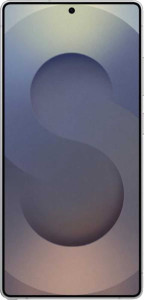
Screen size is where the Magic V5's foldable nature pays off most visibly: its main panel stretches to 7.95″, a full inch larger than the S25 Ultra's 6.9″ display, delivering a genuinely tablet-scale canvas for media, multitasking, and reading. The S25 Ultra counters with a significantly sharper image, however — its 498 ppi pixel density versus the Magic V5's 403 ppi means text and fine details render more crisply, a gap that becomes noticeable when reading small text or viewing high-resolution photos up close. The Magic V5 also gains a secondary screen on its outer shell, useful for quick interactions without unfolding.

Brightness is a decisive differentiator in real-world outdoor use. The Magic V5's 5000 nits peak brightness nearly doubles the S25 Ultra's 2600 nits, meaning the foldable should remain far more legible under direct sunlight. That is a substantial practical gap. The S25 Ultra fights back on content ecosystem support: it carries both HDR10 and HDR10+ certification, enabling richer contrast and color depth when streaming compatible content — features entirely absent on the Magic V5. The S25 Ultra also offers an Always-On Display for at-a-glance notifications, and its branded damage-resistant glass adds a layer of everyday scratch and drop protection that the Magic V5 lacks.

Both panels share the same OLED/AMOLED technology and 120Hz refresh rate, so smoothness and baseline color quality are on par. On balance, the Magic V5 wins on raw size and outdoor visibility, while the S25 Ultra takes the edge on sharpness, content certification, and glass durability. Which advantage matters more depends entirely on the user — media consumption in bright environments favors the Magic V5, while precision and HDR content quality tilt toward the S25 Ultra.

Performance:
internal storage 1024GB 1024GB
RAM 16GB 12GB
AnTuTu benchmark score 2640100 2207809
Chipset (SoC) name Qualcomm Snapdragon 8 Elite Qualcomm Snapdragon 8 Elite Qualcomm Snapdragon 8 Elite
GPU name Adreno 830 Adreno 830
CPU speed 2 x 4.32 & 6 x 3.53 GHz 2 x 4.47 & 6 x 3.53 GHz
Geekbench 6 result (multi) 10059 9846
Geekbench 6 result (single) 3234 3057
GPU clock speed 1100 MHz 1200 MHz
Has integrated LTE
RAM speed 5300 MHz 5300 MHz
semiconductor size 3 nm 3 nm
Supports 64-bit
DirectX version DirectX 12 DirectX 12
Has integrated graphics
OpenGL version 3.2 3.2
OpenGL ES version 3.2 3.2
Uses big.LITTLE technology
CPU threads 8 threads 8 threads
Uses HMP
Has TrustZone
maximum memory bandwidth 85.1 GB/s 85.1 GB/s
OpenCL version 3 3
memory channels 2 2
L2 cache 12 MB 12 MB
Supports ECC memory
L1 cache 192 KB 192 KB
maximum memory amount 24GB 24GB
uses multithreading
GPU turbo 1100 MHz 1100 MHz
Thermal Design Power (TDP) 8.2W 8.2W
DDR memory version 5 5
shading units 1536 1536
supported displays 2 2
L3 cache 8 MB 8 MB

At their core, these two devices are built from the same silicon: both run the Qualcomm Snapdragon 8 Elite on a 3 nm process with the Adreno 830 GPU, identical memory bandwidth, and matching storage at 1024 GB. That shared foundation sets a very high performance ceiling for both. The meaningful differences emerge in configuration and tuning. The Magic V5 carries 16 GB of RAM versus the S25 Ultra's 12 GB, a gap that matters most for heavy multitasking, keeping many apps live in memory, and sustained workloads — all scenarios the Magic V5's larger foldable display actively encourages.

Benchmark numbers reinforce the Magic V5's practical lead. Its AnTuTu score of 2,640,100 outpaces the S25 Ultra's 2,207,809 by roughly 20% — a gap too large to dismiss as noise, likely reflecting both the RAM advantage and thermal or clock configuration differences. Geekbench 6 results tell a more nuanced story: the Magic V5 edges ahead in both single-core (3,234 vs 3,057) and multi-core (10,059 vs 9,846), yet these margins are slim. Interestingly, the S25 Ultra's prime CPU cores are clocked slightly higher at 4.47 GHz versus 4.32 GHz, and its GPU runs at 1200 MHz versus 1100 MHz, suggesting Samsung's tuning prioritizes peak burst speed while Honor's configuration favors sustained throughput.

For everyday use, both phones will feel indistinguishable in speed. The Magic V5 holds a clear edge in memory-intensive and multitasking scenarios thanks to its additional RAM and higher AnTuTu score, making it the stronger performer on paper for this group. The S25 Ultra's slight GPU and CPU clock advantages are real but unlikely to translate into a perceptible difference outside of narrow benchmark conditions.

Cameras:
megapixels (main camera) 64 & 50 & 50 MP 200 & 50 & 50 & 10 MP
wide aperture (main camera) 2.5 & 2 & 1.6f 1.7 & 3.4 & 1.9 & 2.4f
Has a dual-lens (or multi-lens) main camera
megapixels (front camera) 20MP 12MP
has built-in optical image stabilization
video recording (main camera) 2160 x 60 fps 4320 x 30 fps
Has a dual-tone LED flash
number of flash LEDs 2 2
has a BSI sensor
has a CMOS sensor
has continuous autofocus when recording movies
Has phase-detection autofocus for photos
supports slow-motion video recording
has a built-in HDR mode
has manual exposure
has a flash
optical zoom 3x 5x
has manual ISO
has a serial shot mode
has manual focus
has a front camera
Has laser autofocus
Shoots 360° panorama
has manual white balance
shoots raw
has touch autofocus
has manual shutter speed
can create panoramas in-camera
wide aperture (front camera) 2.2f 2.2f
Has timelapse function
minimum focal length 13 mm 24 mm
maximum focal length 70 mm 111 mm
Has a front-facing LED flash
has a dual-lens (or multi-lens) front camera
supports HDR10 recording
supports Dolby Vision recording
has a front-facing camera under the display
Has a RGB LED flash
has 3D photo/video recording capabilities

The rear camera systems diverge significantly in ambition. The S25 Ultra fields a four-lens array headlined by a 200 MP main sensor with a wide f/1.7 aperture — an exceptionally light-hungry configuration that captures enormous detail and performs strongly in low light. The Magic V5 opens with a 64 MP primary shooter at a narrower f/2.5, which is a meaningful gap in both resolution and light intake. The Ultra also extends its telephoto reach considerably further: 5x optical zoom across a 24–111 mm focal range versus the Magic V5's 3x zoom and 13–70 mm range. For portraits, wildlife, or any distant subject, the S25 Ultra has a substantial versatility advantage. It also supports RAW shooting and manual shutter speed — two omissions on the Magic V5 that matter to photographers who want full creative control in post-processing or low-light long-exposure shots.

Video capability is another area where the S25 Ultra pulls ahead. It records up to 4320p (8K) at 30 fps, compared to the Magic V5's ceiling of 2160p (4K) at 60 fps. The Ultra's BSI and CMOS sensors are also documented, confirming its low-light and dynamic range architecture, while the Magic V5's sensor construction is unspecified in the provided data. The S25 Ultra further adds HDR10 video recording, ensuring compatible footage retains richer color depth on supported screens — a feature the Magic V5 lacks.

Both phones share a strong common feature set: OIS, phase-detection and laser autofocus, slow-motion, HDR photo mode, and broad manual controls. The Magic V5's front camera edges slightly higher at 20 MP versus 12 MP on the S25 Ultra, which may appeal to selfie-focused users. Overall, however, the S25 Ultra holds a clear and multi-dimensional advantage in this group — higher main sensor resolution, wider aperture, longer zoom range, superior video ceiling, RAW support, and richer sensor documentation all point decisively in its favor.

Operating system:
Android version Android 15 Android 15
has clipboard warnings
has location privacy options
has camera/microphone privacy options
has Mail Privacy Protection
has theme customization
can block app tracking
blocks cross-site tracking
has on-device machine learning
has notification permissions
has media picker
Can play games while they download
has dark mode
has Wi-Fi password sharing
has battery health check
has an extra dim mode
has focus modes
has dynamic theming
can offload apps
Has customizable notifications
has Live Text
has full-page screenshots
supports split screen
gets direct OS updates
has PiP
Can be used as a PC
Has sharing intents
has a child lock
Supports widgets
Is free and open source
Has offline voice recognition
has voice commands
Tracks the current position of a mobile device
is a multi-user system
has Quick Start

Running the same Android 15 base, these two phones share an extensive and nearly identical software feature set — split screen, Picture-in-Picture, dynamic theming, on-device machine learning, offline voice recognition, customizable notifications, and a full suite of privacy controls are present on both. For the vast majority of daily software interactions, users switching between these devices would feel immediately at home. The differences, while few, are worth examining closely.

The S25 Ultra pulls ahead in three specific areas. It supports cross-site tracking blocking, adds Wi-Fi password sharing for frictionless network handoffs, includes Focus Modes for structured do-not-disturb workflows, and — most distinctively — supports PC mode, allowing the phone to function as a desktop-like computing environment when connected to an external display. The Magic V5 lacks all four of these. None are dealbreakers in isolation, but together they represent a meaningful quality-of-life gap, particularly PC mode, which is a tangible productivity feature for power users who want to consolidate their devices.

The Magic V5 holds no exclusive software advantages over the S25 Ultra based on the provided data. The verdict for this group is a modest but clear edge to the Samsung Galaxy S25 Ultra, driven by its broader privacy controls, convenience features, and the addition of PC mode — a capability the Magic V5 simply does not offer.

Battery:
battery power 5820 mAh 5000 mAh
has wireless charging
Supports fast charging
charging speed 66W 45W
wireless charging speed 50W 15W
has reverse wireless charging
reverse wireless charging speed 5W 4.5W
comes with a charger
has a removable battery
has a battery level indicator
has a rechargeable battery

Capacity is where the Magic V5 establishes an immediate advantage: its 5820 mAh battery outpaces the S25 Ultra's 5000 mAh cell by a meaningful 16%. All else being equal, that translates to noticeably more screen-on time before reaching for a charger — a relevant edge given the Magic V5's large foldable display draws considerable power. Wired fast charging reinforces this lead: at 66W, the Magic V5 charges significantly faster than the S25 Ultra's 45W, meaning a larger battery that also refills more quickly. Topping that off, the Magic V5 comes with a charger in the box, while the S25 Ultra does not — a tangible out-of-box convenience difference.

Wireless charging tells a similarly lopsided story. The Magic V5 supports 50W wireless charging, which is exceptionally fast for a cable-free connection and nearly eliminates the traditional speed penalty of going wireless. The S25 Ultra manages 15W wirelessly — functional, but far slower. Reverse wireless charging is present on both at roughly equivalent speeds (5W vs 4.5W), making this feature essentially a wash for topping up accessories like earbuds.

Across every battery metric provided — capacity, wired speed, wireless speed, and in-box accessories — the Honor Magic V5 holds a clear and consistent advantage. The S25 Ultra offers no compensating battery strength in this data set. For users who prioritize longevity and charging flexibility, the Magic V5 is the stronger choice in this category without qualification.

Audio:
has a socket for a 3.5 mm audio jack
has stereo speakers
has aptX
has LDAC
has aptX HD
has aptX Adaptive
has aptX Lossless
Has a radio

Wired audio is off the table for both devices — neither includes a 3.5 mm headphone jack, so wireless or USB-C listening is the only path. On the wireless side, both phones share a strong common codec foundation: aptX, aptX HD, and LDAC are all present, covering the most widely used high-resolution Bluetooth audio standards. In practice, this means both can deliver lossless-quality wireless audio to compatible headphones, with LDAC in particular enabling up to 990 kbps transmission — well beyond standard Bluetooth audio quality. Stereo speakers are confirmed on both as well.

The single differentiator in this group is the Magic V5's support for aptX Adaptive, which the S25 Ultra lacks. aptX Adaptive is a next-generation codec that dynamically scales bitrate between 279 kbps and 420 kbps (or higher in some implementations) based on connection conditions, and also offers lower latency — an advantage for gaming or video where audio sync is critical. It is backward-compatible with standard aptX devices, adding flexibility without any downside for Magic V5 owners whose headphones support it.

For most listeners, the shared LDAC and aptX HD support makes these phones functionally equivalent in audio quality. The Honor Magic V5 earns a narrow edge in this group solely due to aptX Adaptive, which benefits users with compatible headphones seeking lower latency or more resilient wireless connections. It is not a decisive gap, but it is the only differentiator the data provides, and it favors the Magic V5.

Connectivity & Features:
release date July 2025 January 2025
has 5G support
Wi-Fi version Wi-Fi 4 (802.11n), Wi-Fi 6 (802.11ax), Wi-Fi 5 (802.11ac), Wi-Fi 6E (802.11ax), Wi-Fi 7 (802.11be) Wi-Fi 4 (802.11n), Wi-Fi 6 (802.11ax), Wi-Fi 5 (802.11ac), Wi-Fi 7 (802.11be), Wi-Fi 6E (802.11ax)
SIM cards 2 SIM, 2 eSIM 2 SIM, 2 eSIM
Bluetooth version 6 5.4
has an external memory slot
Has USB Type-C
USB version 3.1 3.2
has NFC
download speed 10000 MBits/s 10000 MBits/s
upload speed 3500 MBits/s 3500 MBits/s
Has a fingerprint scanner
has emergency SOS via satellite
has crash detection
is DLNA-certified
has a gyroscope
supports ANT+
Has a heart rate monitor
has GPS
has a compass
supports Wi-Fi
Has an infrared sensor
has an accelerometer
has a cellular module
Has a barometer
has an HDMI output
Uses 3D facial recognition
Has an iris scanner
Stylus included
supports Galileo
Has motion tracking
Has optical tracking
Has a built-in projector

Across the core connectivity stack, these two phones are remarkably well matched. Both support 5G, Wi-Fi 7, NFC, identical download and upload speeds, dual physical SIM plus dual eSIM, and an identical sensor suite including GPS, gyroscope, barometer, accelerometer, and compass. For everyday wireless use, neither holds a structural advantage. Where differences do emerge, they are specific and worth unpacking.

The Magic V5 ships with Bluetooth 6.0 versus the S25 Ultra's Bluetooth 5.4. Bluetooth 6.0 introduces Channel Sounding for more precise distance measurement and improved connection reliability, representing a forward-looking advantage as compatible accessories proliferate. The S25 Ultra responds with a higher USB 3.2 spec compared to the Magic V5's USB 3.1, enabling faster wired data transfers — relevant for users who regularly move large files to a PC or external drive. The S25 Ultra also supports ANT+, a low-power protocol used by fitness equipment and sports sensors, which adds niche but genuine value for athletes using compatible gear.

The most impactful exclusive in this group, however, belongs to the S25 Ultra: an included stylus. For note-taking, annotation, and precision input on that large display, a built-in stylus is a meaningful productivity differentiator that the Magic V5 cannot match. Weighing everything, the Samsung Galaxy S25 Ultra takes a modest edge here — its stylus inclusion, ANT+ support, and faster USB version collectively outweigh the Magic V5's Bluetooth version lead for most users.
Miscellaneous:
has a video light
Has sapphire glass display
Has a curved display
Has an e-paper display

This specification group presents a clean sweep of identical values across every data point. Both the Honor Magic V5 and the Samsung Galaxy S25 Ultra have a video light, lack a sapphire glass display, feature a flat rather than curved panel, and include no e-paper secondary display. There is simply nothing in this data set that separates the two devices.

This group is a complete tie — no advantage can be assigned to either product based solely on the provided specs.

Comparison Summary & Verdict

After examining every specification, these two flagships clearly cater to different types of users. The Honor Magic V5 stands out with its foldable form factor, a vast 7.95″ display, a larger 5820 mAh battery with blazing 66W wired and 50W wireless charging, more RAM at 16GB, and a higher AnTuTu benchmark score — making it the go-to choice for power users who want maximum screen real estate and endurance. The Samsung Galaxy S25 Ultra, on the other hand, excels in camera versatility with its 200MP main sensor, 5x optical zoom, 8K video recording, RAW shooting, and an included stylus, while also offering a sharper display with HDR10+ support, Always-On Display, and a more complete software ecosystem with PC mode and cross-site tracking protection. Neither device is a clear-cut winner — your ideal pick depends entirely on whether you value foldable innovation and raw power or a refined, camera-first experience.

Honor Magic V5
Buy Honor Magic V5 if...

Buy the Honor Magic V5 if you want a foldable smartphone with a larger screen, bigger battery, faster wired and wireless charging speeds, and more RAM for demanding multitasking.

Samsung Galaxy S25 Ultra
Buy Samsung Galaxy S25 Ultra if...

Buy the Samsung Galaxy S25 Ultra if you prioritize camera versatility with a 200MP sensor, 5x optical zoom, 8K video recording, an included stylus, and a richer display experience with HDR10+ and Always-On Display.