Honor MagicPad 3 Pro
Honor Pad 10

Honor MagicPad 3 Pro Honor Pad 10

Overview

Welcome to our detailed spec comparison between the Honor MagicPad 3 Pro and the Honor Pad 10, two Android tablets from Honor that take notably different approaches to performance, display, and connectivity. Whether you are weighing up raw processing power, screen real estate, or everyday portability, this head-to-head covers every key battleground to help you make an informed decision.

Common Features

  • Neither product includes a stylus.
  • Neither product has a detachable keyboard.
  • Neither product has a backlit keyboard.
  • Neither product offers water resistance.
  • Neither product has tilt sensitivity.
  • Neither product has branded damage-resistant glass.
  • Neither product has an anti-reflection coating.
  • Both products have a touch screen.
  • Neither product has a sapphire glass display.
  • Neither product supports HDR10+.
  • Neither product supports Dolby Vision.
  • Neither product has an e-paper display.
  • Both products use an IPS LCD display type.
  • Both products support 64-bit processing.
  • Both products have integrated LTE.
  • Both products use big.LITTLE technology.
  • Both products support DirectX 12.
  • Both products have integrated graphics.
  • Both products have TrustZone.
  • Both products support OpenGL ES version 3.2.
  • Both products have a front camera.
  • Both products have a built-in HDR mode.
  • Neither product can create panoramas in-camera.
  • Both products have touch autofocus.
  • Neither product has a BSI sensor.
  • Both products have manual white balance.
  • Both products have a CMOS sensor.
  • Both products support aptX.
  • Neither product supports LDAC.
  • Neither product supports aptX Low Latency.
  • Neither product supports aptX Lossless.
  • Both products have stereo speakers.
  • Neither product has a 3.5 mm audio jack.
  • Neither product has a radio.
  • Both products support fast charging.
  • Neither product supports wireless charging.
  • Both products have a battery level indicator.
  • Both products have a rechargeable battery.
  • Neither product has a removable battery.
  • Neither product has Mail Privacy Protection.
  • Both products have on-device machine learning.
  • Both products have clipboard warnings.
  • Both products have location privacy options.
  • Both products have camera and microphone privacy options.
  • Both products can block app tracking.
  • Neither product blocks cross-site tracking.
  • Both products support split screen.
  • Both products use DDR5 memory.
  • Both products use multithreading.

Main Differences

  • Weight is 595 g on Honor MagicPad 3 Pro and 525 g on Honor Pad 10.
  • Thickness is 5.8 mm on Honor MagicPad 3 Pro and 6.3 mm on Honor Pad 10.
  • Width is 293.9 mm on Honor MagicPad 3 Pro and 277.1 mm on Honor Pad 10.
  • Height is 201.4 mm on Honor MagicPad 3 Pro and 179.3 mm on Honor Pad 10.
  • Volume is 343.31 cm³ on Honor MagicPad 3 Pro and 313.01 cm³ on Honor Pad 10.
  • Screen size is 13.3″ on Honor MagicPad 3 Pro and 12.1″ on Honor Pad 10.
  • Resolution is 3200 x 2136 px on Honor MagicPad 3 Pro and 2560 x 1600 px on Honor Pad 10.
  • Pixel density is 289 ppi on Honor MagicPad 3 Pro and 249 ppi on Honor Pad 10.
  • Refresh rate is 165Hz on Honor MagicPad 3 Pro and 120Hz on Honor Pad 10.
  • HDR10 support is present on Honor Pad 10 but not available on Honor MagicPad 3 Pro.
  • Internal storage is 512GB on Honor MagicPad 3 Pro and 256GB on Honor Pad 10.
  • RAM is 16GB on Honor MagicPad 3 Pro and 8GB on Honor Pad 10.
  • The chipset is Qualcomm Snapdragon 8 Gen 3 on Honor MagicPad 3 Pro and Qualcomm Snapdragon 7 Gen 3 on Honor Pad 10.
  • The GPU is Adreno 830 on Honor MagicPad 3 Pro and Adreno 720 on Honor Pad 10.
  • CPU speed is 2 x 4.6 & 6 x 3.62 GHz on Honor MagicPad 3 Pro and 8 x 2.13 GHz on Honor Pad 10.
  • Semiconductor size is 3 nm on Honor MagicPad 3 Pro and 4 nm on Honor Pad 10.
  • GPU clock speed is 1200 MHz on Honor MagicPad 3 Pro and 950 MHz on Honor Pad 10.
  • RAM speed is 5300 MHz on Honor MagicPad 3 Pro and 3200 MHz on Honor Pad 10.
  • Maximum memory amount is 24GB on Honor MagicPad 3 Pro and 16GB on Honor Pad 10.
  • Android version is Android 16 on Honor MagicPad 3 Pro and Android 15 on Honor Pad 10.
  • Thermal Design Power is 8.2W on Honor MagicPad 3 Pro and 6W on Honor Pad 10.
  • Maximum memory bandwidth is 85.1 GB/s on Honor MagicPad 3 Pro and 25.6 GB/s on Honor Pad 10.
  • Main camera resolution is 13 & 2 MP on Honor MagicPad 3 Pro and 8 MP on Honor Pad 10.
  • Front camera resolution is 9MP on Honor MagicPad 3 Pro and 8MP on Honor Pad 10.
  • A flash is present on Honor MagicPad 3 Pro but not available on Honor Pad 10.
  • Slow-motion video recording is supported on Honor Pad 10 but not on Honor MagicPad 3 Pro.
  • A video light is present on Honor MagicPad 3 Pro but not available on Honor Pad 10.
  • aptX HD support is present on Honor MagicPad 3 Pro but not available on Honor Pad 10.
  • aptX Adaptive support is present on Honor MagicPad 3 Pro but not available on Honor Pad 10.
  • Battery capacity is 12450 mAh on Honor MagicPad 3 Pro and 10100 mAh on Honor Pad 10.
  • Wi-Fi 7 (802.11be) support is present on Honor MagicPad 3 Pro but not available on Honor Pad 10.
  • A cellular module is present on Honor Pad 10 but not on Honor MagicPad 3 Pro.
  • USB version is 3.2 on Honor MagicPad 3 Pro and 2 on Honor Pad 10.
  • Bluetooth version is 6 on Honor MagicPad 3 Pro and 5.3 on Honor Pad 10.
  • Download speed is 10000 MBits/s on Honor MagicPad 3 Pro and 5000 MBits/s on Honor Pad 10.
  • A gyroscope is present on Honor MagicPad 3 Pro but not available on Honor Pad 10.
  • Upload speed is 3500 MBits/s on Honor MagicPad 3 Pro and 160 MBits/s on Honor Pad 10.
Specs Comparison
Honor MagicPad 3 Pro

Honor MagicPad 3 Pro

Honor Pad 10

Honor Pad 10

Design:
weight 595 g 525 g
thickness 5.8 mm 6.3 mm
width 293.9 mm 277.1 mm
height 201.4 mm 179.3 mm
volume 343.310468 cm³ 313.009389 cm³
Stylus included
Has a detachable keyboard
Has a backlit keyboard
water resistance None None
Has tilt sensitivity

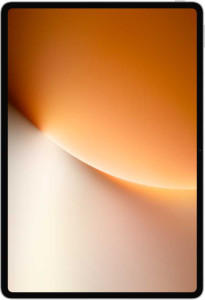
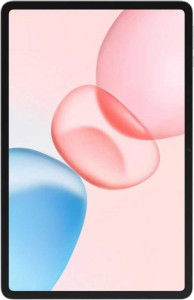
The two tablets occupy noticeably different physical footprints. The Honor MagicPad 3 Pro is significantly larger, measuring 293.9 × 201.4 mm compared to the Honor Pad 10's more compact 277.1 × 179.3 mm frame. That translates to a volume difference of roughly 30 cm³, meaning the MagicPad 3 Pro takes up meaningfully more space in a bag or on a desk. The flip side is that its larger chassis allows for a thinner profile at 5.8 mm versus the Pad 10's 6.3 mm — a modest but perceptible difference when sliding the device into a sleeve or holding it one-handed.

Where the size advantage of the MagicPad 3 Pro comes at a direct cost is weight: it tips the scale at 595 g, a full 70 g heavier than the Pad 10's 525 g. In real-world use, that gap is tangible during extended reading sessions or when holding the tablet unsupported — the Pad 10 will feel noticeably lighter and less fatiguing over time. Neither tablet ships with a stylus, detachable keyboard, or offers any water resistance, so those accessories are equally absent from both options.

On balance, the Honor Pad 10 holds the edge in portability — it is lighter and more compact, making it the better fit for users who prioritize one-handed comfort and travel-friendliness. The MagicPad 3 Pro's slight thinness advantage does not fully offset its greater weight and larger footprint for everyday carry.

Display:
screen size 13.3" 12.1"
resolution 3200 x 2136 px 2560 x 1600 px
pixel density 289 ppi 249 ppi
Display type IPS, LCD LCD, IPS
refresh rate 165Hz 120Hz
has branded damage-resistant glass
has anti-reflection coating
supports HDR10
has a touch screen
Has sapphire glass display
supports HDR10+
supports Dolby Vision
Has an e-paper display

Screen size and sharpness are where the Honor MagicPad 3 Pro pulls ahead most visibly. Its 13.3″ panel versus the Honor Pad 10's 12.1″ screen means noticeably more real estate for split-screen multitasking, document editing, or media consumption. That larger canvas also comes with a higher resolution of 3200 × 2136 px and a pixel density of 289 ppi, compared to the Pad 10's 2560 × 1600 px at 249 ppi. The 40 ppi gap is meaningful — text appears crisper and fine detail in images is more defined on the MagicPad 3 Pro, which matters for reading or precision work.

The refresh rate story also favors the MagicPad 3 Pro: its 165Hz panel delivers significantly smoother scrolling and animations compared to the Pad 10's 120Hz. While 120Hz is already fluid for everyday use, the higher ceiling of 165Hz is perceptible in fast-moving content and gaming. However, the Pad 10 counters with HDR10 support — a feature absent on the MagicPad 3 Pro — which enables better contrast and a wider color range when streaming compatible content. Both panels are IPS LCD technology with no damage-resistant glass or anti-reflection coating on either device.

Overall, the MagicPad 3 Pro holds the stronger display advantage for most users, thanks to its larger screen, higher pixel density, and faster refresh rate. The Pad 10's HDR10 support is a meaningful counterpoint for video enthusiasts, but it does not outweigh the cumulative lead the MagicPad 3 Pro holds across the remaining display metrics.

Performance:
internal storage 512GB 256GB
RAM 16GB 8GB
Chipset (SoC) name Qualcomm Snapdragon 8 Gen 3 Qualcomm SM7550-AB Snapdragon 7 Gen 3
GPU name Adreno 830 Adreno 720
CPU speed 2 x 4.6 & 6 x 3.62 GHz 8 x 2.13 GHz
semiconductor size 3 nm 4 nm
Supports 64-bit
Has integrated LTE
Uses big.LITTLE technology
DirectX version DirectX 12 DirectX 12
Has integrated graphics
GPU clock speed 1200 MHz 950 MHz
RAM speed 5300 MHz 3200 MHz
Has TrustZone
maximum memory amount 24GB 16GB
Android version Android 16 Android 15
Thermal Design Power (TDP) 8.2W 6W
maximum memory bandwidth 85.1 GB/s 25.6 GB/s
OpenGL ES version 3.2 3.2

The chipset gap between these two tablets is substantial. The Honor MagicPad 3 Pro runs on the Snapdragon 8 Gen 3 built on a 3 nm process, while the Honor Pad 10 uses the Snapdragon 7 Gen 3 at 4 nm. The 8 Gen 3 sits in Qualcomm's flagship tier, designed for demanding workloads, while the 7 Gen 3 is a capable mid-range chip. That hierarchy is reflected throughout the supporting specs: the MagicPad 3 Pro's Adreno 830 GPU clocks at 1200 MHz versus the Pad 10's Adreno 720 at 950 MHz, and its memory bandwidth reaches a commanding 85.1 GB/s compared to just 25.6 GB/s on the Pad 10. In practice, this translates to faster texture loading, smoother graphics in demanding games, and snappier response under multitasking pressure.

RAM and storage further reinforce the divide. The MagicPad 3 Pro ships with 16 GB of RAM clocked at 5300 MHz and 512 GB of internal storage, versus the Pad 10's 8 GB at 3200 MHz and 256 GB. Double the RAM means more apps can stay resident in memory without being reloaded, which is especially valuable on a large-screen tablet used for multitasking. The MagicPad 3 Pro also supports up to 24 GB maximum memory, compared to the Pad 10's 16 GB ceiling. Both tablets run Android and support big.LITTLE architecture and TrustZone security, but the MagicPad 3 Pro launches on Android 16 while the Pad 10 starts on Android 15.

There is no ambiguity here — the MagicPad 3 Pro holds a decisive performance advantage across every meaningful dimension: raw compute, GPU throughput, memory speed, storage, and software recency. The Pad 10's lower 6W TDP suggests it will run cooler and potentially more efficiently under light loads, but for users who want flagship-level performance, the MagicPad 3 Pro is in a different league.

Cameras:
megapixels (main camera) 13 & 2 MP 8 MP
megapixels (front camera) 9MP 8MP
has a flash
has a front camera
has a built-in HDR mode
can create panoramas in-camera
supports slow-motion video recording
has touch autofocus
optical zoom 0x 0x
has a BSI sensor
has manual white balance
has a CMOS sensor
supports HDR10 recording
has continuous autofocus when recording movies
supports Dolby Vision recording
Has a front-facing LED flash
has manual ISO
has a video light
Shoots 360° panorama
has a serial shot mode
has built-in optical image stabilization
has 3D photo/video recording capabilities
Has a dual-tone LED flash
has manual focus
Has a RGB LED flash
has manual exposure
has manual shutter speed

Tablet cameras are rarely a primary purchase driver, but the differences here are worth understanding. The Honor MagicPad 3 Pro fields a dual rear camera setup at 13 MP + 2 MP, while the Honor Pad 10 makes do with a single 8 MP rear shooter. The MagicPad 3 Pro's higher-resolution main sensor captures more detail in stills, and the secondary 2 MP lens adds at least some depth-sensing capability. Front cameras are essentially matched, with the MagicPad 3 Pro at 9 MP and the Pad 10 at 8 MP — a negligible gap for video calls.

Two practical differentiators stand out beyond resolution. The MagicPad 3 Pro includes a rear flash and a video light, making it usable in low-light scanning or document capture scenarios where the Pad 10 — which has neither — would struggle. Conversely, the Pad 10 supports slow-motion video recording, a feature absent on the MagicPad 3 Pro. Both tablets share a solid common baseline: touch autofocus, continuous autofocus during video, HDR mode, and manual controls for ISO, white balance, focus, and exposure are present on each device.

On balance, the MagicPad 3 Pro has the camera edge, primarily due to its higher-resolution dual rear system and the addition of a flash and video light — tools that have tangible utility for document scanning and low-light capture. The Pad 10's slow-motion capability is a niche advantage that won't matter to most tablet users. Neither device is built around photography, but the MagicPad 3 Pro is the more versatile option within this category.

Audio:
has aptX
has aptX HD
has LDAC
has aptX Low Latency
has aptX Adaptive
has aptX Lossless
has stereo speakers
has a socket for a 3.5 mm audio jack
Has a radio

Both tablets share the same foundational audio setup: stereo speakers, no 3.5 mm headphone jack, and no radio. For wired headphone users, the absence of an audio jack on either device means relying on Bluetooth or a USB-C adapter — a limitation that applies equally to both.

Where they diverge is in Bluetooth audio codec support, which determines the quality ceiling when using wireless headphones. Both support standard aptX, but the Honor MagicPad 3 Pro goes further with aptX HD and aptX Adaptive. aptX HD raises the bitrate for higher-fidelity wireless audio, while aptX Adaptive is a more modern codec that dynamically adjusts bitrate for both quality and low-latency performance — making it useful for media consumption and gaming alike. The Honor Pad 10 tops out at standard aptX, which is a competent baseline but lacks the headroom of the MagicPad 3 Pro's codec stack.

The MagicPad 3 Pro has a clear audio edge for wireless headphone users, particularly those with aptX HD or aptX Adaptive-compatible headphones who want to extract higher fidelity from their listening experience. For users who rely solely on the built-in speakers, both tablets are evenly matched on paper.

Battery:
battery power 12450 mAh 10100 mAh
Supports fast charging
has wireless charging
has a battery level indicator
has a rechargeable battery
has a removable battery

Battery capacity is one area where the size of the Honor MagicPad 3 Pro works directly in its favor. Its 12,450 mAh cell is a significant step up from the Honor Pad 10's 10,100 mAh — a difference of roughly 2,350 mAh, or about 23% more capacity. For a device with a larger, higher-resolution, faster-refresh display and a more power-hungry flagship chipset, that larger battery helps offset the increased energy demands and sustain competitive endurance.

Beyond raw capacity, the two tablets are essentially identical in battery feature set: both support fast charging, neither offers wireless charging, and both have non-removable rechargeable cells. The absence of wireless charging on either device is a shared limitation worth noting for users who prioritize cable-free convenience.

The MagicPad 3 Pro holds the battery edge on capacity alone. While its more demanding display and processor will draw more power than the Pad 10's hardware, the considerably larger cell helps maintain a meaningful endurance advantage. Users who spend long stretches away from a charger will find the MagicPad 3 Pro's reserve more reassuring.

Connectivity & Features:
release date October 2025 May 2025
Wi-Fi version Wi-Fi 4 (802.11n), Wi-Fi 6 (802.11ax), Wi-Fi 5 (802.11ac), Wi-Fi 7 (802.11be) Wi-Fi 4 (802.11n), Wi-Fi 5 (802.11ac), Wi-Fi 6 (802.11ax)
has Mail Privacy Protection
has on-device machine learning
has clipboard warnings
has location privacy options
has camera/microphone privacy options
can block app tracking
blocks cross-site tracking
supports split screen
has Live Text
has notification permissions
has full-page screenshots
has Quick Start
has theme customization
has Wi-Fi password sharing
has PiP
Can play games while they download
has an extra dim mode
can offload apps
has focus modes
has media picker
has dynamic theming
has dark mode
has battery health check
Has USB Type-C
has a cellular module
has 5G support
is a multi-user system
gets direct OS updates
has a child lock
has an HDMI output
has NFC
Has a fingerprint scanner
USB version 3.2 2
Supports widgets
Bluetooth version 6 5.3
download speed 10000 MBits/s 5000 MBits/s
has a gyroscope
Is free and open source
Has offline voice recognition
has a compass
upload speed 3500 MBits/s 160 MBits/s
supports Wi-Fi
Has sharing intents
Has customizable notifications
Uses 3D facial recognition
Has a barometer
has an accelerometer
has voice commands
Has an iris scanner
Has a built-in projector
supports Ethernet
Has an infrared sensor
Tracks the current position of a mobile device

Wireless connectivity is where the Honor MagicPad 3 Pro pulls significantly ahead. It supports Wi-Fi 7 (802.11be), the latest generation, while the Honor Pad 10 tops out at Wi-Fi 6 (802.11ax). Wi-Fi 7 brings higher throughput and lower latency on compatible routers, and the spec figures bear this out starkly: the MagicPad 3 Pro's rated download speed of 10,000 Mbits/s versus the Pad 10's 5,000 Mbits/s, and a dramatic upload gap of 3,500 Mbits/s versus just 160 Mbits/s. The MagicPad 3 Pro also has a newer Bluetooth 6 radio compared to the Pad 10's Bluetooth 5.3, offering improved connection stability and efficiency, and its USB 3.2 port enables far faster wired data transfers than the Pad 10's USB 2.

One meaningful advantage belongs exclusively to the Pad 10: it includes a cellular module, meaning it can connect to mobile data networks, whereas the MagicPad 3 Pro is Wi-Fi only. For users who need connectivity away from known hotspots — on commutes, travel, or in the field — this is a significant practical differentiator. The MagicPad 3 Pro also adds a gyroscope sensor absent on the Pad 10, which improves motion sensing for compatible apps and games. Software feature parity between the two is otherwise remarkably high, with both offering split-screen, PiP, dark mode, dynamic theming, multi-user support, and a full suite of privacy controls.

The winner here depends on use case. For raw wireless performance and wired speed, the MagicPad 3 Pro has a clear lead. But if untethered connectivity matters — if you need to be online without a Wi-Fi network — the Honor Pad 10's cellular capability is a decisive advantage that no amount of faster Wi-Fi can substitute for.
Miscellaneous:
DDR memory version 5 5
uses multithreading

This group contains just two data points, and both are identical across the tablets. The Honor MagicPad 3 Pro and the Honor Pad 10 both use DDR5 memory and both support multithreading. DDR5 is the current mainstream standard for mobile RAM, offering improved bandwidth and power efficiency over the previous DDR4 generation — a shared baseline that benefits both devices equally. Multithreading support means each tablet's CPU can handle multiple instruction streams simultaneously, contributing to smoother performance under parallel workloads like background app processing or complex rendering tasks.

This group is a complete tie. There are no differentiators to analyze here, and neither product holds any advantage over the other based on the provided specifications.

Comparison Summary & Verdict

After examining every specification, the two tablets clearly target different audiences. The Honor MagicPad 3 Pro is the stronger performer overall, pairing a Snapdragon 8 Gen 3 chipset with 16 GB of RAM, a large 13.3″ 165 Hz display, and a massive 12450 mAh battery, making it the better choice for demanding users who want a premium, desktop-like tablet experience. The Honor Pad 10, on the other hand, is lighter, includes a built-in cellular module, supports HDR10, and comes at a more accessible specification level with its Snapdragon 7 Gen 3 chip, making it a practical pick for users who value on-the-go connectivity and a more compact form factor over cutting-edge performance.

Honor MagicPad 3 Pro
Buy Honor MagicPad 3 Pro if...

Buy the Honor MagicPad 3 Pro if you want the best possible performance, a larger high-refresh-rate display, and significantly more RAM and storage for demanding tasks.

Honor Pad 10
Buy Honor Pad 10 if...

Buy the Honor Pad 10 if you need built-in cellular connectivity, prefer a lighter and more portable tablet, and do not require top-tier processing power.