Honor MagicPad 3 Pro
OnePlus Pad 3

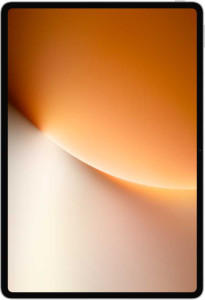
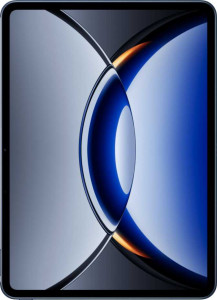
Honor MagicPad 3 Pro OnePlus Pad 3

Overview

When choosing between the Honor MagicPad 3 Pro and the OnePlus Pad 3, buyers are faced with two highly capable Android tablets that share a surprising amount of common ground — yet diverge in meaningful ways. From display sharpness and refresh rates to chipset generation and stylus support, this comparison digs into the details that matter most for productivity, creativity, and everyday use.

Common Features

  • Neither product has a detachable keyboard.
  • Neither product has a backlit keyboard.
  • Neither product offers water resistance.
  • Neither product has tilt sensitivity.
  • Neither product features branded damage-resistant glass.
  • HDR10 support is not available on either product.
  • Both products have a touch screen.
  • Neither product has a sapphire glass display.
  • HDR10+ support is not available on either product.
  • Neither product has an e-paper display.
  • Both products come with 512GB of internal storage and 16GB of RAM.
  • Both products use the Adreno 830 GPU and are built on a 3 nm semiconductor process.
  • Both products achieved a Geekbench 6 multi-core score of 10059 and a single-core score of 3234.
  • Neither product has an external memory slot.
  • Both products support 64-bit processing.
  • Both products support main camera video recording at 2160p 30fps.
  • Both products have a flash, a front camera, and a built-in HDR mode.
  • Neither product can create panoramas in-camera or supports slow-motion video recording.
  • Both products have touch autofocus and offer 0x optical zoom.
  • Both products support aptX HD audio.
  • LDAC support is not available on either product.
  • aptX Low Latency support is not available on either product.
  • aptX Lossless support is not available on either product.
  • Both products have stereo speakers.
  • Neither product has a 3.5mm audio jack.
  • Neither product has a radio.
  • Both products support fast charging.
  • Wireless charging is not available on either product.
  • Both products have a battery level indicator and a non-removable rechargeable battery.
  • Both products support on-device machine learning.
  • Both products offer clipboard warnings, location privacy options, and camera/microphone privacy options.
  • Both products can block app tracking.
  • Cross-site tracking blocking is not available on either product.
  • Both products support split screen.
  • Both products use DDR5 memory and support multithreading.

Main Differences

  • Weight is 595 g on Honor MagicPad 3 Pro and 675 g on OnePlus Pad 3.
  • Thickness is 5.8 mm on Honor MagicPad 3 Pro and 6 mm on OnePlus Pad 3.
  • Width is 293.9 mm on Honor MagicPad 3 Pro and 289.6 mm on OnePlus Pad 3.
  • Height is 201.4 mm on Honor MagicPad 3 Pro and 209.7 mm on OnePlus Pad 3.
  • Volume is 343.31 cm³ on Honor MagicPad 3 Pro and 364.37 cm³ on OnePlus Pad 3.
  • A stylus is included with the OnePlus Pad 3 but not with the Honor MagicPad 3 Pro.
  • Screen size is 13.3″ on Honor MagicPad 3 Pro and 13.2″ on OnePlus Pad 3.
  • Resolution is 3200 x 2136 px on Honor MagicPad 3 Pro and 3392 x 2400 px on OnePlus Pad 3.
  • Pixel density is 289 ppi on Honor MagicPad 3 Pro and 315 ppi on OnePlus Pad 3.
  • Refresh rate is 165Hz on Honor MagicPad 3 Pro and 144Hz on OnePlus Pad 3.
  • An anti-reflection coating is present on OnePlus Pad 3 but not on Honor MagicPad 3 Pro.
  • Dolby Vision support is available on OnePlus Pad 3 but not on Honor MagicPad 3 Pro.
  • The chipset is Qualcomm Snapdragon 8 Gen 3 on Honor MagicPad 3 Pro and Qualcomm Snapdragon 8 Elite on OnePlus Pad 3.
  • CPU speed is 2 x 4.6 & 6 x 3.62 GHz on Honor MagicPad 3 Pro and 2 x 4.32 & 6 x 3.53 GHz on OnePlus Pad 3.
  • GPU clock speed is 1200 MHz on Honor MagicPad 3 Pro and 1100 MHz on OnePlus Pad 3.
  • Android version is Android 16 on Honor MagicPad 3 Pro and Android 15 on OnePlus Pad 3.
  • The main camera is 13 & 2 MP on Honor MagicPad 3 Pro and 13 MP on OnePlus Pad 3.
  • The front camera is 9MP on Honor MagicPad 3 Pro and 8MP on OnePlus Pad 3.
  • aptX support is available on Honor MagicPad 3 Pro but not on OnePlus Pad 3.
  • aptX Adaptive support is available on Honor MagicPad 3 Pro but not on OnePlus Pad 3.
  • Battery capacity is 12450 mAh on Honor MagicPad 3 Pro and 12140 mAh on OnePlus Pad 3.
  • Bluetooth version is 6 on Honor MagicPad 3 Pro and 5.4 on OnePlus Pad 3.
  • A compass is present on OnePlus Pad 3 but not on Honor MagicPad 3 Pro.
Specs Comparison
Honor MagicPad 3 Pro

Honor MagicPad 3 Pro

OnePlus Pad 3

OnePlus Pad 3

Design:
weight 595 g 675 g
thickness 5.8 mm 6 mm
width 293.9 mm 289.6 mm
height 201.4 mm 209.7 mm
volume 343.310468 cm³ 364.37472 cm³
Stylus included
Has a detachable keyboard
Has a backlit keyboard
water resistance None None
Has tilt sensitivity

From a physical standpoint, the Honor MagicPad 3 Pro has a clear structural advantage in portability. At 595 g and 5.8 mm thick, it is noticeably lighter and slimmer than the OnePlus Pad 3, which weighs 675 g and measures 6 mm in thickness. That 80 g difference is meaningful in practice — it translates to less fatigue during extended handheld use, making the MagicPad 3 Pro the more comfortable option for reading, browsing, or media consumption on the go. Its smaller overall volume (343.3 cm³ vs 364.4 cm³) also suggests a more compact footprint despite being slightly wider, as it trades the OnePlus Pad 3's extra height for a broader, shorter form factor.

Where the OnePlus Pad 3 turns the tables is accessory inclusion: it ships with a stylus in the box, while the MagicPad 3 Pro does not. For users interested in note-taking, sketching, or annotation, this is a significant out-of-the-box advantage — a bundled stylus removes an additional purchase and signals that the device is positioned for active input use cases. Both tablets, however, lack a detachable keyboard, water resistance, and tilt sensitivity, so neither stands out for professional creative workflows or rugged environments.

In summary, the MagicPad 3 Pro wins on ergonomics and portability, making it the better daily carry. The OnePlus Pad 3 counters with the included stylus, offering better out-of-the-box value for stylus-driven use. Which advantage matters more depends entirely on the user's priorities: pure comfort in hand, or pen-ready productivity without extra spending.

Display:
screen size 13.3" 13.2"
resolution 3200 x 2136 px 3392 x 2400 px
pixel density 289 ppi 315 ppi
Display type IPS, LCD LCD, IPS
refresh rate 165Hz 144Hz
has branded damage-resistant glass
has anti-reflection coating
supports HDR10
has a touch screen
Has sapphire glass display
supports HDR10+
supports Dolby Vision
Has an e-paper display

Both tablets feature large IPS LCD panels of nearly identical size — 13.3″ for the MagicPad 3 Pro versus 13.2″ for the OnePlus Pad 3 — so screen real estate is essentially a wash. The more telling difference lies in resolution and pixel density. The OnePlus Pad 3 resolves at 3392 x 2400 px with a pixel density of 315 ppi, compared to the MagicPad 3 Pro's 3200 x 2136 px at 289 ppi. That 26 ppi gap is perceptible when reading fine text or viewing detailed graphics up close, giving the OnePlus Pad 3 a crisper, more refined image.

Refresh rate tells a different story. The MagicPad 3 Pro runs at 165Hz versus the OnePlus Pad 3's 144Hz, which means smoother scrolling, more fluid animations, and a slight edge in responsiveness — particularly relevant for gaming or fast UI interactions. Meanwhile, the OnePlus Pad 3 counters with two meaningful display quality features the MagicPad 3 Pro lacks entirely: an anti-reflection coating that reduces glare in bright or outdoor environments, and Dolby Vision support for enhanced contrast and color accuracy when streaming compatible content. These are practical, everyday advantages that go beyond raw numbers.

On balance, the OnePlus Pad 3 holds a clear display edge. Its higher pixel density produces a sharper image, and the combination of anti-reflection coating and Dolby Vision certification makes it significantly better suited for media consumption and varied lighting conditions. The MagicPad 3 Pro's higher refresh rate is a real advantage, but it is not enough to offset the OnePlus Pad 3's broader display feature set.

Performance:
internal storage 512GB 512GB
RAM 16GB 16GB
Chipset (SoC) name Qualcomm Snapdragon 8 Gen 3 Qualcomm Snapdragon 8 Elite
GPU name Adreno 830 Adreno 830
CPU speed 2 x 4.6 & 6 x 3.62 GHz 2 x 4.32 & 6 x 3.53 GHz
Geekbench 6 result (multi) 10059 10059
Geekbench 6 result (single) 3234 3234
has an external memory slot
semiconductor size 3 nm 3 nm
Supports 64-bit
Has integrated LTE
Uses big.LITTLE technology
OpenGL version 3.2 3.2
DirectX version DirectX 12 DirectX 12
Has integrated graphics
GPU clock speed 1200 MHz 1100 MHz
L2 cache 12 MB 12 MB
CPU threads 8 threads 8 threads
Supports ECC memory
RAM speed 5300 MHz 5300 MHz
Has TrustZone
maximum memory amount 24GB 24GB
supported displays 2 2
L1 cache 192 KB 192 KB
Android version Android 16 Android 15
Thermal Design Power (TDP) 8.2W 8.2W
Uses HMP
L3 cache 8 MB 8 MB
maximum memory bandwidth 85.1 GB/s 85.1 GB/s
memory channels 2 2
OpenGL ES version 3.2 3.2
shading units 1536 1536
OpenCL version 3 3

At first glance, these two tablets appear to be in completely different chipset tiers — the MagicPad 3 Pro runs the Snapdragon 8 Gen 3 while the OnePlus Pad 3 carries the Snapdragon 8 Elite. Yet the provided benchmark data tells a remarkably flat story: both score identically at 10059 (multi-core) and 3234 (single-core) on Geekbench 6. This suggests that, within the context of tablet-optimized workloads, real-world computational throughput is effectively equivalent between these two devices. The MagicPad 3 Pro does edge ahead in raw clock speeds — its performance cores reach 4.6 GHz versus the OnePlus Pad 3's 4.32 GHz — and its GPU runs at a higher 1200 MHz compared to 1100 MHz, which could yield a marginal advantage in sustained GPU-intensive tasks like gaming.

Everything else in the performance stack is a mirror image: 16 GB of RAM at 5300 MHz, 512 GB of internal storage, identical memory bandwidth, cache hierarchy, and the same Adreno 830 GPU with 1536 shading units across both. Neither offers expandable storage, so what you get is what you have. The shared 3 nm fabrication process and 8.2W TDP mean thermal behavior and power efficiency should be comparable under load.

The one differentiator that stands clearly apart from raw performance numbers is software: the MagicPad 3 Pro ships with Android 16 versus the OnePlus Pad 3's Android 15, giving it a more current software foundation out of the box. Overall, these tablets are essentially performance peers — the MagicPad 3 Pro's slight CPU and GPU clock advantage and newer Android version give it a narrow edge, but users should not expect any meaningful day-to-day difference in speed or responsiveness.

Cameras:
megapixels (main camera) 13 & 2 MP 13 MP
megapixels (front camera) 9MP 8MP
video recording (main camera) 2160 x 30 fps 2160 x 30 fps
has a flash
has a front camera
has a built-in HDR mode
can create panoramas in-camera
supports slow-motion video recording
has touch autofocus
optical zoom 0x 0x
has a BSI sensor
has manual white balance
has a CMOS sensor
supports HDR10 recording
has continuous autofocus when recording movies
supports Dolby Vision recording
Has a front-facing LED flash
number of flash LEDs 1 1
has manual ISO
has a video light
Has timelapse function
Shoots 360° panorama
has a serial shot mode
has built-in optical image stabilization
has 3D photo/video recording capabilities
Has a dual-tone LED flash
has manual focus
Has a RGB LED flash
has manual exposure
has manual shutter speed

Tablet cameras are rarely a primary purchase driver, but the differences here are worth noting. The most meaningful distinction is that the MagicPad 3 Pro features a dual rear camera system (13 & 2 MP), while the OnePlus Pad 3 relies on a single 13 MP rear sensor. That secondary 2 MP lens on the MagicPad 3 Pro typically serves a depth-sensing role, enabling more accurate subject separation in portrait-style shots. It is a modest but real functional addition. The front cameras follow the same pattern — the MagicPad 3 Pro offers 9 MP versus the OnePlus Pad 3's 8 MP, a gap small enough to be largely inconsequential in practice but still a technical lead.

Beyond those distinctions, the two tablets are functionally identical across every other camera specification. Both shoot 4K video at 30 fps, support continuous autofocus during recording, offer manual controls for ISO, white balance, focus, and exposure, and lack optical image stabilization. Neither supports slow-motion, optical zoom, or timelapse — limitations that reflect the utilitarian camera positioning typical of large-format tablets.

The MagicPad 3 Pro holds a narrow edge here, courtesy of its dual rear camera setup and slightly higher-resolution front sensor. That said, neither device is positioned as a photography tool, and the practical gap between them is small. Users for whom video calls and occasional document scanning represent the bulk of camera use will find both tablets adequate — the MagicPad 3 Pro simply offers a bit more flexibility for those who want it.

Audio:
has aptX
has aptX HD
has LDAC
has aptX Low Latency
has aptX Adaptive
has aptX Lossless
has stereo speakers
has a socket for a 3.5 mm audio jack
Has a radio

Wired audio is off the table for both devices — neither includes a 3.5 mm headphone jack, so wireless listening is the only personal audio option. Both tablets support stereo speakers, putting them on equal footing for built-in sound. The real differentiator in this group is Bluetooth codec support, which directly affects wireless audio quality when paired with compatible headphones.

The MagicPad 3 Pro holds a meaningful advantage here. It supports aptX, aptX HD, and aptX Adaptive, while the OnePlus Pad 3 is limited to aptX HD alone. aptX Adaptive is the most capable of these, dynamically adjusting bitrate between 280 Kbps and 420 Kbps to balance audio quality and latency — making it particularly valuable for both high-fidelity music listening and low-latency gaming or video. The OnePlus Pad 3's aptX HD support delivers better-than-CD audio quality over Bluetooth, which is still a solid baseline, but it cannot match the flexibility and ceiling of aptX Adaptive.

The MagicPad 3 Pro takes a clear win in audio. Its broader codec stack — especially the inclusion of aptX Adaptive — gives it a tangible edge for users with compatible wireless headphones who care about audio quality or need reliable low-latency performance. For users who primarily rely on the built-in speakers, both tablets are equivalent, but the MagicPad 3 Pro is the stronger choice for wireless headphone pairing.

Battery:
battery power 12450 mAh 12140 mAh
Supports fast charging
has wireless charging
has a battery level indicator
has a rechargeable battery
has a removable battery

Both tablets pack exceptionally large batteries by any standard — the MagicPad 3 Pro at 12450 mAh and the OnePlus Pad 3 at 12140 mAh. The 310 mAh gap between them is slim enough that real-world battery life differences would likely be imperceptible under normal usage conditions. At this capacity tier, both devices are built for all-day and potentially multi-day use between charges, which is the more relevant takeaway for prospective buyers.

Beyond raw capacity, the two tablets are identical in every other battery-related specification: both support fast charging, neither offers wireless charging, and neither has a removable battery. The absence of wireless charging is worth noting for users who have invested in wireless charging ecosystems, though it is not unusual for large tablets in this segment.

This group is essentially a tie. The MagicPad 3 Pro's marginal capacity lead is too small to translate into any meaningful endurance advantage in practice. Buyers can expect comparable battery longevity from both devices, and neither holds a structural edge in how the battery is charged or managed.

Connectivity & Features:
release date October 2025 June 2025
Wi-Fi version Wi-Fi 4 (802.11n), Wi-Fi 6 (802.11ax), Wi-Fi 5 (802.11ac), Wi-Fi 7 (802.11be) Wi-Fi 6 (802.11ax), Wi-Fi 5 (802.11ac), Wi-Fi 4 (802.11n), Wi-Fi 7 (802.11be)
has Mail Privacy Protection
has on-device machine learning
has clipboard warnings
has location privacy options
has camera/microphone privacy options
can block app tracking
blocks cross-site tracking
supports split screen
has Live Text
has notification permissions
has full-page screenshots
has Quick Start
has theme customization
has Wi-Fi password sharing
has PiP
Can play games while they download
has an extra dim mode
can offload apps
has focus modes
has media picker
has dynamic theming
has dark mode
has battery health check
Has USB Type-C
has a cellular module
has 5G support
is a multi-user system
gets direct OS updates
has GPS
has a child lock
has an HDMI output
has NFC
Has a fingerprint scanner
USB version 3.2 3.2
Supports widgets
Bluetooth version 6 5.4
download speed 10000 MBits/s 10000 MBits/s
has a gyroscope
Is free and open source
Has offline voice recognition
has a compass
upload speed 3500 MBits/s 3500 MBits/s
supports Wi-Fi
Has sharing intents
Has customizable notifications
Uses 3D facial recognition
supports Galileo
Has a barometer
has an accelerometer
has voice commands
Has an iris scanner
Has a built-in projector
supports Ethernet
Has an infrared sensor
Tracks the current position of a mobile device

Across the broad sweep of connectivity and software features, these two tablets are remarkably well-matched — identical Wi-Fi support (including Wi-Fi 7), the same USB 3.2 Type-C port, matching download and upload speeds, and an extensive shared feature set covering split-screen, Picture-in-Picture, dynamic theming, and on-device machine learning, among others. Neither includes cellular, NFC, GPS, or a fingerprint scanner, so both are clearly positioned as home and productivity tablets rather than mobile-independent devices.

The two meaningful differentiators cut in opposite directions. The MagicPad 3 Pro runs Bluetooth 6 against the OnePlus Pad 3's Bluetooth 5.4 — a generational leap that brings improved connection efficiency, lower latency, and more robust multi-device handling. For users who rely heavily on wireless peripherals or audio accessories, this is a tangible, future-proof advantage. The OnePlus Pad 3 counters with one small but practical sensor edge: it includes a compass, which the MagicPad 3 Pro lacks. Combined with its position-tracking capability, this makes the OnePlus Pad 3 slightly more capable for navigation-oriented use cases — though without GPS or cellular, that use case remains limited for both devices.

On balance, the MagicPad 3 Pro holds the stronger hand in this group. Bluetooth 6 is a more broadly impactful upgrade than a compass sensor, benefiting everyday wireless connectivity for the majority of users. The OnePlus Pad 3's compass advantage is real but niche. In all other respects, the two tablets are functionally indistinguishable in connectivity and software features.
Miscellaneous:
DDR memory version 5 5
uses multithreading

The Miscellaneous group offers only two data points, and both are shared equally: each tablet uses DDR5 memory and supports multithreading. DDR5 is the current standard for high-performance mobile memory, delivering greater bandwidth and energy efficiency compared to DDR4 — a foundation that complements the powerful chipsets both devices carry. Multithreading, meanwhile, ensures that the CPU can handle multiple tasks simultaneously, contributing to smooth performance when running demanding or parallel workloads.

This is a straightforward tie. With no differentiating specs in this group whatsoever, neither the Honor MagicPad 3 Pro nor the OnePlus Pad 3 holds any advantage here. Buyers should weigh the findings from other specification groups to inform their decision.

Comparison Summary & Verdict

Both the Honor MagicPad 3 Pro and the OnePlus Pad 3 are powerful tablets sharing the same RAM, storage, and GPU family, but they cater to different priorities. The Honor MagicPad 3 Pro stands out with its lighter 595 g build, higher 165Hz refresh rate, faster GPU clock, and broader Bluetooth 6 and aptX Adaptive audio support — making it a strong pick for multimedia enthusiasts and those who value a more responsive display. The OnePlus Pad 3, on the other hand, counters with a sharper 315 ppi display, Dolby Vision and anti-reflection coating, an included stylus, and the newer Snapdragon 8 Elite chipset — making it the better choice for note-takers, content creators, and those who prioritize visual accuracy and pen input out of the box.

Honor MagicPad 3 Pro
Buy Honor MagicPad 3 Pro if...

Buy the Honor MagicPad 3 Pro if you prioritize a lighter design, a higher 165Hz refresh rate, and broader audio support with aptX Adaptive and Bluetooth 6.

OnePlus Pad 3
Buy OnePlus Pad 3 if...

Buy the OnePlus Pad 3 if you want a sharper display with Dolby Vision, an included stylus, and anti-reflection coating for better visibility out of the box.