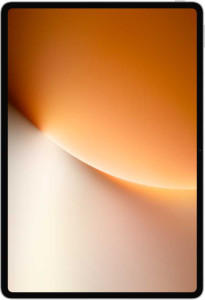
Honor MagicPad 3 Pro
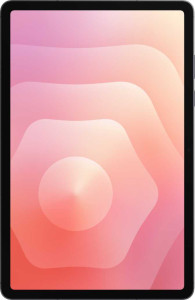
Samsung Galaxy Tab S11

Honor MagicPad 3 Pro Samsung Galaxy Tab S11

Overview

Welcome to our in-depth spec comparison between the Honor MagicPad 3 Pro and the Samsung Galaxy Tab S11. These two tablets take notably different approaches to the premium Android experience, diverging across key areas such as display technology, battery capacity, and connectivity. Whether you prioritize sheer screen real estate or a compact, feature-rich portable package, this breakdown will help you make an informed decision.

Common Features

  • Neither product includes a detachable keyboard.
  • Neither product includes a backlit keyboard.
  • Neither product supports tilt sensitivity.
  • Both products have a touch screen.
  • Neither product features branded damage-resistant glass.
  • Neither product has a sapphire glass display.
  • Neither product supports Dolby Vision.
  • Neither product has an e-paper display.
  • Both products share 512GB of internal storage.
  • Both products use a 3 nm semiconductor process.
  • Both products support 64-bit processing.
  • Both products have integrated LTE.
  • Both products use big.LITTLE CPU technology.
  • Both products have integrated graphics.
  • Both products feature 8 CPU threads.
  • Both products support a maximum of 24GB of memory.
  • Both products record main camera video at 2160x30 fps.
  • Both products include a flash.
  • Both products have a front camera.
  • Both products have a built-in HDR mode.
  • Neither product can create panoramas in-camera.
  • Both products support touch autofocus.
  • Both products offer 0x optical zoom.
  • Both products support manual white balance.
  • Neither product supports LDAC.
  • Neither product supports aptX Low Latency.
  • Neither product supports aptX Lossless.
  • Both products feature stereo speakers.
  • Neither product has a 3.5mm audio jack.
  • Neither product includes a radio.
  • Both products support fast charging.
  • Neither product supports wireless charging.
  • Both products have a battery level indicator.
  • Both products have a rechargeable battery.
  • Neither product has a removable battery.
  • Neither product has Mail Privacy Protection.
  • Both products support on-device machine learning.
  • Both products provide clipboard warnings.
  • Both products include location privacy options.
  • Both products offer camera and microphone privacy options.
  • Both products can block app tracking.
  • Neither product blocks cross-site tracking.
  • Both products support split screen.
  • Both products use DDR5 memory.
  • Both products use multithreading.

Main Differences

  • Weight is 595g on Honor MagicPad 3 Pro and 471g on Samsung Galaxy Tab S11.
  • Thickness is 5.8mm on Honor MagicPad 3 Pro and 5.5mm on Samsung Galaxy Tab S11.
  • Width is 293.9mm on Honor MagicPad 3 Pro and 253.8mm on Samsung Galaxy Tab S11.
  • Height is 201.4mm on Honor MagicPad 3 Pro and 165.3mm on Samsung Galaxy Tab S11.
  • Volume is 343.31 cm³ on Honor MagicPad 3 Pro and 230.74 cm³ on Samsung Galaxy Tab S11.
  • A stylus is included with Samsung Galaxy Tab S11 but not with Honor MagicPad 3 Pro.
  • Water resistance is present on Samsung Galaxy Tab S11 but Honor MagicPad 3 Pro has none.
  • Screen size is 13.3″ on Honor MagicPad 3 Pro and 11″ on Samsung Galaxy Tab S11.
  • Resolution is 3200x2136px on Honor MagicPad 3 Pro and 2560x1600px on Samsung Galaxy Tab S11.
  • Pixel density is 289 ppi on Honor MagicPad 3 Pro and 274 ppi on Samsung Galaxy Tab S11.
  • The display type is IPS LCD on Honor MagicPad 3 Pro and OLED/AMOLED on Samsung Galaxy Tab S11.
  • Refresh rate is 165Hz on Honor MagicPad 3 Pro and 120Hz on Samsung Galaxy Tab S11.
  • An anti-reflection coating is present on Samsung Galaxy Tab S11 but not on Honor MagicPad 3 Pro.
  • HDR10 support is available on Samsung Galaxy Tab S11 but not on Honor MagicPad 3 Pro.
  • HDR10+ support is available on Samsung Galaxy Tab S11 but not on Honor MagicPad 3 Pro.
  • RAM is 16GB on Honor MagicPad 3 Pro and 12GB on Samsung Galaxy Tab S11.
  • The chipset is Qualcomm Snapdragon 8 Gen 3 on Honor MagicPad 3 Pro and MediaTek Dimensity 9400 Plus on Samsung Galaxy Tab S11.
  • The GPU is Adreno 830 on Honor MagicPad 3 Pro and Immortalis G925 on Samsung Galaxy Tab S11.
  • CPU speed is 2x4.6 & 6x3.62 GHz on Honor MagicPad 3 Pro and 1x3.73 & 4x3.3 & 3x2.4 GHz on Samsung Galaxy Tab S11.
  • Geekbench 6 multi-core score is 10059 on Honor MagicPad 3 Pro and 8969 on Samsung Galaxy Tab S11.
  • Geekbench 6 single-core score is 3234 on Honor MagicPad 3 Pro and 2874 on Samsung Galaxy Tab S11.
  • An external memory slot is available on Samsung Galaxy Tab S11 but not on Honor MagicPad 3 Pro.
  • GPU clock speed is 1200 MHz on Honor MagicPad 3 Pro and 1300 MHz on Samsung Galaxy Tab S11.
  • ECC memory support is present on Honor MagicPad 3 Pro but not on Samsung Galaxy Tab S11.
  • RAM speed is 5300 MHz on Honor MagicPad 3 Pro and 10667 MHz on Samsung Galaxy Tab S11.
  • L3 cache is 8MB on Honor MagicPad 3 Pro and 12MB on Samsung Galaxy Tab S11.
  • Maximum memory bandwidth is 85.1 GB/s on Honor MagicPad 3 Pro and 85.3 GB/s on Samsung Galaxy Tab S11.
  • The main camera is 13MP & 2MP on Honor MagicPad 3 Pro and 13MP on Samsung Galaxy Tab S11.
  • Slow-motion video recording is supported on Samsung Galaxy Tab S11 but not on Honor MagicPad 3 Pro.
  • aptX support is present on Honor MagicPad 3 Pro but not on Samsung Galaxy Tab S11.
  • aptX HD support is present on Honor MagicPad 3 Pro but not on Samsung Galaxy Tab S11.
  • aptX Adaptive support is present on Honor MagicPad 3 Pro but not on Samsung Galaxy Tab S11.
  • Battery capacity is 12450 mAh on Honor MagicPad 3 Pro and 8400 mAh on Samsung Galaxy Tab S11.
  • Wi-Fi 7 (802.11be) support is present on Honor MagicPad 3 Pro while Samsung Galaxy Tab S11 supports Wi-Fi 6E (802.11ax) instead.
  • A cellular module is included in Samsung Galaxy Tab S11 but not in Honor MagicPad 3 Pro.
  • 5G support is available on Samsung Galaxy Tab S11 but not on Honor MagicPad 3 Pro.
  • GPS is available on Samsung Galaxy Tab S11 but not on Honor MagicPad 3 Pro.
  • A fingerprint scanner is present on Samsung Galaxy Tab S11 but not on Honor MagicPad 3 Pro.
  • Bluetooth version is 6 on Honor MagicPad 3 Pro and 5.4 on Samsung Galaxy Tab S11.
  • Download speed is 10000 Mbit/s on Honor MagicPad 3 Pro and 7300 Mbit/s on Samsung Galaxy Tab S11.
  • A compass is available on Samsung Galaxy Tab S11 but not on Honor MagicPad 3 Pro.
  • Galileo navigation support is present on Samsung Galaxy Tab S11 but not on Honor MagicPad 3 Pro.
Specs Comparison
Honor MagicPad 3 Pro

Honor MagicPad 3 Pro

Samsung Galaxy Tab S11

Samsung Galaxy Tab S11

Design:
weight 595 g 471 g
thickness 5.8 mm 5.5 mm
width 293.9 mm 253.8 mm
height 201.4 mm 165.3 mm
volume 343.310468 cm³ 230.74227 cm³
Stylus included
Has a detachable keyboard
Has a backlit keyboard
water resistance None Waterproof
Has tilt sensitivity

The most immediate difference between these two tablets is sheer size and weight. The Honor MagicPad 3 Pro is a noticeably larger device — 293.9 × 201.4 mm versus the Galaxy Tab S11's 253.8 × 165.3 mm — resulting in a volume roughly 49% greater than Samsung's offering. Paired with a weight of 595 g against the Tab S11's 471 g, that 124-gram gap is very tangible during extended handheld use: the MagicPad starts to fatigue the wrists considerably faster, making the Tab S11 the more comfortable one-handed or lap-held companion. Both are remarkably thin at 5.8 mm and 5.5 mm respectively, so neither stands out for slimness.

Beyond form factor, two spec-level differentiators strongly favor the Galaxy Tab S11. First, it ships with a stylus included — a meaningful cost and convenience advantage, since Honor MagicPad 3 Pro buyers who want pen input must source and purchase one separately. Second, the Tab S11 carries waterproof protection, while the MagicPad 3 Pro has no water resistance at all. For users who work near liquids, take their tablet outdoors, or simply want peace of mind against spills, this is a significant real-world safety net that the Honor cannot match.

Overall, the Samsung Galaxy Tab S11 holds a clear edge in this design category. It is lighter, more compact, better protected against water damage, and bundles a stylus out of the box. The MagicPad 3 Pro's larger footprint may suit users who specifically want a bigger canvas, but on portability, durability, and included accessories, Samsung wins decisively based on these specs alone.

Display:
screen size 13.3" 11"
resolution 3200 x 2136 px 2560 x 1600 px
pixel density 289 ppi 274 ppi
Display type IPS, LCD OLED/AMOLED
refresh rate 165Hz 120Hz
has branded damage-resistant glass
has anti-reflection coating
supports HDR10
has a touch screen
Has sapphire glass display
supports HDR10+
supports Dolby Vision
Has an e-paper display

Screen technology is where these two tablets diverge most sharply. The Galaxy Tab S11 uses an AMOLED panel, which delivers true blacks, higher contrast, and more vibrant colors than the MagicPad 3 Pro's IPS LCD — a fundamental panel-type advantage that no spec tweak can fully offset. Samsung compounds this with anti-reflection coating and support for both HDR10 and HDR10+, meaning it handles bright environments better and renders high-dynamic-range content with greater fidelity. For media consumption, creative work, or any use in varied lighting conditions, the Tab S11's display technology is qualitatively superior.

The MagicPad 3 Pro pushes back hard on raw numbers, however. Its 13.3″ screen dwarfs the Tab S11's 11″, giving it a significantly larger canvas — a genuine advantage for multitasking, document editing, or split-screen workflows. Its resolution of 3200 × 2136 px also outpaces the Tab S11's 2560 × 1600 px, and despite the larger panel, pixel density remains competitive at 289 ppi versus 274 ppi — both comfortably sharp in everyday use. The MagicPad also pulls ahead on refresh rate at 165Hz versus 120Hz, which translates to noticeably smoother scrolling and more responsive stylus input.

This is ultimately a clash of quality versus scale. The Galaxy Tab S11 wins on display quality — richer colors, deeper contrast, glare resistance, and HDR support make it the better screen for watching content or working in diverse environments. The MagicPad 3 Pro wins on display size and motion smoothness. Users who prioritize immersive visuals and portability should lean toward the Tab S11; those who need a larger workspace and smoother screen motion will find the MagicPad more compelling. On balance, given how significantly panel technology affects everyday visual experience, the Samsung Galaxy Tab S11 holds the narrower overall edge in display quality.

Performance:
internal storage 512GB 512GB
RAM 16GB 12GB
Chipset (SoC) name Qualcomm Snapdragon 8 Gen 3 MediaTek Dimensity 9400 Plus
GPU name Adreno 830 Immortalis G925
CPU speed 2 x 4.6 & 6 x 3.62 GHz 1 x 3.73 & 4 x 3.3 & 3 x 2.4 GHz
Geekbench 6 result (multi) 10059 8969
Geekbench 6 result (single) 3234 2874
has an external memory slot
semiconductor size 3 nm 3 nm
Supports 64-bit
Has integrated LTE
Uses big.LITTLE technology
Has integrated graphics
GPU clock speed 1200 MHz 1300 MHz
CPU threads 8 threads 8 threads
Supports ECC memory
RAM speed 5300 MHz 10667 MHz
maximum memory amount 24GB 24GB
Uses HMP
L3 cache 8 MB 12 MB
maximum memory bandwidth 85.1 GB/s 85.3 GB/s

Both tablets are built on 3nm chips and deliver flagship-tier performance, but the Honor MagicPad 3 Pro holds a measurable CPU advantage. Its Snapdragon 8 Gen 3 scores 10,059 in Geekbench 6 multi-core and 3,234 single-core, compared to the Galaxy Tab S11's Dimensity 9400 Plus at 8,969 and 2,874 respectively. That roughly 12% multi-core and 12% single-core gap is consistent enough to show up in real sustained workloads — faster app launches, snappier heavy multitasking, and more headroom for demanding tasks. The MagicPad also ships with 16 GB of RAM versus the Tab S11's 12 GB, a difference that directly benefits users running many apps simultaneously or working with large files.

The Galaxy Tab S11 punches back in memory architecture. Its RAM runs at a significantly faster 10,667 MHz compared to the MagicPad's 5,300 MHz, and it carries a larger 12 MB L3 cache versus 8 MB. These factors help the Dimensity chip keep latency low and sustain throughput in cache-sensitive workloads. Raw memory bandwidth is essentially a wash at 85.3 GB/s versus 85.1 GB/s. The Tab S11 also uniquely offers an external memory slot, a practical advantage for users who need expandable storage beyond the 512 GB built-in. Conversely, the MagicPad supports ECC memory, which adds error-correction useful in productivity-critical or data-sensitive contexts.

On balance, the MagicPad 3 Pro holds the clearer overall performance edge — its benchmark lead is consistent across both single- and multi-core tests, and its larger RAM pool gives it more breathing room for intensive use. The Tab S11's faster RAM speed and bigger cache partially close the gap, but cannot overturn the CPU deficit. The expandable storage slot gives Samsung a meaningful practical bonus, but in terms of raw processing power, Honor leads this round.

Cameras:
megapixels (main camera) 13 & 2 MP 13 MP
video recording (main camera) 2160 x 30 fps 2160 x 30 fps
has a flash
has a front camera
has a built-in HDR mode
can create panoramas in-camera
supports slow-motion video recording
has touch autofocus
optical zoom 0x 0x
has manual white balance
has a CMOS sensor
has continuous autofocus when recording movies
supports Dolby Vision recording
Has a front-facing LED flash
number of flash LEDs 1 1
has manual ISO
has a video light
Shoots 360° panorama
has a serial shot mode
has built-in optical image stabilization
has 3D photo/video recording capabilities
Has a dual-tone LED flash
has manual focus
Has a RGB LED flash
has manual exposure
has manual shutter speed

Tablet cameras are rarely a primary purchase driver, and this comparison does little to change that narrative — these two devices are remarkably similar on paper. Both shoot 13 MP stills and cap out at 4K 30fps video, share the same manual controls (ISO, white balance, exposure, focus), and are equally missing optical image stabilization or optical zoom. For casual note-taking snapshots, document scanning, or video calls, either tablet will perform comparably.

Two small but meaningful differences separate them. The MagicPad 3 Pro adds a secondary 2 MP depth sensor alongside its main camera, which can assist with subject separation in portrait-style shots. The Galaxy Tab S11, meanwhile, supports slow-motion video recording — a feature entirely absent on the MagicPad. For users who occasionally capture movement or want creative video flexibility, slow-motion is the more broadly useful differentiator of the two.

Neither tablet distinguishes itself as a serious imaging device, and the gap between them is narrow. The Tab S11's slow-motion capability edges out the MagicPad's depth sensor in practical versatility, giving Samsung a very slight advantage in this category. That said, users buying either device for its camera would be setting low expectations regardless — this is effectively a tie with a minor nod to the Galaxy Tab S11.

Audio:
has aptX
has aptX HD
has LDAC
has aptX Low Latency
has aptX Adaptive
has aptX Lossless
has stereo speakers
has a socket for a 3.5 mm audio jack
Has a radio

Wired audio is off the table for both tablets — neither offers a 3.5mm headphone jack, so wireless is the only path to personal listening. That makes Bluetooth codec support a meaningful differentiator, and here the Honor MagicPad 3 Pro pulls decisively ahead. It supports aptX, aptX HD, and aptX Adaptive, while the Galaxy Tab S11 supports none of these — leaving it reliant on standard SBC or AAC for wireless audio.

In practice, this matters most to users with compatible Qualcomm-based wireless headphones or earbuds. aptX HD enables higher-bitrate audio transmission for noticeably cleaner sound, and aptX Adaptive goes further by dynamically adjusting bitrate based on connection conditions — reducing dropout artifacts and latency simultaneously. The Tab S11 offers no equivalent, meaning wireless audio quality is inherently capped at a lower ceiling regardless of how premium the headphones paired with it are.

Both tablets share stereo speakers for built-in playback, so neither has an edge there. But for anyone who listens through wireless headphones — which is the only personal audio option given the missing jack — the MagicPad 3 Pro's codec support is a clear and unambiguous advantage. The Honor MagicPad 3 Pro wins this category outright.

Battery:
battery power 12450 mAh 8400 mAh
Supports fast charging
has wireless charging
has a battery level indicator
has a rechargeable battery
has a removable battery

Battery capacity is one of the starkest gaps in this entire comparison. The Honor MagicPad 3 Pro packs a 12,450 mAh cell — nearly 48% larger than the Galaxy Tab S11's 8,400 mAh. Raw mAh doesn't translate linearly to screen-on time since the MagicPad also drives a larger, higher-refresh display, but the sheer size of that capacity buffer means it will sustain longer sessions before needing a charge in virtually any usage scenario. For users who work away from a power source for extended periods, this difference is practically significant.

Where the specs converge, neither tablet gains an edge: both support fast charging, neither offers wireless charging, and both have non-removable batteries. The parity on fast charging is worth noting — it means the MagicPad's larger battery doesn't necessarily translate to longer charge times if wattage is comparable, though the provided specs don't specify charging wattage for either device.

The Honor MagicPad 3 Pro wins this category clearly and without caveat. A ~4,000 mAh advantage is too large to be negated by any display or software efficiency difference, and with identical charging feature sets, there is no trade-off to weigh against it. Users who prioritize all-day or multi-day battery endurance will find the MagicPad decisively better suited to that need.

Connectivity & Features:
release date October 2025 September 2025
Wi-Fi version Wi-Fi 4 (802.11n), Wi-Fi 6 (802.11ax), Wi-Fi 5 (802.11ac), Wi-Fi 7 (802.11be) Wi-Fi 4 (802.11n), Wi-Fi 6E (802.11ax), Wi-Fi 6 (802.11ax), Wi-Fi 5 (802.11ac)
has Mail Privacy Protection
has on-device machine learning
has clipboard warnings
has location privacy options
has camera/microphone privacy options
can block app tracking
blocks cross-site tracking
supports split screen
has Live Text
has notification permissions
has full-page screenshots
has Quick Start
has theme customization
has Wi-Fi password sharing
has PiP
Can play games while they download
has an extra dim mode
can offload apps
has focus modes
has media picker
has dynamic theming
has dark mode
has battery health check
Has USB Type-C
has a cellular module
has 5G support
is a multi-user system
gets direct OS updates
has GPS
has a child lock
has an HDMI output
has NFC
Has a fingerprint scanner
USB version 3.2 3.2
Supports widgets
Bluetooth version 6 5.4
download speed 10000 MBits/s 7300 MBits/s
has a gyroscope
Is free and open source
Has offline voice recognition
has a compass
supports Wi-Fi
Has sharing intents
Has customizable notifications
Uses 3D facial recognition
supports Galileo
Has a barometer
has an accelerometer
has voice commands
Has an iris scanner
Has a built-in projector
supports Ethernet
Has an infrared sensor
Tracks the current position of a mobile device

Wireless connectivity is a tale of two philosophies. The MagicPad 3 Pro supports Wi-Fi 7 and Bluetooth 6 — the latest generations of both standards — enabling theoretical download speeds up to 10,000 Mbits/s and improved wireless stability and efficiency over short range. The Galaxy Tab S11 counters with Wi-Fi 6E rather than Wi-Fi 7, and Bluetooth 5.4, reaching up to 7,300 Mbits/s. In real-world home or office environments, neither figure is a bottleneck today, but the MagicPad is more future-proofed as Wi-Fi 7 routers become mainstream.

Away from a router, however, the Tab S11 holds a decisive structural advantage: it includes a cellular module with 5G support, while the MagicPad 3 Pro is Wi-Fi only. For users who need connectivity on the move — commuting, traveling, or working from locations without trusted Wi-Fi — this alone can be a deal-breaker. Samsung further extends its location and navigation capabilities with built-in GPS, a compass, and support for the Galileo satellite system, none of which are present on the MagicPad. The Tab S11 also adds a fingerprint scanner for biometric security, a convenience the MagicPad lacks entirely.

Despite sharing a long list of software features — split screen, widgets, dark mode, privacy controls, and offline voice recognition among them — the meaningful hardware gaps give the Galaxy Tab S11 the edge in this category. Cellular connectivity, GPS, and a fingerprint scanner are practical, everyday-use advantages that the MagicPad's Wi-Fi 7 and Bluetooth 6 upgrades cannot fully offset for most users. Those who stay exclusively on Wi-Fi may find the MagicPad's faster wireless specs appealing, but for versatility in the real world, Samsung wins here.
Miscellaneous:
DDR memory version 5 5
uses multithreading

This is as close as a spec group gets: both the Honor MagicPad 3 Pro and the Galaxy Tab S11 are identical across every available data point here. Both run DDR5 memory and both utilize multithreading — meaning their processors can handle multiple execution threads simultaneously, improving responsiveness under parallel workloads like background app processing or complex rendering tasks.

DDR5 is the current flagship memory standard, offering higher bandwidth and improved power efficiency over DDR4, so both tablets benefit equally from that foundation. There is simply no differentiator to analyze in this group — this is a complete tie, and the decision between these two devices must rest entirely on the other specification categories.

Comparison Summary & Verdict

After examining every specification, it becomes clear that both tablets serve distinct audiences. The Honor MagicPad 3 Pro stands out with its larger 13.3″ 165Hz IPS display, a substantially bigger 12450 mAh battery, stronger Geekbench multi-core performance, and superior aptX audio codec support — making it ideal for productivity-focused users and media consumers who rarely leave their desk. The Samsung Galaxy Tab S11, on the other hand, counters with a vibrant OLED/AMOLED screen with HDR10+ and anti-reflection coating, a bundled stylus, full 5G and GPS connectivity, water resistance, and a more portable form factor — making it the stronger companion for mobile professionals and on-the-go creatives.

Honor MagicPad 3 Pro
Buy Honor MagicPad 3 Pro if...

Buy the Honor MagicPad 3 Pro if you want a large 13.3″ high-refresh display, a massive long-lasting battery, and top-tier Geekbench performance for demanding desktop-style use.

Samsung Galaxy Tab S11
Buy Samsung Galaxy Tab S11 if...

Buy the Samsung Galaxy Tab S11 if you need a portable tablet with an OLED display, built-in stylus, 5G connectivity, water resistance, and GPS for an active, on-the-go lifestyle.