Honor MagicPad 3
Honor Pad 10

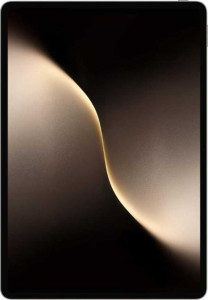
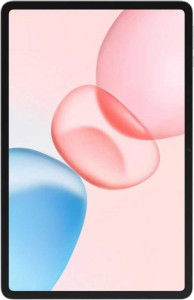
Honor MagicPad 3 Honor Pad 10

Overview

When choosing between the Honor MagicPad 3 and the Honor Pad 10, you are looking at two Android tablets that share a common foundation but diverge sharply in key areas. This comparison puts both devices head-to-head across critical battlegrounds including display quality and refresh rate, raw processing power, battery capacity, and connectivity options, helping you determine which tablet truly fits your needs and budget.

Common Features

  • Neither product includes a stylus.
  • Neither product has a detachable keyboard.
  • Neither product has a backlit keyboard.
  • Neither product offers water resistance.
  • Neither product has tilt sensitivity.
  • Neither product has branded damage-resistant glass.
  • Neither product has an anti-reflection coating.
  • Both products have a touchscreen.
  • Neither product has a sapphire glass display.
  • Neither product supports HDR10+.
  • Neither product supports Dolby Vision.
  • Neither product has an e-paper display.
  • Both products use a 4 nm semiconductor size.
  • Both products support 64-bit processing.
  • Both products use big.LITTLE technology.
  • Both products support DirectX 12.
  • Both products have integrated graphics.
  • Both products have TrustZone.
  • Both products run Android 15.
  • Both products have a front camera.
  • Both products have a built-in HDR mode.
  • Neither product can create panoramas in-camera.
  • Both products have touch autofocus.
  • Neither product has a BSI sensor.
  • Both products have manual white balance.
  • Both products have a CMOS sensor.
  • Both products support aptX.
  • Neither product supports LDAC.
  • Neither product supports aptX Low Latency.
  • Neither product supports aptX Lossless.
  • Both products have stereo speakers.
  • Neither product has a 3.5 mm audio jack.
  • Neither product has a radio.
  • Both products support fast charging.
  • Neither product supports wireless charging.
  • Both products have a battery level indicator.
  • Both products have a rechargeable battery.
  • Neither product has a removable battery.
  • Neither product has Mail Privacy Protection.
  • Both products have on-device machine learning.
  • Both products have clipboard warnings.
  • Both products have location privacy options.
  • Both products have camera and microphone privacy options.
  • Both products can block app tracking.
  • Neither product blocks cross-site tracking.
  • Both products support split screen.
  • Both products use DDR5 memory.
  • Both products use multithreading.
  • Both products have integrated LTE.

Main Differences

  • Weight is 595 g on Honor MagicPad 3 and 525 g on Honor Pad 10.
  • Thickness is 5.8 mm on Honor MagicPad 3 and 6.3 mm on Honor Pad 10.
  • Width is 293.9 mm on Honor MagicPad 3 and 277.1 mm on Honor Pad 10.
  • Height is 201.4 mm on Honor MagicPad 3 and 179.3 mm on Honor Pad 10.
  • Volume is 343.31 cm³ on Honor MagicPad 3 and 313.01 cm³ on Honor Pad 10.
  • Screen size is 13.3″ on Honor MagicPad 3 and 12.1″ on Honor Pad 10.
  • Resolution is 3200 x 2136 px on Honor MagicPad 3 and 2560 x 1600 px on Honor Pad 10.
  • Pixel density is 289 ppi on Honor MagicPad 3 and 249 ppi on Honor Pad 10.
  • Refresh rate is 165 Hz on Honor MagicPad 3 and 120 Hz on Honor Pad 10.
  • HDR10 support is present on Honor Pad 10 but not available on Honor MagicPad 3.
  • Internal storage is 1024 GB on Honor MagicPad 3 and 256 GB on Honor Pad 10.
  • RAM is 16 GB on Honor MagicPad 3 and 8 GB on Honor Pad 10.
  • The chipset is Qualcomm Snapdragon 8 Gen 3 on Honor MagicPad 3 and Qualcomm Snapdragon 7 Gen 3 on Honor Pad 10.
  • The GPU is Adreno 750 on Honor MagicPad 3 and Adreno 720 on Honor Pad 10.
  • CPU speed is 3 x 3.15 & 2 x 2.96 & 2 x 2.26 & 1 x 3.3 GHz on Honor MagicPad 3 and 8 x 2.13 GHz on Honor Pad 10.
  • GPU clock speed is 900 MHz on Honor MagicPad 3 and 950 MHz on Honor Pad 10.
  • RAM speed is 4800 MHz on Honor MagicPad 3 and 3200 MHz on Honor Pad 10.
  • Maximum memory amount is 24 GB on Honor MagicPad 3 and 16 GB on Honor Pad 10.
  • Thermal Design Power is 12.5 W on Honor MagicPad 3 and 6 W on Honor Pad 10.
  • Maximum memory bandwidth is 76.6 GB/s on Honor MagicPad 3 and 25.6 GB/s on Honor Pad 10.
  • Main camera resolution is 13 & 2 MP on Honor MagicPad 3 and 8 MP on Honor Pad 10.
  • Front camera resolution is 9 MP on Honor MagicPad 3 and 8 MP on Honor Pad 10.
  • A flash is present on Honor MagicPad 3 but not available on Honor Pad 10.
  • Slow-motion video recording is supported on Honor Pad 10 but not on Honor MagicPad 3.
  • A video light is present on Honor MagicPad 3 but not available on Honor Pad 10.
  • aptX HD support is present on Honor MagicPad 3 but not available on Honor Pad 10.
  • aptX Adaptive support is present on Honor MagicPad 3 but not available on Honor Pad 10.
  • Battery capacity is 12450 mAh on Honor MagicPad 3 and 10100 mAh on Honor Pad 10.
  • Honor MagicPad 3 supports Wi-Fi 7 (802.11be) in addition to Wi-Fi 4, 5, and 6, while Honor Pad 10 supports only Wi-Fi 4, 5, and 6.
  • A cellular module is present on Honor Pad 10 but not available on Honor MagicPad 3.
  • USB version is 3.2 on Honor MagicPad 3 and 2.0 on Honor Pad 10.
  • Bluetooth version is 5.4 on Honor MagicPad 3 and 5.3 on Honor Pad 10.
  • Download speed is 10000 Mbits/s on Honor MagicPad 3 and 5000 Mbits/s on Honor Pad 10.
  • Upload speed is 3500 Mbits/s on Honor MagicPad 3 and 160 Mbits/s on Honor Pad 10.
  • A gyroscope is present on Honor MagicPad 3 but not available on Honor Pad 10.
Specs Comparison
Honor MagicPad 3

Honor MagicPad 3

Honor Pad 10

Honor Pad 10

Design:
weight 595 g 525 g
thickness 5.8 mm 6.3 mm
width 293.9 mm 277.1 mm
height 201.4 mm 179.3 mm
volume 343.310468 cm³ 313.009389 cm³
Stylus included
Has a detachable keyboard
Has a backlit keyboard
water resistance None None
Has tilt sensitivity

The most immediate real-world difference between these two tablets is size and weight. The Honor MagicPad 3 is noticeably larger, measuring 293.9 × 201.4 mm with a volume of 343.3 cm³, while the Honor Pad 10 is more compact at 277.1 × 179.3 mm and 313.0 cm³. That size gap translates directly to how each device feels in daily use: the Pad 10 is easier to hold one-handed, slips more naturally into a bag, and is less fatiguing during extended reading or browsing sessions.

Weight reinforces this distinction. At 525 g, the Pad 10 is 70 g lighter than the MagicPad 3's 595 g — roughly the weight of a large egg. Over a long commute or a multi-hour session on the couch, that difference becomes genuinely noticeable in hand and wrist fatigue. The MagicPad 3 does counter with a slimmer profile at 5.8 mm versus the Pad 10's 6.3 mm, which gives it a more premium, svelte feel when held or laid flat, even if it weighs more overall.

On accessory support, both tablets are identical: no stylus, no detachable or backlit keyboard, and no water resistance. Neither product offers any design edge in terms of ecosystem accessories or durability ratings. Overall, the Honor Pad 10 holds a clear portability advantage — it is lighter and more compact — while the MagicPad 3's only design win is its thinner chassis, which may appeal to users prioritizing a sleek profile over ease of handling.

Display:
screen size 13.3" 12.1"
resolution 3200 x 2136 px 2560 x 1600 px
pixel density 289 ppi 249 ppi
Display type IPS, LCD LCD, IPS
refresh rate 165Hz 120Hz
has branded damage-resistant glass
has anti-reflection coating
supports HDR10
has a touch screen
Has sapphire glass display
supports HDR10+
supports Dolby Vision
Has an e-paper display

Screen real estate and sharpness are where the Honor MagicPad 3 pulls ahead most convincingly. Its 13.3″ panel at 3200 × 2136 px yields a pixel density of 289 ppi, compared to the Pad 10's 12.1″ screen at 2560 × 1600 px and 249 ppi. In practice, that 40 ppi gap is perceptible — text renders crisper, fine UI elements are sharper, and detailed images benefit from the higher pixel count, which matters especially on a larger canvas where individual pixels are easier to notice.

Refresh rate tells a similar story in favor of the MagicPad 3. Its 165Hz panel versus the Pad 10's 120Hz means scrolling, animations, and stylus input (if supported) all appear measurably smoother. For productivity and casual use, 120Hz is already excellent, but the higher ceiling of 165Hz gives the MagicPad 3 a tangible edge for users sensitive to motion fluidity or who use the tablet for gaming. The Pad 10 counters with HDR10 support, which the MagicPad 3 lacks — meaning the Pad 10 can display a wider luminance range when streaming compatible content, producing deeper blacks and brighter highlights in HDR video.

Both panels are IPS LCD type, so neither offers the contrast or color saturation of OLED, and both lack anti-reflection coating or damage-resistant glass. On balance, the MagicPad 3 holds the stronger display advantage — its larger, sharper, and faster screen wins for most use cases — though users who prioritize HDR video streaming will find the Pad 10's HDR10 certification a meaningful trade-off.

Performance:
internal storage 1024GB 256GB
RAM 16GB 8GB
Chipset (SoC) name Qualcomm Snapdragon 8 Gen 3 Qualcomm SM7550-AB Snapdragon 7 Gen 3
GPU name Adreno 750 Adreno 720
CPU speed 3 x 3.15 & 2 x 2.96 & 2 x 2.26 & 1 x 3.3 GHz 8 x 2.13 GHz
semiconductor size 4 nm 4 nm
Supports 64-bit
Has integrated LTE
Uses big.LITTLE technology
DirectX version DirectX 12 DirectX 12
Has integrated graphics
GPU clock speed 900 MHz 950 MHz
RAM speed 4800 MHz 3200 MHz
Has TrustZone
maximum memory amount 24GB 16GB
Android version Android 15 Android 15
Thermal Design Power (TDP) 12.5W 6W
maximum memory bandwidth 76.6 GB/s 25.6 GB/s
OpenGL ES version 3.2 3.2

The chipset gap here is substantial. The Honor MagicPad 3 runs on a Snapdragon 8 Gen 3 — Qualcomm's flagship-tier SoC — while the Honor Pad 10 uses the mid-range Snapdragon 7 Gen 3. Both are fabbed on a 4 nm process, but the architectural differences are significant in practice: the 8 Gen 3 features a heterogeneous core cluster with a prime core reaching 3.3 GHz, delivering considerably higher peak CPU throughput for demanding workloads like video editing, large file exports, or intensive multitasking. The Pad 10's eight cores are all clocked at a uniform 2.13 GHz, a simpler configuration that prioritizes efficiency over burst performance.

Memory bandwidth is where the performance divide becomes starker. The MagicPad 3's 76.6 GB/s maximum bandwidth — nearly three times the Pad 10's 25.6 GB/s — means the GPU and CPU can feed data far faster, which directly benefits high-resolution gaming, parallel processing tasks, and the tablet's ability to sustain performance under load. Paired with 16 GB of RAM at 4800 MHz (versus 8 GB at 3200 MHz) and up to 1 TB of storage compared to 256 GB, the MagicPad 3 is in an entirely different league for users who keep many apps open simultaneously or work with large media files.

The Pad 10 does have one nuanced edge: its 6W TDP versus the MagicPad 3's 12.5W means it generates less heat and likely sustains performance more consistently in thermally constrained conditions, which can be relevant during prolonged use. That said, for raw performance across every measurable dimension — compute, memory, storage, and headroom — the MagicPad 3 wins this category decisively. The Pad 10 is a capable mid-range performer, but it is not in contention with a flagship SoC.

Cameras:
megapixels (main camera) 13 & 2 MP 8 MP
megapixels (front camera) 9MP 8MP
has a flash
has a front camera
has a built-in HDR mode
can create panoramas in-camera
supports slow-motion video recording
has touch autofocus
optical zoom 0x 0x
has a BSI sensor
has manual white balance
has a CMOS sensor
supports HDR10 recording
has continuous autofocus when recording movies
supports Dolby Vision recording
Has a front-facing LED flash
has manual ISO
has a video light
Shoots 360° panorama
has a serial shot mode
has built-in optical image stabilization
has 3D photo/video recording capabilities
Has a dual-tone LED flash
has manual focus
Has a RGB LED flash
has manual exposure
has manual shutter speed

Tablet cameras are rarely a primary purchase driver, but the differences here are meaningful for document scanning, video calls, and casual shooting. The Honor MagicPad 3 fields a dual rear camera setup — 13 MP + 2 MP — against the Honor Pad 10's single 8 MP rear shooter. The MagicPad 3's higher-resolution main sensor captures more detail in stills, and the secondary 2 MP lens adds at least some depth-sensing capability, giving it a clear hardware advantage at the back.

Two functional differentiators stand out beyond megapixel counts. The MagicPad 3 includes a rear flash and a video light, which the Pad 10 entirely lacks — useful for scanning documents in poor lighting or shooting video in dim environments. The Pad 10, on the other hand, supports slow-motion video recording, a feature absent on the MagicPad 3, which may appeal to users who occasionally capture motion-heavy content. Both tablets share the same manual controls — ISO, white balance, focus, and exposure — and both offer continuous autofocus during video recording, so the shooting experience is otherwise comparable in flexibility.

Front cameras are nearly matched at 9 MP on the MagicPad 3 versus 8 MP on the Pad 10, making video calls essentially equivalent on both devices. Overall, the MagicPad 3 holds the edge in cameras, primarily due to its higher-resolution dual rear system and the practical addition of a flash. The Pad 10's slow-motion capability is a niche win, but it does not offset the broader hardware gap.

Audio:
has aptX
has aptX HD
has LDAC
has aptX Low Latency
has aptX Adaptive
has aptX Lossless
has stereo speakers
has a socket for a 3.5 mm audio jack
Has a radio

Both tablets share stereo speakers and the absence of a 3.5 mm headphone jack, so wired audio listeners are equally constrained on either device. Where they diverge is in Bluetooth audio codec support, which determines the quality ceiling when using wireless headphones. Both support standard aptX, but the Honor MagicPad 3 goes further with aptX HD and aptX Adaptive — codecs the Honor Pad 10 entirely lacks.

That distinction matters for users who own compatible premium headphones. aptX HD enables higher-bitrate transmission for near-lossless wireless audio quality, while aptX Adaptive is the most capable of the three — dynamically adjusting bitrate and latency to balance audio fidelity and connection stability in real time. For media consumption, music listening, or any scenario where wireless audio quality is a priority, the MagicPad 3 offers a meaningfully richer codec ecosystem. The Pad 10, limited to standard aptX, delivers solid but comparatively basic Bluetooth audio.

With no LDAC support on either device and identical speaker configurations, the MagicPad 3 holds a clear audio edge specifically for wireless headphone users with aptX HD or aptX Adaptive-compatible hardware. For those who rely solely on the built-in speakers, the two tablets are evenly matched on paper.

Battery:
battery power 12450 mAh 10100 mAh
Supports fast charging
has wireless charging
has a battery level indicator
has a rechargeable battery
has a removable battery

Raw capacity is the headline here: the Honor MagicPad 3 packs a 12,450 mAh battery against the Honor Pad 10's 10,100 mAh — a gap of roughly 23%. All else being equal, that larger reservoir translates directly into more hours between charges, which is especially relevant on the MagicPad 3 given its larger, higher-resolution, 165Hz display demanding more power. The bigger battery helps offset those added consumption pressures, whereas the Pad 10's smaller cell must sustain a less demanding screen, so real-world endurance may be closer than the raw numbers suggest.

Both tablets support fast charging and share the same structural limitations — no wireless charging and a non-removable battery. That parity means the charging experience and long-term battery serviceability are identical on paper, and neither device offers any convenience advantage over the other in how power is replenished.

On balance, the MagicPad 3 holds the battery capacity advantage, and it is a meaningful one in absolute terms. Whether that translates to noticeably longer screen-on time in practice depends on how its higher-performance chipset and larger display consume that extra headroom, but as a raw reserve, more capacity is always a favorable position to be in for a large-screen tablet used away from a charger.

Connectivity & Features:
release date July 2025 May 2025
Wi-Fi version Wi-Fi 4 (802.11n), Wi-Fi 6 (802.11ax), Wi-Fi 5 (802.11ac), Wi-Fi 7 (802.11be) Wi-Fi 4 (802.11n), Wi-Fi 5 (802.11ac), Wi-Fi 6 (802.11ax)
has Mail Privacy Protection
has on-device machine learning
has clipboard warnings
has location privacy options
has camera/microphone privacy options
can block app tracking
blocks cross-site tracking
supports split screen
has Live Text
has notification permissions
has full-page screenshots
has Quick Start
has theme customization
has Wi-Fi password sharing
has PiP
Can play games while they download
has an extra dim mode
can offload apps
has focus modes
has media picker
has dynamic theming
has dark mode
has battery health check
Has USB Type-C
has a cellular module
has 5G support
is a multi-user system
gets direct OS updates
has a child lock
has an HDMI output
has NFC
Has a fingerprint scanner
USB version 3.2 2
Supports widgets
Bluetooth version 5.4 5.3
download speed 10000 MBits/s 5000 MBits/s
has a gyroscope
Is free and open source
Has offline voice recognition
has a compass
upload speed 3500 MBits/s 160 MBits/s
supports Wi-Fi
Has sharing intents
Has customizable notifications
Uses 3D facial recognition
Has a barometer
has an accelerometer
has voice commands
Has an iris scanner
Has a built-in projector
supports Ethernet
Has an infrared sensor
Tracks the current position of a mobile device

Wireless connectivity is where the Honor MagicPad 3 pulls well ahead. Its support for Wi-Fi 7 (802.11be) — absent on the Honor Pad 10, which tops out at Wi-Fi 6 — means the MagicPad 3 can take advantage of next-generation routers for significantly higher throughput, lower latency, and better performance in congested environments. That advantage is reflected in the stated speeds: the MagicPad 3 reaches up to 10,000 Mbits/s download versus the Pad 10's 5,000 Mbits/s, and the upload gap is even more dramatic — 3,500 Mbits/s against just 160 Mbits/s. For large file transfers, cloud syncing, or streaming at maximum quality, the MagicPad 3 operates on a different tier entirely when paired with compatible network infrastructure.

The USB story follows a similar pattern. The MagicPad 3 uses USB 3.2, while the Pad 10 is limited to USB 2 — a generational gap that means dramatically faster wired data transfers and broader accessory compatibility on the MagicPad 3. One meaningful flip, however: the Pad 10 includes a cellular module, giving it mobile data connectivity that the MagicPad 3 entirely lacks. For users who need internet access away from Wi-Fi without tethering to a phone, that is a significant practical advantage. The MagicPad 3 is Wi-Fi only, which limits its standalone utility on the go.

Rounding out the differences, the MagicPad 3 adds a gyroscope — useful for augmented reality, precise motion-based navigation, and certain games — and edges the Pad 10 on Bluetooth with version 5.4 versus 5.3, a marginal but forward-looking improvement in connection stability. Software feature parity between the two is extensive. Overall, the verdict depends heavily on use case: the MagicPad 3 dominates on wired and wireless data performance, but the Pad 10 is the only option for users who need built-in cellular connectivity.
Miscellaneous:
DDR memory version 5 5
uses multithreading

This group offers no differentiation between the two tablets. Both the Honor MagicPad 3 and the Honor Pad 10 use DDR5 memory and support multithreading — and that is the entirety of the data available here. DDR5 is the current mainstream standard for mobile memory, bringing improved bandwidth efficiency and lower power consumption compared to DDR4, while multithreading support ensures the CPU can handle parallel workloads more effectively across its cores.

Since both specs are identical across both devices, this group is a complete tie — neither product holds any advantage over the other based solely on the provided data.

Comparison Summary & Verdict

After examining every specification, a clear picture emerges for each device. The Honor MagicPad 3 is the stronger performer overall, offering a larger 13.3″ display at 165 Hz, the more powerful Snapdragon 8 Gen 3 chipset, 16 GB of RAM, a massive 1 TB of storage, a larger 12450 mAh battery, Wi-Fi 7 support, USB 3.2, and aptX HD and aptX Adaptive audio — making it the ideal choice for power users, creative professionals, and multimedia enthusiasts. The Honor Pad 10, on the other hand, is a more compact and lighter option with a built-in cellular module, HDR10 support, and a lower thermal footprint, making it well-suited for users who need on-the-go connectivity and a more portable everyday tablet experience without demanding the highest performance tier.

Honor MagicPad 3
Buy Honor MagicPad 3 if...

Buy the Honor MagicPad 3 if you want the best possible performance, a large high-refresh-rate display, superior audio codec support, and ample storage for demanding tasks at home or in the office.

Honor Pad 10
Buy Honor Pad 10 if...

Buy the Honor Pad 10 if you prioritize portability, built-in cellular connectivity for use on the go, and a lighter and more compact form factor for everyday use.