Honor MagicPad 3
Samsung Galaxy Tab S10 FE Plus

Honor MagicPad 3 Samsung Galaxy Tab S10 FE Plus

Overview

Welcome to our in-depth comparison of the Honor MagicPad 3 and the Samsung Galaxy Tab S10 FE Plus, two large-screen Android tablets competing for your attention. While both devices share a similar display footprint and rely on fast-charging battery technology, they take strikingly different approaches to raw performance and connectivity, as well as build features like water resistance and stylus support. Read on as we break down every key specification to help you decide which tablet truly fits your needs.

Common Features

  • Neither product has a detachable keyboard.
  • Neither product has a backlit keyboard.
  • Neither product has tilt sensitivity.
  • Neither product has an anti-reflection coating on the display.
  • HDR10 support is not available on either product.
  • Both products have a touch screen.
  • Neither product has a sapphire glass display.
  • HDR10+ support is not available on either product.
  • Neither product has an e-paper display.
  • Both products use a 4 nm semiconductor.
  • Both products support 64-bit processing.
  • Both products have integrated LTE.
  • Both products use big.LITTLE technology.
  • Both products support OpenGL version 3.2.
  • Both products support DirectX 12.
  • Both products have integrated graphics.
  • Both products have 8 CPU threads.
  • Both products can record video at 2160p 30 fps on the main camera.
  • Both products have a front camera.
  • Both products have a built-in HDR mode.
  • Panorama creation is not available on either product.
  • Slow-motion video recording is not supported on either product.
  • Both products have touch autofocus.
  • Both products support manual white balance.
  • Both products have a CMOS sensor.
  • Both products have stereo speakers.
  • Neither product has a 3.5 mm audio jack.
  • Neither product has a radio.
  • Both products support fast charging.
  • Neither product supports wireless charging.
  • Both products have a battery level indicator.
  • Both products have a rechargeable battery.
  • Neither product has a removable battery.
  • Neither product has Mail Privacy Protection.
  • Both products have on-device machine learning.
  • Both products have clipboard warnings.
  • Both products have location privacy options.
  • Both products have camera and microphone privacy options.
  • Both products can block app tracking.
  • Cross-site tracking blocking is not available on either product.
  • Both products support split screen.
  • Both products use DDR5 memory.
  • Both products use multithreading.

Main Differences

  • Weight is 595 g on Honor MagicPad 3 and 668 g on Samsung Galaxy Tab S10 FE Plus.
  • Thickness is 5.8 mm on Honor MagicPad 3 and 6 mm on Samsung Galaxy Tab S10 FE Plus.
  • Width is 293.9 mm on Honor MagicPad 3 and 300.6 mm on Samsung Galaxy Tab S10 FE Plus.
  • Height is 201.4 mm on Honor MagicPad 3 and 194.7 mm on Samsung Galaxy Tab S10 FE Plus.
  • Volume is 343.31 cm³ on Honor MagicPad 3 and 351.16 cm³ on Samsung Galaxy Tab S10 FE Plus.
  • A stylus is included with Samsung Galaxy Tab S10 FE Plus but not with Honor MagicPad 3.
  • Water resistance is present on Samsung Galaxy Tab S10 FE Plus but Honor MagicPad 3 has none.
  • Screen size is 13.3″ on Honor MagicPad 3 and 13.1″ on Samsung Galaxy Tab S10 FE Plus.
  • Resolution is 3200 x 2136 px on Honor MagicPad 3 and 2880 x 1800 px on Samsung Galaxy Tab S10 FE Plus.
  • Pixel density is 289 ppi on Honor MagicPad 3 and 259 ppi on Samsung Galaxy Tab S10 FE Plus.
  • Display type is IPS LCD on Honor MagicPad 3 and LCD on Samsung Galaxy Tab S10 FE Plus.
  • Refresh rate is 165 Hz on Honor MagicPad 3 and 90 Hz on Samsung Galaxy Tab S10 FE Plus.
  • Branded damage-resistant glass is present on Samsung Galaxy Tab S10 FE Plus but not on Honor MagicPad 3.
  • Internal storage is 1024 GB on Honor MagicPad 3 and 256 GB on Samsung Galaxy Tab S10 FE Plus.
  • RAM is 16 GB on Honor MagicPad 3 and 12 GB on Samsung Galaxy Tab S10 FE Plus.
  • The chipset is Qualcomm Snapdragon 8 Gen 3 on Honor MagicPad 3 and Samsung Exynos 1580 on Samsung Galaxy Tab S10 FE Plus.
  • The GPU is Adreno 750 on Honor MagicPad 3 and Xclipse 530 on Samsung Galaxy Tab S10 FE Plus.
  • Geekbench 6 multi-core score is 7325 on Honor MagicPad 3 and 3893 on Samsung Galaxy Tab S10 FE Plus.
  • Geekbench 6 single-core score is 2213 on Honor MagicPad 3 and 1360 on Samsung Galaxy Tab S10 FE Plus.
  • An external memory slot is available on Samsung Galaxy Tab S10 FE Plus but not on Honor MagicPad 3.
  • GPU clock speed is 900 MHz on Honor MagicPad 3 and 1300 MHz on Samsung Galaxy Tab S10 FE Plus.
  • RAM speed is 4800 MHz on Honor MagicPad 3 and 3200 MHz on Samsung Galaxy Tab S10 FE Plus.
  • Maximum memory amount is 24 GB on Honor MagicPad 3 and 12 GB on Samsung Galaxy Tab S10 FE Plus.
  • L3 cache is 12 MB on Honor MagicPad 3 and 4 MB on Samsung Galaxy Tab S10 FE Plus.
  • Main camera resolution is 13 & 2 MP on Honor MagicPad 3 and 13 MP on Samsung Galaxy Tab S10 FE Plus.
  • Front camera resolution is 9 MP on Honor MagicPad 3 and 12 MP on Samsung Galaxy Tab S10 FE Plus.
  • A flash is present on Honor MagicPad 3 but not on Samsung Galaxy Tab S10 FE Plus.
  • A video light is available on Honor MagicPad 3 but not on Samsung Galaxy Tab S10 FE Plus.
  • Battery capacity is 12450 mAh on Honor MagicPad 3 and 10090 mAh on Samsung Galaxy Tab S10 FE Plus.
  • Wi-Fi 7 (802.11be) is supported on Honor MagicPad 3, while Samsung Galaxy Tab S10 FE Plus supports Wi-Fi 6E (802.11ax) instead.
  • A cellular module is present on Samsung Galaxy Tab S10 FE Plus but not on Honor MagicPad 3.
  • 5G support is available on Samsung Galaxy Tab S10 FE Plus but not on Honor MagicPad 3.
  • NFC is present on Samsung Galaxy Tab S10 FE Plus but not on Honor MagicPad 3.
  • A fingerprint scanner is present on Samsung Galaxy Tab S10 FE Plus but not on Honor MagicPad 3.
  • USB version is 3.2 on Honor MagicPad 3 and 2.0 on Samsung Galaxy Tab S10 FE Plus.
  • Bluetooth version is 5.4 on Honor MagicPad 3 and 5.3 on Samsung Galaxy Tab S10 FE Plus.
  • Download speed is 10000 Mbits/s on Honor MagicPad 3 and 5100 Mbits/s on Samsung Galaxy Tab S10 FE Plus.
  • Upload speed is 3500 Mbits/s on Honor MagicPad 3 and 1280 Mbits/s on Samsung Galaxy Tab S10 FE Plus.
  • A gyroscope is present on Honor MagicPad 3 but not on Samsung Galaxy Tab S10 FE Plus.
Specs Comparison
Honor MagicPad 3

Honor MagicPad 3

Samsung Galaxy Tab S10 FE Plus

Samsung Galaxy Tab S10 FE Plus

Design:
weight 595 g 668 g
thickness 5.8 mm 6 mm
width 293.9 mm 300.6 mm
height 201.4 mm 194.7 mm
volume 343.310468 cm³ 351.16092 cm³
Stylus included
Has a detachable keyboard
Has a backlit keyboard
water resistance None Waterproof
Has tilt sensitivity

In terms of physical form, the Honor MagicPad 3 holds a meaningful advantage in portability. At 595 g versus the Galaxy Tab S10 FE Plus's 668 g, it is 73 grams lighter — a difference that becomes noticeable during extended handheld use or when carrying the tablet in a bag. It is also marginally thinner at 5.8 mm compared to 6 mm, giving it a slightly more premium, svelte feel. The two devices differ in their footprint as well: the MagicPad 3 is taller and wider in a more landscape-oriented frame, while the Tab S10 FE Plus is taller in portrait orientation, which can influence one-handed grip and how content is consumed.

Where Samsung draws a decisive line is in two practical design features. The Galaxy Tab S10 FE Plus ships with a stylus included in the box — a tangible, out-of-the-box value advantage for note-takers, artists, or anyone who works with handwritten input. The Honor MagicPad 3 offers no stylus at all per the provided specs, which means users would need a third-party solution. Even more critically, the Tab S10 FE Plus carries waterproof protection, while the MagicPad 3 has no water resistance whatsoever. In real-world terms, this means the Samsung can survive splashes or brief exposure to water — a meaningful durability edge for those who use their tablet in kitchens, outdoors, or other unpredictable environments.

Both tablets share the same omissions: no detachable keyboard, no backlit keyboard, and no tilt sensitivity, so neither has an edge in those areas. Overall, the MagicPad 3 wins on lightness and slim profile, but the Galaxy Tab S10 FE Plus has the stronger design package thanks to its bundled stylus and waterproofing — features that add practical durability and immediate productivity value without any extra cost.

Display:
screen size 13.3" 13.1"
resolution 3200 x 2136 px 2880 x 1800 px
pixel density 289 ppi 259 ppi
Display type IPS, LCD LCD
refresh rate 165Hz 90Hz
has branded damage-resistant glass
has anti-reflection coating
supports HDR10
has a touch screen
Has sapphire glass display
supports HDR10+
Has an e-paper display

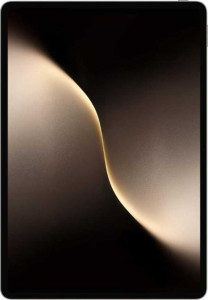
The Honor MagicPad 3 leads on almost every core display metric. Its 3200 x 2136 resolution across a 13.3″ panel results in a pixel density of 289 ppi, noticeably sharper than the Tab S10 FE Plus's 2880 x 1800 at 259 ppi on a 13.1″ screen. That 30 ppi gap is perceptible in everyday use — text edges appear crisper and fine image detail is more defined, which matters especially for reading, document work, or media consumption at close range.

The refresh rate gap is where the MagicPad 3 pulls furthest ahead. At 165Hz versus the Tab S10 FE Plus's 90Hz, scrolling and animations on the Honor feel substantially smoother and more responsive — a difference that is immediately apparent when navigating the UI or using a stylus for handwriting. Both panels are LCD-based, so neither has an inherent contrast or color volume advantage from display technology alone, and neither supports HDR10 or HDR10+, so they are evenly matched on that front.

Samsung's lone display advantage is branded damage-resistant glass, which the MagicPad 3 lacks entirely. For users who prioritize screen longevity against scratches and drops, this is a real-world durability consideration. That said, as a display performance package — sharpness, smoothness, and screen real estate — the MagicPad 3 holds a clear overall edge, with Samsung's glass protection being the only meaningful counterpoint.

Performance:
internal storage 1024GB 256GB
RAM 16GB 12GB
Chipset (SoC) name Qualcomm Snapdragon 8 Gen 3 Samsung Exynos 1580
GPU name Adreno 750 Xclipse 530
CPU speed 3 x 3.15 & 2 x 2.96 & 2 x 2.26 & 1 x 3.3 GHz 1 x 2.9 & 3 x 2.6 & 4 x 1.95 GHz
Geekbench 6 result (multi) 7325 3893
Geekbench 6 result (single) 2213 1360
has an external memory slot
semiconductor size 4 nm 4 nm
Supports 64-bit
Has integrated LTE
Uses big.LITTLE technology
OpenGL version 3.2 3.2
DirectX version DirectX 12 DirectX 12
Has integrated graphics
GPU clock speed 900 MHz 1300 MHz
CPU threads 8 threads 8 threads
RAM speed 4800 MHz 3200 MHz
maximum memory amount 24GB 12GB
Android version Android 15 Android 15
Uses HMP
L3 cache 12 MB 4 MB
maximum memory bandwidth 76.6 GB/s 51.2 GB/s
memory channels 2 4
OpenGL ES version 3.2 3.2
OpenCL version 2 2

The chipset divide here is substantial. The Honor MagicPad 3 runs on the Qualcomm Snapdragon 8 Gen 3, one of the most powerful mobile processors available, while the Galaxy Tab S10 FE Plus uses the Samsung Exynos 1580, a mid-range chip. The Geekbench 6 scores make the gap concrete: the MagicPad 3 posts 2213 single-core and 7325 multi-core, compared to 1360 and 3893 respectively for the Tab S10 FE Plus. In practice, that nearly 2x multi-core advantage translates to faster app launches, smoother multitasking under heavy load, and significantly better sustained performance in demanding tasks like video editing or gaming.

The memory and storage story reinforces this gap. The MagicPad 3 pairs its chipset with 16 GB of RAM at 4800 MHz, a maximum expandable ceiling of 24 GB, and a massive 1 TB of internal storage. The Tab S10 FE Plus offers 12 GB of RAM at 3200 MHz, capped at 12 GB with no upgrade path, and only 256 GB of onboard storage — though it does include a microSD slot for expandable storage, which the MagicPad 3 lacks entirely. For users who rely on local files or want storage flexibility without paying a premium, that card slot is a genuine practical advantage. The MagicPad 3 also benefits from a larger 12 MB L3 cache versus 4 MB and higher memory bandwidth (76.6 GB/s vs 51.2 GB/s), both of which aid in data-intensive workloads.

Both tablets share the same process node, Android version, and several architectural features, so the common ground ends there. On raw performance, the MagicPad 3 wins decisively across every meaningful compute metric. The Tab S10 FE Plus's only counterpoint in this category is its expandable storage — a convenience feature, not a performance one.

Cameras:
megapixels (main camera) 13 & 2 MP 13 MP
megapixels (front camera) 9MP 12MP
video recording (main camera) 2160 x 30 fps 2160 x 30 fps
has a flash
has a front camera
has a built-in HDR mode
can create panoramas in-camera
supports slow-motion video recording
has touch autofocus
has manual white balance
has a CMOS sensor
has continuous autofocus when recording movies
Has a front-facing LED flash
has manual ISO
has a video light
Shoots 360° panorama
has a serial shot mode
has built-in optical image stabilization
has 3D photo/video recording capabilities
Has a dual-tone LED flash
has manual focus
Has a RGB LED flash
has manual exposure
has manual shutter speed

Tablet cameras are rarely a primary purchase driver, but a few meaningful differences exist here. Both devices share a 13 MP main sensor and cap video recording at 4K 30fps, putting them on equal footing for core imaging output. The MagicPad 3 adds a secondary 2 MP rear sensor, likely for depth-sensing purposes, and more notably includes a rear flash — something the Tab S10 FE Plus omits entirely. In low-light scenarios where the rear camera is used, the absence of any flash on the Samsung is a practical limitation.

Flipping to the front, the roles partially reverse. The Galaxy Tab S10 FE Plus offers a 12 MP front camera versus the MagicPad 3's 9 MP, giving Samsung a resolution edge for video calls and selfies — a use case that matters more on a tablet than the rear camera for most users. The MagicPad 3 counters with a video light, which acts as a soft front-facing illumination aid during calls or recordings in dim environments, partially offsetting the megapixel gap in practical terms.

Beyond these points, the two tablets are essentially identical in camera capability: both share the same manual control set, the same recording ceiling, and the same list of absent features like OIS and slow-motion. On balance, the MagicPad 3 holds a narrow overall edge thanks to its flash and video light — but users who prioritize video call quality may find the Tab S10 FE Plus's higher-resolution front camera the more relevant advantage.

Audio:
has stereo speakers
has a socket for a 3.5 mm audio jack
Has a radio

The audio specs for these two tablets are identical across every available data point. Both feature stereo speakers, omit a 3.5 mm headphone jack, and lack a built-in radio. This is a complete tie — there is nothing in the provided data to differentiate one from the other in this category.

The shared absence of a headphone jack is worth noting for users who prefer wired audio: both tablets require a USB-C adapter or Bluetooth headphones for private listening. This is increasingly common in the tablet segment, but it remains a consideration for those with existing wired setups.

Based strictly on the available specs, neither product holds any advantage in audio hardware — users should look to other categories to make their decision.

Battery:
battery power 12450 mAh 10090 mAh
Supports fast charging
has wireless charging
has a battery level indicator
has a rechargeable battery
has a removable battery

Battery capacity is one of the MagicPad 3's clearest advantages across the entire comparison. Its 12,450 mAh cell is roughly 23% larger than the Galaxy Tab S10 FE Plus's 10,090 mAh, a gap that is significant enough to translate into meaningfully longer usage sessions between charges. For a device used heavily for media consumption, productivity, or gaming — all of which are demanding on a large-screen tablet — that extra headroom can represent an hour or more of additional screen-on time in real-world conditions.

Both tablets support fast charging and neither offers wireless charging, so the charging experience is structurally the same. It is worth noting, however, that the MagicPad 3's larger battery will inherently take longer to fill from empty even with fast charging support, so the capacity advantage comes with a charging time trade-off that users should keep in mind.

On balance, the MagicPad 3 holds a clear edge in battery by virtue of its substantially larger capacity. For users who prioritize all-day or multi-day battery life without reaching for a charger, this difference is practically meaningful — and it is one of the more decisive advantages the Honor holds in this comparison.

Connectivity & Features:
release date July 2025 April 2025
Wi-Fi version Wi-Fi 4 (802.11n), Wi-Fi 6 (802.11ax), Wi-Fi 5 (802.11ac), Wi-Fi 7 (802.11be) Wi-Fi 4 (802.11n), Wi-Fi 6 (802.11ax), Wi-Fi 5 (802.11ac), Wi-Fi 6E (802.11ax)
has Mail Privacy Protection
has on-device machine learning
has clipboard warnings
has location privacy options
has camera/microphone privacy options
can block app tracking
blocks cross-site tracking
supports split screen
has Live Text
has notification permissions
has full-page screenshots
has Quick Start
has theme customization
has Wi-Fi password sharing
has PiP
Can play games while they download
has an extra dim mode
can offload apps
has focus modes
has media picker
has dynamic theming
has dark mode
has battery health check
Has USB Type-C
has a cellular module
has 5G support
is a multi-user system
gets direct OS updates
has a child lock
has an HDMI output
has NFC
Has a fingerprint scanner
USB version 3.2 2
Supports widgets
Bluetooth version 5.4 5.3
download speed 10000 MBits/s 5100 MBits/s
has a gyroscope
Is free and open source
Has offline voice recognition
has a compass
upload speed 3500 MBits/s 1280 MBits/s
supports Wi-Fi
Has sharing intents
Has customizable notifications
Uses 3D facial recognition
has an accelerometer
has voice commands
Has an iris scanner
Has a built-in projector
supports Ethernet
Has an infrared sensor
Tracks the current position of a mobile device

Wireless connectivity is where the MagicPad 3 pulls ahead in a forward-looking way. It supports Wi-Fi 7 (802.11be), the latest generation, while the Tab S10 FE Plus tops out at Wi-Fi 6E. Wi-Fi 7 brings meaningfully higher theoretical throughput — reflected in the spec data with peak download speeds of 10,000 Mbits/s versus 5,100 Mbits/s — along with lower latency and better performance in congested environments. The MagicPad 3 also edges ahead on Bluetooth 5.4 versus 5.3, and its USB 3.2 port is a substantial upgrade over the Tab S10 FE Plus's USB 2.0, enabling dramatically faster wired data transfers and broader peripheral compatibility.

Samsung counters with a set of connectivity features that matter greatly to certain users. The Tab S10 FE Plus includes a cellular module with 5G support, NFC, and a fingerprint scanner — none of which are present on the MagicPad 3. The ability to connect via a SIM card untethers the tablet from Wi-Fi entirely, which is a fundamental lifestyle difference for users on the move. NFC enables contactless payments and quick device pairing, and the fingerprint scanner provides a faster, more secure biometric unlock method. The MagicPad 3 offers no equivalent to any of these three features.

Software feature parity between the two is high — split screen, PiP, dark mode, dynamic theming, and privacy controls are shared across both. This category is genuinely split: the MagicPad 3 leads on wired and wireless data performance, while the Tab S10 FE Plus offers greater real-world flexibility through cellular connectivity, NFC, and biometric security. Which set of advantages matters more depends entirely on how and where the tablet is used.

Miscellaneous:
DDR memory version 5 5
uses multithreading

The Miscellaneous category offers no differentiation between these two tablets. Both use DDR5 memory and support multithreading — and that is the entirety of the available data. This is a complete tie with no basis for declaring either product an advantage.

For context, DDR5 is the current mainstream standard for high-performance mobile memory, delivering improved bandwidth and efficiency over its predecessor. Its presence in both devices is expected given their positioning, and multithreading support is equally standard across modern mobile chipsets. Neither spec creates a distinguishing factor here.

Users should rely on the other specification groups — particularly Performance and Connectivity — to inform their decision, as this category provides no differentiating data between the Honor MagicPad 3 and the Samsung Galaxy Tab S10 FE Plus.

Comparison Summary & Verdict

After examining every specification, a clear picture emerges for each device. The Honor MagicPad 3 stands out as the stronger performer, delivering a sharper 3200x2136 display at 165Hz, the powerful Snapdragon 8 Gen 3 chipset with Geekbench 6 multi-core scores nearly double its rival, a massive 12450 mAh battery, up to 1TB of internal storage, and faster USB 3.2 connectivity. It is the clear choice for users who demand top-tier performance, productivity, and media consumption. The Samsung Galaxy Tab S10 FE Plus, on the other hand, brings practical everyday advantages: it includes a stylus in the box, offers waterproof protection, supports 5G and NFC, features a fingerprint scanner, and accepts expandable storage. It is the more versatile, feature-complete tablet for users who prioritize real-world usability, portability-friendly extras, and connectivity flexibility over raw benchmark power.

Honor MagicPad 3
Buy Honor MagicPad 3 if...

Buy the Honor MagicPad 3 if you want the fastest performance, a higher-resolution 165Hz display, a larger battery, and significantly more internal storage at a premium level.

Samsung Galaxy Tab S10 FE Plus
Buy Samsung Galaxy Tab S10 FE Plus if...

Buy the Samsung Galaxy Tab S10 FE Plus if you value an included stylus, waterproof durability, 5G connectivity, NFC, a fingerprint scanner, and expandable storage for everyday versatility.