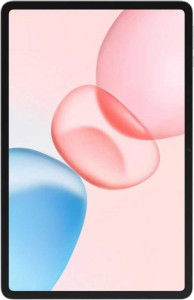
Honor Pad 10
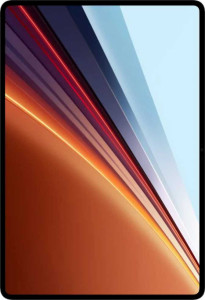
Honor Pad GT2 Pro

Honor Pad 10 Honor Pad GT2 Pro

Overview

When choosing between the Honor Pad 10 and the Honor Pad GT2 Pro, buyers face a genuinely interesting decision. Both tablets share a large LCD IPS display, Android 15, and a 10100 mAh battery, yet they diverge sharply in areas like display sharpness and refresh rate, processing muscle, and connectivity options. Whether you prioritize portability and everyday versatility or crave a powerhouse display with professional-grade specs, this comparison breaks down every key battleground to help you decide.

Common Features

  • Neither product has a detachable keyboard.
  • Neither product has a backlit keyboard.
  • Neither product has water resistance.
  • Neither product has tilt sensitivity.
  • Both products feature an LCD IPS display type.
  • Neither product has branded damage-resistant glass.
  • Neither product has an anti-reflection coating.
  • Both products have a touch screen.
  • Neither product has a sapphire glass display.
  • Neither product supports HDR10+ or Dolby Vision.
  • Neither product has an e-paper display.
  • Both products use a 4 nm semiconductor size.
  • Both products support 64-bit processing.
  • Both products have integrated LTE.
  • Both products use big.LITTLE technology.
  • Both products support DirectX 12.
  • Both products have integrated graphics.
  • Both products have TrustZone.
  • Both products run Android 15.
  • Both products have an 8 MP front camera.
  • Both products have a front camera.
  • Both products have a built-in HDR mode.
  • Neither product can create panoramas in-camera.
  • Both products have touch autofocus.
  • Neither product has optical zoom.
  • Neither product has a BSI sensor.
  • Both products have manual white balance.
  • Neither product has aptX HD.
  • Neither product has LDAC.
  • Neither product has aptX Low Latency.
  • Neither product has aptX Lossless.
  • Neither product has a 3.5 mm audio jack.
  • Neither product has a radio.
  • Both products have a 10100 mAh battery.
  • Neither product supports wireless charging.
  • Both products have a battery level indicator.
  • Both products have a rechargeable battery.
  • Neither product has a removable battery.
  • Neither product has Mail Privacy Protection.
  • Both products have on-device machine learning.
  • Both products have clipboard warnings.
  • Both products have location privacy options.
  • Both products have camera and microphone privacy options.
  • Both products can block app tracking.
  • Neither product blocks cross-site tracking.
  • Both products support split screen.
  • Both products use DDR5 memory.
  • Both products use multithreading.

Main Differences

  • Weight is 525 g on Honor Pad 10 and 532 g on Honor Pad GT2 Pro.
  • Thickness is 6.3 mm on Honor Pad 10 and 6 mm on Honor Pad GT2 Pro.
  • Width is 277.1 mm on Honor Pad 10 and 277.8 mm on Honor Pad GT2 Pro.
  • Height is 179.3 mm on Honor Pad 10 and 190.9 mm on Honor Pad GT2 Pro.
  • A stylus is included with Honor Pad GT2 Pro but not with Honor Pad 10.
  • Screen size is 12.1″ on Honor Pad 10 and 12.5″ on Honor Pad GT2 Pro.
  • Resolution is 2560 x 1600 px on Honor Pad 10 and 3048 x 2032 px on Honor Pad GT2 Pro.
  • Pixel density is 249 ppi on Honor Pad 10 and 285 ppi on Honor Pad GT2 Pro.
  • Refresh rate is 120 Hz on Honor Pad 10 and 165 Hz on Honor Pad GT2 Pro.
  • HDR10 support is present on Honor Pad 10 but not available on Honor Pad GT2 Pro.
  • Internal storage is 256 GB on Honor Pad 10 and 512 GB on Honor Pad GT2 Pro.
  • RAM is 8 GB on Honor Pad 10 and 16 GB on Honor Pad GT2 Pro.
  • GPU is Adreno 720 on Honor Pad 10 and Adreno 750 on Honor Pad GT2 Pro.
  • CPU speed is 8 x 2.13 GHz on Honor Pad 10 and 3 x 3.15 & 2 x 2.96 & 2 x 2.26 & 1 x 3.3 GHz on Honor Pad GT2 Pro.
  • GPU clock speed is 950 MHz on Honor Pad 10 and 900 MHz on Honor Pad GT2 Pro.
  • RAM speed is 3200 MHz on Honor Pad 10 and 4800 MHz on Honor Pad GT2 Pro.
  • Maximum memory amount is 16 GB on Honor Pad 10 and 24 GB on Honor Pad GT2 Pro.
  • Thermal Design Power is 6 W on Honor Pad 10 and 12.5 W on Honor Pad GT2 Pro.
  • Maximum memory bandwidth is 25.6 GB/s on Honor Pad 10 and 76.6 GB/s on Honor Pad GT2 Pro.
  • Main camera resolution is 8 MP on Honor Pad 10 and 13 MP on Honor Pad GT2 Pro.
  • A camera flash is present on Honor Pad GT2 Pro but not available on Honor Pad 10.
  • Slow-motion video recording is supported on Honor Pad 10 but not on Honor Pad GT2 Pro.
  • A video light is present on Honor Pad GT2 Pro but not available on Honor Pad 10.
  • aptX support is present on Honor Pad 10 but not available on Honor Pad GT2 Pro.
  • aptX Adaptive support is present on Honor Pad GT2 Pro but not available on Honor Pad 10.
  • Stereo speakers are present on Honor Pad 10 but not on Honor Pad GT2 Pro.
  • Fast charging is supported on Honor Pad 10 but not on Honor Pad GT2 Pro.
  • Wi-Fi versions supported are Wi-Fi 4, 5, and 6 on Honor Pad 10, while Honor Pad GT2 Pro also adds Wi-Fi 6E and Wi-Fi 7.
  • A cellular module is present on Honor Pad 10 but not on Honor Pad GT2 Pro.
  • Bluetooth version is 5.3 on Honor Pad 10 and 5.4 on Honor Pad GT2 Pro.
  • Download speed is 5000 Mbit/s on Honor Pad 10 and 10000 Mbit/s on Honor Pad GT2 Pro.
  • Upload speed is 160 Mbit/s on Honor Pad 10 and 3500 Mbit/s on Honor Pad GT2 Pro.
  • A gyroscope is present on Honor Pad GT2 Pro but not on Honor Pad 10.
Specs Comparison
Honor Pad 10

Honor Pad 10

Honor Pad GT2 Pro

Honor Pad GT2 Pro

Design:
weight 525 g 532 g
thickness 6.3 mm 6 mm
width 277.1 mm 277.8 mm
height 179.3 mm 190.9 mm
volume 313.009389 cm³ 318.19212 cm³
Stylus included
Has a detachable keyboard
Has a backlit keyboard
water resistance None None
Has tilt sensitivity

In terms of physical form factor, the two tablets are remarkably close. The Honor Pad 10 measures 179.3 × 277.1 mm while the GT2 Pro is noticeably taller at 190.9 × 277.8 mm, pointing to a larger display panel on the GT2 Pro. Despite that larger footprint, the GT2 Pro is marginally lighter in terms of density perception since both weigh nearly the same — 525 g vs 532 g — a 7 g difference that is entirely imperceptible in daily use. Where the GT2 Pro does edge ahead physically is in thickness: at 6.0 mm it is slightly slimmer than the Pad 10's 6.3 mm, which contributes to a more premium in-hand feel even if the real-world gap is minimal.

The single most meaningful design differentiator is accessory support. The GT2 Pro ships with a stylus included in the box, while the Pad 10 offers none. For note-taking, sketching, or annotating documents, this is a practical, cost-saving advantage for GT2 Pro buyers — they get a creative and productivity tool without an additional purchase. Neither tablet offers a detachable or backlit keyboard, tilt sensitivity, or any form of water resistance, so those use cases are equally unaddressed by both devices.

Overall, the GT2 Pro holds a clear design edge: it is thinner, accommodates a larger panel within a chassis of nearly identical weight, and critically, bundles a stylus that adds real utility out of the box. The Pad 10 has no meaningful design advantage over its sibling based solely on these specs.

Display:
screen size 12.1" 12.5"
resolution 2560 x 1600 px 3048 x 2032 px
pixel density 249 ppi 285 ppi
Display type LCD, IPS LCD, IPS
refresh rate 120Hz 165Hz
has branded damage-resistant glass
has anti-reflection coating
supports HDR10
has a touch screen
Has sapphire glass display
supports HDR10+
supports Dolby Vision
Has an e-paper display

Both tablets use an LCD IPS panel, so neither has the contrast or black-level advantage of OLED — that is a shared limitation. Within that shared panel technology, however, the GT2 Pro pulls ahead on every measurable display metric. Its 12.5″ screen versus the Pad 10's 12.1″ is a modest but real size bump, and the resolution leap from 2560 × 1600 to 3048 × 2032 is substantial. That translates directly into pixel density: 285 ppi on the GT2 Pro against 249 ppi on the Pad 10, a 14% advantage that makes text noticeably crisper and fine detail more defined — particularly relevant for reading, document editing, or stylus-based work.

The refresh rate gap is equally significant. The GT2 Pro's 165 Hz panel versus the Pad 10's 120 Hz means smoother scrolling, more fluid animations, and a tangibly more responsive feel during fast-paced content or gaming. While 120 Hz is already well above the 60 Hz baseline, the jump to 165 Hz is meaningful for users who are sensitive to motion smoothness. One area where the Pad 10 has a nominal advantage is HDR10 support, which the GT2 Pro lacks — however, given that both are LCD panels without the dynamic range to fully exploit HDR, this difference carries limited practical weight in everyday viewing scenarios.

The GT2 Pro wins the display category decisively: sharper resolution, higher pixel density, and a faster refresh rate all compound into a meaningfully superior visual experience. The Pad 10's HDR10 support is a minor footnote that does not offset the GT2 Pro's across-the-board screen advantages.

Performance:
internal storage 256GB 512GB
RAM 8GB 16GB
GPU name Adreno 720 Adreno 750
CPU speed 8 x 2.13 GHz 3 x 3.15 & 2 x 2.96 & 2 x 2.26 & 1 x 3.3 GHz
semiconductor size 4 nm 4 nm
Supports 64-bit
Has integrated LTE
Uses big.LITTLE technology
DirectX version DirectX 12 DirectX 12
Has integrated graphics
GPU clock speed 950 MHz 900 MHz
RAM speed 3200 MHz 4800 MHz
Has TrustZone
maximum memory amount 16GB 24GB
Android version Android 15 Android 15
Thermal Design Power (TDP) 6W 12.5W
maximum memory bandwidth 25.6 GB/s 76.6 GB/s
OpenGL ES version 3.2 3.2

These two tablets occupy fundamentally different performance tiers. The Pad 10 runs a chip with 8 uniform cores at 2.13 GHz, while the GT2 Pro features a sophisticated multi-cluster architecture — 3.3 GHz peak cores alongside efficiency clusters stepping down through 3.15, 2.96, and 2.26 GHz. That kind of heterogeneous design, with a dedicated top-performance core reaching 3.3 GHz, is the hallmark of a flagship-class processor built for sustained heavy workloads, not just everyday tasks. The TDP tells the same story: the GT2 Pro's 12.5W thermal envelope versus the Pad 10's 6W signals that the GT2 Pro is engineered to sustain significantly higher performance levels before throttling.

The memory subsystem gap is even more striking. Both tablets share the same 4 nm manufacturing process, but the GT2 Pro's 76.6 GB/s memory bandwidth dwarfs the Pad 10's 25.6 GB/s — nearly three times the throughput. Combined with faster 4800 MHz RAM (versus 3200 MHz), double the base RAM at 16 GB, and double the storage at 512 GB, the GT2 Pro is equipped to handle demanding multitasking, large creative files, and graphics-intensive applications with far greater headroom. The Adreno 750 GPU, despite a marginally lower clock speed than the Adreno 720, belongs to a newer and architecturally more capable generation, making raw clock speed an irrelevant comparison point here.

The GT2 Pro wins performance comprehensively. Across CPU throughput, memory bandwidth, RAM capacity, and storage, it outclasses the Pad 10 by margins that translate into real-world differences for gaming, creative work, and heavy multitasking. The Pad 10 is adequate for general use, but users who push their tablet will feel the gap.
Cameras:
megapixels (main camera) 8 MP 13 MP
megapixels (front camera) 8MP 8MP
has a flash
has a front camera
has a built-in HDR mode
can create panoramas in-camera
supports slow-motion video recording
has touch autofocus
optical zoom 0x 0x
has a BSI sensor
has manual white balance
has a CMOS sensor
wide aperture (main camera) 2f 2f
supports HDR10 recording
has continuous autofocus when recording movies
supports Dolby Vision recording
Has a front-facing LED flash
has manual ISO
has a video light
Shoots 360° panorama
has a serial shot mode
has built-in optical image stabilization
has 3D photo/video recording capabilities
Has a dual-tone LED flash
has manual focus
Has a RGB LED flash
has manual exposure
has manual shutter speed

Tablet cameras are rarely a primary purchase driver, but the differences here are still worth noting. The GT2 Pro's 13 MP main camera outresolves the Pad 10's 8 MP sensor, meaning it can capture more detail in documents, whiteboards, or casual shots — a practical benefit given how tablets are often used in productivity or meeting contexts. Both share the same f/2 aperture, identical front cameras at 8 MP, and a matching manual controls suite including ISO, white balance, exposure, and focus, so the shooting experience is broadly comparable outside of that resolution gap.

Where the GT2 Pro adds meaningful utility is lighting. It includes both a flash and a video light, neither of which the Pad 10 has. A video light is particularly useful for video calls or recording in dim environments — a scenario tablet users encounter regularly. The Pad 10 counters with slow-motion video recording, which the GT2 Pro omits, though this is a niche capability that most tablet users will rarely reach for.

On balance, the GT2 Pro holds a modest camera edge: its higher-resolution main sensor and practical lighting tools give it an advantage in the scenarios where tablet cameras actually get used. The Pad 10's slow-motion support is the one trade-off, but it is unlikely to sway most buyers.

Audio:
has aptX
has aptX HD
has LDAC
has aptX Low Latency
has aptX Adaptive
has aptX Lossless
has stereo speakers
has a socket for a 3.5 mm audio jack
Has a radio

Audio is where the Pad 10 scores a clear practical win over the GT2 Pro. Having stereo speakers — which the GT2 Pro lacks — is the single most impactful audio feature for a tablet used to watch video, listen to music, or take video calls without headphones. A mono speaker setup on a large-screen device like the GT2 Pro is a genuine limitation that affects the everyday listening experience in a way that codec support simply cannot compensate for.

On the wireless audio side, the situation reverses. The GT2 Pro supports aptX Adaptive, a modern codec that dynamically adjusts bitrate and latency to balance audio quality and sync, making it well-suited for both high-fidelity music and low-latency use cases like gaming or video. The Pad 10's aptX support is functional but represents an older standard with a fixed bitrate ceiling. For users who primarily listen through quality Bluetooth headphones, the GT2 Pro's codec advantage is meaningful — though it requires compatible headphones to be realized. Neither tablet includes a 3.5 mm jack, so wired headphone users will need an adapter regardless of which device they choose.

Weighed together, the Pad 10 has the stronger audio profile for most users: stereo speakers deliver an immediate, hardware-level improvement for all speaker-based listening, whereas the GT2 Pro's aptX Adaptive advantage only surfaces in a specific wireless headphone pairing scenario.

Battery:
battery power 10100 mAh 10100 mAh
Supports fast charging
has wireless charging
has a battery level indicator
has a rechargeable battery
has a removable battery

At identical 10100 mAh battery capacities, both tablets start from the same baseline for longevity — neither has a raw energy advantage over the other. The differentiator here is not how long they last, but how quickly they recover. The Pad 10 supports fast charging, while the GT2 Pro does not. On a large tablet battery, the absence of fast charging means noticeably longer waits tethered to a charger — a real inconvenience for users who need to top up quickly between uses or during a commute.

Neither device offers wireless charging, and both have sealed, non-removable batteries — so outside of the charging speed gap, the two tablets are functionally identical in this category. It is worth noting that the GT2 Pro's more powerful processor carries a higher TDP, which may draw down that shared 10100 mAh capacity faster under heavy load, but that inference goes beyond the data provided here.

Based strictly on these specs, the Pad 10 has the edge in battery — not because it stores more energy, but because fast charging meaningfully reduces downtime. For a device with an otherwise identical battery, that convenience advantage is the only differentiator, and it favors the Pad 10.

Connectivity & Features:
release date May 2025 July 2025
Wi-Fi version Wi-Fi 4 (802.11n), Wi-Fi 5 (802.11ac), Wi-Fi 6 (802.11ax) Wi-Fi 4 (802.11n), Wi-Fi 5 (802.11ac), Wi-Fi 6 (802.11ax), Wi-Fi 6E (802.11ax), Wi-Fi 7 (802.11be)
has Mail Privacy Protection
has on-device machine learning
has clipboard warnings
has location privacy options
has camera/microphone privacy options
can block app tracking
blocks cross-site tracking
supports split screen
has Live Text
has notification permissions
has full-page screenshots
has Quick Start
has theme customization
has Wi-Fi password sharing
has PiP
Can play games while they download
has an extra dim mode
can offload apps
has focus modes
has media picker
has dynamic theming
has dark mode
has battery health check
Has USB Type-C
has a cellular module
has 5G support
is a multi-user system
gets direct OS updates
has a child lock
has an HDMI output
has NFC
Has a fingerprint scanner
Supports widgets
Bluetooth version 5.3 5.4
download speed 5000 MBits/s 10000 MBits/s
has a gyroscope
Is free and open source
Has offline voice recognition
has a compass
upload speed 160 MBits/s 3500 MBits/s
supports Wi-Fi
Has sharing intents
Has customizable notifications
Uses 3D facial recognition
Has a barometer
has an accelerometer
has voice commands
Has an iris scanner
Has a built-in projector
supports Ethernet
Has an infrared sensor
Tracks the current position of a mobile device

Wireless connectivity is where the GT2 Pro makes a strong statement. It supports Wi-Fi 7 (802.11be) and Wi-Fi 6E, while the Pad 10 caps out at Wi-Fi 6. Wi-Fi 7 brings substantially higher throughput and lower latency, which is reflected directly in the specs: the GT2 Pro's theoretical download speed of 10,000 Mbits/s doubles the Pad 10's 5,000 Mbits/s, and the upload gap is even more dramatic — 3,500 Mbits/s versus just 160 Mbits/s. In practice, real-world speeds depend on router support, but for users with modern Wi-Fi 6E or 7 infrastructure, the GT2 Pro is built to take full advantage. Its Bluetooth 5.4 also edges past the Pad 10's 5.3, offering marginally improved efficiency and connection stability.

The most consequential trade-off cuts the other way, however. The Pad 10 includes a cellular module, giving it the ability to connect via a SIM card when Wi-Fi is unavailable — a flexibility the GT2 Pro entirely lacks. For users who need connectivity on the go without relying on a phone hotspot, this is a significant practical advantage. The GT2 Pro additionally includes a gyroscope that the Pad 10 omits, which benefits certain games, AR applications, and screen-rotation accuracy. Beyond these points, both tablets share an extensive and nearly identical software feature set — split screen, PiP, dark mode, on-device ML, and a full privacy controls suite — making that layer a wash.

This category produces a split verdict depending on use case. The GT2 Pro leads on wireless speed and sensor completeness, making it the stronger choice for home or office environments with modern networking gear. The Pad 10 wins for mobile users who need standalone cellular connectivity — a capability the GT2 Pro simply cannot replicate.

Miscellaneous:
DDR memory version 5 5
uses multithreading

The Miscellaneous group offers no differentiating data between these two tablets. Both use DDR5 memory and both support multithreading — meaning each can handle multiple processing threads simultaneously to improve efficiency under parallel workloads. These are shared foundations, not points of distinction.

This category is a complete tie. Neither product holds any advantage over the other based on the available specs, and buyers should look to other specification groups to inform their decision.

Comparison Summary & Verdict

After examining all the evidence, these two tablets clearly target different kinds of users. The Honor Pad 10 stands out for buyers who value fast charging, cellular connectivity, stereo speakers, and a lighter everyday experience — all at what is likely a more accessible price point. Its HDR10 support and aptX audio also make it a capable media companion. The Honor Pad GT2 Pro, on the other hand, is the stronger choice for power users who demand a sharper 3048 x 2032 display, a blazing 165 Hz refresh rate, significantly more RAM and storage, Wi-Fi 7 support, and an included stylus for creative or productivity work. If raw performance and display quality are your top priorities, the GT2 Pro pulls ahead decisively.

Honor Pad 10
Buy Honor Pad 10 if...

Buy the Honor Pad 10 if you want fast charging, built-in cellular connectivity, stereo speakers, and a lighter tablet for everyday media consumption without breaking the bank.

Honor Pad GT2 Pro
Buy Honor Pad GT2 Pro if...

Buy the Honor Pad GT2 Pro if you need a high-resolution 165 Hz display, significantly more RAM and storage, Wi-Fi 7, and an included stylus for demanding productivity or creative tasks.