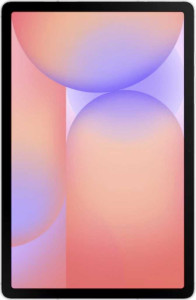
Honor Pad 10
Samsung Galaxy Tab S10 Lite

Honor Pad 10 Samsung Galaxy Tab S10 Lite

Overview

Choosing between the Honor Pad 10 and the Samsung Galaxy Tab S10 Lite is no simple task — both tablets share a surprising amount of common ground, yet diverge sharply in areas that could be decisive for your needs. In this detailed comparison, we put both devices head-to-head across key battlegrounds including display quality, performance, battery capacity, and connectivity features to help you determine which one truly fits your lifestyle.

Common Features

  • Neither product has a detachable keyboard.
  • Neither product has a backlit keyboard.
  • Neither product offers water resistance.
  • Neither product has tilt sensitivity.
  • Both products use an LCD IPS display type.
  • Both products have a touch screen.
  • Neither product has a sapphire glass display.
  • Neither product supports HDR10+.
  • Neither product supports Dolby Vision.
  • Neither product has an e-paper display.
  • Both products come with 256GB of internal storage.
  • Both products have 8GB of RAM.
  • Both products support 64-bit processing.
  • Both products have integrated LTE.
  • Both products use big.LITTLE technology.
  • Both products support DirectX 12.
  • Both products have integrated graphics.
  • Both products have a GPU clock speed of 950 MHz.
  • Both products have an 8 MP main camera.
  • Neither product has a flash.
  • Both products have a front camera.
  • Both products have a built-in HDR mode.
  • Neither product can create panoramas in-camera.
  • Both products have touch autofocus.
  • Neither product has optical zoom.
  • Neither product has a BSI sensor.
  • Neither product has aptX HD.
  • Neither product has LDAC.
  • Neither product has aptX Low Latency.
  • Neither product has aptX Adaptive.
  • Neither product has aptX Lossless.
  • Both products have stereo speakers.
  • Neither product has a 3.5mm audio jack.
  • Neither product has a radio.
  • Both products support fast charging.
  • Neither product has wireless charging.
  • Both products have a battery level indicator.
  • Both products have a rechargeable battery.
  • Neither product has a removable battery.
  • Neither product has Mail Privacy Protection.
  • Both products have on-device machine learning.
  • Both products have clipboard warnings.
  • Both products have location privacy options.
  • Both products have camera and microphone privacy options.
  • Both products can block app tracking.
  • Neither product blocks cross-site tracking.
  • Both products support split screen.
  • Both products use DDR5 memory.
  • Both products use multithreading.

Main Differences

  • Weight is 525g on Honor Pad 10 and 524g on Samsung Galaxy Tab S10 Lite.
  • Thickness is 6.3mm on Honor Pad 10 and 6.6mm on Samsung Galaxy Tab S10 Lite.
  • Width is 277.1mm on Honor Pad 10 and 254.3mm on Samsung Galaxy Tab S10 Lite.
  • Height is 179.3mm on Honor Pad 10 and 165.8mm on Samsung Galaxy Tab S10 Lite.
  • Volume is 313.01 cm³ on Honor Pad 10 and 278.28 cm³ on Samsung Galaxy Tab S10 Lite.
  • A stylus is included with Samsung Galaxy Tab S10 Lite but not with Honor Pad 10.
  • Screen size is 12.1″ on Honor Pad 10 and 10.9″ on Samsung Galaxy Tab S10 Lite.
  • Resolution is 2560 x 1600 px on Honor Pad 10 and 2112 x 1320 px on Samsung Galaxy Tab S10 Lite.
  • Pixel density is 249 ppi on Honor Pad 10 and 228 ppi on Samsung Galaxy Tab S10 Lite.
  • Refresh rate is 120Hz on Honor Pad 10 and 90Hz on Samsung Galaxy Tab S10 Lite.
  • Damage-resistant glass is present on Samsung Galaxy Tab S10 Lite but not on Honor Pad 10.
  • An anti-reflection coating is present on Samsung Galaxy Tab S10 Lite but not on Honor Pad 10.
  • HDR10 support is available on Honor Pad 10 but not on Samsung Galaxy Tab S10 Lite.
  • The GPU is an Adreno 720 on Honor Pad 10 and a Mali G68 MP5 on Samsung Galaxy Tab S10 Lite.
  • CPU speed is 8 x 2.13 GHz on Honor Pad 10 and 4 x 2.4 GHz & 4 x 2 GHz on Samsung Galaxy Tab S10 Lite.
  • Semiconductor size is 4nm on Honor Pad 10 and 5nm on Samsung Galaxy Tab S10 Lite.
  • Maximum memory amount is 16GB on Honor Pad 10 and 8GB on Samsung Galaxy Tab S10 Lite.
  • Thermal Design Power is 6W on Honor Pad 10 and 5W on Samsung Galaxy Tab S10 Lite.
  • Maximum memory bandwidth is 25.6 GB/s on Honor Pad 10 and 51.2 GB/s on Samsung Galaxy Tab S10 Lite.
  • Front camera resolution is 8MP on Honor Pad 10 and 5MP on Samsung Galaxy Tab S10 Lite.
  • Slow-motion video recording is supported on Honor Pad 10 but not on Samsung Galaxy Tab S10 Lite.
  • aptX support is present on Honor Pad 10 but not on Samsung Galaxy Tab S10 Lite.
  • Battery capacity is 10100 mAh on Honor Pad 10 and 8000 mAh on Samsung Galaxy Tab S10 Lite.
  • Samsung Galaxy Tab S10 Lite supports eSIM in addition to a physical SIM, while Honor Pad 10 only supports one physical SIM.
  • 5G support is available on Samsung Galaxy Tab S10 Lite but not on Honor Pad 10.
  • Download speed is 5000 Mbit/s on Honor Pad 10 and 3790 Mbit/s on Samsung Galaxy Tab S10 Lite.
  • Upload speed is 160 Mbit/s on Honor Pad 10 and 1280 Mbit/s on Samsung Galaxy Tab S10 Lite.
  • A gyroscope is present on Samsung Galaxy Tab S10 Lite but not on Honor Pad 10.
  • A compass is present on Samsung Galaxy Tab S10 Lite but not on Honor Pad 10.
Specs Comparison
Honor Pad 10

Honor Pad 10

Samsung Galaxy Tab S10 Lite

Samsung Galaxy Tab S10 Lite

Design:
weight 525 g 524 g
thickness 6.3 mm 6.6 mm
width 277.1 mm 254.3 mm
height 179.3 mm 165.8 mm
volume 313.009389 cm³ 278.275404 cm³
Stylus included
Has a detachable keyboard
Has a backlit keyboard
water resistance None None
Has tilt sensitivity

At first glance, both tablets weigh virtually the same — 525 g vs 524 g — making weight a non-factor in this comparison. The more telling distinction lies in their physical footprints. The Honor Pad 10 is noticeably larger in surface area (277.1 × 179.3 mm) compared to the Galaxy Tab S10 Lite (254.3 × 165.8 mm), resulting in a significantly higher total volume (313 cm³ vs 278 cm³). In practice, this means the Tab S10 Lite will feel more compact and easier to hold one-handed or slip into a bag, even though both tablets weigh essentially the same. The Honor Pad 10 compensates slightly by being marginally thinner at 6.3 mm versus 6.6 mm, but that 0.3 mm difference is imperceptible in daily use.

The most impactful differentiator in this group is accessory support. The Galaxy Tab S10 Lite includes a stylus in the box, while the Honor Pad 10 does not. For users interested in note-taking, sketching, or annotation, this is a concrete, out-of-the-box advantage that adds real value without extra cost. Neither tablet offers a detachable keyboard, backlit keyboard, water resistance, or tilt sensitivity, so those dimensions are entirely even.

Overall, the Samsung Galaxy Tab S10 Lite holds a clear edge in this design group. Its more compact and pocketable form factor — despite identical weight — combined with a bundled stylus gives it a practical advantage for portability and productivity. The Honor Pad 10's slightly slimmer profile does not meaningfully offset these differences.

Display:
screen size 12.1" 10.9"
resolution 2560 x 1600 px 2112 x 1320 px
pixel density 249 ppi 228 ppi
Display type LCD, IPS LCD, IPS
refresh rate 120Hz 90Hz
has branded damage-resistant glass
has anti-reflection coating
supports HDR10
has a touch screen
Has sapphire glass display
supports HDR10+
supports Dolby Vision
Has an e-paper display

The screen is where these two tablets diverge most dramatically. The Honor Pad 10 sports a larger 12.1″ panel with a 2560 × 1600 resolution and a sharper 249 ppi pixel density, while the Tab S10 Lite comes in at 10.9″ with 2112 × 1320 and 228 ppi. Both use LCD IPS technology, so color reproduction characteristics are broadly similar, but the Honor Pad 10's larger, higher-resolution canvas makes a tangible difference for media consumption, reading, or multitasking — text is crisper and there is simply more screen real estate to work with. Its 120Hz refresh rate also produces noticeably smoother scrolling and animations compared to the Tab S10 Lite's 90Hz panel, a gap that is perceptible during everyday use.

The Tab S10 Lite counters with two display durability and usability features the Honor Pad 10 lacks: branded damage-resistant glass and an anti-reflection coating. The latter is particularly meaningful in real-world settings — reduced glare makes the screen far more legible in bright indoor lighting or near windows, which can matter more day-to-day than a resolution advantage. The Honor Pad 10 reclaims some ground with HDR10 support, enabling richer contrast and color range on compatible streaming content, whereas the Tab S10 Lite supports neither HDR10 nor any other HDR standard.

Neither display is a clear sweep. The Honor Pad 10 wins on raw display performance — larger screen, higher resolution, sharper pixel density, faster refresh rate, and HDR10 support — making it the stronger choice for media and productivity. The Tab S10 Lite edges ahead on durability and everyday usability with its anti-reflection coating and tougher glass. Users who prioritize screen quality and content consumption should favor the Honor Pad 10; those who use their tablet heavily in variable lighting conditions or want added peace of mind will appreciate what the Tab S10 Lite brings.

Performance:
internal storage 256GB 256GB
RAM 8GB 8GB
GPU name Adreno 720 Mali G68 MP5
CPU speed 8 x 2.13 GHz 4 x 2.4 & 4 x 2 GHz
semiconductor size 4 nm 5 nm
Supports 64-bit
Has integrated LTE
Uses big.LITTLE technology
DirectX version DirectX 12 DirectX 12
Has integrated graphics
GPU clock speed 950 MHz 950 MHz
RAM speed 3200 MHz 3200 MHz
Has TrustZone
maximum memory amount 16GB 8GB
Android version Android 15 Android 15
Thermal Design Power (TDP) 6W 5W
maximum memory bandwidth 25.6 GB/s 51.2 GB/s

Both tablets ship with identical base configurations — 8GB RAM, 256GB storage, Android 15, and big.LITTLE CPU architecture — so everyday multitasking parity is expected. The meaningful divergences lie deeper. The Honor Pad 10 runs on a 4nm chip versus the Tab S10 Lite's 5nm process node; the smaller node generally yields better power efficiency and thermal headroom. The Tab S10 Lite counters with higher peak CPU clock speeds (4 × 2.4 GHz performance cores vs the Honor Pad 10's uniform 8 × 2.13 GHz), meaning the Samsung chip can burst harder on single-threaded workloads, while the Honor chip offers more consistent throughput across all cores.

The most striking gap is memory bandwidth: the Tab S10 Lite's memory subsystem delivers 51.2 GB/s — exactly double the Honor Pad 10's 25.6 GB/s. This is a significant architectural advantage for tasks that are data-movement intensive, such as GPU rendering, image processing, or sustained gaming workloads, where feeding the processor quickly matters as much as raw clock speed. Despite both GPUs sharing the same 950 MHz clock, the Mali G68 MP5 in the Tab S10 Lite can leverage that bandwidth advantage more effectively. The Honor Pad 10 does, however, support a maximum of 16GB RAM (versus 8GB on the Tab S10 Lite), which is a future-proofing edge if higher-RAM configurations become available.

This group has no clean winner — the two chips trade blows in different areas. The Honor Pad 10 holds an edge in process node efficiency and memory expandability ceiling, while the Tab S10 Lite pulls ahead on peak CPU performance and, notably, its 2× memory bandwidth advantage, which has tangible implications for sustained GPU and data-intensive tasks. For most everyday use they will feel comparable, but power users focused on graphics or heavy processing workloads may find the Tab S10 Lite's memory architecture more capable.

Cameras:
megapixels (main camera) 8 MP 8 MP
megapixels (front camera) 8MP 5MP
has a flash
has a front camera
has a built-in HDR mode
can create panoramas in-camera
supports slow-motion video recording
has touch autofocus
optical zoom 0x 0x
has a BSI sensor
has manual white balance
has a CMOS sensor
supports HDR10 recording
has continuous autofocus when recording movies
supports Dolby Vision recording
Has a front-facing LED flash
has manual ISO
has a video light
Shoots 360° panorama
has a serial shot mode
has built-in optical image stabilization
has 3D photo/video recording capabilities
Has a dual-tone LED flash
has manual focus
Has a RGB LED flash
has manual exposure
has manual shutter speed

Tablet cameras are rarely a primary purchase driver, and this comparison reinforces why — both devices offer modest, utilitarian imaging hardware. The rear cameras are identical at 8 MP, and the shared feature set is extensive: HDR mode, touch autofocus, continuous autofocus during video, manual white balance, manual ISO, manual focus, and manual exposure are all present on both. Neither tablet has a flash, optical zoom, or optical image stabilization, so low-light and telephoto shooting are equally limited across the board.

The only meaningful differentiator here is the front camera. The Honor Pad 10 packs an 8 MP selfie shooter, compared to just 5 MP on the Tab S10 Lite. For video calls — arguably the most common use case for a tablet's front camera — the Honor Pad 10's higher-resolution sensor can produce a noticeably sharper image, which matters during work calls or virtual meetings. The Honor Pad 10 also supports slow-motion video recording, a feature absent on the Tab S10 Lite, adding a small but tangible creative capability.

The Honor Pad 10 takes a clear, if narrow, edge in this category. Its front camera advantage and slow-motion support are the only points of differentiation in an otherwise identical spec sheet. Neither tablet is built for serious photography, but for everyday video calling and occasional video capture, the Honor Pad 10 offers a slightly more capable package.

Audio:
has aptX
has aptX HD
has LDAC
has aptX Low Latency
has aptX Adaptive
has aptX Lossless
has stereo speakers
has a socket for a 3.5 mm audio jack
Has a radio

Wired audio is off the table for both devices — neither includes a 3.5mm headphone jack, so wireless headphones or a USB-C adapter are the only options for private listening. Both tablets do feature stereo speakers, keeping them on equal footing for built-in audio output during media consumption or calls.

The one distinguishing factor is Bluetooth audio codec support. The Honor Pad 10 supports aptX, which enables higher-quality compressed audio transmission over Bluetooth compared to the standard SBC codec. For users pairing the tablet with compatible wireless headphones, this translates to better audio fidelity with less compression artifacting. The Tab S10 Lite lacks aptX support entirely, relying solely on baseline Bluetooth audio codecs. Neither device supports the higher-tier aptX HD, LDAC, or aptX Adaptive codecs, so the gap is real but not dramatic.

The Honor Pad 10 holds a modest edge here thanks solely to aptX support — a meaningful perk for users who prioritize wireless audio quality through compatible headphones. For those who stream through the built-in speakers or use non-aptX Bluetooth accessories, the two tablets are effectively tied in this category.

Battery:
battery power 10100 mAh 8000 mAh
Supports fast charging
has wireless charging
has a battery level indicator
has a rechargeable battery
has a removable battery

Battery capacity is where the Honor Pad 10 asserts a clear, quantifiable lead. Its 10100 mAh cell outpaces the Tab S10 Lite's 8000 mAh by roughly 26% — a gap large enough to translate into noticeably longer usage sessions between charges. For a tablet used heavily for video streaming, reading, or productivity, that difference can realistically mean an extra hour or two before needing to plug in.

It is worth noting that raw capacity is not the only variable in real-world battery life — screen size, display brightness, and processor efficiency all play a role. The Honor Pad 10's larger, higher-refresh display will draw more power than the Tab S10 Lite's smaller screen, which partially offsets the capacity advantage. That said, the 2100 mAh gap is substantial enough that the Honor Pad 10 is still very likely to outlast the Tab S10 Lite under comparable usage conditions. Both tablets support fast charging and share the same non-removable, rechargeable battery design, so neither has a structural advantage in charging convenience.

The Honor Pad 10 wins this category outright. Its significantly larger battery is the single differentiator here, and for users who prioritize all-day endurance — especially when away from a power source — it offers a tangible, practical advantage over the Tab S10 Lite.

Connectivity & Features:
release date May 2025 August 2025
Wi-Fi version Wi-Fi 4 (802.11n), Wi-Fi 5 (802.11ac), Wi-Fi 6 (802.11ax) Wi-Fi 4 (802.11n), Wi-Fi 6 (802.11ax), Wi-Fi 5 (802.11ac)
SIM cards 1 SIM 1 SIM, 1 eSIM
has Mail Privacy Protection
has on-device machine learning
has clipboard warnings
has location privacy options
has camera/microphone privacy options
can block app tracking
blocks cross-site tracking
supports split screen
has Live Text
has notification permissions
has full-page screenshots
has Quick Start
has theme customization
has Wi-Fi password sharing
has PiP
Can play games while they download
has an extra dim mode
can offload apps
has focus modes
has media picker
has dynamic theming
has dark mode
has battery health check
Has USB Type-C
has a cellular module
has 5G support
is a multi-user system
gets direct OS updates
has a child lock
has an HDMI output
has NFC
Has a fingerprint scanner
USB version 2 2
Supports widgets
Bluetooth version 5.3 5.3
download speed 5000 MBits/s 3790 MBits/s
has a gyroscope
Is free and open source
Has offline voice recognition
has a compass
upload speed 160 MBits/s 1280 MBits/s
supports Wi-Fi
Has sharing intents
Has customizable notifications
Uses 3D facial recognition
Has a barometer
has an accelerometer
has voice commands
Has an iris scanner
Has a built-in projector
supports Ethernet
Has an infrared sensor
Tracks the current position of a mobile device

Across a long shared feature list — Bluetooth 5.3, Wi-Fi 6, split-screen, Picture-in-Picture, dark mode, dynamic theming, and a robust privacy toolkit — these two tablets are nearly indistinguishable in day-to-day software and connectivity capabilities. The real separation emerges in cellular and sensor hardware. The Tab S10 Lite supports 5G and adds an eSIM slot alongside its physical SIM, while the Honor Pad 10 is limited to 4G LTE and a single physical SIM only. For users who rely on mobile data, 5G means dramatically faster speeds and future-proofing on modern networks, and eSIM flexibility makes carrier switching or travel SIM management far more convenient.

The cellular speed figures add an interesting wrinkle. The Honor Pad 10 claims a higher theoretical download speed of 5000 Mbits/s versus the Tab S10 Lite's 3790 Mbits/s, yet the Tab S10 Lite's upload speed of 1280 Mbits/s dwarfs the Honor Pad 10's 160 Mbits/s — an 8× advantage. For upload-heavy tasks like video conferencing, cloud backups, or sharing large files over cellular, that gap is substantial. On the sensor front, the Tab S10 Lite also includes a gyroscope and compass, which the Honor Pad 10 lacks; these matter for navigation apps, augmented reality experiences, and precise screen orientation tracking.

The Samsung Galaxy Tab S10 Lite holds a clear connectivity edge in this group. Its 5G support, eSIM capability, vastly superior cellular upload speeds, and additional motion sensors add up to a more versatile and future-ready package — particularly for users who use their tablet on the go or in mobile-data-dependent scenarios.

Miscellaneous:
DDR memory version 5 5
uses multithreading

This group contains just two data points, and both are identical across the board. The Honor Pad 10 and the Samsung Galaxy Tab S10 Lite both use DDR5 memory and both support multithreading — meaning neither tablet has any advantage here whatsoever.

The practical significance of these shared specs is worth noting: DDR5 is the current-generation memory standard, offering improved bandwidth and energy efficiency over DDR4, which aligns with the modern chip architectures both tablets employ. Multithreading support ensures that both processors can handle multiple tasks across cores simultaneously, contributing to the smooth app-switching and parallel workload handling that modern Android usage demands. These are table-stakes features at this tier, not differentiators.

This group is a complete tie. Based solely on the provided specs, neither the Honor Pad 10 nor the Tab S10 Lite holds any advantage here, and this category should carry no weight in a purchasing decision between the two.

Comparison Summary & Verdict

After examining every specification, both tablets emerge as capable mid-range options with distinct strengths. The Honor Pad 10 stands out with its larger 12.1″ 120Hz display, bigger 10100 mAh battery, HDR10 support, and a more recent 4nm chip — making it an excellent companion for media consumption and long usage sessions. The Samsung Galaxy Tab S10 Lite, on the other hand, counters with practical advantages: a bundled stylus, anti-reflection coating with damage-resistant glass, 5G connectivity, a gyroscope and compass, and significantly higher upload speeds. If productivity, portability, and future-proof connectivity matter most to you, the Samsung wins. If raw screen real estate, battery endurance, and display performance are your priorities, the Honor is the stronger pick.

Honor Pad 10
Buy Honor Pad 10 if...

Buy the Honor Pad 10 if you want a larger 120Hz display, longer battery life, and HDR10 support for an immersive media experience at a competitive price point.

Samsung Galaxy Tab S10 Lite
Buy Samsung Galaxy Tab S10 Lite if...

Buy the Samsung Galaxy Tab S10 Lite if you need 5G connectivity, a built-in stylus for productivity, and a more portable design with damage-resistant, anti-reflection glass.