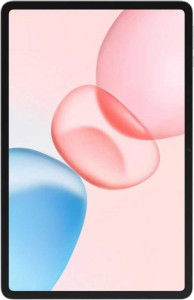
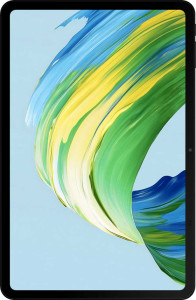
Wireless connectivity is where the Honor Pad 10 pulls meaningfully ahead. It supports Wi-Fi 6 (802.11ax), while the TCL NxtPaper 11 Gen 2 tops out at Wi-Fi 5 (802.11ac). Wi-Fi 6 delivers faster throughput, lower latency, and significantly better performance in congested network environments — such as homes or offices with many connected devices. For streaming high-resolution content, large file transfers, or video calls on a busy network, this difference is real and recurring. The Honor Pad 10 also runs a newer Bluetooth 5.3 versus the TCL's Bluetooth 5.0, offering incremental improvements in connection stability and efficiency, particularly relevant given that both tablets lack a headphone jack.
Perhaps the most consequential distinction in this group is cellular connectivity. The Honor Pad 10 includes a cellular module, meaning it can be paired with a SIM card for mobile data on the go — the TCL NxtPaper 11 Gen 2 is Wi-Fi only. For users who need their tablet to function independently of a hotspot or fixed network, this is a fundamental capability gap, not a minor feature omission. On the other hand, the TCL counters with a gyroscope, which the Honor Pad 10 lacks. A gyroscope enables more accurate motion sensing, impacting certain games, AR applications, and navigation use cases that rely on rotational orientation rather than just basic accelerometer data.
Across the rest of the feature set — split-screen, Picture-in-Picture, dark mode, widgets, privacy controls, and software utilities — both tablets are essentially identical, reflecting their shared Android 15 foundation. The Honor Pad 10 takes this category clearly, with Wi-Fi 6, newer Bluetooth, and cellular capability forming a connectivity trifecta that the TCL cannot match. The TCL's gyroscope is the sole hardware feature edge it holds here, but it does not offset the broader connectivity advantage.