Honor Pad GT2 Pro
Xiaomi Redmi Pad 2

Honor Pad GT2 Pro Xiaomi Redmi Pad 2

Overview

When choosing between the Honor Pad GT2 Pro and the Xiaomi Redmi Pad 2, buyers are faced with two compelling Android 15 tablets that take very different paths to win your attention. From display sharpness and refresh rates to chipset power and everyday versatility, these two devices cater to distinct priorities. In this comparison, we examine their key battlegrounds — including performance headroom, connectivity options, audio capabilities, and battery behavior — to help you decide which one truly fits your needs.

Common Features

  • Both tablets use an LCD IPS display type.
  • Neither product has branded damage-resistant glass on the display.
  • HDR10 support is not available on either product.
  • Both products have a touch screen.
  • Sapphire glass display is not present on either product.
  • HDR10+ support is not available on either product.
  • Dolby Vision support is not available on either product.
  • Neither product has an e-paper display.
  • Both tablets support 64-bit processing.
  • Both products have integrated LTE capability.
  • Both tablets use big.LITTLE technology.
  • Both products have integrated graphics.
  • Both tablets feature 8 CPU threads.
  • TrustZone is supported on both products.
  • Both tablets run Android 15.
  • Both products use HMP scheduling.
  • Both tablets have a front camera.
  • Both products have a built-in HDR mode.
  • Neither product can create panoramas in-camera.
  • Both tablets have touch autofocus.
  • Neither product has an optical zoom.
  • Neither product has a BSI sensor.
  • Both tablets support manual white balance.
  • Both products have a CMOS sensor.
  • Neither tablet has aptX support.
  • Neither tablet has aptX HD support.
  • Neither tablet has LDAC support.
  • Neither tablet has aptX Low Latency support.
  • Neither tablet has aptX Lossless support.
  • Neither product has a radio.
  • Wireless charging is not available on either product.
  • Both tablets have a battery level indicator.
  • Both products have a rechargeable battery.
  • Neither product has a removable battery.
  • Mail Privacy Protection is not available on either product.
  • Both tablets have on-device machine learning.
  • Both products have clipboard warnings.
  • Both tablets have location privacy options.
  • Both products have camera and microphone privacy options.
  • Both tablets can block app tracking.
  • Cross-site tracking blocking is not available on either product.
  • Both products support split screen.
  • Neither product has a detachable keyboard.
  • Neither product has a backlit keyboard.
  • Neither product has water resistance.
  • Neither product has tilt sensitivity.

Main Differences

  • Weight is 532 g on Honor Pad GT2 Pro and 510 g on Xiaomi Redmi Pad 2.
  • Thickness is 6 mm on Honor Pad GT2 Pro and 7.4 mm on Xiaomi Redmi Pad 2.
  • Width is 277.8 mm on Honor Pad GT2 Pro and 254.6 mm on Xiaomi Redmi Pad 2.
  • Height is 190.9 mm on Honor Pad GT2 Pro and 166 mm on Xiaomi Redmi Pad 2.
  • Volume is 318.19 cm³ on Honor Pad GT2 Pro and 312.75 cm³ on Xiaomi Redmi Pad 2.
  • A stylus is included with Honor Pad GT2 Pro but not with Xiaomi Redmi Pad 2.
  • Screen size is 12.5″ on Honor Pad GT2 Pro and 11″ on Xiaomi Redmi Pad 2.
  • Resolution is 3048 x 2032 px on Honor Pad GT2 Pro and 2560 x 1600 px on Xiaomi Redmi Pad 2.
  • Pixel density is 285 ppi on Honor Pad GT2 Pro and 274 ppi on Xiaomi Redmi Pad 2.
  • Refresh rate is 165Hz on Honor Pad GT2 Pro and 90Hz on Xiaomi Redmi Pad 2.
  • Internal storage is 512GB on Honor Pad GT2 Pro and 256GB on Xiaomi Redmi Pad 2.
  • RAM is 16GB on Honor Pad GT2 Pro and 8GB on Xiaomi Redmi Pad 2.
  • GPU is Adreno 750 on Honor Pad GT2 Pro and Mali G57 on Xiaomi Redmi Pad 2.
  • CPU speed is 3 x 3.15 & 2 x 2.96 & 2 x 2.26 & 1 x 3.3 GHz on Honor Pad GT2 Pro and 2 x 2.2 & 6 x 2 GHz on Xiaomi Redmi Pad 2.
  • An external memory slot is available on Xiaomi Redmi Pad 2 but not on Honor Pad GT2 Pro.
  • Semiconductor size is 4 nm on Honor Pad GT2 Pro and 6 nm on Xiaomi Redmi Pad 2.
  • DirectX version is DirectX 12 on Honor Pad GT2 Pro and DirectX 11 on Xiaomi Redmi Pad 2.
  • GPU clock speed is 900 MHz on Honor Pad GT2 Pro and 1000 MHz on Xiaomi Redmi Pad 2.
  • RAM speed is 4800 MHz on Honor Pad GT2 Pro and 4266 MHz on Xiaomi Redmi Pad 2.
  • Maximum memory amount is 24GB on Honor Pad GT2 Pro and 12GB on Xiaomi Redmi Pad 2.
  • Thermal Design Power is 12.5W on Honor Pad GT2 Pro and 5W on Xiaomi Redmi Pad 2.
  • Maximum memory bandwidth is 76.6 GB/s on Honor Pad GT2 Pro and 17.1 GB/s on Xiaomi Redmi Pad 2.
  • DDR memory version is DDR5 on Honor Pad GT2 Pro and DDR4 on Xiaomi Redmi Pad 2.
  • Main camera resolution is 13 MP on Honor Pad GT2 Pro and 8 MP on Xiaomi Redmi Pad 2.
  • Front camera resolution is 8 MP on Honor Pad GT2 Pro and 5 MP on Xiaomi Redmi Pad 2.
  • A flash is present on Honor Pad GT2 Pro but not on Xiaomi Redmi Pad 2.
  • Slow-motion video recording is supported on Xiaomi Redmi Pad 2 but not on Honor Pad GT2 Pro.
  • A video light is available on Honor Pad GT2 Pro but not on Xiaomi Redmi Pad 2.
  • Front camera aperture is f/2.0 on Honor Pad GT2 Pro and f/2.2 on Xiaomi Redmi Pad 2.
  • aptX Adaptive support is present on Honor Pad GT2 Pro but not available on Xiaomi Redmi Pad 2.
  • Stereo speakers are present on Xiaomi Redmi Pad 2 but not on Honor Pad GT2 Pro.
  • A 3.5 mm audio jack is available on Xiaomi Redmi Pad 2 but not on Honor Pad GT2 Pro.
  • Battery capacity is 10100 mAh on Honor Pad GT2 Pro and 9000 mAh on Xiaomi Redmi Pad 2.
  • Fast charging is supported on Xiaomi Redmi Pad 2 but not on Honor Pad GT2 Pro.
  • Wi-Fi versions supported include Wi-Fi 4, 5, 6, 6E, and 7 on Honor Pad GT2 Pro, while Xiaomi Redmi Pad 2 supports only Wi-Fi 4 and 5.
  • A cellular module is present on Xiaomi Redmi Pad 2 but not on Honor Pad GT2 Pro.
  • GPS is available on Xiaomi Redmi Pad 2 but not on Honor Pad GT2 Pro.
  • Bluetooth version is 5.4 on Honor Pad GT2 Pro and 5.3 on Xiaomi Redmi Pad 2.
  • Download speed is 10000 Mbits/s on Honor Pad GT2 Pro and 650 Mbits/s on Xiaomi Redmi Pad 2.
  • Upload speed is 3500 Mbits/s on Honor Pad GT2 Pro and 150 Mbits/s on Xiaomi Redmi Pad 2.
  • A compass is available on Xiaomi Redmi Pad 2 but not on Honor Pad GT2 Pro.
  • Galileo navigation support is present on Xiaomi Redmi Pad 2 but not on Honor Pad GT2 Pro.
Specs Comparison
Honor Pad GT2 Pro

Honor Pad GT2 Pro

Xiaomi Redmi Pad 2

Xiaomi Redmi Pad 2

Design:
weight 532 g 510 g
thickness 6 mm 7.4 mm
width 277.8 mm 254.6 mm
height 190.9 mm 166 mm
volume 318.19212 cm³ 312.75064 cm³
Stylus included
Has a detachable keyboard
Has a backlit keyboard
water resistance None None
Has tilt sensitivity

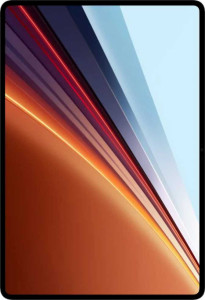
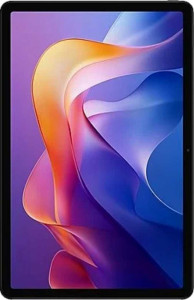
In terms of physical footprint, these two tablets target noticeably different use cases. The Honor Pad GT2 Pro is significantly larger — 277.8 × 190.9 mm versus the Xiaomi Redmi Pad 2's more compact 254.6 × 166 mm — meaning the Honor is closer to a full-sized productivity slate, while the Redmi Pad 2 sits in a more portable, one-hand-friendly bracket. Despite its larger surface area, the Honor is remarkably slim at 6 mm thick compared to the Redmi's 7.4 mm, which gives it a premium, svelte feel in hand even if it occupies more bag space.

Weight tells a nuanced story: the Redmi Pad 2 is lighter at 510 g versus the Honor's 532 g, a 22 g difference that is unlikely to be felt during casual use but could matter during extended one-handed reading sessions. Neither tablet offers any water resistance, and both lack a detachable or backlit keyboard in the box — so neither has a built-in productivity accessory advantage on that front.

The single most impactful design differentiator is that the Honor Pad GT2 Pro includes a stylus, while the Redmi Pad 2 does not. Even without tilt sensitivity, having a bundled stylus opens up note-taking and sketching workflows at no extra cost, which is a tangible real-world advantage. Overall, the Honor Pad GT2 Pro holds a clear design edge for users who want a larger canvas, a thinner profile, and stylus support out of the box; the Redmi Pad 2 wins only if compactness and lighter weight are the top priorities.

Display:
screen size 12.5" 11"
resolution 3048 x 2032 px 2560 x 1600 px
pixel density 285 ppi 274 ppi
Display type LCD, IPS LCD, IPS
refresh rate 165Hz 90Hz
has branded damage-resistant glass
supports HDR10
has a touch screen
Has sapphire glass display
supports HDR10+
supports Dolby Vision
Has an e-paper display

Screen size is where these two tablets diverge most dramatically. The Honor Pad GT2 Pro sports a large 12.5″ panel versus the Xiaomi Redmi Pad 2's 11″ — a 1.5-inch difference that translates into meaningfully more screen real estate for multitasking, media consumption, and document editing. Both panels are LCD IPS, so neither has the contrast or black-level advantage of OLED, and neither supports HDR10 or Dolby Vision, putting them on equal footing for color-critical content.

Where the Honor pulls further ahead is refresh rate. Its 165Hz panel is substantially smoother than the Redmi's 90Hz — a gap that is immediately perceptible when scrolling, navigating UI, or playing fast-paced games. The 90Hz on the Redmi is adequate and noticeably better than a standard 60Hz screen, but the Honor's 165Hz sits in a class typically reserved for gaming-focused displays, making animations feel near-instantaneous. Pixel density is close — 285 ppi on the Honor versus 274 ppi on the Redmi — meaning both deliver sharp text and imagery, with only a marginal sharpness edge to the Honor that most users won't distinguish in everyday use.

Neither tablet offers branded damage-resistant glass, so both are equally vulnerable to scratches without a screen protector. Taking everything together, the Honor Pad GT2 Pro holds a clear display advantage: its larger canvas and significantly higher refresh rate make it the stronger choice for both productivity and entertainment, while the Redmi Pad 2 is a competent but more modest screen experience.

Performance:
internal storage 512GB 256GB
RAM 16GB 8GB
GPU name Adreno 750 Mali G57
CPU speed 3 x 3.15 & 2 x 2.96 & 2 x 2.26 & 1 x 3.3 GHz 2 x 2.2 & 6 x 2 GHz
has an external memory slot
semiconductor size 4 nm 6 nm
Supports 64-bit
Has integrated LTE
Uses big.LITTLE technology
DirectX version DirectX 12 DirectX 11
Has integrated graphics
GPU clock speed 900 MHz 1000 MHz
CPU threads 8 threads 8 threads
RAM speed 4800 MHz 4266 MHz
Has TrustZone
maximum memory amount 24GB 12GB
Android version Android 15 Android 15
Thermal Design Power (TDP) 12.5W 5W
Uses HMP
maximum memory bandwidth 76.6 GB/s 17.1 GB/s
OpenGL ES version 3.2 3.2
OpenCL version 2 2

The silicon gap between these two tablets is substantial. The Honor Pad GT2 Pro runs on a 4 nm chip with a complex eight-core configuration peaking at 3.3 GHz, paired with 16 GB of RAM and up to 512 GB of internal storage. The Xiaomi Redmi Pad 2, by contrast, is built on a 6 nm process with a more modest dual-cluster setup topping out at 2.2 GHz, alongside 8 GB of RAM and 256 GB of storage. A smaller node means greater efficiency and higher peak performance — in practice, the Honor will handle heavier workloads, more simultaneous apps, and demanding games with noticeably more headroom before slowing down.

The GPU story is equally one-sided. The Honor's Adreno 750 supports DirectX 12 and delivers a memory bandwidth of 76.6 GB/s — nearly 4.5 times the Redmi's 17.1 GB/s — which translates directly into faster texture loading, smoother frame rates in graphically intensive titles, and better future-proofing for upcoming game releases. The Redmi's Mali G57 with DirectX 11 is a capable mid-range GPU, but it belongs to a clearly different performance tier. One counterpoint: the Redmi's TDP of just 5W versus the Honor's 12.5W suggests it will run cooler and potentially preserve battery better under light loads, though this comes at the cost of peak throughput.

The Redmi Pad 2 does recover one practical point: it includes a microSD card slot, giving users a path to expand storage beyond the built-in 256 GB — something the Honor, despite its generous 512 GB base, does not offer. Still, on raw performance, the Honor Pad GT2 Pro wins this category decisively, outclassing the Redmi Pad 2 across CPU speed, RAM capacity, GPU capability, and memory bandwidth by margins that will be felt in real-world usage.
Cameras:
megapixels (main camera) 13 MP 8 MP
megapixels (front camera) 8MP 5MP
has a flash
has a front camera
has a built-in HDR mode
can create panoramas in-camera
supports slow-motion video recording
has touch autofocus
optical zoom 0x 0x
has a BSI sensor
has manual white balance
has a CMOS sensor
wide aperture (main camera) 2f 2f
supports HDR10 recording
has continuous autofocus when recording movies
supports Dolby Vision recording
Has a front-facing LED flash
has manual ISO
has a video light
wide aperture (front camera) 2f 2.2f
Shoots 360° panorama
has a serial shot mode
has built-in optical image stabilization
has 3D photo/video recording capabilities
Has a dual-tone LED flash
has manual focus
Has a RGB LED flash
has manual exposure
has manual shutter speed

Tablet cameras are rarely a primary purchase driver, but the differences here are worth noting. The Honor Pad GT2 Pro leads on resolution with a 13 MP main camera and an 8 MP front camera, compared to the Xiaomi Redmi Pad 2's 8 MP rear and 5 MP front. More megapixels alone don't guarantee better photos, but they do allow for more detail retention when cropping, which matters for document scanning and video calls — two scenarios where tablet cameras actually see regular use.

A more practical differentiator is the Honor's inclusion of a rear flash and a video light, both absent on the Redmi Pad 2. For scanning documents or shooting in dim environments, having a flash is a genuine functional advantage rather than a luxury. The Redmi counters with one exclusive feature of its own: slow-motion video recording, which the Honor lacks. It also has a slightly wider front aperture at f/2.2 versus the Honor's f/2.0 — meaning the Honor's selfie camera lets in marginally more light, an edge for video calls in lower-light conditions. Both tablets share the same manual control set and continuous autofocus during video, so neither has an advantage in shooting flexibility.

On balance, the Honor Pad GT2 Pro has a clear camera edge: higher resolution on both lenses, a flash for low-light utility, and a brighter front aperture make it the more capable imaging package. The Redmi Pad 2's slow-motion capability is a niche perk that won't sway most users comparing these two for everyday use cases.

Audio:
has aptX
has aptX HD
has LDAC
has aptX Low Latency
has aptX Adaptive
has aptX Lossless
has stereo speakers
has a socket for a 3.5 mm audio jack
Has a radio

Audio is the one category where the Xiaomi Redmi Pad 2 punches back convincingly. It features stereo speakers and a 3.5 mm headphone jack — two things the Honor Pad GT2 Pro lacks entirely. For a media consumption device like a tablet, stereo speakers are a meaningful everyday advantage: content sounds wider, more immersive, and better positioned in space compared to a mono setup. The headphone jack adds wired compatibility with any pair of headphones without needing an adapter, which is a practical convenience many users still value.

The Honor's sole audio differentiator is support for aptX Adaptive, a high-quality Bluetooth audio codec that delivers low-latency, adaptive-bitrate wireless audio — a genuine perk for users pairing premium wireless headphones. However, this benefit only materializes if the connected headphones also support aptX Adaptive, making it a conditional rather than universal advantage. The Redmi, by contrast, offers no advanced Bluetooth audio codec, which matters for users who rely heavily on wireless audio quality.

Taken as a whole, the Xiaomi Redmi Pad 2 wins the audio category for most users. Stereo speakers and a headphone jack are universally applicable advantages that improve the out-of-the-box listening experience daily, whereas aptX Adaptive on the Honor only pays off in a specific wireless headphone pairing scenario.

Battery:
battery power 10100 mAh 9000 mAh
Supports fast charging
has wireless charging
has a battery level indicator
has a rechargeable battery
has a removable battery

Raw capacity goes to the Honor Pad GT2 Pro, which houses a 10,100 mAh battery versus the Xiaomi Redmi Pad 2's 9,000 mAh. That 1,100 mAh gap — roughly 12% more capacity — suggests the Honor can sustain longer sessions between charges, an advantage amplified by its more power-efficient 4 nm chip noted in the performance specs. For users who rely on a tablet through full workdays or long travel stretches, that extra headroom is a tangible benefit.

The Redmi Pad 2 strikes back on charging speed: it supports fast charging, while the Honor does not. This is a meaningful real-world trade-off — a larger battery that charges slowly can mean hours tethered to a wall outlet, whereas fast charging on the Redmi lets users top up quickly during short breaks. Depending on usage patterns, a user who regularly charges throughout the day may find the Redmi's faster replenishment more practical than the Honor's larger reserve. Neither tablet offers wireless charging, so both require a wired connection regardless.

This category is a genuine split decision with no outright winner. The Honor Pad GT2 Pro suits users who prioritize maximum uptime and can plan their charging around longer intervals, while the Redmi Pad 2 is better suited to those who charge opportunistically and value getting back to full quickly. The right choice depends entirely on individual usage habits.

Connectivity & Features:
release date July 2025 June 2025
Wi-Fi version Wi-Fi 4 (802.11n), Wi-Fi 5 (802.11ac), Wi-Fi 6 (802.11ax), Wi-Fi 6E (802.11ax), Wi-Fi 7 (802.11be) Wi-Fi 4 (802.11n), Wi-Fi 5 (802.11ac)
has Mail Privacy Protection
has on-device machine learning
has clipboard warnings
has location privacy options
has camera/microphone privacy options
can block app tracking
blocks cross-site tracking
supports split screen
has Live Text
has notification permissions
has full-page screenshots
has Quick Start
has theme customization
has Wi-Fi password sharing
has PiP
Can play games while they download
has an extra dim mode
can offload apps
has focus modes
has media picker
has dynamic theming
has dark mode
has battery health check
Has USB Type-C
has a cellular module
has 5G support
is a multi-user system
gets direct OS updates
has GPS
has a child lock
has an HDMI output
has NFC
Has a fingerprint scanner
Supports widgets
Bluetooth version 5.4 5.3
download speed 10000 MBits/s 650 MBits/s
has a gyroscope
Is free and open source
Has offline voice recognition
has a compass
upload speed 3500 MBits/s 150 MBits/s
supports Wi-Fi
Has sharing intents
Has customizable notifications
Uses 3D facial recognition
supports Galileo
Has a barometer
has an accelerometer
has voice commands
Has an iris scanner
Has a built-in projector
supports Ethernet
Has an infrared sensor
Tracks the current position of a mobile device

Wireless connectivity is where the Honor Pad GT2 Pro makes its most future-proof statement. It supports up to Wi-Fi 7 (802.11be) with theoretical download speeds of 10,000 Mbits/s, while the Xiaomi Redmi Pad 2 tops out at Wi-Fi 5 (802.11ac) with a ceiling of just 650 Mbits/s. In practical terms, Wi-Fi 7 delivers dramatically lower latency and higher throughput on compatible routers — a significant advantage for heavy file transfers, cloud gaming, or streaming high-bitrate content. The Honor also edges ahead on Bluetooth 5.4 versus the Redmi's 5.3, though this difference is marginal in everyday use.

Navigation and location tell a different story. The Redmi Pad 2 includes a cellular module, GPS, a compass, and Galileo satellite support — none of which are present on the Honor. This makes the Redmi a genuinely portable, always-connected device capable of independent navigation, whereas the Honor is entirely dependent on a Wi-Fi network or a phone hotspot to get online and cannot independently determine its location. For users who travel or use their tablet away from known networks, this is a consequential gap in the Honor's capabilities.

Neither product has NFC or a fingerprint scanner, and both share an identical software feature set — split screen, PiP, widgets, dark mode, and on-device ML among them. Overall, this category is a meaningful split: the Honor Pad GT2 Pro dominates on Wi-Fi speed and future-proofing, while the Redmi Pad 2 wins on real-world portability thanks to its cellular connectivity and full location stack. Which advantage matters more depends entirely on whether the user needs an always-connected, go-anywhere tablet or a stay-at-home powerhouse.

Miscellaneous:
DDR memory version 5 4

This group contains a single data point, but it reinforces a pattern already visible in the performance specs. The Honor Pad GT2 Pro uses LPDDR5 memory, while the Xiaomi Redmi Pad 2 relies on the older LPDDR4 standard. LPDDR5 offers higher bandwidth and improved power efficiency compared to LPDDR4 — meaning the Honor's RAM not only moves data faster between the processor and memory, but does so while drawing less power, which contributes to both performance headroom and battery longevity under load.

The Honor Pad GT2 Pro has the clear edge here. LPDDR5 is the more modern standard, and its advantages compound with the Honor's already superior RAM capacity and memory bandwidth figures seen elsewhere in the spec sheet. For the Redmi Pad 2, LPDDR4 is a functional and proven technology, but it represents an older generation that is less capable of keeping pace with demanding multitasking or memory-intensive workloads.

Comparison Summary & Verdict

After examining every specification, a clear picture emerges for each device. The Honor Pad GT2 Pro is the stronger choice for users who demand raw performance — its larger 12.5″ 165Hz display, 16GB of RAM, Adreno 750 GPU, Wi-Fi 7 support, and included stylus make it a productivity and multimedia powerhouse. The Xiaomi Redmi Pad 2, on the other hand, appeals to users who value everyday practicality: it offers stereo speakers, a 3.5mm audio jack, fast charging, a cellular module with GPS, and a microSD slot for expandable storage — all in a slightly lighter body. If immersive visuals and top-tier performance are your priority, lean toward the Honor Pad GT2 Pro. If portability, versatile connectivity, and well-rounded daily usability matter more, the Xiaomi Redmi Pad 2 is the smarter pick.

Honor Pad GT2 Pro
Buy Honor Pad GT2 Pro if...

Buy the Honor Pad GT2 Pro if you want a high-performance tablet with a large 12.5″ 165Hz display, superior RAM and GPU power, Wi-Fi 7 connectivity, and a bundled stylus for productivity.

Xiaomi Redmi Pad 2
Buy Xiaomi Redmi Pad 2 if...

Buy the Xiaomi Redmi Pad 2 if you prioritize everyday versatility, including stereo speakers, a headphone jack, fast charging, cellular connectivity with GPS, and expandable storage via microSD.