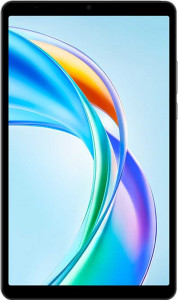
Honor Pad X7
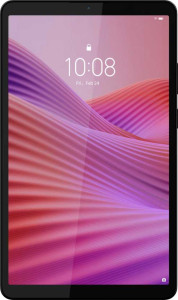
Lenovo Tab One

Honor Pad X7 Lenovo Tab One

Overview

Welcome to our in-depth spec comparison between the Honor Pad X7 and the Lenovo Tab One, two budget-friendly 8.7-inch Android tablets competing for the same shelf space. Both share a familiar foundation — identical screen size, 4GB of RAM, 128GB of storage, and stereo speakers — yet they diverge sharply in areas like display quality, battery capacity, and connectivity options. Read on to discover which tablet better fits your everyday needs.

Common Features

  • Both tablets share the same height of 124.8 mm.
  • Neither the Honor Pad X7 nor the Lenovo Tab One includes a stylus.
  • Neither device has a detachable or backlit keyboard.
  • Neither tablet offers any water resistance rating.
  • Both devices feature an 8.7″ screen size.
  • Both tablets have a pixel density of 179 ppi.
  • Neither device has branded damage-resistant glass or an anti-reflection coating.
  • HDR10 and HDR10+ support are not available on either product.
  • Both devices feature a touchscreen display.
  • Both tablets come with 128GB of internal storage and 4GB of RAM.
  • Both devices support external memory expansion.
  • Both support 64-bit processing and use big.LITTLE technology.
  • DirectX 12 is supported on both tablets.
  • Both devices have integrated graphics and integrated LTE capability.
  • Both tablets have an 8 MP main camera capable of 1080p at 30 fps video recording.
  • Both devices include a front-facing camera, built-in HDR mode, and touch autofocus.
  • Neither device supports in-camera panoramas or has a BSI sensor, and both offer 0x optical zoom.
  • Stereo speakers are present on both the Honor Pad X7 and the Lenovo Tab One.
  • Neither device supports aptX, aptX HD, aptX Adaptive, aptX Low Latency, aptX Lossless, or LDAC.
  • Neither tablet supports wireless charging, and both have a non-removable rechargeable battery with a battery level indicator.
  • Both devices support Wi-Fi 4 (802.11n) and Wi-Fi 5 (802.11ac).
  • Both tablets feature on-device machine learning, clipboard warnings, location privacy options, and camera/microphone privacy options.
  • Both devices allow blocking of app tracking, but neither blocks cross-site tracking.
  • DDR4 memory is used in both the Honor Pad X7 and the Lenovo Tab One.

Main Differences

  • Weight is 365 g on the Honor Pad X7 and 320 g on the Lenovo Tab One.
  • Thickness is 8 mm on the Honor Pad X7 and 8.5 mm on the Lenovo Tab One.
  • Width is 211.8 mm on the Honor Pad X7 and 211 mm on the Lenovo Tab One.
  • Volume is 211.46 cm³ on the Honor Pad X7 and 223.83 cm³ on the Lenovo Tab One.
  • Display type is LCD IPS on the Honor Pad X7 and LCD (without IPS) on the Lenovo Tab One.
  • Refresh rate is 90Hz on the Honor Pad X7 and 60Hz on the Lenovo Tab One.
  • Typical brightness is 500 nits on the Honor Pad X7 and 480 nits on the Lenovo Tab One.
  • The GPU is an Adreno 610 on the Honor Pad X7 and a Mali G52 MC2 on the Lenovo Tab One.
  • CPU speed is 4 x 2.4 GHz & 4 x 1.9 GHz on the Honor Pad X7 and 2 x 2 GHz & 6 x 1.8 GHz on the Lenovo Tab One.
  • Geekbench 6 multi-core score is 1466 on the Honor Pad X7 and 1322 on the Lenovo Tab One.
  • Geekbench 6 single-core score is 416 on the Honor Pad X7 and 424 on the Lenovo Tab One.
  • Semiconductor size is 6 nm on the Honor Pad X7 and 12 nm on the Lenovo Tab One.
  • GPU clock speed is 845 MHz on the Honor Pad X7 and 1000 MHz on the Lenovo Tab One.
  • RAM speed is 2133 MHz on the Honor Pad X7 and 1800 MHz on the Lenovo Tab One.
  • Maximum memory bandwidth is 14.9 GB/s on the Honor Pad X7 and 13.41 GB/s on the Lenovo Tab One.
  • The Honor Pad X7 runs Android 15 while the Lenovo Tab One runs Android 14.
  • TDP is 6W on the Honor Pad X7 and 5W on the Lenovo Tab One.
  • Front camera resolution is 5 MP on the Honor Pad X7 and 2 MP on the Lenovo Tab One.
  • A flash and video light are present on the Honor Pad X7 but not on the Lenovo Tab One.
  • Slow-motion video recording is supported on the Lenovo Tab One but not on the Honor Pad X7.
  • A 3.5 mm audio jack is available on the Lenovo Tab One but not on the Honor Pad X7.
  • An FM radio is present on the Lenovo Tab One but not on the Honor Pad X7.
  • Battery capacity is 7020 mAh on the Honor Pad X7 and 5100 mAh on the Lenovo Tab One.
  • Fast charging is supported on the Lenovo Tab One but not on the Honor Pad X7.
  • App offloading is available on the Honor Pad X7 but not on the Lenovo Tab One.
  • A cellular module is present on the Lenovo Tab One but not on the Honor Pad X7.
  • GPS is available on the Lenovo Tab One but not on the Honor Pad X7.
  • Galileo satellite navigation is supported on the Lenovo Tab One but not on the Honor Pad X7.
  • Bluetooth version is 5.0 on the Honor Pad X7 and 5.3 on the Lenovo Tab One.
  • Download speed is 390 Mbit/s on the Honor Pad X7 and 300 Mbit/s on the Lenovo Tab One.
  • Upload speed is 150 Mbit/s on the Honor Pad X7 and 100 Mbit/s on the Lenovo Tab One.
Specs Comparison
Honor Pad X7

Honor Pad X7

Lenovo Tab One

Lenovo Tab One

Design:
weight 365 g 320 g
thickness 8 mm 8.5 mm
width 211.8 mm 211 mm
height 124.8 mm 124.8 mm
volume 211.46112 cm³ 223.8288 cm³
Stylus included
Has a detachable keyboard
Has a backlit keyboard
water resistance None None
Has tilt sensitivity

In terms of physical footprint, the Honor Pad X7 and Lenovo Tab One are nearly identical twins: both share the same 124.8 mm height and near-matching widths of 211.8 mm vs 211 mm, making them virtually interchangeable in terms of how much desk or bag space they occupy. The one area where they diverge noticeably in hand is weight: the Lenovo Tab One comes in at 320 g, a meaningful 45 g lighter than the Honor Pad X7's 365 g. Over extended reading or media sessions held in one hand, that difference is genuinely perceptible and gives the Lenovo a comfort edge for prolonged use.

Flipping the script, the Honor Pad X7 is the slimmer device at 8 mm thick versus the Lenovo's 8.5 mm. While 0.5 mm is barely noticeable in isolation, it does translate to a slightly more refined, premium-feeling profile when the tablet is lying flat or slipped into a sleeve. Interestingly, despite its smaller overall volume (211.46 cm³ vs 223.83 cm³), the Honor Pad X7 is the heavier unit, implying denser internal components or a heavier chassis material — a trade-off between slimness and mass.

Both tablets are on equal footing in every accessory and protection category: neither includes a stylus, a detachable keyboard, nor any form of water resistance. For users prioritizing lighter weight for handheld comfort, the Lenovo Tab One holds a clear edge; those who prefer a slimmer profile will find the Honor Pad X7 more appealing. Overall, the Lenovo Tab One has the practical design advantage for everyday portability.

Display:
screen size 8.7" 8.7"
resolution 1340 x 800 px 800 x 1340 px
pixel density 179 ppi 179 ppi
Display type LCD, IPS LCD
refresh rate 90Hz 60Hz
has branded damage-resistant glass
has anti-reflection coating
supports HDR10
brightness (typical) 500 nits 480 nits
has a touch screen
Has sapphire glass display
supports HDR10+
supports Dolby Vision
Has an e-paper display

Both tablets share the same 8.7″ screen size and arrive at an identical 179 ppi pixel density, meaning sharpness is a wash between them. The more telling distinction lies in panel technology and motion handling: the Honor Pad X7 uses an IPS LCD panel with a 90Hz refresh rate, while the Lenovo Tab One runs a standard LCD at 60Hz. The smoother 90Hz cadence on the Honor makes scrolling, animations, and casual gaming feel noticeably more fluid — a tangible everyday benefit rather than a paper spec.

Brightness is another area where the Honor edges ahead: its 500 nits typical brightness versus the Lenovo's 480 nits is a modest gap, but in practice it can make a difference under mixed lighting conditions such as near a window, where every bit of extra luminance helps combat glare. Neither display features anti-reflection coating, HDR support of any kind, or damage-resistant glass, so neither tablet has any protective or contrast-enhancement advantage over the other.

The Honor Pad X7 holds a clear edge in this category. The combination of a more capable IPS panel — which typically delivers better color accuracy and wider viewing angles than a generic LCD designation — and the faster 90Hz refresh rate makes it the stronger display choice for media consumption and daily use, with the slight brightness advantage serving as a secondary but welcome bonus.

Performance:
internal storage 128GB 128GB
RAM 4GB 4GB
GPU name Adreno 610 Mali G52 MC2
CPU speed 4 x 2.4 & 4 x 1.9 GHz 2 x 2 & 6 x 1.8 GHz
Geekbench 6 result (multi) 1466 1322
Geekbench 6 result (single) 416 424
has an external memory slot
semiconductor size 6 nm 12 nm
Supports 64-bit
Has integrated LTE
Uses big.LITTLE technology
DirectX version DirectX 12 DirectX 12
Has integrated graphics
GPU clock speed 845 MHz 1000 MHz
CPU threads 8 threads 8 threads
RAM speed 2133 MHz 1800 MHz
Has TrustZone
GPU turbo 800 MHz 1000 MHz
maximum memory amount 8GB 8GB
Android version Android 15 Android 14
Thermal Design Power (TDP) 6W 5W
maximum memory bandwidth 14.9 GB/s 13.41 GB/s
memory channels 2 2
OpenGL ES version 3.2 3.2
eMMC version 5.1 5.1
OpenCL version 2 2

Under the hood, the Honor Pad X7 pulls ahead in most of the metrics that matter for sustained performance. Its chipset is built on a 6 nm process node versus the Lenovo Tab One's older 12 nm fabrication — a generational gap that translates directly into better power efficiency and lower heat output per unit of work. That architectural advantage shows up in the Geekbench 6 benchmarks: the Honor leads in multi-core throughput with a score of 1466 versus 1322 for the Lenovo, meaning it handles parallel workloads — think split-screen apps, background sync, and complex web pages — more capably. Single-core scores are essentially tied (416 vs 424), so for basic, sequential tasks the two feel comparable.

The memory subsystem also favors the Honor: its 2133 MHz RAM and 14.9 GB/s peak bandwidth outpace the Lenovo's 1800 MHz and 13.41 GB/s, which means faster data throughput between the CPU and RAM — a subtle but real benefit when multitasking or loading large assets. On the GPU side, the Lenovo's Mali G52 MC2 runs at a higher clock speed, but the Honor's Adreno 610 is an architecturally more capable GPU design, making raw clock speed a misleading comparison here. Software longevity is another differentiator: the Honor ships with Android 15 out of the box, one full generation ahead of the Lenovo's Android 14.

The Honor Pad X7 holds a clear performance advantage in this category. Its more modern 6 nm chip, stronger multi-core output, faster memory, and newer Android version collectively make it the more future-proof and capable performer, particularly for users who push their tablet beyond light browsing and video playback.

Cameras:
megapixels (main camera) 8 MP 8 MP
megapixels (front camera) 5MP 2MP
video recording (main camera) 1080 x 30 fps 1080 x 30 fps
has a flash
has a front camera
has a built-in HDR mode
can create panoramas in-camera
supports slow-motion video recording
has touch autofocus
optical zoom 0x 0x
has a BSI sensor
has manual white balance
has a CMOS sensor
supports HDR10 recording
has continuous autofocus when recording movies
supports Dolby Vision recording
Has a front-facing LED flash
has manual ISO
has a video light
Shoots 360° panorama
has a serial shot mode
has built-in optical image stabilization
has 3D photo/video recording capabilities
Has a dual-tone LED flash
has manual focus
Has a RGB LED flash
has manual exposure
has manual shutter speed

On the rear camera, both tablets are perfectly matched: 8 MP sensors, 1080p at 30fps video, HDR mode, touch autofocus, continuous autofocus during recording, and a shared set of manual controls including ISO, white balance, exposure, and focus. Neither offers optical zoom or optical image stabilization, which is typical for tablets in this segment. The meaningful divergence starts when you look beyond the headline resolution figures.

The Honor Pad X7 includes a rear flash and a video light, while the Lenovo Tab One has neither. For a device class not primarily known for photography, these additions are genuinely useful for scanning documents, capturing whiteboards in dim rooms, or occasional close-up shots in low light. The Lenovo counters with slow-motion video recording, a feature absent on the Honor — though on a budget tablet without a high-frame-rate sensor, its practical quality ceiling is limited. The front camera gap is more clear-cut: the Honor's 5 MP selfie shooter versus the Lenovo's 2 MP is a significant resolution difference that directly impacts video call clarity and self-portrait quality.

The Honor Pad X7 takes the edge in this category. The combination of a stronger 5 MP front camera, a rear flash, and a video light makes it the more versatile and capable imaging package — advantages that are particularly relevant for video conferencing, which is one of the most common use cases for a tablet of this size.
Audio:
has aptX
has aptX HD
has LDAC
has aptX Low Latency
has aptX Adaptive
has aptX Lossless
has stereo speakers
has a socket for a 3.5 mm audio jack
Has a radio

Stereo speakers are the one feature both tablets share here, and it is a welcome baseline — stereo output produces a noticeably wider soundstage than mono for media consumption. Neither device supports any high-quality Bluetooth audio codec such as aptX, LDAC, or their variants, meaning wireless audio is limited to standard SBC or AAC quality regardless of which tablet you choose.

Where the Lenovo Tab One pulls decisively ahead is in wired and broadcast audio connectivity. Its 3.5 mm headphone jack is a feature the Honor Pad X7 omits entirely — and on a budget tablet used for long media sessions, this matters considerably. Wired headphones typically deliver lower latency, more reliable connections, and better audio quality per dollar than Bluetooth alternatives, and they do not require charging. The Lenovo also includes a built-in FM radio, a niche but genuinely useful feature for users who want to access local broadcasts without consuming mobile data.

The Lenovo Tab One wins this category outright. The presence of a 3.5 mm jack alone is a significant practical advantage for many users, and the addition of an FM radio only widens the gap. The Honor Pad X7 has no compensating audio feature to offset these omissions.

Battery:
battery power 7020 mAh 5100 mAh
Supports fast charging
has wireless charging
has a battery level indicator
has a rechargeable battery
has a removable battery

The battery story here is a clear trade-off between capacity and convenience. The Honor Pad X7 packs a substantially larger 7020 mAh cell compared to the Lenovo Tab One's 5100 mAh — a difference of nearly 38%. All else being equal, that translates directly into meaningfully longer time between charges, whether for video streaming, reading, or light productivity. For users who prioritize all-day or multi-day endurance without reaching for a cable, the Honor has a notable structural advantage.

The Lenovo counters with fast charging support, a feature the Honor Pad X7 lacks entirely. Fast charging does not extend battery life, but it does reduce the time spent tethered to a wall — a practical benefit for users whose usage patterns involve shorter, more frequent top-ups rather than full overnight charges. Whether this offsets the capacity gap depends heavily on individual habits: a user who charges nightly will barely notice fast charging, while one who needs a quick boost before leaving the house will find it genuinely valuable.

On balance, the Honor Pad X7 holds the stronger position in this category. A 7020 mAh battery is a foundational advantage for a portable device — it reduces charge frequency altogether, which is a more universal benefit than faster replenishment of a smaller cell. The Lenovo's fast charging is a useful quality-of-life feature, but it does not compensate for carrying nearly 1900 mAh less capacity.

Connectivity & Features:
release date July 2025 March 2025
Wi-Fi version Wi-Fi 4 (802.11n), Wi-Fi 5 (802.11ac) Wi-Fi 4 (802.11n), Wi-Fi 5 (802.11ac)
has Mail Privacy Protection
has on-device machine learning
has clipboard warnings
has location privacy options
has camera/microphone privacy options
can block app tracking
blocks cross-site tracking
supports split screen
has Live Text
has notification permissions
has full-page screenshots
has Quick Start
has theme customization
has Wi-Fi password sharing
has PiP
Can play games while they download
has an extra dim mode
can offload apps
has focus modes
has media picker
has dynamic theming
has dark mode
has battery health check
Has USB Type-C
has a cellular module
has 5G support
is a multi-user system
gets direct OS updates
has GPS
has a child lock
has an HDMI output
has NFC
Has a fingerprint scanner
Supports widgets
Bluetooth version 5 5.3
download speed 390 MBits/s 300 MBits/s
has a gyroscope
Is free and open source
Has offline voice recognition
has a compass
upload speed 150 MBits/s 100 MBits/s
supports Wi-Fi
Has sharing intents
Has customizable notifications
Uses 3D facial recognition
supports Galileo
Has a barometer
has an accelerometer
has voice commands
Has an iris scanner
Has a built-in projector
supports Ethernet
Has an infrared sensor
Tracks the current position of a mobile device

Across the broad landscape of software features — split-screen, Picture-in-Picture, dark mode, dynamic theming, privacy controls, widgets, and voice commands — these two tablets are virtually identical. The real differentiators emerge in hardware connectivity. The Lenovo Tab One includes a cellular module alongside GPS and Galileo satellite support, while the Honor Pad X7 has none of these. In practical terms, this means the Lenovo can function as a standalone connected device away from Wi-Fi and navigate accurately without a tethered smartphone — a meaningful capability gap for users who need mobility beyond the home or office.

Flipping to wireless performance, the Honor Pad X7 reclaims ground with notably faster Wi-Fi throughput: 390 Mbits/s download and 150 Mbits/s upload versus the Lenovo's 300 Mbits/s and 100 Mbits/s. For a Wi-Fi-only device, maximizing local network speed is a reasonable compensation. The Lenovo also edges ahead on Bluetooth 5.3 compared to the Honor's Bluetooth 5.0, offering slightly better connection stability and range for wireless peripherals. One smaller but handy software distinction: the Honor supports app offloading — removing an app while retaining its data — which the Lenovo does not.

The Lenovo Tab One holds the advantage in this category, and it is not especially close. The combination of a cellular module, GPS, and newer Bluetooth makes it the more versatile device for users who need connectivity beyond Wi-Fi range. The Honor's faster Wi-Fi speeds are a welcome trait for home use, but they cannot substitute for the Lenovo's fundamentally broader connectivity hardware.

Miscellaneous:
DDR memory version 4 4

The only data point available for this group is the DDR memory version, and both the Honor Pad X7 and the Lenovo Tab One use DDR4 RAM. DDR4 is a mature, widely adopted standard that offers a solid balance of bandwidth and power efficiency for devices in this performance tier. Since both tablets are on equal footing here, this spec provides no basis for differentiation — this category is a complete tie.

Comparison Summary & Verdict

After examining every specification, a clear picture emerges for each device. The Honor Pad X7 stands out with its 90Hz IPS display, larger 7020 mAh battery, newer Android 15, a more powerful chipset built on a 6nm process, and a higher-resolution 5MP front camera — making it the stronger choice for media consumption and video calls. The Lenovo Tab One, on the other hand, wins points for its lighter 320g build, built-in cellular module with GPS, 3.5mm audio jack, FM radio, and support for fast charging, making it a better companion for users who need on-the-go connectivity and wired audio. Choose the Honor Pad X7 for a richer screen and longer battery life at home; choose the Lenovo Tab One if portability, cellular access, and everyday versatility are your top priorities.

Honor Pad X7
Buy Honor Pad X7 if...

Buy the Honor Pad X7 if you want a smoother 90Hz IPS display, a significantly larger battery, and a more modern chipset for better everyday performance.

Lenovo Tab One
Buy Lenovo Tab One if...

Buy the Lenovo Tab One if you need built-in cellular connectivity and GPS, prefer a lighter device, or rely on a 3.5mm headphone jack and fast charging.