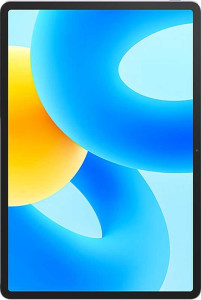
Wireless connectivity is where the Huawei MatePad 11.5 (2025) pulls ahead most clearly. It supports Wi-Fi 6 (802.11ax) in addition to Wi-Fi 4 and 5, while the Honor Pad X9a tops out at Wi-Fi 5 (802.11ac). Wi-Fi 6 delivers lower latency, better performance in congested network environments, and improved efficiency — meaningful for users on modern routers or in shared spaces like offices or classrooms. The throughput figures reinforce this gap: the MatePad reaches 1400 Mbits/s download versus the X9a's 390 Mbits/s, a substantial difference for large file transfers or high-bitrate streaming. On Bluetooth, the X9a edges ahead with version 5.1 versus the MatePad's 5.0, though the practical difference between these two versions is negligible for most users.
Beyond raw wireless specs, the MatePad also supports voice commands, a feature absent on the X9a. For users who rely on hands-free interaction — particularly in productivity or accessibility contexts — this is a genuine functional differentiator. Otherwise, the two tablets are well-matched across software features: both offer split-screen, dark mode, widgets, customizable notifications, multi-user support, child lock, privacy controls for camera and microphone, and position tracking. Neither includes NFC, GPS, a fingerprint scanner, or cellular connectivity, so location-dependent and contactless use cases are equally limited on both.
The Huawei MatePad 11.5 (2025) holds the advantage in connectivity, driven by its Wi-Fi 6 support and dramatically higher download speeds — benefits that compound over time as Wi-Fi 6 infrastructure becomes more prevalent. The addition of voice commands further extends its feature set beyond the X9a. The X9a's marginal Bluetooth version lead does not offset these differences in any meaningful way.