Honor Pad X9a
Oppo Pad 4 Pro

Honor Pad X9a Oppo Pad 4 Pro

Overview

Welcome to our in-depth comparison of the Honor Pad X9a and the Oppo Pad 4 Pro — two Android tablets running Android 15 that take very different approaches to the tablet experience. From screen size and raw processing power to battery capacity and connectivity, these two devices sit at notably different ends of the spectrum. Read on as we break down every key specification to help you decide which one truly fits your needs.

Common Features

  • Neither product includes a stylus.
  • Neither product has a detachable keyboard.
  • Neither product has a backlit keyboard.
  • Neither product has any water resistance rating.
  • Neither product has tilt sensitivity.
  • Both products feature an LCD IPS display type.
  • Neither product has branded damage-resistant glass.
  • Neither product supports HDR10.
  • Both products have a touchscreen.
  • Neither product has a sapphire glass display.
  • Neither product supports HDR10+.
  • Neither product has an e-paper display.
  • Both products support 64-bit processing.
  • Both products have integrated LTE.
  • Both products use big.LITTLE CPU technology.
  • Both products support DirectX 12.
  • Both products have integrated graphics.
  • Both products have 8 CPU threads.
  • Both products have TrustZone security.
  • Both products run Android 15.
  • Both products have a front camera.
  • Both products have a built-in HDR mode.
  • Both products support slow-motion video recording.
  • Both products support manual white balance.
  • Both products have continuous autofocus when recording video.
  • Neither product has a front-facing LED flash.
  • Both products support manual ISO.
  • Neither product can shoot 360° panoramas.
  • Both products have stereo speakers.
  • Neither product has a 3.5 mm audio jack.
  • Neither product has a radio.
  • Both products support fast charging.
  • Neither product supports wireless charging.
  • Both products have a battery level indicator.
  • Both products have a rechargeable battery.
  • Neither product has a removable battery.
  • Both products have on-device machine learning.
  • Both products have clipboard warnings.
  • Both products have location privacy options.
  • Both products have camera and microphone privacy options.
  • Both products can block app tracking.
  • Neither product blocks cross-site tracking.
  • Both products support split screen.
  • Neither product has Mail Privacy Protection.

Main Differences

  • Weight is 475 g on Honor Pad X9a and 675 g on Oppo Pad 4 Pro.
  • Thickness is 6.8 mm on Honor Pad X9a and 6 mm on Oppo Pad 4 Pro.
  • Width is 267.3 mm on Honor Pad X9a and 289.6 mm on Oppo Pad 4 Pro.
  • Height is 167.4 mm on Honor Pad X9a and 209.7 mm on Oppo Pad 4 Pro.
  • Volume is 304.27 cm³ on Honor Pad X9a and 364.37 cm³ on Oppo Pad 4 Pro.
  • Screen size is 11.5″ on Honor Pad X9a and 13.2″ on Oppo Pad 4 Pro.
  • Resolution is 2508 x 1504 px on Honor Pad X9a and 3392 x 2400 px on Oppo Pad 4 Pro.
  • Pixel density is 254 ppi on Honor Pad X9a and 315 ppi on Oppo Pad 4 Pro.
  • Refresh rate is 120Hz on Honor Pad X9a and 144Hz on Oppo Pad 4 Pro.
  • Internal storage is 128GB on Honor Pad X9a and 512GB on Oppo Pad 4 Pro.
  • RAM is 8GB on Honor Pad X9a and 16GB on Oppo Pad 4 Pro.
  • The chipset is Qualcomm Snapdragon 685 4G on Honor Pad X9a and Qualcomm Snapdragon 8 Elite on Oppo Pad 4 Pro.
  • The GPU is Adreno 610 on Honor Pad X9a and Adreno 830 on Oppo Pad 4 Pro.
  • CPU speed is 4 x 2.8 & 4 x 1.9 GHz on Honor Pad X9a and 2 x 4.32 & 6 x 3.53 GHz on Oppo Pad 4 Pro.
  • Geekbench 6 multi-core score is 1510 on Honor Pad X9a and 10059 on Oppo Pad 4 Pro.
  • Geekbench 6 single-core score is 473 on Honor Pad X9a and 3234 on Oppo Pad 4 Pro.
  • An external memory slot is available on Honor Pad X9a but not on Oppo Pad 4 Pro.
  • Semiconductor size is 6 nm on Honor Pad X9a and 3 nm on Oppo Pad 4 Pro.
  • RAM speed is 2133 MHz on Honor Pad X9a and 5300 MHz on Oppo Pad 4 Pro.
  • DDR memory version is DDR4 on Honor Pad X9a and DDR5 on Oppo Pad 4 Pro.
  • Main camera resolution is 8 MP on Honor Pad X9a and 13 MP on Oppo Pad 4 Pro.
  • Front camera resolution is 5 MP on Honor Pad X9a and 8 MP on Oppo Pad 4 Pro.
  • Main camera video recording is 1080p at 30 fps on Honor Pad X9a and 2160p at 30 fps on Oppo Pad 4 Pro.
  • A rear flash is present on Oppo Pad 4 Pro but not available on Honor Pad X9a.
  • In-camera panorama creation is available on Honor Pad X9a but not on Oppo Pad 4 Pro.
  • Main camera aperture is f/2 on Honor Pad X9a and f/2.2 on Oppo Pad 4 Pro.
  • A video light is present on Oppo Pad 4 Pro but not available on Honor Pad X9a.
  • Battery capacity is 8300 mAh on Honor Pad X9a and 12140 mAh on Oppo Pad 4 Pro.
  • Wi-Fi support covers Wi-Fi 4 and Wi-Fi 5 on Honor Pad X9a, while Oppo Pad 4 Pro also adds Wi-Fi 6 and Wi-Fi 7.
  • Bluetooth version is 5.1 on Honor Pad X9a and 5.4 on Oppo Pad 4 Pro.
  • Download speed is 390 Mbit/s on Honor Pad X9a and 10000 Mbit/s on Oppo Pad 4 Pro.
  • Upload speed is 150 Mbit/s on Honor Pad X9a and 3500 Mbit/s on Oppo Pad 4 Pro.
  • A gyroscope is present on Oppo Pad 4 Pro but not available on Honor Pad X9a.
  • A compass is present on Oppo Pad 4 Pro but not available on Honor Pad X9a.
  • Voice command support is available on Oppo Pad 4 Pro but not on Honor Pad X9a.
Specs Comparison
Honor Pad X9a

Honor Pad X9a

Oppo Pad 4 Pro

Oppo Pad 4 Pro

Design:
weight 475 g 675 g
thickness 6.8 mm 6 mm
width 267.3 mm 289.6 mm
height 167.4 mm 209.7 mm
volume 304.272936 cm³ 364.37472 cm³
Stylus included
Has a detachable keyboard
Has a backlit keyboard
water resistance None None
Has tilt sensitivity

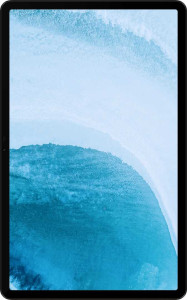
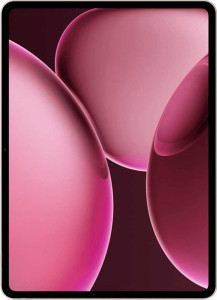
The most striking design difference between these two tablets is their physical scale and weight. The Honor Pad X9a, at 475 g and dimensions of 267.3 × 167.4 mm, is meaningfully more compact than the Oppo Pad 4 Pro, which weighs 675 g and measures 289.6 × 209.7 mm. That 200 g gap is substantial in practice — it translates to noticeably less arm fatigue during extended handheld use, and makes the Honor the more comfortable choice for reading or media consumption on the go.

The trade-off flips when it comes to thickness: the Oppo Pad 4 Pro is actually the slimmer device at 6.0 mm versus the Honor's 6.8 mm. While 0.8 mm is barely perceptible in isolation, it does give the Oppo a slightly more premium, svelte feel in the hand despite its larger footprint. The larger overall volume of the Oppo (364.4 cm³ vs 304.3 cm³) is a direct consequence of its bigger panel size, which may suit users who prioritize screen real estate over portability.

On accessory support, both tablets are identically equipped — or rather, unequipped: neither includes a stylus, a detachable keyboard, or any water resistance rating. Given these shared omissions, the design edge belongs clearly to the Honor Pad X9a for everyday portability, while the Oppo Pad 4 Pro appeals to those who want a larger, thinner slate and are less concerned about weight.

Display:
screen size 11.5" 13.2"
resolution 2508 x 1504 px 3392 x 2400 px
pixel density 254 ppi 315 ppi
Display type LCD, IPS LCD, IPS
refresh rate 120Hz 144Hz
has branded damage-resistant glass
supports HDR10
has a touch screen
Has sapphire glass display
supports HDR10+
Has an e-paper display

Screen size and pixel density are where these two tablets diverge most meaningfully. The Oppo Pad 4 Pro sports a larger 13.2″ IPS LCD panel against the Honor Pad X9a's 11.5″ screen — a difference that makes the Oppo noticeably better suited for productivity tasks like split-screen multitasking, document editing, or media consumption where extra canvas space pays dividends. The resolution gap reinforces this: 3392 × 2400 px at 315 ppi on the Oppo versus 2508 × 1504 px at 254 ppi on the Honor means text and fine detail are rendered more crisply on the Oppo — a difference that becomes apparent when reading small text or viewing high-resolution images up close.

The refresh rate story also favors the Oppo, with its 144Hz panel edging out the Honor's 120Hz. In real-world use, 120Hz already delivers smooth scrolling and fluid UI animations, so the gap here is subtle — most users won't perceive a dramatic difference — but it does give the Oppo a slight advantage in fast-paced gaming scenarios. Both tablets share the same IPS LCD panel technology, meaning neither offers the deeper blacks or superior contrast of an OLED display, and both lack HDR10 support, so their color volume ceilings are comparable.

Overall, the display category is a clear win for the Oppo Pad 4 Pro across every measurable dimension — larger size, higher resolution, greater pixel density, and a faster refresh rate. The Honor Pad X9a's screen is perfectly competent for casual use, but users who prioritize display quality and workspace will find the Oppo's panel in a different league.

Performance:
internal storage 128GB 512GB
RAM 8GB 16GB
Chipset (SoC) name Qualcomm Snapdragon 685 4G Qualcomm Snapdragon 8 Elite
GPU name Adreno 610 Adreno 830
CPU speed 4 x 2.8 & 4 x 1.9 GHz 2 x 4.32 & 6 x 3.53 GHz
Geekbench 6 result (multi) 1510 10059
Geekbench 6 result (single) 473 3234
has an external memory slot
semiconductor size 6 nm 3 nm
Supports 64-bit
Has integrated LTE
Uses big.LITTLE technology
DirectX version DirectX 12 DirectX 12
Has integrated graphics
GPU clock speed 1260 MHz 1100 MHz
CPU threads 8 threads 8 threads
RAM speed 2133 MHz 5300 MHz
Has TrustZone
GPU turbo 1260 MHz 1100 MHz
maximum memory amount 16GB 24GB
Android version Android 15 Android 15
maximum memory bandwidth 17 GB/s 85.1 GB/s
OpenGL ES version 3.2 3.2
OpenCL version 2 3

These two tablets occupy entirely different performance tiers. The Honor Pad X9a runs on a Snapdragon 685 built on a 6 nm process, while the Oppo Pad 4 Pro is powered by the Snapdragon 8 Elite on a cutting-edge 3 nm node — a flagship-grade chip typically found in top-tier smartphones. The Geekbench 6 scores make the gap impossible to ignore: the Oppo achieves a multi-core score of 10,059 versus the Honor's 1,510, and a single-core score of 3,234 against 473. In practical terms, this means the Oppo handles demanding workloads — video editing, 3D gaming, AI-driven tasks — with a fluidity that the Honor simply cannot match.

The memory subsystem tells a similar story. The Oppo ships with 16 GB of RAM running at 5300 MHz and delivers a memory bandwidth of 85.1 GB/s, compared to the Honor's 8 GB at 2133 MHz and just 17 GB/s of bandwidth. Higher bandwidth means data moves between the CPU, GPU, and RAM far faster, reducing bottlenecks in intensive tasks. The Oppo also doubles the base storage at 512 GB versus 128 GB, though the Honor compensates with a microSD slot — a meaningful advantage for users who want affordable storage expansion, which the Oppo entirely lacks.

For everyday tasks like browsing, streaming, or light productivity, the Honor Pad X9a's Snapdragon 685 is adequate. But for users who want sustained performance under load, future-proofing, or a device that can genuinely double as a productivity powerhouse, the Oppo Pad 4 Pro wins this category by an overwhelming margin — it is not a close contest.

Cameras:
megapixels (main camera) 8 MP 13 MP
megapixels (front camera) 5MP 8MP
video recording (main camera) 1080 x 30 fps 2160 x 30 fps
has a flash
has a front camera
has a built-in HDR mode
can create panoramas in-camera
supports slow-motion video recording
has manual white balance
wide aperture (main camera) 2f 2.2f
has continuous autofocus when recording movies
Has a front-facing LED flash
has manual ISO
has a video light
Shoots 360° panorama
has built-in optical image stabilization
Has a dual-tone LED flash
has manual focus
Has a RGB LED flash
has manual exposure
has manual shutter speed

Tablet cameras are rarely a primary purchase driver, but the gap here is still worth understanding. The Oppo Pad 4 Pro edges ahead with a 13 MP main sensor capable of 4K (2160p) video at 30 fps, while the Honor Pad X9a offers an 8 MP shooter limited to 1080p. In real-world use, the Oppo's higher resolution captures more detail in document scanning, video calls, or casual photos, and 4K recording provides significantly more flexibility for cropping or reframing footage in post-production.

The front cameras follow the same pattern — 8 MP on the Oppo versus 5 MP on the Honor — which matters most for video conferencing, the predominant use case for tablet selfie cameras. The Oppo also includes a rear flash and a video light, practical additions for scanning documents or recording in dim environments that the Honor lacks entirely. One area where the Honor holds a small edge is its support for in-camera panoramas, a feature absent on the Oppo — though this is a niche capability unlikely to influence most buying decisions. Both tablets share a solid common feature set: HDR mode, continuous autofocus during video, slow-motion recording, and manual controls for ISO, white balance, focus, and exposure.

Across the key metrics — resolution, video ceiling, and low-light utility — the Oppo Pad 4 Pro holds a clear advantage in this category. Neither tablet is designed to replace a dedicated camera, but users who rely on their tablet for frequent video calls or document digitization will find the Oppo's camera setup noticeably more capable.

Audio:
has stereo speakers
has a socket for a 3.5 mm audio jack
Has a radio

When it comes to audio hardware, the Honor Pad X9a and Oppo Pad 4 Pro are perfectly matched on every available data point. Both feature stereo speakers — a meaningful baseline for tablets used in media consumption — and both omit a 3.5 mm headphone jack, meaning wired audio requires a USB-C adapter on either device. Neither includes an FM radio, which is a standard omission at this product tier.

Based strictly on the provided specifications, this category is a complete tie. There is no differentiator here that would give either tablet an advantage over the other in audio hardware terms.

Battery:
battery power 8300 mAh 12140 mAh
Supports fast charging
has wireless charging
has a battery level indicator
has a rechargeable battery
has a removable battery

Battery capacity is one of the starkest divides in this comparison. The Oppo Pad 4 Pro houses a massive 12,140 mAh cell, nearly 46% larger than the 8,300 mAh pack in the Honor Pad X9a. Raw capacity doesn't tell the complete story — a larger, more power-hungry display and a faster chipset will draw more energy — but the Oppo's substantial advantage in absolute terms means it carries a meaningful reserve that should sustain heavier workloads without reaching for a charger as frequently.

Both tablets support fast charging and share the same structural limitations: no wireless charging and no removable battery. These are standard trade-offs at this form factor, so neither device gains or loses ground on those fronts. The fast charging parity is worth noting, however — a larger battery that charges quickly is a more practical combination than a large battery saddled with a slow charger, though no wattage figures are provided to quantify this further.

On battery capacity alone, the Oppo Pad 4 Pro holds a clear edge. For users who prioritize all-day or multi-day endurance — particularly during travel or extended sessions away from an outlet — the Oppo's considerably larger cell is a tangible advantage over the Honor's already respectable but comparatively modest 8,300 mAh.

Connectivity & Features:
release date March 2025 April 2025
Wi-Fi version Wi-Fi 4 (802.11n), Wi-Fi 5 (802.11ac) Wi-Fi 4 (802.11n), Wi-Fi 6 (802.11ax), Wi-Fi 5 (802.11ac), Wi-Fi 7 (802.11be)
has Mail Privacy Protection
has on-device machine learning
has clipboard warnings
has location privacy options
has camera/microphone privacy options
can block app tracking
blocks cross-site tracking
supports split screen
has Live Text
has notification permissions
has full-page screenshots
has Quick Start
has theme customization
has Wi-Fi password sharing
has PiP
Can play games while they download
has an extra dim mode
can offload apps
has focus modes
has media picker
has dynamic theming
has dark mode
has battery health check
Has USB Type-C
has a cellular module
has 5G support
is a multi-user system
gets direct OS updates
has GPS
has a child lock
has an HDMI output
has NFC
Has a fingerprint scanner
Supports widgets
Bluetooth version 5.1 5.4
download speed 390 MBits/s 10000 MBits/s
has a gyroscope
Is free and open source
Has offline voice recognition
has a compass
upload speed 150 MBits/s 3500 MBits/s
supports Wi-Fi
Has sharing intents
Has customizable notifications
Uses 3D facial recognition
supports Galileo
has an accelerometer
has voice commands
Has an iris scanner
Has a built-in projector
supports Ethernet
Has an infrared sensor
Tracks the current position of a mobile device

Wireless connectivity is where the Oppo Pad 4 Pro pulls decisively ahead. It supports Wi-Fi 7 (802.11be) alongside Wi-Fi 6, 5, and 4, whereas the Honor Pad X9a tops out at Wi-Fi 5 (802.11ac). The real-world implication is stark: the Oppo's theoretical download speed reaches 10,000 Mbits/s against the Honor's 390 Mbits/s, and upload speeds follow the same pattern at 3,500 versus 150 Mbits/s. For users on a Wi-Fi 6 or 7 router, the Oppo can exploit the full bandwidth of a modern network — critical for 4K streaming, large file transfers, or low-latency cloud gaming — while the Honor is effectively capped at older network speeds regardless of router capability. Bluetooth also favors the Oppo, with version 5.4 offering improved stability and efficiency over the Honor's 5.1.

Beyond wireless, the Oppo adds a gyroscope and compass — sensors absent on the Honor. A gyroscope enables accurate motion detection for gaming, AR applications, and auto-rotate precision, while a compass supports proper map orientation. The Oppo also includes voice commands, a feature the Honor lacks. These additions collectively make the Oppo a more versatile device for navigation-adjacent or motion-sensitive use cases.

On software features and privacy controls, the two tablets are virtually identical — both support split-screen, picture-in-picture, dark mode, dynamic theming, and the same suite of privacy options. Neither includes cellular, NFC, GPS, or a fingerprint scanner. Shared limitations aside, the Oppo Pad 4 Pro wins this category clearly on the strength of its dramatically superior Wi-Fi capability and its additional onboard sensors.
Miscellaneous:
DDR memory version 4 5

This group contains a single but meaningful differentiator: memory generation. The Oppo Pad 4 Pro uses DDR5 RAM, while the Honor Pad X9a relies on DDR4. DDR5 offers higher bandwidth, lower power consumption per operation, and greater efficiency under sustained workloads compared to DDR4 — which aligns directly with what was already observed in the Performance group, where the Oppo's memory bandwidth of 85.1 GB/s dwarfed the Honor's 17 GB/s. The memory generation is both a cause and a reflection of that wider performance gap.

In practical terms, DDR5 helps the system move data more rapidly between the processor and RAM, reducing latency in memory-intensive tasks such as running multiple heavy applications simultaneously or processing large media files. For the Honor's more modest Snapdragon 685 chipset, DDR4 is entirely appropriate and sufficient — the chip wouldn't meaningfully benefit from faster memory. The Oppo's Snapdragon 8 Elite, by contrast, is specifically designed to leverage DDR5's capabilities to their fullest. The Oppo Pad 4 Pro holds the clear edge here, with a more modern memory standard that complements its flagship-tier hardware.

Comparison Summary & Verdict

After examining every specification, it is clear that these two tablets serve distinct audiences. The Honor Pad X9a stands out for its lightweight 475 g build, expandable storage via its external memory slot, and more accessible footprint — making it an excellent companion for everyday browsing, reading, and casual use on the go. The Oppo Pad 4 Pro, on the other hand, is in a different league when it comes to raw performance: its Snapdragon 8 Elite chipset, 16 GB of RAM, and a Geekbench 6 multi-core score of 10059 make it a powerhouse for demanding tasks. Add to that its larger 13.2-inch 144Hz display, massive 12140 mAh battery, Wi-Fi 7 support, and 4K video recording, and the Oppo Pad 4 Pro is clearly aimed at power users and creative professionals.

Honor Pad X9a
Buy Honor Pad X9a if...

Buy the Honor Pad X9a if you want a lightweight, compact tablet for everyday use and value the flexibility of expandable storage at a more modest size.

Oppo Pad 4 Pro
Buy Oppo Pad 4 Pro if...

Buy the Oppo Pad 4 Pro if you need top-tier performance, a large high-refresh-rate display, a significantly bigger battery, and cutting-edge connectivity including Wi-Fi 7.