Honor Pad X9a
Samsung Galaxy Tab A11

Honor Pad X9a Samsung Galaxy Tab A11

Overview

When two tablets take very different approaches to the same market, the choice can be surprisingly revealing. In this in-depth comparison, we put the Honor Pad X9a head-to-head against the Samsung Galaxy Tab A11, examining key battlegrounds including display size and quality, processing performance, battery capacity, and connectivity features, so you can make a fully informed decision before you buy.

Common Features

  • Neither product includes a stylus.
  • Neither product has a detachable keyboard.
  • Neither product has a backlit keyboard.
  • Neither product offers water resistance.
  • Neither product has tilt sensitivity.
  • Neither product features branded damage-resistant glass.
  • Neither product supports HDR10.
  • Both products have a touch screen.
  • Neither product has a sapphire glass display.
  • Neither product supports HDR10+.
  • Neither product has an e-paper display.
  • Both products offer 128GB of internal storage.
  • Both products come with 8GB of RAM.
  • Both products have an external memory slot.
  • Both products use a 6 nm semiconductor size.
  • Both products support 64-bit processing.
  • Both products have integrated LTE.
  • Both products use big.LITTLE technology.
  • Both products have integrated graphics.
  • Both products have an 8 MP main camera and a 5 MP front camera.
  • Both products record main camera video at 1080p 30fps.
  • Both products have a built-in HDR mode.
  • Both products support slow-motion video recording.
  • Both products have manual white balance.
  • Both products support continuous autofocus when recording video.
  • Both products have stereo speakers.
  • Neither product has a 3.5mm audio jack.
  • Neither product has a radio.
  • Both products support fast charging.
  • Neither product supports wireless charging.
  • Both products have a battery level indicator.
  • Both products have a rechargeable and non-removable battery.
  • Both products support Wi-Fi 4 (802.11n) and Wi-Fi 5 (802.11ac).
  • Neither product has Mail Privacy Protection.
  • Both products support on-device machine learning.
  • Both products have clipboard warnings.
  • Both products offer location privacy options.
  • Both products offer camera and microphone privacy options.
  • Both products can block app tracking.
  • Neither product blocks cross-site tracking.
  • Both products use DDR4 memory.

Main Differences

  • Weight is 475 g on Honor Pad X9a and 337 g on Samsung Galaxy Tab A11.
  • Thickness is 6.8 mm on Honor Pad X9a and 8 mm on Samsung Galaxy Tab A11.
  • Width is 267.3 mm on Honor Pad X9a and 211 mm on Samsung Galaxy Tab A11.
  • Height is 167.4 mm on Honor Pad X9a and 124.7 mm on Samsung Galaxy Tab A11.
  • Volume is 304.27 cm³ on Honor Pad X9a and 210.49 cm³ on Samsung Galaxy Tab A11.
  • Screen size is 11.5″ on Honor Pad X9a and 8.7″ on Samsung Galaxy Tab A11.
  • Resolution is 2508 x 1504 px on Honor Pad X9a and 1340 x 800 px on Samsung Galaxy Tab A11.
  • Pixel density is 254 ppi on Honor Pad X9a and 179 ppi on Samsung Galaxy Tab A11.
  • Display type is LCD IPS on Honor Pad X9a and LCD on Samsung Galaxy Tab A11.
  • Refresh rate is 120Hz on Honor Pad X9a and 90Hz on Samsung Galaxy Tab A11.
  • The chipset is Qualcomm Snapdragon 685 4G on Honor Pad X9a and Mediatek Helio G99 on Samsung Galaxy Tab A11.
  • The GPU is Adreno 610 on Honor Pad X9a and Mali G57 on Samsung Galaxy Tab A11.
  • CPU speed is 4 x 2.8 & 4 x 1.9 GHz on Honor Pad X9a and 2 x 2.2 & 6 x 2 GHz on Samsung Galaxy Tab A11.
  • Geekbench 6 multi-core score is 1510 on Honor Pad X9a and 1979 on Samsung Galaxy Tab A11.
  • Geekbench 6 single-core score is 473 on Honor Pad X9a and 729 on Samsung Galaxy Tab A11.
  • DirectX version is 12 on Honor Pad X9a and 11 on Samsung Galaxy Tab A11.
  • GPU clock speed is 1260 MHz on Honor Pad X9a and 950 MHz on Samsung Galaxy Tab A11.
  • RAM speed is 2133 MHz on Honor Pad X9a and 4266 MHz on Samsung Galaxy Tab A11.
  • GPU turbo speed is 1260 MHz on Honor Pad X9a and 2133 MHz on Samsung Galaxy Tab A11.
  • Maximum memory amount is 16GB on Honor Pad X9a and 12GB on Samsung Galaxy Tab A11.
  • Maximum memory bandwidth is 17 GB/s on Honor Pad X9a and 17.1 GB/s on Samsung Galaxy Tab A11.
  • eMMC version is 5.1 on Honor Pad X9a and 5.2 on Samsung Galaxy Tab A11.
  • A camera flash is present on Samsung Galaxy Tab A11 but not available on Honor Pad X9a.
  • In-camera panorama creation is available on Honor Pad X9a but not on Samsung Galaxy Tab A11.
  • Battery power is 8300 mAh on Honor Pad X9a and 5100 mAh on Samsung Galaxy Tab A11.
  • A cellular module is present on Samsung Galaxy Tab A11 but not available on Honor Pad X9a.
  • GPS is available on Samsung Galaxy Tab A11 but not on Honor Pad X9a.
  • Download speed is 390 Mbits/s on Honor Pad X9a and 650 Mbits/s on Samsung Galaxy Tab A11.
  • Voice commands are supported on Samsung Galaxy Tab A11 but not on Honor Pad X9a.
Specs Comparison
Honor Pad X9a

Honor Pad X9a

Samsung Galaxy Tab A11

Samsung Galaxy Tab A11

Design:
weight 475 g 337 g
thickness 6.8 mm 8 mm
width 267.3 mm 211 mm
height 167.4 mm 124.7 mm
volume 304.272936 cm³ 210.4936 cm³
Stylus included
Has a detachable keyboard
Has a backlit keyboard
water resistance None None
Has tilt sensitivity

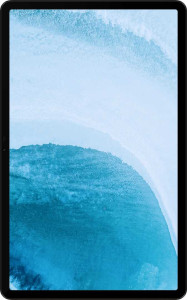
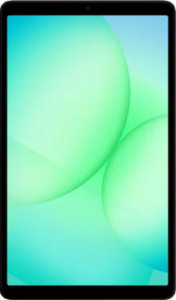
The most striking difference in this group is sheer size and mass. The Honor Pad X9a is a substantially larger device — 267.3 × 167.4 mm with a volume of 304.3 cm³ — compared to the more compact Samsung Galaxy Tab A11 at 211 × 124.7 mm and 210.5 cm³. That size gap points to a meaningfully different screen real estate and use-case target: the Honor is built for media consumption, productivity, or split-screen multitasking on a bigger canvas, while the Samsung is positioned as a more hand-friendly, portable device.

Weight compounds this distinction. The Honor Pad X9a tips the scales at 475 g, which is 138 g heavier than the Samsung's 337 g. In practical terms, that difference is very noticeable during extended one-handed use or when holding the tablet up for video calls or reading — the Samsung will cause significantly less arm fatigue. On the other hand, the Honor Pad X9a partially compensates with a slimmer profile at 6.8 mm thick versus the Samsung's 8 mm, making it feel more premium in-hand despite its larger footprint and greater weight.

On accessories and durability, both tablets are evenly matched — and notably bare: neither includes a stylus, a detachable keyboard, or any form of water resistance. This means neither product has an edge for note-taking workflows or outdoor resilience straight out of the box. Overall, the Samsung Galaxy Tab A11 holds a clear advantage in portability and everyday handling comfort, while the Honor Pad X9a trades that convenience for a larger form factor suited to users who prioritize screen size over compactness.

Display:
screen size 11.5" 8.7"
resolution 2508 x 1504 px 1340 x 800 px
pixel density 254 ppi 179 ppi
Display type LCD, IPS LCD
refresh rate 120Hz 90Hz
has branded damage-resistant glass
supports HDR10
has a touch screen
Has sapphire glass display
supports HDR10+
Has an e-paper display

Screen quality is where these two tablets diverge most dramatically. The Honor Pad X9a features an 11.5″ IPS LCD panel running at 2508 × 1504 px, yielding a pixel density of 254 ppi — sharp enough that individual pixels are essentially invisible at normal viewing distances. The Samsung Galaxy Tab A11, by contrast, offers an 8.7″ LCD at just 1340 × 800 px and 179 ppi, a density gap that becomes perceptible when reading small text, viewing detailed images, or watching high-resolution video content. The Honor's IPS panel also brings better color accuracy and wider viewing angles compared to a standard LCD, which matters for shared or angled viewing scenarios.

Refresh rate tells a similar story. The Honor's 120Hz display delivers noticeably smoother scrolling, animations, and UI interactions than the Samsung's 90Hz panel. While 90Hz is already a step above the standard 60Hz found on many budget tablets, the difference between 90Hz and 120Hz is still tangible during fast-scrolling or gaming sessions. Combined with the resolution advantage, the Honor Pad X9a's display experience feels considerably more premium in everyday use.

On durability and advanced display features, both tablets are identically equipped — or rather, identically unequipped: no branded damage-resistant glass, no HDR10 support, and no e-paper mode on either side. These shared omissions mean neither has a content-quality or longevity edge in those areas. Overall, the Honor Pad X9a holds a commanding advantage in this category, outperforming the Samsung on screen size, resolution, pixel density, panel technology, and refresh rate simultaneously.

Performance:
internal storage 128GB 128GB
RAM 8GB 8GB
Chipset (SoC) name Qualcomm Snapdragon 685 4G Mediatek Helio G99
GPU name Adreno 610 Mali G57
CPU speed 4 x 2.8 & 4 x 1.9 GHz 2 x 2.2 & 6 x 2 GHz
Geekbench 6 result (multi) 1510 1979
Geekbench 6 result (single) 473 729
has an external memory slot
semiconductor size 6 nm 6 nm
Supports 64-bit
Has integrated LTE
Uses big.LITTLE technology
DirectX version DirectX 12 DirectX 11
Has integrated graphics
GPU clock speed 1260 MHz 950 MHz
CPU threads 8 threads 8 threads
RAM speed 2133 MHz 4266 MHz
Has TrustZone
GPU turbo 1260 MHz 2133 MHz
maximum memory amount 16GB 12GB
Android version Android 15 Android 15
maximum memory bandwidth 17 GB/s 17.1 GB/s
OpenGL ES version 3.2 3.2
eMMC version 5.1 5.2
OpenCL version 2 2

Despite sharing the same 128GB storage, 8GB RAM, and 6 nm fabrication node, the chipsets powering these two tablets tell very different performance stories. The Samsung Galaxy Tab A11 runs on the MediaTek Helio G99, while the Honor Pad X9a uses the Qualcomm Snapdragon 685 — and the benchmark gap between them is substantial. The Samsung scores 729 single-core and 1979 multi-core in Geekbench 6, versus the Honor's 473 single-core and 1510 multi-core. Single-core performance is especially consequential for everyday responsiveness — app launches, UI fluidity, and web browsing — making the Samsung feel snappier in typical use cases despite both devices being mid-range offerings.

Memory bandwidth reinforces this picture. The Samsung's RAM operates at 4266 MHz compared to the Honor's 2133 MHz, meaning data can be fed to the processor roughly twice as fast — a tangible advantage in memory-intensive tasks like multitasking or loading large files. On the GPU side, the Honor's Adreno 610 has a higher base clock at 1260 MHz, but the Samsung's Mali G57 reaches a turbo clock of 2133 MHz, suggesting stronger peak graphics throughput for gaming workloads. The Honor does counter with support for DirectX 12 versus the Samsung's DirectX 11, though this distinction has minimal practical relevance on Android.

One area where the Honor Pad X9a holds a meaningful edge is maximum supported memory — up to 16GB versus the Samsung's 12GB ceiling — which could matter for future-proofing or RAM expansion features supported by the OS. Both tablets run Android 15 and support expandable storage. That said, the overall performance advantage belongs clearly to the Samsung Galaxy Tab A11, which outpaces the Honor on both CPU benchmarks and RAM speed — the metrics that matter most for real-world fluidity.

Cameras:
megapixels (main camera) 8 MP 8 MP
megapixels (front camera) 5MP 5MP
video recording (main camera) 1080 x 30 fps 1080 x 30 fps
has a flash
has a front camera
has a built-in HDR mode
can create panoramas in-camera
supports slow-motion video recording
has manual white balance
has continuous autofocus when recording movies
Has a front-facing LED flash
has manual ISO
Shoots 360° panorama
has built-in optical image stabilization
Has a dual-tone LED flash
has manual focus
Has a RGB LED flash
has manual exposure
has manual shutter speed

Tablet cameras are rarely a primary purchase driver, and this comparison does little to change that narrative — these two devices are remarkably similar on paper. Both the Honor Pad X9a and the Samsung Galaxy Tab A11 feature an 8 MP rear camera and a 5 MP front camera, capped at 1080p at 30 fps for video. The shared manual controls — ISO, white balance, exposure, and focus — give users a reasonable degree of creative control for a tablet-class shooter, though the absence of optical image stabilization on both means handheld video will be susceptible to shake.

The two meaningful differentiators cut in opposite directions. The Samsung Galaxy Tab A11 includes a rear flash, which the Honor lacks entirely — a practical advantage for shooting in dim environments, even if tablet flash is rarely ideal. The Honor Pad X9a counters with in-camera panorama support, absent on the Samsung, which can be useful for capturing wide scenes like landscapes or large interiors without post-processing.

Weighing these trade-offs, neither tablet establishes a convincing overall lead in this category. The Samsung's flash gives it a slight functional edge for low-light snapshots, while the Honor's panorama mode adds a niche but occasionally useful shooting option. For most users, the camera systems of both devices will feel essentially equivalent — competent for video calls and casual shots, but not a differentiating factor in the purchase decision.

Audio:
has stereo speakers
has a socket for a 3.5 mm audio jack
Has a radio

Audio is the rare category where these two tablets are in complete lockstep. Both the Honor Pad X9a and the Samsung Galaxy Tab A11 offer stereo speakers and nothing more — no 3.5 mm headphone jack and no FM radio on either device. Stereo speakers are a meaningful baseline for tablet audio, ensuring that sound is spatially separated rather than mono, which makes a noticeable difference when watching video content or playing games in landscape orientation.

The absence of a 3.5 mm audio jack on both devices means wired headphone users will need a USB-C adapter or must rely on Bluetooth audio — an increasingly common trade-off in modern tablets, but still worth noting for users who prefer wired listening without extra accessories. This shared limitation ensures neither product has a convenience edge for traditional headphone users.

With every data point in this group identical across both products, this category is an unambiguous tie. The decision here will come down entirely to factors outside this spec group — neither tablet offers any audio hardware advantage over the other.

Battery:
battery power 8300 mAh 5100 mAh
Supports fast charging
has wireless charging
has a battery level indicator
has a rechargeable battery
has a removable battery

Battery capacity is one of the most decisive splits in this entire comparison. The Honor Pad X9a packs an 8300 mAh battery — a very large cell even by tablet standards — against the Samsung Galaxy Tab A11's 5100 mAh. That is a difference of over 3,000 mAh, or roughly 63% more capacity in the Honor's favor. In practical terms, this gap translates directly to significantly longer time between charges: whether for video streaming, browsing, or light productivity, the Honor Pad X9a should sustain use considerably longer on a single charge. For travel, classroom, or all-day use scenarios where access to an outlet is limited, this advantage is highly meaningful.

It is worth contextualizing the capacity figures against each device's screen size. The Honor's larger 11.5″ display naturally draws more power than the Samsung's 8.7″ panel, so the real-world runtime gap will be somewhat smaller than the raw mAh difference suggests. That said, the Honor's battery is proportionally large enough that it should still deliver a comfortable lead in endurance under comparable usage patterns.

Where the two tablets converge is in charging architecture: both support fast charging and neither offers wireless charging. This shared baseline means the faster refill experience is available on both, partially offsetting the Samsung's smaller capacity by reducing downtime. Still, the Honor Pad X9a holds an unambiguous and significant advantage in this category — raw capacity dominates the battery discussion here, and the gap is too wide to overlook.

Connectivity & Features:
release date March 2025 September 2025
Wi-Fi version Wi-Fi 4 (802.11n), Wi-Fi 5 (802.11ac) Wi-Fi 4 (802.11n), Wi-Fi 5 (802.11ac)
has Mail Privacy Protection
has on-device machine learning
has clipboard warnings
has location privacy options
has camera/microphone privacy options
can block app tracking
blocks cross-site tracking
supports split screen
has Live Text
has notification permissions
has full-page screenshots
has Quick Start
has theme customization
has Wi-Fi password sharing
has PiP
Can play games while they download
has an extra dim mode
can offload apps
has focus modes
has media picker
has dynamic theming
has dark mode
has battery health check
Has USB Type-C
has a cellular module
has 5G support
is a multi-user system
gets direct OS updates
has GPS
has a child lock
has an HDMI output
has NFC
Has a fingerprint scanner
Supports widgets
download speed 390 MBits/s 650 MBits/s
Is free and open source
Has offline voice recognition
upload speed 150 MBits/s 150 MBits/s
supports Wi-Fi
Has sharing intents
Has customizable notifications
Uses 3D facial recognition
has an accelerometer
has voice commands
Has an iris scanner
Has a built-in projector
supports Ethernet
Has an infrared sensor
Tracks the current position of a mobile device

Across a long list of connectivity and software features, these two tablets are nearly identical — but a handful of differences carry real-world weight. Most critically, the Samsung Galaxy Tab A11 includes a cellular module and GPS, while the Honor Pad X9a has neither. This means the Samsung can connect to mobile networks independently of Wi-Fi and navigate with location accuracy, making it a genuinely versatile companion for commuting, travel, or any scenario away from a known network. The Honor, by contrast, is strictly a Wi-Fi-only device — a meaningful constraint for users who need on-the-go connectivity without tethering to a phone.

Wi-Fi performance also diverges. Both tablets support Wi-Fi 5 (802.11ac), but the Samsung's peak download speed of 650 Mbits/s outpaces the Honor's 390 Mbits/s ceiling. In practice, this gap matters most when pulling large files, streaming at high bitrates, or operating on a congested network — the Samsung has more headroom to sustain faster throughput. Upload speeds are identical at 150 Mbits/s on both. The Samsung also adds voice command support, absent on the Honor, which adds a hands-free interaction option that can be convenient for accessibility or kitchen/desk use.

Software feature parity is otherwise thorough: both devices share split-screen multitasking, Picture-in-Picture, dark mode, dynamic theming, battery health checks, USB-C, and a robust suite of privacy controls. These shared capabilities mean neither tablet has a software ecosystem edge. The verdict here, however, belongs clearly to the Samsung Galaxy Tab A11 — its cellular connectivity, GPS, faster Wi-Fi throughput, and voice commands add up to a meaningfully more versatile and connected device.
Miscellaneous:
DDR memory version 4 4

This group contains a single data point, and it is identical across both devices: the Honor Pad X9a and the Samsung Galaxy Tab A11 both use DDR4 memory. DDR4 is a well-established memory standard that offers reliable bandwidth and power efficiency for mid-range devices, ensuring stable multitasking and app performance on both tablets.

With no differentiating data available in this group, the result is a complete tie. Neither product holds any advantage here based on the provided specifications.

Comparison Summary & Verdict

After examining every specification, these two tablets clearly target different types of users. The Honor Pad X9a stands out for those who want an immersive experience at home, offering a large 11.5-inch 120Hz IPS display with a sharp 2508x1504 resolution and a generous 8300 mAh battery that is hard to beat for media consumption and extended sessions. The Samsung Galaxy Tab A11, on the other hand, appeals to users who value portability and versatility: it is notably lighter at 337 g, delivers stronger CPU performance with higher Geekbench 6 scores, and crucially includes a cellular module and GPS, making it the better companion for users on the move who need always-on connectivity and voice command support.

Honor Pad X9a
Buy Honor Pad X9a if...

Buy the Honor Pad X9a if you want a large, sharp 11.5-inch display with a smooth 120Hz refresh rate and a massive 8300 mAh battery for long sessions at home, and do not need built-in cellular or GPS.

Samsung Galaxy Tab A11
Buy Samsung Galaxy Tab A11 if...

Buy the Samsung Galaxy Tab A11 if you prioritize portability, stronger processing performance, and the convenience of built-in cellular connectivity and GPS for use on the go.