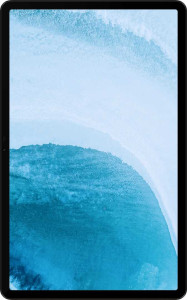
Honor Pad X9a
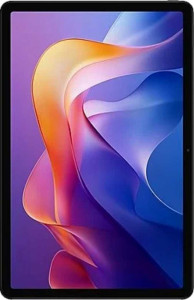
Xiaomi Redmi Pad 2

Honor Pad X9a Xiaomi Redmi Pad 2

Overview

Welcome to our in-depth spec comparison between the Honor Pad X9a and the Xiaomi Redmi Pad 2 — two mid-range Android tablets that share a surprising amount of common ground while diverging in several meaningful ways. From their display refresh rates and chipset choices to battery capacity and connectivity options, each tablet makes distinct trade-offs that could matter greatly depending on your daily needs. Read on to see how they stack up across every major category.

Common Features

  • Neither product includes a stylus.
  • Neither product has a detachable keyboard.
  • Neither product has a backlit keyboard.
  • Neither product offers water resistance.
  • Both products feature an LCD IPS display.
  • Neither product has branded damage-resistant glass.
  • Neither product supports HDR10.
  • Both products have a touchscreen.
  • Neither product has a sapphire glass display.
  • Both products come with 8GB of RAM.
  • Both products have an external memory slot.
  • Both products use a 6 nm semiconductor.
  • Both products support 64-bit processing.
  • Both products have integrated LTE.
  • Both products use big.LITTLE technology.
  • Both products have integrated graphics.
  • Both products feature 8 CPU threads.
  • Both products have an 8 MP main camera and a 5 MP front camera.
  • Both products support 1080p video recording at 30 fps on the main camera.
  • Neither product has a flash.
  • Both products have a front camera.
  • Both products have a built-in HDR mode.
  • Both products support slow-motion video recording.
  • Both products have manual white balance.
  • Both products have stereo speakers.
  • Neither product has a radio.
  • Both products support fast charging.
  • Neither product supports wireless charging.
  • Both products have a battery level indicator.
  • Both products have a rechargeable battery.
  • Neither product has a removable battery.
  • Both products support Wi-Fi 4 (802.11n) and Wi-Fi 5 (802.11ac).
  • Both products have on-device machine learning.
  • Both products have clipboard warnings.
  • Both products have location privacy options.
  • Both products have camera and microphone privacy options.
  • Both products can block app tracking.
  • Neither product blocks cross-site tracking.
  • Both products use DDR4 memory.

Main Differences

  • Weight is 475 g on Honor Pad X9a and 510 g on Xiaomi Redmi Pad 2.
  • Thickness is 6.8 mm on Honor Pad X9a and 7.4 mm on Xiaomi Redmi Pad 2.
  • Width is 267.3 mm on Honor Pad X9a and 254.6 mm on Xiaomi Redmi Pad 2.
  • Height is 167.4 mm on Honor Pad X9a and 166 mm on Xiaomi Redmi Pad 2.
  • Volume is 304.27 cm³ on Honor Pad X9a and 312.75 cm³ on Xiaomi Redmi Pad 2.
  • Screen size is 11.5″ on Honor Pad X9a and 11″ on Xiaomi Redmi Pad 2.
  • Resolution is 2508 x 1504 px on Honor Pad X9a and 2560 x 1600 px on Xiaomi Redmi Pad 2.
  • Pixel density is 254 ppi on Honor Pad X9a and 274 ppi on Xiaomi Redmi Pad 2.
  • Refresh rate is 120Hz on Honor Pad X9a and 90Hz on Xiaomi Redmi Pad 2.
  • Internal storage is 128GB on Honor Pad X9a and 256GB on Xiaomi Redmi Pad 2.
  • The chipset is Qualcomm Snapdragon 685 4G on Honor Pad X9a and MediaTek Helio G100 on Xiaomi Redmi Pad 2.
  • The GPU is Adreno 610 on Honor Pad X9a and Mali G57 on Xiaomi Redmi Pad 2.
  • CPU speed is 4 x 2.8 & 4 x 1.9 GHz on Honor Pad X9a and 2 x 2.2 & 6 x 2 GHz on Xiaomi Redmi Pad 2.
  • DirectX version is 12 on Honor Pad X9a and 11 on Xiaomi Redmi Pad 2.
  • GPU clock speed is 1260 MHz on Honor Pad X9a and 1000 MHz on Xiaomi Redmi Pad 2.
  • RAM speed is 2133 MHz on Honor Pad X9a and 4266 MHz on Xiaomi Redmi Pad 2.
  • Maximum memory amount is 16GB on Honor Pad X9a and 12GB on Xiaomi Redmi Pad 2.
  • Maximum memory bandwidth is 17 GB/s on Honor Pad X9a and 17.1 GB/s on Xiaomi Redmi Pad 2.
  • In-camera panorama creation is available on Honor Pad X9a but not on Xiaomi Redmi Pad 2.
  • A 3.5 mm audio jack is present on Xiaomi Redmi Pad 2 but not on Honor Pad X9a.
  • Battery capacity is 8300 mAh on Honor Pad X9a and 9000 mAh on Xiaomi Redmi Pad 2.
  • A cellular module is present on Xiaomi Redmi Pad 2 but not on Honor Pad X9a.
  • GPS is available on Xiaomi Redmi Pad 2 but not on Honor Pad X9a.
  • Bluetooth version is 5.1 on Honor Pad X9a and 5.3 on Xiaomi Redmi Pad 2.
  • Download speed is 390 MBits/s on Honor Pad X9a and 650 MBits/s on Xiaomi Redmi Pad 2.
  • A gyroscope is present on Xiaomi Redmi Pad 2 but not on Honor Pad X9a.
  • A compass is present on Xiaomi Redmi Pad 2 but not on Honor Pad X9a.
  • Galileo support is available on Xiaomi Redmi Pad 2 but not on Honor Pad X9a.
  • Voice commands are supported on Xiaomi Redmi Pad 2 but not on Honor Pad X9a.
Specs Comparison
Honor Pad X9a

Honor Pad X9a

Xiaomi Redmi Pad 2

Xiaomi Redmi Pad 2

Design:
weight 475 g 510 g
thickness 6.8 mm 7.4 mm
width 267.3 mm 254.6 mm
height 167.4 mm 166 mm
volume 304.272936 cm³ 312.75064 cm³
Stylus included
Has a detachable keyboard
Has a backlit keyboard
water resistance None None
Has tilt sensitivity

In terms of physical design, the Honor Pad X9a holds a meaningful edge in two of the most practically felt dimensions: weight and thickness. At 475 g versus 510 g, the X9a is 35 grams lighter than the Redmi Pad 2 — a gap that may sound small on paper but becomes noticeable during extended one-handed use or long reading sessions. Similarly, the X9a's 6.8 mm profile is visibly slimmer than the Redmi Pad 2's 7.4 mm, contributing to a more premium in-hand feel and easier slipping into a bag or sleeve.

Footprint-wise, the two tablets are nearly the same height (~167 mm), but the X9a is notably wider at 267.3 mm compared to 254.6 mm on the Redmi Pad 2. This suggests the X9a likely houses a wider display aspect ratio, which can translate to a more immersive landscape experience for video or productivity. Despite being wider, the X9a's overall volume (304.3 cm³ vs 312.8 cm³) remains smaller, confirming it is the more compact and efficiently built device of the two.

Both tablets share identical accessory limitations — no included stylus, no detachable or backlit keyboard support, no tilt sensitivity, and no water resistance — so neither has an advantage on those fronts. Overall, the Honor Pad X9a has a clear design edge: it is lighter, thinner, and more compact, making it the better choice for users who prioritize portability and ergonomics.

Display:
screen size 11.5" 11"
resolution 2508 x 1504 px 2560 x 1600 px
pixel density 254 ppi 274 ppi
Display type LCD, IPS LCD, IPS
refresh rate 120Hz 90Hz
has branded damage-resistant glass
supports HDR10
has a touch screen
Has sapphire glass display
supports HDR10+
Has an e-paper display

The display matchup between these two tablets is genuinely close, with each product winning on a different key metric. The Xiaomi Redmi Pad 2 offers sharper visuals thanks to its higher pixel density of 274 ppi versus 254 ppi on the Honor Pad X9a — a difference that is subtle but perceptible when reading fine text or viewing detailed images up close. Its 2560 x 1600 px resolution on an 11″ panel is a well-balanced combination for productivity and media consumption.

Where the Honor Pad X9a fights back is with its 120Hz refresh rate, compared to the Redmi Pad 2's 90Hz. In practice, 120Hz delivers noticeably smoother scrolling, more fluid animations, and a more responsive feel during everyday use — an advantage that many users will appreciate more consistently than the marginal pixel density difference. The X9a also sports a slightly larger 11.5″ screen, which provides more usable real estate for multitasking, reading, or watching content.

Both panels are LCD IPS type with no HDR10 support and no damage-resistant glass, so neither holds an edge in color volume or durability. On balance, the choice comes down to personal priority: the Redmi Pad 2 is the sharper screen, while the X9a offers a larger, smoother display. For general daily use where fluidity and screen size matter most, the Honor Pad X9a has a slight practical edge.

Performance:
internal storage 128GB 256GB
RAM 8GB 8GB
Chipset (SoC) name Qualcomm Snapdragon 685 4G MediaTek Helio G100
GPU name Adreno 610 Mali G57
CPU speed 4 x 2.8 & 4 x 1.9 GHz 2 x 2.2 & 6 x 2 GHz
has an external memory slot
semiconductor size 6 nm 6 nm
Supports 64-bit
Has integrated LTE
Uses big.LITTLE technology
DirectX version DirectX 12 DirectX 11
Has integrated graphics
GPU clock speed 1260 MHz 1000 MHz
CPU threads 8 threads 8 threads
RAM speed 2133 MHz 4266 MHz
Has TrustZone
maximum memory amount 16GB 12GB
Android version Android 15 Android 15
maximum memory bandwidth 17 GB/s 17.1 GB/s
OpenGL ES version 3.2 3.2
OpenCL version 2 2

Two 6nm chips, identical RAM amounts, and near-identical memory bandwidth — yet these tablets diverge in meaningful ways under the hood. The Honor Pad X9a runs on the Qualcomm Snapdragon 685, whose performance cores clock up to 2.8 GHz, notably higher than the Helio G100's peak of 2.2 GHz in the Redmi Pad 2. More strikingly, the X9a's Adreno 610 GPU runs at 1260 MHz versus the Redmi Pad 2's Mali G57 at 1000 MHz — a 26% clock speed advantage that points to a tangible edge in graphics-intensive tasks like gaming or video rendering. The X9a also supports DirectX 12 against the Redmi Pad 2's DirectX 11, reflecting a more modern GPU feature set.

The Redmi Pad 2 counters with significantly faster RAM at 4266 MHz compared to the X9a's 2133 MHz, which can benefit rapid data-fetching workloads and multitasking responsiveness. It also ships with 256 GB of internal storage by default — double the X9a's 128 GB — a practical win for users who store large media libraries or offline content. Both tablets support expandable storage, so the gap is bridgeable, but the out-of-box capacity difference is real.

Balancing these factors, the Honor Pad X9a holds the stronger performance profile for compute and GPU-heavy use cases, while the Redmi Pad 2 is the better value for storage-first users. For gaming or sustained multitasking, the X9a's chip and GPU clock advantages make it the more capable performer overall.

Cameras:
megapixels (main camera) 8 MP 8 MP
megapixels (front camera) 5MP 5MP
video recording (main camera) 1080 x 30 fps 1080 x 30 fps
has a flash
has a front camera
has a built-in HDR mode
can create panoramas in-camera
supports slow-motion video recording
has manual white balance
wide aperture (main camera) 2f 2f
has continuous autofocus when recording movies
Has a front-facing LED flash
has manual ISO
has a video light
Shoots 360° panorama
has built-in optical image stabilization
Has a dual-tone LED flash
has manual focus
Has a RGB LED flash
has manual exposure
has manual shutter speed

Camera hardware on both tablets is essentially a mirror image: identical 8 MP rear shooters, matching 5 MP front cameras, and the same 1080p at 30fps video ceiling. Shared features like HDR mode, slow-motion recording, continuous autofocus during video, manual ISO, manual white balance, manual focus, and manual exposure mean neither tablet has a meaningful advantage in shooting flexibility or video capability.

The one — and only — differentiator in this category is that the Honor Pad X9a supports in-camera panorama shooting, while the Redmi Pad 2 does not. For most users this is a minor convenience rather than a decisive factor, but it does represent the sole functional gap between two otherwise identical camera systems.

Realistically, tablet cameras at this tier are best suited for casual video calls and document scanning rather than serious photography, and neither device changes that calculus. This category is essentially a tie, with the Honor Pad X9a holding a marginal edge purely on the basis of panorama support.

Audio:
has stereo speakers
has a socket for a 3.5 mm audio jack
Has a radio

Stereo speakers are standard on both tablets, ensuring a reasonably immersive audio experience for media consumption on either device. Neither includes a radio, so that shared omission requires no further discussion. The meaningful split here comes down to a single, practical feature: the Xiaomi Redmi Pad 2 retains a 3.5 mm headphone jack, while the Honor Pad X9a does not.

The real-world implications of this difference are more significant than they might first appear. Users who own wired headphones — whether for commuting, focused work, or simply preferring wired audio quality — can plug directly into the Redmi Pad 2 without any adapter. On the X9a, wired listening requires either a USB-C to 3.5 mm adapter or a switch to Bluetooth audio, adding friction and potential expense. For students, frequent travelers, or anyone who relies on wired peripherals, this is a tangible inconvenience.

Audio hardware parity on the speaker side means neither tablet pulls ahead for shared or public listening, but the Redmi Pad 2 holds a clear edge in this category overall, thanks to its broader compatibility with wired audio accessories — a connectivity option that still matters to a significant portion of users.

Battery:
battery power 8300 mAh 9000 mAh
Supports fast charging
has wireless charging
has a battery level indicator
has a rechargeable battery
has a removable battery

Battery capacity is where the Xiaomi Redmi Pad 2 pulls ahead cleanly: its 9000 mAh cell outpaces the Honor Pad X9a's 8300 mAh by 700 mAh — roughly an 8% larger reserve. For a tablet used heavily for video streaming, browsing, or reading, that gap can realistically translate to an additional hour or more of screen-on time before needing to reach for a charger.

Both devices support fast charging and share an identical feature set otherwise — non-removable, rechargeable batteries with no wireless charging on either side. The absence of wireless charging is unsurprising at this price tier, and fast charging on both ensures that topping up from low doesn't become a half-day wait.

With no other differentiating battery features in play, the verdict here is straightforward: the Redmi Pad 2 wins this category by virtue of its larger capacity, making it the more suitable pick for users who prioritize all-day or multi-day endurance over other considerations.

Connectivity & Features:
release date March 2025 June 2025
Wi-Fi version Wi-Fi 4 (802.11n), Wi-Fi 5 (802.11ac) Wi-Fi 4 (802.11n), Wi-Fi 5 (802.11ac)
has Mail Privacy Protection
has on-device machine learning
has clipboard warnings
has location privacy options
has camera/microphone privacy options
can block app tracking
blocks cross-site tracking
supports split screen
has Live Text
has notification permissions
has full-page screenshots
has Quick Start
has theme customization
has Wi-Fi password sharing
has PiP
Can play games while they download
has an extra dim mode
can offload apps
has focus modes
has media picker
has dynamic theming
has dark mode
has battery health check
Has USB Type-C
has a cellular module
has 5G support
is a multi-user system
gets direct OS updates
has GPS
has a child lock
has an HDMI output
has NFC
Has a fingerprint scanner
Supports widgets
Bluetooth version 5.1 5.3
download speed 390 MBits/s 650 MBits/s
has a gyroscope
Is free and open source
Has offline voice recognition
has a compass
upload speed 150 MBits/s 150 MBits/s
supports Wi-Fi
Has sharing intents
Has customizable notifications
Uses 3D facial recognition
supports Galileo
has an accelerometer
has voice commands
Has an iris scanner
Has a built-in projector
supports Ethernet
Has an infrared sensor
Tracks the current position of a mobile device

Connectivity is where the gap between these two tablets widens most dramatically. The Xiaomi Redmi Pad 2 includes a cellular module and GPS — two features entirely absent on the Honor Pad X9a. A cellular module means the Redmi Pad 2 can connect to mobile data networks independently of Wi-Fi, making it genuinely usable on the go without a hotspot. GPS, combined with Galileo satellite support, enables reliable standalone navigation — a meaningful advantage for travel or location-aware apps that the X9a simply cannot replicate.

The hardware sensor gap compounds this further. The Redmi Pad 2 adds a gyroscope and compass, which matter for augmented reality apps, precise screen rotation, and navigation accuracy. Its Bluetooth 5.3 is also a step ahead of the X9a's 5.1, offering improved connection stability and slightly better energy efficiency with compatible peripherals. On raw wireless throughput, the Redmi Pad 2's 650 Mbps maximum download speed outpaces the X9a's 390 Mbps on the same Wi-Fi 5 standard — a difference that can matter when transferring large files or streaming high-bitrate content over a capable router.

Software feature parity is high between the two — both support split screen, PiP, dark mode, dynamic theming, and on-device machine learning. The X9a is not deficient on the software side; it simply loses ground on hardware connectivity. Taken as a whole, the Redmi Pad 2 wins this category decisively, offering meaningfully broader real-world connectivity thanks to its cellular capability, GPS, superior sensors, faster Bluetooth, and higher Wi-Fi throughput.
Miscellaneous:
DDR memory version 4 4

The only data point available for this group is the DDR4 memory standard, which is identical on both the Honor Pad X9a and the Xiaomi Redmi Pad 2. DDR4 is a mature, widely adopted memory generation that provides a solid foundation for everyday tablet workloads — multitasking, app switching, and media playback — without being a differentiating factor at this tier.

With a single shared spec and no divergence whatsoever, this category is a complete tie. Neither tablet holds any advantage here, and the memory generation alone offers no basis for preferring one device over the other.

Comparison Summary & Verdict

After examining every specification, it is clear that both tablets serve different types of users. The Honor Pad X9a stands out with its 120Hz refresh rate, larger 11.5-inch screen, lighter 475 g body, higher DirectX 12 GPU support, and a faster GPU clock speed of 1260 MHz — making it the better pick for media consumption and casual gaming. The Xiaomi Redmi Pad 2, on the other hand, counters with a larger 9000 mAh battery, double the internal storage at 256GB, a cellular module with GPS, a 3.5 mm headphone jack, and a more complete connectivity suite including a gyroscope, compass, and Bluetooth 5.3. If versatility and on-the-go independence matter most to you, the Redmi Pad 2 has the edge. If you prioritize a smoother display experience and a slimmer, lighter form factor, the Honor Pad X9a is the stronger choice.

Honor Pad X9a
Buy Honor Pad X9a if...

Buy the Honor Pad X9a if you want a lighter, slimmer tablet with a larger 11.5-inch screen and a smoother 120Hz display for media and casual gaming.

Xiaomi Redmi Pad 2
Buy Xiaomi Redmi Pad 2 if...

Buy the Xiaomi Redmi Pad 2 if you need a versatile tablet with a bigger 9000 mAh battery, built-in cellular and GPS connectivity, a headphone jack, and double the internal storage.