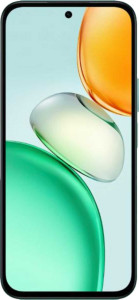
Honor Play 10C
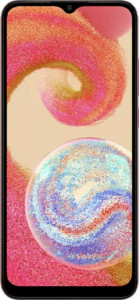
Samsung Galaxy F06 5G

Honor Play 10C Samsung Galaxy F06 5G

Overview

Welcome to our detailed spec-by-spec comparison of the Honor Play 10C and the Samsung Galaxy F06 5G. Both phones share the same MediaTek Dimensity 6300 chipset and 5G connectivity, making this a fascinating head-to-head battle. The real divergence lies in areas like camera capability, battery size versus charging speed, storage, and a handful of connectivity features. Read on to find out which device is the better fit for your needs.

Common Features

  • Neither product has water resistance.
  • Both products have a non-rugged, non-foldable build.
  • Both products feature an LCD IPS display type.
  • Neither product has branded damage-resistant glass.
  • HDR10, HDR10+, and Dolby Vision support are not available on either product.
  • Always-On Display is not available on either product.
  • Both products use the MediaTek Dimensity 6300 chipset.
  • Both products use the Arm Mali-G57 MC2 GPU running at 950 MHz.
  • Both products share the same CPU speed of 2 x 2.4 and 6 x 2 GHz.
  • Both products score 2012 (multi-core) and 782 (single-core) on Geekbench 6.
  • Both products have RAM running at 2133 MHz and integrated LTE.
  • Neither product has optical image stabilization or a BSI sensor.
  • Both products have a CMOS sensor, phase-detection autofocus, and continuous autofocus during video recording.
  • Both products support slow-motion video recording.
  • Both products run on Android and include clipboard warnings, location privacy options, and camera/microphone privacy options.
  • Both products support theme customization and can block app tracking.
  • Neither product supports wireless charging, and both support fast charging.
  • Both products have a non-removable rechargeable battery with a battery level indicator.
  • Both products have a 3.5 mm audio jack but lack stereo speakers, LDAC, aptX Lossless, and a radio.
  • Both products support 5G, Wi-Fi 4 and Wi-Fi 5, dual SIM, Bluetooth 5.3, USB Type-C (USB 2.0), and have a fingerprint scanner.
  • Both products have a download speed of 3300 MBits/s.

Main Differences

  • Weight is 197 g on Honor Play 10C and 191 g on Samsung Galaxy F06 5G.
  • Thickness is 8.4 mm on Honor Play 10C and 8 mm on Samsung Galaxy F06 5G.
  • Width is 75.6 mm on Honor Play 10C and 77.3 mm on Samsung Galaxy F06 5G.
  • Height is 164 mm on Honor Play 10C and 167.3 mm on Samsung Galaxy F06 5G.
  • Screen size is 6.61″ on Honor Play 10C and 6.7″ on Samsung Galaxy F06 5G.
  • Pixel density is 266 ppi on Honor Play 10C and 262 ppi on Samsung Galaxy F06 5G.
  • Internal storage is 256 GB on Honor Play 10C and 128 GB on Samsung Galaxy F06 5G.
  • RAM is 8 GB on Honor Play 10C and 6 GB on Samsung Galaxy F06 5G.
  • The main camera is 13 MP on Honor Play 10C, while Samsung Galaxy F06 5G has a dual-lens main camera with 50 MP and 2 MP sensors.
  • Main camera aperture is f/1.8 on Honor Play 10C, while Samsung Galaxy F06 5G offers f/2.4 and f/1.8 across its dual lenses.
  • A dual-lens main camera is available on Samsung Galaxy F06 5G but not on Honor Play 10C.
  • Front camera resolution is 5 MP on Honor Play 10C and 8 MP on Samsung Galaxy F06 5G.
  • Front camera aperture is f/2.2 on Honor Play 10C and f/2.0 on Samsung Galaxy F06 5G.
  • Main camera video recording tops out at 1080p 30 fps on Honor Play 10C and 1080p 60 fps on Samsung Galaxy F06 5G.
  • Honor Play 10C runs Android 15, while Samsung Galaxy F06 5G runs Android 14.
  • App offloading is supported on Honor Play 10C but not on Samsung Galaxy F06 5G.
  • Battery capacity is 6000 mAh on Honor Play 10C and 5000 mAh on Samsung Galaxy F06 5G.
  • Charging speed is 15W on Honor Play 10C and 25W on Samsung Galaxy F06 5G.
  • A microSD card slot is available on Samsung Galaxy F06 5G but not on Honor Play 10C.
  • NFC is available on Honor Play 10C but not on Samsung Galaxy F06 5G.
Specs Comparison
Honor Play 10C

Honor Play 10C

Samsung Galaxy F06 5G

Samsung Galaxy F06 5G

Design:
water resistance None None
weight 197 g 191 g
thickness 8.4 mm 8 mm
width 75.6 mm 77.3 mm
height 164 mm 167.3 mm
volume 104.14656 cm³ 103.45832 cm³
has a rugged build
can be folded

Both the Honor Play 10C and the Samsung Galaxy F06 5G share the same fundamental design philosophy: standard candy-bar slabs with no water resistance, no rugged reinforcement, and no folding mechanism. Neither device offers any protection against the elements, so users in wet or dusty environments should factor that in equally for both.

Where the two diverge is in their physical proportions. The F06 5G is measurably slimmer at 8 mm thick compared to the Play 10C's 8.4 mm, and lighter at 191 g versus 197 g. While a 6-gram difference is barely perceptible in isolation, combined with the thinner profile it translates to a slightly more refined feel in the hand during extended use. The Play 10C, in turn, is narrower (75.6 mm vs 77.3 mm) and shorter (164 mm vs 167.3 mm), which can make one-handed reach marginally easier despite its added bulk. The two phones' overall volumes are nearly identical — roughly 104 cm³ each — confirming that neither wastes internal space significantly more than the other.

On balance, the Samsung Galaxy F06 5G holds a modest design edge: it is both lighter and thinner, qualities that directly affect day-to-day comfort and pocketability. The advantage is not dramatic, but for users sensitive to weight or sleekness, the F06 5G is the slightly more refined choice in this category.

Display:
Display type LCD, IPS LCD, IPS
screen size 6.61" 6.7"
pixel density 266 ppi 262 ppi
resolution 720 x 1604 px 720 x 1600 px
has branded damage-resistant glass
supports HDR10
supports HDR10+
Always-On Display
supports Dolby Vision
Has a secondary screen
has a touch screen

At their core, these two displays are cut from the same cloth: both use an LCD IPS panel, both cap out at 720p resolution, and neither supports any premium HDR standard — no HDR10, no Dolby Vision, no Always-On Display. For users expecting vivid AMOLED contrast or wide color gamut performance, neither phone delivers that; this is firmly budget-tier display territory on both sides.

The size and sharpness numbers tell a story of near-perfect parity. The Play 10C offers a 6.61-inch screen at 266 ppi, while the F06 5G stretches slightly to 6.7 inches at 262 ppi. That 4 ppi difference is functionally invisible to the human eye — text and images will look equally sharp on both. The F06 5G's marginally larger canvas gives it a touch more screen real estate for media and reading, but the gap is too narrow to constitute a meaningful advantage. Notably, neither device includes branded damage-resistant glass, leaving both equally vulnerable to everyday scratches.

This category is essentially a tie. The shared panel type, resolution class, and feature set mean users will have a virtually indistinguishable viewing experience on either phone. Neither product holds a credible display edge over the other based on the available specifications.

Performance:
internal storage 256GB 128GB
RAM 8GB 6GB
Chipset (SoC) name MediaTek Dimensity 6300 MediaTek Dimensity 6300
GPU name Arm Mali-G57 MC2 Arm Mali-G57 MC2
CPU speed 2 x 2.4 & 6 x 2 GHz 2 x 2.4 & 6 x 2 GHz
Geekbench 6 result (multi) 2012 2012
Geekbench 6 result (single) 782 782
GPU clock speed 950 MHz 950 MHz
Has integrated LTE
RAM speed 2133 MHz 2133 MHz
semiconductor size 6 nm 6 nm
Supports 64-bit
DirectX version DirectX 12 DirectX 12
Has integrated graphics
Uses big.LITTLE technology
CPU threads 8 threads 8 threads
Uses HMP
maximum memory bandwidth 17.07 GB/s 17.07 GB/s
L2 cache 1 MB 1 MB
L1 cache 512 KB 512 KB
maximum memory amount 12GB 12GB
uses multithreading
DDR memory version 4 4
L3 cache 2 MB 2 MB

Under the hood, the Honor Play 10C and Samsung Galaxy F06 5G are powered by the exact same silicon — the MediaTek Dimensity 6300 — and the performance data confirms it. Identical CPU configuration, identical GPU, identical Geekbench 6 scores (782 single-core / 2012 multi-core), and identical memory architecture. Every meaningful compute metric is a perfect match, meaning day-to-day speed, app launch times, and gaming capability will be indistinguishable between the two devices.

The only differentiators in this category are RAM and internal storage. The Play 10C ships with 8 GB of RAM and 256 GB of storage, while the F06 5G comes with 6 GB of RAM and 128 GB of storage. The RAM gap has real-world relevance: 8 GB allows the system to keep more apps active in the background without reloading them, which benefits heavy multitaskers and users who switch frequently between apps. The storage difference is equally practical — 256 GB comfortably accommodates large app libraries, offline media, and years of photos, whereas 128 GB can fill up faster than users expect on a device meant to be kept for 2–3 years.

The Honor Play 10C takes a clear edge in this group. The raw processing power is identical, but the additional RAM and doubled storage provide tangible, lasting advantages in everyday use — making the Play 10C the stronger performer where it actually counts for the user experience.

Cameras:
megapixels (main camera) 13 MP 50 & 2 MP
wide aperture (main camera) 1.8f 2.4 & 1.8f
Has a dual-lens (or multi-lens) main camera
megapixels (front camera) 5MP 8MP
has built-in optical image stabilization
video recording (main camera) 1080 x 30 fps 1080 x 60 fps
Has a dual-tone LED flash
number of flash LEDs 1 1
has a BSI sensor
has a CMOS sensor
has continuous autofocus when recording movies
Has phase-detection autofocus for photos
supports slow-motion video recording
has a built-in HDR mode
has manual exposure
has a flash
optical zoom 0x 0x
has manual ISO
has a serial shot mode
has manual focus
has a front camera
Has laser autofocus
Shoots 360° panorama
has manual white balance
shoots raw
has touch autofocus
has manual shutter speed
can create panoramas in-camera
wide aperture (front camera) 2.2f 2f
Has timelapse function
Has a front-facing LED flash
has a dual-lens (or multi-lens) front camera
supports HDR10 recording
supports Dolby Vision recording
has a front-facing camera under the display
Has a RGB LED flash
has 3D photo/video recording capabilities

The camera systems are where these two phones diverge most meaningfully. The Samsung Galaxy F06 5G sports a dual-lens rear camera led by a 50 MP main sensor paired with a 2 MP secondary lens, while the Honor Play 10C makes do with a single 13 MP rear camera. In practical terms, the F06 5G's higher megapixel count enables greater detail retention and more flexibility when cropping shots, and the presence of a second lens — even a modest 2 MP one — opens the door to depth-sensing for portrait-mode effects that the Play 10C simply cannot replicate in hardware. On the video side, the F06 5G records at 1080p 60 fps versus the Play 10C's 1080p 30 fps, meaning smoother footage for action scenes or fast-moving subjects.

The selfie camera gap runs in the same direction. The F06 5G offers an 8 MP front camera with a slightly wider f/2.0 aperture, compared to the Play 10C's 5 MP shooter at f/2.2. More megapixels and a wider aperture together translate to sharper, better-lit selfies — a genuine everyday advantage for users who shoot self-portraits or video call frequently. Manual controls, autofocus behavior, HDR mode, and slow-motion support are identical across both devices, so neither holds an edge in shooting flexibility or feature depth.

The Samsung Galaxy F06 5G wins this category convincingly. Its higher-resolution main and front cameras, dual-lens rear system, and 60 fps video recording represent concrete, real-world improvements over the Play 10C's more modest single-camera setup — making it the stronger choice for users who prioritize photography.

Operating system:
Android version Android 15 Android 14
has clipboard warnings
has location privacy options
has camera/microphone privacy options
has Mail Privacy Protection
has theme customization
can block app tracking
blocks cross-site tracking
has on-device machine learning
has notification permissions
has media picker
Can play games while they download
has dark mode
has Wi-Fi password sharing
has battery health check
has an extra dim mode
has focus modes
has dynamic theming
can offload apps
Has customizable notifications
has Live Text
has full-page screenshots
supports split screen
gets direct OS updates
has PiP
Can be used as a PC
Has sharing intents
has a child lock
Supports widgets
Is free and open source
Has offline voice recognition
has voice commands
Tracks the current position of a mobile device
is a multi-user system
has Quick Start

The software story between these two devices is largely one of shared foundations with one notable version gap. The Honor Play 10C ships on Android 15, while the Samsung Galaxy F06 5G launches on Android 14. That one-generation difference matters because Android 15 brings cumulative security patches, refined privacy controls, and system-level improvements that the F06 5G does not have out of the box. Since neither device receives direct OS updates according to the specs, whatever version they ship with is likely the baseline users will live with — making the Play 10C's fresher starting point a more durable long-term advantage.

Across the broader feature set, the two phones are remarkably well-matched. Both support dark mode, dynamic theming, split-screen multitasking, picture-in-picture, customizable notifications, on-device machine learning, and a full suite of privacy controls including app tracking blockers and camera/microphone permission management. The one functional difference beyond the OS version is that the Play 10C supports app offloading — the ability to remove an app's code while retaining its data — whereas the F06 5G does not. This is a useful tool for managing storage without losing app state, though its everyday impact is modest for most users.

The Honor Play 10C holds the edge here. Running a newer Android version from the outset, combined with app offloading support, gives it a tangible if unspectacular software advantage — particularly relevant given that neither phone is positioned to receive major OS upgrades down the line.

Battery:
battery power 6000 mAh 5000 mAh
has wireless charging
Supports fast charging
charging speed 15W 25W
has a removable battery
has a battery level indicator
has a rechargeable battery

Battery is where these two phones make genuinely different trade-offs. The Honor Play 10C packs a substantial 6000 mAh cell, a full 1000 mAh more than the Samsung Galaxy F06 5G's 5000 mAh. On a shared display and chipset platform, that extra capacity translates directly into longer endurance — users who travel frequently, work long shifts, or simply dislike hunting for a charger will feel that difference by end of day. The F06 5G's 5000 mAh is still a respectable figure for a budget device, but it is outgunned here in raw terms.

The charging equation flips, however. The F06 5G supports 25W fast charging, compared to the Play 10C's 15W. A higher wattage means meaningfully shorter top-up times — the F06 5G will recover from a low battery significantly faster, which matters for users with unpredictable schedules who rely on short charging windows. The Play 10C's larger battery does take longer to refill at 15W, partially offsetting its capacity advantage when time is short. Neither phone offers wireless charging, so that is a non-factor for both.

Declaring an overall winner here depends on usage pattern, but on balance the Honor Play 10C holds the stronger position for most users. Raw battery capacity is the primary driver of all-day endurance, and a 6000 mAh cell is a more universally valuable advantage than faster charging — especially since the Play 10C's 15W speed, while slower, is still adequate for overnight or desk charging scenarios.

Audio:
has a socket for a 3.5 mm audio jack
has stereo speakers
has LDAC
has aptX Lossless
Has a radio

Audio is the shortest story in this comparison: the Honor Play 10C and Samsung Galaxy F06 5G are identical across every available specification. Both retain the 3.5 mm headphone jack — a meaningful inclusion at this price tier, sparing users the need for adapters or Bluetooth-only listening. Beyond that, however, the feature set is sparse for both: no stereo speakers, no LDAC, no aptX Lossless, and no FM radio.

The absence of stereo speakers on both devices means media consumption — videos, music, gaming — relies on a single mono driver, which limits spatial sound and overall loudness compared to phones that offer a dual-speaker setup. Users who care about speaker quality will need to reach for headphones or an external speaker on either device equally.

This category is a complete tie. There is no basis in the provided data to give either phone an audio advantage over the other — they share the same strengths and the same limitations.

Connectivity & Features:
release date August 2025 February 2025
has 5G support
Wi-Fi version Wi-Fi 4 (802.11n), Wi-Fi 5 (802.11ac) Wi-Fi 4 (802.11n), Wi-Fi 5 (802.11ac)
SIM cards 2 SIM 2 SIM
Bluetooth version 5.3 5.3
has an external memory slot
Has USB Type-C
USB version 2 2
has NFC
download speed 3300 MBits/s 3300 MBits/s
Has a fingerprint scanner
has emergency SOS via satellite
has crash detection
is DLNA-certified
has a gyroscope
supports ANT+
Has a heart rate monitor
has GPS
has a compass
supports Wi-Fi
Has an infrared sensor
has an accelerometer
has a cellular module
Has a barometer
has an HDMI output
Uses 3D facial recognition
Has an iris scanner
Stylus included
supports Galileo
Has motion tracking
Has optical tracking
Has a built-in projector

Connectivity fundamentals are nearly identical between the two phones. Both support 5G, dual SIM, Wi-Fi 5, Bluetooth 5.3, USB Type-C 2.0, GPS with Galileo support, an accelerometer, and a compass. At this tier, that is a solid and complete everyday connectivity package — fast mobile data, reliable wireless peripheral pairing, and accurate location tracking are all accounted for on either device.

The two meaningful differentiators pull in opposite directions. The Honor Play 10C includes NFC, while the Samsung Galaxy F06 5G does not — a significant omission for users who rely on contactless payments or tap-to-pair interactions. Conversely, the F06 5G features a microSD card slot for expandable storage, which the Play 10C lacks entirely. Given that the Play 10C already ships with 256 GB internally, the absence of a card slot is less painful, but the F06 5G's 128 GB base storage makes its expandability a more critical practical feature for that device's users.

The overall edge goes to the Honor Play 10C. NFC is a broadly useful, increasingly mainstream capability — from mobile payments to smart home device pairing — while the F06 5G's expandable storage, though valuable given its tighter base capacity, compensates for a limitation rather than adding a new capability. On balance, NFC represents a more forward-looking and universally applicable advantage.

Miscellaneous:
has a video light
Has sapphire glass display
Has a curved display
Has an e-paper display

The miscellaneous category offers nothing to separate these two devices. Both the Honor Play 10C and the Samsung Galaxy F06 5G share an identical profile: a video light is present on each, and neither features sapphire glass, a curved display, or an e-paper screen — all of which are premium or niche characteristics that would be unexpected at this price point regardless.

This is a complete tie. With no differentiating features on either side, this group has no bearing on the overall comparison between the two phones.

Comparison Summary & Verdict

After examining every spec, both phones emerge as solid mid-range contenders built on the same core platform, but they cater to noticeably different priorities. The Honor Play 10C stands out with its larger 6000 mAh battery, more generous 8 GB of RAM and 256 GB of storage, NFC support, Android 15, and app offloading — making it the stronger pick for power users who need endurance and modern software features. The Samsung Galaxy F06 5G, on the other hand, wins on camera versatility with its 50 MP dual-lens rear system and 8 MP front camera, faster 25W charging, a microSD card slot for expandable storage, and slightly smoother 1080p 60 fps video recording. Buyers who prioritize photography and flexible storage will lean toward the Samsung, while those who value raw capacity, NFC payments, and up-to-date software will find the Honor the more compelling choice.

Honor Play 10C
Buy Honor Play 10C if...

Buy the Honor Play 10C if you want a larger 6000 mAh battery, more RAM and storage out of the box, NFC support, and the latest Android 15 experience.

Samsung Galaxy F06 5G
Buy Samsung Galaxy F06 5G if...

Buy the Samsung Galaxy F06 5G if you prioritize a versatile 50 MP dual-lens camera, faster 25W charging, and the flexibility of expandable microSD storage.