Honor Play10
Infinix Smart 10

Honor Play10 Infinix Smart 10

Overview

Choosing between the Honor Play10 and the Infinix Smart 10 means weighing up two budget-friendly Android 15 smartphones that share a surprising amount of DNA. Both arrive with 4GB of RAM, a 5000 mAh battery, and an LCD IPS screen, yet their approaches to storage, cameras, and everyday connectivity set them apart in meaningful ways. In this detailed comparison we put both devices side by side to help you decide which one truly fits your needs.

Common Features

  • Both the Honor Play10 and Infinix Smart 10 are water resistant.
  • Neither the Honor Play10 nor the Infinix Smart 10 has a rugged build.
  • Neither the Honor Play10 nor the Infinix Smart 10 can be folded.
  • Both devices feature an LCD IPS display type.
  • Both devices share a resolution of 720 x 1600 px.
  • Damage-resistant branded glass is not present on either device.
  • HDR10 support is not available on either the Honor Play10 or the Infinix Smart 10.
  • Always-On Display is not featured on either device.
  • Both the Honor Play10 and Infinix Smart 10 come with 4GB of RAM.
  • Both devices have integrated LTE connectivity.
  • Both devices are built on a 12 nm semiconductor process.
  • Both devices support 64-bit processing.
  • Both devices use big.LITTLE CPU technology.
  • Neither device has a dual-lens or multi-lens main camera.
  • Neither device has built-in optical image stabilization.
  • Both devices feature a CMOS sensor.
  • Both devices support continuous autofocus during video recording.
  • Both devices run Android 15.
  • Both the Honor Play10 and Infinix Smart 10 have a 5000 mAh battery.
  • Neither device supports wireless charging.
  • Both devices support fast charging.
  • Both devices include a 3.5 mm audio jack.
  • FM radio is available on both the Honor Play10 and Infinix Smart 10.
  • Neither device supports 5G connectivity.
  • Both devices support Wi-Fi 4 (802.11n) and Wi-Fi 5 (802.11ac).
  • Both devices include an external memory slot.
  • Both devices feature a USB Type-C port with USB 2.0.
  • Both devices have a fingerprint scanner.
  • A download speed of 300 MBits/s is supported on both devices.

Main Differences

  • Weight is 189 g on the Honor Play10 and 187 g on the Infinix Smart 10.
  • Thickness is 8.6 mm on the Honor Play10 and 8.3 mm on the Infinix Smart 10.
  • Screen size is 6.74″ on the Honor Play10 and 6.67″ on the Infinix Smart 10.
  • Pixel density is 260 ppi on the Honor Play10 and 263 ppi on the Infinix Smart 10.
  • Internal storage is 128GB on the Honor Play10 and 256GB on the Infinix Smart 10.
  • The chipset is MediaTek Helio G81 on the Honor Play10 and Unisoc T7250 on the Infinix Smart 10.
  • The GPU is Mali G52 MP2 on the Honor Play10 and Mali G57 on the Infinix Smart 10.
  • CPU speed is 2 x 2 GHz & 6 x 1.8 GHz on the Honor Play10 and 2 x 1.8 GHz & 6 x 1.6 GHz on the Infinix Smart 10.
  • Geekbench 6 multi-core score is 1391 on the Honor Play10 and 1461 on the Infinix Smart 10.
  • Geekbench 6 single-core score is 420 on the Honor Play10 and 437 on the Infinix Smart 10.
  • Maximum memory amount is 8GB on the Honor Play10 and 12GB on the Infinix Smart 10.
  • Shading units number 32 on the Honor Play10 and 64 on the Infinix Smart 10.
  • Main camera resolution is 13 MP on the Honor Play10 and 8 MP on the Infinix Smart 10.
  • Front camera resolution is 5 MP on the Honor Play10 and 8 MP on the Infinix Smart 10.
  • Maximum video recording resolution is 1080p at 30 fps on the Honor Play10 and 1440p at 30 fps on the Infinix Smart 10.
  • Dual-tone LED flash is present on the Infinix Smart 10 but not available on the Honor Play10.
  • Charging speed is 10W on the Honor Play10 and 15W on the Infinix Smart 10.
  • Stereo speakers are featured on the Infinix Smart 10 but not on the Honor Play10.
  • The Honor Play10 supports 2 SIM cards while the Infinix Smart 10 supports 1 SIM card.
  • NFC is available on the Infinix Smart 10 but not on the Honor Play10.
  • Upload speed is 100 MBits/s on the Honor Play10 and 150 MBits/s on the Infinix Smart 10.
  • A compass is present on the Infinix Smart 10 but not available on the Honor Play10.
Specs Comparison
Honor Play10

Honor Play10

Infinix Smart 10

Infinix Smart 10

Design:
water resistance Water resistant Water resistant
weight 189 g 187 g
thickness 8.6 mm 8.3 mm
width 77.7 mm 77 mm
height 167.7 mm 165.6 mm
volume 112.060494 cm³ 105.83496 cm³
has a rugged build
can be folded

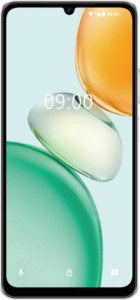
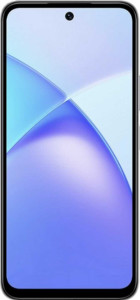
Both the Honor Play10 and the Infinix Smart 10 share the same fundamental design category: neither is ruggedized nor foldable, and both carry a water-resistant rating. In practice, this means everyday splash protection is on the table for both devices, but neither is engineered for harsh or outdoor environments. These are standard, slab-form smartphones aimed at everyday use.

Where the two diverge is in their physical dimensions and mass. The Infinix Smart 10 is the more compact of the two across every measurable axis — it is 2.1 mm shorter, 0.7 mm narrower, and crucially 0.3 mm thinner at 8.3 mm versus the Honor Play10's 8.6 mm. These differences compound into a meaningful volume gap: the Smart 10 occupies roughly 105.8 cm³ compared to the Play10's 112.1 cm³ — about 6% less total bulk. The weight gap is smaller (a 2 g difference, 187 g vs 189 g), but the slimmer, shorter, and narrower profile of the Smart 10 will translate to a more pocketable and one-hand-friendly feel in daily use.

On design, the Infinix Smart 10 holds a clear, if modest, edge. It is the more refined form factor — trimmer and easier to grip — without sacrificing any of the shared features like water resistance. For users who prioritize a sleeker silhouette, the Smart 10 wins this category. That said, the differences are subtle enough that most users handling either device casually would not find the Play10 uncomfortable.

Display:
Display type LCD, IPS LCD, IPS
screen size 6.74" 6.67"
pixel density 260 ppi 263 ppi
resolution 720 x 1600 px 720 x 1600 px
has branded damage-resistant glass
supports HDR10
supports HDR10+
Always-On Display
supports Dolby Vision
Has a secondary screen
has a touch screen

At the panel level, these two phones are essentially identical in technology: both use an LCD IPS display, share the same 720 x 1600 px resolution, and lack any premium display features such as HDR10, Dolby Vision, or Always-On Display. Neither has branded damage-resistant glass. For buyers expecting a sharp, vivid, or particularly durable screen, neither device stands out — this is solidly mid-to-entry-tier display hardware on both sides.

The only measurable differences lie in screen size and pixel density. The Honor Play10 offers a slightly larger 6.74″ panel, while the Infinix Smart 10 comes in at 6.67″. Interestingly, because the Smart 10 packs the same resolution into a smaller area, it edges ahead marginally in pixel density — 263 ppi versus 260 ppi. In practice, a 3 ppi gap at this range is imperceptible to the human eye, so neither phone will look noticeably sharper than the other in everyday use.

This category is effectively a tie. The Play10's larger screen gives it a fractionally more immersive viewing area for media consumption, while the Smart 10's slightly higher density is too small a difference to matter. Users who prefer a bigger canvas may lean toward the Play10, but neither device holds a meaningful display advantage over the other.

Performance:
internal storage 128GB 256GB
RAM 4GB 4GB
Chipset (SoC) name MediaTek Helio G81 Unisoc T7250
GPU name Mali G52 MP2 Mali G57
CPU speed 2 x 2 & 6 x 1.8 GHz 2 x 1.8 & 6 x 1.6 GHz
Geekbench 6 result (multi) 1391 1461
Geekbench 6 result (single) 420 437
Geekbench 5 result (multi) 1300 1350
Geekbench 5 result (single) 350 357
Has integrated LTE
RAM speed 1800 MHz 1866 MHz
semiconductor size 12 nm 12 nm
Supports 64-bit
Has integrated graphics
OpenGL version 3.2 3.2
OpenGL ES version 3.2 3.2
Uses big.LITTLE technology
CPU threads 8 threads 8 threads
Has TrustZone
OpenCL version 2 2
eMMC version 5.1 5.1
maximum memory amount 8GB 12GB
GPU execution units 2 2
Thermal Design Power (TDP) 5W 10W
DDR memory version 4 4
shading units 32 64
L3 cache 1 MB 1 MB

Despite sharing the same 4 GB of RAM, 12 nm fabrication, and 8-thread big.LITTLE architecture, the Honor Play10 and Infinix Smart 10 are powered by fundamentally different chipsets — the MediaTek Helio G81 and the Unisoc T7250, respectively. The Play10 holds a clock speed advantage on paper, with its performance cores running at 2.0 GHz versus the Smart 10's 1.8 GHz, but real-world throughput tells a different story: the Smart 10 scores higher across all four Geekbench results, edging ahead in both single-core (437 vs 420) and multi-core (1461 vs 1391) on Geekbench 6. The margins are modest, but they are consistent, suggesting the Unisoc T7250 extracts slightly more usable performance from its architecture.

The graphics gap is more pronounced. The Smart 10's Mali G57 GPU carries 64 shading units — double the Play10's Mali G52 MP2 with just 32 shading units. For gaming or GPU-accelerated tasks, this is a tangible structural advantage. Offsetting this, the Play10's 5W TDP is half the Smart 10's 10W, implying the Helio G81 runs considerably cooler and draws less power under sustained load — a real consideration for battery longevity during extended sessions. The Smart 10 also supports a higher maximum memory ceiling (12 GB vs 8 GB), which may matter for future-proofing.

Storage is where the Smart 10 pulls decisively ahead: it ships with 256 GB of internal storage versus the Play10's 128 GB — a 2x advantage that is immediately practical for users who store media, games, or large apps locally. Taking all factors together, the Infinix Smart 10 holds a clear performance edge — stronger GPU, better benchmark scores, more storage, and a higher RAM ceiling — while the Play10's lower TDP is the lone meaningful counterpoint for efficiency-conscious users.
Cameras:
megapixels (main camera) 13 MP 8 MP
wide aperture (main camera) 2.2f 2f
Has a dual-lens (or multi-lens) main camera
megapixels (front camera) 5MP 8MP
has built-in optical image stabilization
video recording (main camera) 1080 x 30 fps 1440 x 30 fps
Has a dual-tone LED flash
number of flash LEDs 1 2
has a BSI sensor
has a CMOS sensor
has continuous autofocus when recording movies
Has phase-detection autofocus for photos
supports slow-motion video recording
has a built-in HDR mode
has manual exposure
has a flash
optical zoom 0x 0x
has manual ISO
has a serial shot mode
has manual focus
has a front camera
Has laser autofocus
Shoots 360° panorama
has manual white balance
shoots raw
has touch autofocus
has manual shutter speed
can create panoramas in-camera
wide aperture (front camera) 2.2f 2f
Has timelapse function
Has a front-facing LED flash
has a dual-lens (or multi-lens) front camera
supports HDR10 recording
supports Dolby Vision recording
has a front-facing camera under the display
Has a RGB LED flash
has 3D photo/video recording capabilities

The camera matchup here is a tale of competing trade-offs rather than a clean sweep. The Honor Play10 leads on main camera resolution with 13 MP versus the Infinix Smart 10's 8 MP, which on paper means more detail in daylight shots and greater flexibility for cropping. However, the Smart 10 counters with a wider main aperture of f/2.0 compared to the Play10's f/2.2 — a difference that allows meaningfully more light to hit the sensor, giving the Smart 10 a structural advantage in low-light and indoor photography where aperture often matters more than raw megapixel count.

The Smart 10 also pulls ahead in two other important areas. Its front camera delivers 8 MP at f/2.0, compared to the Play10's 5 MP at f/2.2 — a notable gap for selfie-focused users, combining higher resolution with better light intake. On video, the Smart 10 tops out at 1440p @ 30 fps while the Play10 caps at 1080p @ 30 fps, offering sharper footage with more room for cropping in post. The Smart 10 also features a dual-tone LED flash with two LEDs versus a single LED on the Play10, which produces more color-accurate and natural-looking flash photography.

The feature sets beyond these differences are nearly identical — both phones share phase-detection autofocus, continuous autofocus during video, HDR mode, manual controls, slow-motion, and panorama. Given all of this, the Infinix Smart 10 holds the stronger overall camera package: its wider apertures on both cameras, superior selfie resolution, higher video ceiling, and better flash system outweigh the Play10's megapixel advantage on the main shooter.

Operating system:
Android version Android 15 Android 15
has clipboard warnings
has location privacy options
has camera/microphone privacy options
has Mail Privacy Protection
has theme customization
can block app tracking
blocks cross-site tracking
has on-device machine learning
has notification permissions
has media picker
Can play games while they download
has dark mode
has Wi-Fi password sharing
has battery health check
has an extra dim mode
has focus modes
has dynamic theming
can offload apps
Has customizable notifications
has Live Text
has full-page screenshots
supports split screen
gets direct OS updates
has PiP
Can be used as a PC
Has sharing intents
has a child lock
Supports widgets
Is free and open source
Has offline voice recognition
has voice commands
Tracks the current position of a mobile device
is a multi-user system
has Quick Start

Rarely does a spec group produce a result this definitive: the Honor Play10 and Infinix Smart 10 are running an identical software stack. Both launch on Android 15, share every single listed feature, and carry the same limitations — no direct OS updates, no Wi-Fi password sharing, no focus modes, and no Quick Start. There is not a single differentiating data point in this entire group.

What that shared feature set does include is worth noting for buyers unfamiliar with modern Android. Both phones offer a solid privacy toolkit — location controls, camera and microphone permission management, clipboard warnings, and app tracking blocks — alongside quality-of-life features like dynamic theming, Picture-in-Picture, split-screen multitasking, and on-device machine learning. These are meaningful capabilities for everyday users, and neither phone is shortchanged.

The verdict here is an absolute tie. Software experience, privacy features, and Android version are identical across both devices. Any decision between the Honor Play10 and the Infinix Smart 10 will need to rest entirely on the hardware differences covered in other spec groups — the OS offers no basis for differentiation whatsoever.

Battery:
battery power 5000 mAh 5000 mAh
has wireless charging
Supports fast charging
charging speed 10W 15W
has a removable battery
has a battery level indicator
has a rechargeable battery

Capacity-wise, these two phones are perfectly matched: both carry a 5000 mAh battery, neither supports wireless charging, and both have non-removable, rechargeable cells. For endurance purposes, users can expect a broadly similar experience from day to day — a 5000 mAh cell at this tier is generally sufficient for all-day use under moderate workloads.

The only point of separation is charging speed. The Infinix Smart 10 supports 15W fast charging versus the Honor Play10's 10W. While neither figure is remarkable by current standards, the 50% speed advantage of the Smart 10 translates into a meaningfully shorter time to top up — particularly valuable during quick charging windows before heading out. Charging the same 5000 mAh cell at 15W versus 10W can realistically shave 30 to 45 minutes off a full charge cycle, which adds up over daily use.

The Infinix Smart 10 takes a narrow but practical edge in this category purely on the strength of its faster charging. Since battery capacity is identical, replenishment speed becomes the deciding factor — and the Smart 10 wins that outright. For users who frequently charge in short bursts rather than overnight, this difference will be felt regularly.

Audio:
has a socket for a 3.5 mm audio jack
has stereo speakers
has aptX
has LDAC
has aptX HD
has aptX Adaptive
has aptX Lossless
Has a radio

Both phones cover the audio basics comfortably — a 3.5 mm headphone jack and a built-in FM radio are present on each, a combination that is increasingly rare and genuinely useful for wired audio fans and radio listeners alike. Neither device supports high-resolution Bluetooth codecs such as aptX, LDAC, or any of their variants, so wireless audio quality is limited to standard Bluetooth transmission on both sides.

The single differentiator in this group is a significant one for speaker-out listening: the Infinix Smart 10 includes stereo speakers, while the Honor Play10 makes do with a mono setup. In practice, stereo speakers produce a wider, more immersive soundstage for media consumption — whether watching videos, playing games, or listening to music without headphones. Mono speakers, by contrast, output sound from a single point, which can feel flat and directionally limited. This is a hardware gap that no software update can close.

The Infinix Smart 10 wins this category clearly. The shared headphone jack and radio keep things even on wired and broadcast audio, but the addition of stereo speakers gives the Smart 10 a meaningfully better out-loud listening experience — a feature that matters every time a user reaches for their phone without headphones.

Connectivity & Features:
release date September 2025 June 2025
has 5G support
Wi-Fi version Wi-Fi 4 (802.11n), Wi-Fi 5 (802.11ac) Wi-Fi 4 (802.11n), Wi-Fi 5 (802.11ac)
SIM cards 2 SIM 1 SIM
has an external memory slot
Has USB Type-C
USB version 2 2
has NFC
download speed 300 MBits/s 300 MBits/s
upload speed 100 MBits/s 150 MBits/s
Has a fingerprint scanner
has emergency SOS via satellite
has crash detection
is DLNA-certified
has a gyroscope
supports ANT+
Has a heart rate monitor
has GPS
has a compass
supports Wi-Fi
Has an infrared sensor
has an accelerometer
has a cellular module
Has a barometer
has an HDMI output
Uses 3D facial recognition
Has an iris scanner
Stylus included
supports Galileo
Has motion tracking
Has optical tracking
Has a built-in projector

The connectivity foundations are largely shared: both phones run on Wi-Fi 4 and Wi-Fi 5, offer USB Type-C 2.0, support GPS with Galileo, include a fingerprint scanner, and provide an external memory slot. Neither has 5G, NFC on the Play10's side, or advanced sensors like a gyroscope or barometer. The Honor Play10, however, holds one practical hardware advantage here — it accommodates 2 SIM cards versus the Smart 10's single SIM slot, which matters significantly for users who juggle personal and work lines or travel internationally with local SIMs.

The Infinix Smart 10 counters with three meaningful additions. It includes NFC, enabling contactless payments and quick device pairing — a feature the Play10 entirely lacks. It also has a compass, which improves navigation accuracy by providing directional orientation independent of movement. On cellular throughput, the Smart 10 supports an upload speed of 150 Mbits/s compared to the Play10's 100 Mbits/s — a 50% advantage for uploading large files, video content, or backing up data over mobile networks.

This category resists a clean single-winner verdict because the advantages are use-case dependent. The Honor Play10 is the better choice for dual-SIM users — a common and practical need in many markets. But for everyone else, the Infinix Smart 10 offers a richer feature set: NFC alone is a compelling differentiator for contactless payments, and the compass and faster upload speeds add further value. On balance, the Smart 10 edges ahead for most users, with the Play10's dual-SIM capability remaining its one clear connectivity trump card.

Miscellaneous:
has a video light
Has sapphire glass display
Has a curved display
Has an e-paper display

The miscellaneous spec group offers nothing to separate these two devices. Every data point — from the presence of a video light to the absence of sapphire glass, a curved display, or an e-paper screen — is identical across the Honor Play10 and the Infinix Smart 10. This is a complete tie by every available measure in this category.

The shared video light is the one feature worth acknowledging: it serves as a torch-mode flash during video recording, a practical utility for filming in low-light conditions that both phones support equally. The absence of premium display treatments like sapphire glass or a curved panel is consistent with the entry-level positioning of both devices and carries no differentiation weight.

This group has no bearing on the decision between these two phones — it is an unambiguous tie, and buyers should weigh it accordingly alongside the more meaningful distinctions found in the other spec categories.

Comparison Summary & Verdict

After examining every specification, both phones emerge as solid budget picks, but they cater to slightly different priorities. The Honor Play10 stands out with a larger 6.74-inch display, a higher-resolution 13 MP main camera, and dual-SIM support, making it the stronger choice for users who multitask across two numbers and value a bigger screen. The Infinix Smart 10, on the other hand, pulls ahead with 256GB of internal storage, a faster 15W charging speed, stereo speakers, NFC, a compass, and a notably higher maximum RAM ceiling of 12GB — advantages that add up to a more feature-rich daily experience. Its Geekbench scores also edge slightly higher across both single and multi-core tests. If raw storage capacity, richer audio, and modern conveniences like NFC and stereo sound top your list, the Infinix Smart 10 is the smarter buy. If a dual-SIM setup and a larger display matter more, the Honor Play10 remains a compelling option.

Honor Play10
Buy Honor Play10 if...

Buy the Honor Play10 if you need dual-SIM support and prefer a larger 6.74-inch display with a higher-resolution 13 MP main camera.

Infinix Smart 10
Buy Infinix Smart 10 if...

Buy the Infinix Smart 10 if you want more storage (256GB), faster 15W charging, stereo speakers, NFC, and a higher RAM ceiling of 12GB for a more feature-packed experience.