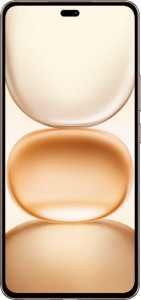
Honor Power (256GB / 8GB RAM)
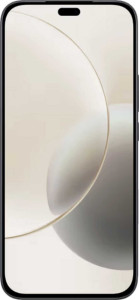
Honor X70i

Honor Power (256GB / 8GB RAM) Honor X70i

Overview

Welcome to our in-depth spec comparison between the Honor Power (256GB / 8GB RAM) and the Honor X70i. Both devices share a surprising amount of common ground, from their OLED displays and 120Hz refresh rates to 5G connectivity and Android 15, but they diverge sharply when it comes to battery capacity, camera configuration, and raw processing power. Read on to discover which phone fits your priorities.

Common Features

  • Both phones are water resistant.
  • Neither phone has a rugged build.
  • Neither phone can be folded.
  • Both phones feature an OLED/AMOLED display.
  • Both phones support a 120Hz refresh rate.
  • Neither phone has branded damage-resistant glass.
  • Neither phone supports HDR10+.
  • Neither phone has an Always-On Display.
  • Neither phone supports Dolby Vision.
  • Neither phone has a secondary screen.
  • Both phones have a touch screen.
  • Both phones have integrated LTE.
  • Both phones support 64-bit processing.
  • Both phones use DirectX 12.
  • Both phones have integrated graphics.
  • Both phones use big.LITTLE technology.
  • Both phones support a maximum memory amount of 16GB.
  • Both phones use multithreading.
  • Both phones use DDR5 memory.
  • Both phones run Android 15.
  • Both phones have clipboard warnings.
  • Both phones have location privacy options.
  • Both phones have camera and microphone privacy options.
  • Neither phone has Mail Privacy Protection.
  • Both phones support theme customization.
  • Both phones can block app tracking.
  • Neither phone blocks cross-site tracking.
  • Neither phone supports wireless charging.
  • Both phones support fast charging.
  • Neither phone has a removable battery.
  • Both phones have a battery level indicator.
  • Both phones have a rechargeable battery.
  • Neither phone has a 3.5mm audio jack.
  • Both phones have stereo speakers.
  • Neither phone has LDAC.
  • Both phones support aptX HD.
  • Neither phone supports aptX Adaptive.
  • Neither phone supports aptX Lossless.
  • Neither phone has a radio.
  • Both phones support 5G.
  • Both phones have dual SIM card slots.
  • Both phones use Bluetooth 5.3.
  • Neither phone has an external memory slot.
  • Both phones have a USB Type-C port.
  • Both phones use USB version 2.
  • Both phones have NFC.
  • Both phones have a fingerprint scanner.
  • Neither phone has a BSI sensor.
  • Both phones have a CMOS sensor.
  • Both phones support continuous autofocus when recording movies.
  • Both phones have phase-detection autofocus for photos.
  • Both phones support slow-motion video recording.
  • Both phones have a built-in HDR mode.
  • Neither phone has a dual-tone LED flash.
  • Both phones have a single LED flash.
  • Both phones have a video light.
  • Neither phone has a sapphire glass display.
  • Neither phone has a curved display.
  • Neither phone has an e-paper display.

Main Differences

  • Weight is 209 g on Honor Power (256GB / 8GB RAM) and 178.5 g on Honor X70i.
  • Thickness is 8 mm on Honor Power (256GB / 8GB RAM) and 7.3 mm on Honor X70i.
  • Width is 76.7 mm on Honor Power (256GB / 8GB RAM) and 74.6 mm on Honor X70i.
  • Height is 163.7 mm on Honor Power (256GB / 8GB RAM) and 161 mm on Honor X70i.
  • Volume is 100.44632 cm³ on Honor Power (256GB / 8GB RAM) and 87.67738 cm³ on Honor X70i.
  • Screen size is 6.78″ on Honor Power (256GB / 8GB RAM) and 6.7″ on Honor X70i.
  • Pixel density is 437 ppi on Honor Power (256GB / 8GB RAM) and 394 ppi on Honor X70i.
  • Resolution is 1224 x 2700 px on Honor Power (256GB / 8GB RAM) and 1080 x 2412 px on Honor X70i.
  • HDR10 support is present on Honor Power (256GB / 8GB RAM) but not available on Honor X70i.
  • Internal storage is 256GB on Honor Power (256GB / 8GB RAM) and 512GB on Honor X70i.
  • RAM is 8GB on Honor Power (256GB / 8GB RAM) and 12GB on Honor X70i.
  • The chipset is Qualcomm Snapdragon 7 Gen 3 on Honor Power (256GB / 8GB RAM) and MediaTek Dimensity 7025 on Honor X70i.
  • The GPU is Adreno 720 on Honor Power (256GB / 8GB RAM) and IMG BXM-8-256 on Honor X70i.
  • CPU speed is 1 x 2.63 & 3 x 2.4 & 4 x 1.8 GHz on Honor Power (256GB / 8GB RAM) and 2 x 2.5 & 6 x 2 GHz on Honor X70i.
  • GPU clock speed is 950 MHz on Honor Power (256GB / 8GB RAM) and 900 MHz on Honor X70i.
  • RAM speed is 3200 MHz on Honor Power (256GB / 8GB RAM) and 2750 MHz on Honor X70i.
  • Semiconductor size is 4 nm on Honor Power (256GB / 8GB RAM) and 6 nm on Honor X70i.
  • Maximum memory bandwidth is 25.6 GB/s on Honor Power (256GB / 8GB RAM) and 51.2 GB/s on Honor X70i.
  • Main camera resolution is 50 & 5 MP on Honor Power (256GB / 8GB RAM) and 108 MP on Honor X70i.
  • A multi-lens main camera is present on Honor Power (256GB / 8GB RAM) but not on Honor X70i.
  • Front camera resolution is 16MP on Honor Power (256GB / 8GB RAM) and 8MP on Honor X70i.
  • Optical image stabilization is available on Honor Power (256GB / 8GB RAM) but not on Honor X70i.
  • Main camera video recording is 2160 x 30 fps on Honor Power (256GB / 8GB RAM) and 1080 x 30 fps on Honor X70i.
  • Front camera aperture is f/2.5 on Honor Power (256GB / 8GB RAM) and f/2 on Honor X70i.
  • Battery capacity is 8000 mAh on Honor Power (256GB / 8GB RAM) and 6000 mAh on Honor X70i.
  • Charging speed is 66W on Honor Power (256GB / 8GB RAM) and 35W on Honor X70i.
  • aptX support is present on Honor Power (256GB / 8GB RAM) but not available on Honor X70i.
  • Wi-Fi 6 (802.11ax) support is present on Honor Power (256GB / 8GB RAM) but not available on Honor X70i.
  • Download speed is 5000 MBits/s on Honor Power (256GB / 8GB RAM) and 2770 MBits/s on Honor X70i.
  • A gyroscope is present on Honor Power (256GB / 8GB RAM) but not available on Honor X70i.
Specs Comparison
Honor Power (256GB / 8GB RAM)

Honor Power (256GB / 8GB RAM)

Honor X70i

Honor X70i

Design:
water resistance Water resistant Water resistant
weight 209 g 178.5 g
thickness 8 mm 7.3 mm
width 76.7 mm 74.6 mm
height 163.7 mm 161 mm
volume 100.44632 cm³ 87.67738 cm³
has a rugged build
can be folded

Both phones share the same basic design philosophy — water-resistant builds with no rugged certification and no folding form factor — but they diverge noticeably in physical dimensions. The Honor Power is larger and heavier across every metric: 209 g versus 178.5 g, 8 mm thick versus 7.3 mm, and a volume of 100.45 cm³ compared to 87.68 cm³. That 30.5 g difference is perceptible in daily use — the X70i will feel noticeably lighter in hand and in a pocket over long periods.

The slimmer profile of the Honor X70i also has ergonomic implications. At 74.6 mm wide versus 76.7 mm, it sits more comfortably in smaller hands and is easier to reach across one-handed. The Honor Power's extra bulk is likely a deliberate trade-off to accommodate a larger battery or additional hardware — common in phones prioritizing endurance — but the raw design specs alone give the X70i a clear advantage in portability and everyday handling comfort.

On design, the Honor X70i holds a clear edge: it is lighter, slimmer, and more compact without sacrificing any structural feature that the Honor Power offers. Unless the Power's extra size translates into meaningful hardware benefits elsewhere (battery, cooling), users who prioritize a comfortable, pocketable device will prefer the X70i.

Display:
Display type OLED/AMOLED OLED/AMOLED
screen size 6.78" 6.7"
pixel density 437 ppi 394 ppi
resolution 1224 x 2700 px 1080 x 2412 px
refresh rate 120Hz 120Hz
has branded damage-resistant glass
supports HDR10
supports HDR10+
Always-On Display
supports Dolby Vision
Has a secondary screen
has a touch screen

Both phones use an OLED/AMOLED panel with a 120Hz refresh rate, so the fundamental display technology and motion smoothness are identical. Where they diverge is in resolution and pixel density. The Honor Power delivers 1224 x 2700 px at 437 ppi, while the X70i runs at 1080 x 2412 px and 394 ppi. That 43 ppi gap is meaningful — at typical viewing distances, text and fine detail will appear noticeably crisper on the Power, particularly when reading small fonts or viewing high-resolution images.

The Honor Power also supports HDR10, which the X70i lacks entirely. HDR10 enables a wider range of brightness and color when streaming compatible content on platforms like Netflix or YouTube, producing deeper blacks and more vivid highlights — a tangible advantage for media consumption on OLED hardware that is built to benefit from it.

On display quality, the Honor Power has a clear edge. Its higher pixel density and HDR10 support make it the stronger choice for users who prioritize sharp visuals and richer streaming content, while the X70i offers a competent but more basic screen experience.

Performance:
internal storage 256GB 512GB
RAM 8GB 12GB
Chipset (SoC) name Qualcomm Snapdragon 7 Gen 3 MediaTek Dimensity 7025
GPU name Adreno 720 IMG BXM-8-256
CPU speed 1 x 2.63 & 3 x 2.4 & 4 x 1.8 GHz 2 x 2.5 & 6 x 2 GHz
GPU clock speed 950 MHz 900 MHz
Has integrated LTE
RAM speed 3200 MHz 2750 MHz
semiconductor size 4 nm 6 nm
Supports 64-bit
DirectX version DirectX 12 DirectX 12
Has integrated graphics
Uses big.LITTLE technology
maximum memory bandwidth 25.6 GB/s 51.2 GB/s
maximum memory amount 16GB 16GB
uses multithreading
DDR memory version 5 5

The chipset gap here is significant. The Honor Power runs on the Qualcomm Snapdragon 7 Gen 3, built on a 4nm process, while the X70i uses the MediaTek Dimensity 7025 on a 6nm node. The smaller fabrication node on the Power translates directly to better energy efficiency and thermal management — it can sustain higher performance for longer without throttling as aggressively. In everyday tasks and gaming, the Snapdragon 7 Gen 3 is a meaningfully newer and more capable platform than the Dimensity 7025.

The X70i counters with advantages in memory configuration: 12GB of RAM versus 8GB, and a striking 51.2 GB/s memory bandwidth compared to the Power's 25.6 GB/s. More RAM benefits heavy multitasking and keeping more apps suspended in the background, while the doubled bandwidth helps the X70i move data between the CPU, GPU, and memory faster. The X70i also ships with 512GB of internal storage by default, doubling the Power's 256GB — a practical advantage for users who store large media libraries or games locally.

This is a split verdict. The Honor Power holds the edge in raw processing efficiency and sustained CPU/GPU performance thanks to its newer, more advanced chipset. The Honor X70i is the better choice for users who prioritize multitasking headroom, storage capacity, and memory throughput. For gaming and compute-intensive workloads, the Power's Snapdragon platform is the stronger foundation.

Cameras:
megapixels (main camera) 50 & 5 MP 108 MP
Has a dual-lens (or multi-lens) main camera
megapixels (front camera) 16MP 8MP
has built-in optical image stabilization
video recording (main camera) 2160 x 30 fps 1080 x 30 fps
Has a dual-tone LED flash
number of flash LEDs 1 1
has a BSI sensor
has a CMOS sensor
has continuous autofocus when recording movies
Has phase-detection autofocus for photos
supports slow-motion video recording
has a built-in HDR mode
has manual exposure
has a flash
optical zoom 0x 0x
has manual ISO
has a serial shot mode
has manual focus
has a front camera
Has laser autofocus
Shoots 360° panorama
has manual white balance
has touch autofocus
has manual shutter speed
can create panoramas in-camera
wide aperture (front camera) 2.5f 2f
Has timelapse function
Has a front-facing LED flash
has a dual-lens (or multi-lens) front camera
supports HDR10 recording
supports Dolby Vision recording
has a front-facing camera under the display
Has a RGB LED flash
has 3D photo/video recording capabilities

The headline numbers pull in opposite directions. The X70i sports a 108MP single main sensor — a high pixel count that enables detailed crops and pixel-binning for cleaner shots in good light — while the Honor Power pairs a 50MP primary with a 5MP secondary lens, giving it genuine versatility the X70i cannot match. More practically, the Power includes optical image stabilization (OIS), which the X70i entirely lacks. OIS is one of the most impactful camera features for real-world use: it reduces blur in low-light stills and smooths out handheld video in ways that software correction cannot fully replicate.

The video gap is equally decisive. The Honor Power records at 2160p (4K) @ 30fps, while the X70i tops out at 1080p @ 30fps. For anyone who shoots video — whether for social media, travel, or just family moments — 4K offers substantially more detail and future-proofs footage for larger screens. On the front camera, the Power's 16MP sensor outresolves the X70i's 8MP, though the X70i counters with a slightly wider f/2.0 aperture versus the Power's f/2.5, meaning it admits more light per frame for selfies.

Overall, the Honor Power is the stronger camera system. OIS, 4K video, a dual-lens rear setup, and a higher-resolution front camera collectively represent a more capable and well-rounded package. The X70i's 108MP sensor is eye-catching on paper but is undercut by the absence of stabilization and its 1080p video ceiling.

Operating system:
Android version Android 15 Android 15
has clipboard warnings
has location privacy options
has camera/microphone privacy options
has Mail Privacy Protection
has theme customization
can block app tracking
blocks cross-site tracking
has on-device machine learning
has notification permissions
has media picker
Can play games while they download
has dark mode
has Wi-Fi password sharing
has battery health check
has an extra dim mode
has focus modes
has dynamic theming
can offload apps
Has customizable notifications
has Live Text
has full-page screenshots
supports split screen
gets direct OS updates
has PiP
Can be used as a PC
Has sharing intents
has a child lock
Supports widgets
Is free and open source
Has offline voice recognition
has voice commands
Tracks the current position of a mobile device
is a multi-user system
has Quick Start

This is a rare case of a complete dead heat. Every single operating system feature listed for both phones is identical — both run Android 15 and share the same privacy controls, customization options, and software capabilities without a single point of divergence.

On the software experience, these two phones are indistinguishable based on the provided data. Neither receives direct OS updates, neither supports Wi-Fi password sharing or focus modes, and both offer the same suite of productivity and privacy tools — from split-screen multitasking and picture-in-picture to on-device machine learning and customizable notifications.

The verdict here is a tie. Buyers who make their decision based on software features and OS capabilities will find no reason to prefer one over the other — the experience out of the box should be functionally equivalent on both devices.

Battery:
battery power 8000 mAh 6000 mAh
has wireless charging
Supports fast charging
charging speed 66W 35W
has a removable battery
has a battery level indicator
has a rechargeable battery

Battery is where the Honor Power earns its name. An 8000 mAh cell is exceptionally large by any standard — it dwarfs the X70i's already-generous 6000 mAh by a full third. In practical terms, the Power is designed to last well beyond a single day of heavy use, making it a compelling option for users who travel frequently, work long shifts, or simply dislike hunting for a charger. The X70i's 6000 mAh is still above average for the segment and should comfortably deliver a full day for most users, but the gap is not trivial.

Charging speed follows a similar pattern in reverse proportion. The Power refills its much larger battery at 66W, while the X70i charges at 35W. Despite the Power's larger capacity, its faster charging rate helps offset the sheer volume of energy it needs to replenish — meaning the real-world time to a full charge may not be as dramatically different as the raw mAh gap implies. Neither phone supports wireless charging, so both rely entirely on wired top-ups.

The Honor Power wins this category decisively. Its combination of a massive battery and faster charging makes it the clear choice for endurance-focused users, and the trade-off in physical bulk seen in the Design specs now has a concrete explanation — that extra size is largely battery.

Audio:
has a socket for a 3.5 mm audio jack
has stereo speakers
has aptX
has LDAC
has aptX HD
has aptX Adaptive
has aptX Lossless
Has a radio

The audio setups are nearly identical — no 3.5mm headphone jack, stereo speakers, and shared support for aptX HD on both devices. The one differentiator is that the Honor Power also supports standard aptX, which the X70i omits. In practice, aptX HD already covers the higher-quality tier of Qualcomm's Bluetooth audio codec family, so the addition of base aptX on the Power is a minor incremental benefit rather than a meaningful leap — it simply ensures compatibility with a broader range of older aptX-only wireless accessories.

Neither phone offers LDAC (Sony's high-res Bluetooth codec) or aptX Adaptive, so users with premium wireless headphones that rely on those codecs will find both devices equally limited. The absence of a headphone jack on both means wired analog audio is not an option without an adapter.

This category is effectively a tie. The Honor Power's additional aptX support gives it a marginal edge in Bluetooth accessory compatibility, but the shared aptX HD support levels the playing field for anyone using modern wireless headphones. Neither device stands out as an audio-first choice.

Connectivity & Features:
release date April 2025 April 2025
has 5G support
Wi-Fi version Wi-Fi 4 (802.11n), Wi-Fi 5 (802.11ac), Wi-Fi 6 (802.11ax) Wi-Fi 4 (802.11n), Wi-Fi 5 (802.11ac)
SIM cards 2 SIM 2 SIM
Bluetooth version 5.3 5.3
has an external memory slot
Has USB Type-C
USB version 2 2
has NFC
download speed 5000 MBits/s 2770 MBits/s
Has a fingerprint scanner
has emergency SOS via satellite
has crash detection
is DLNA-certified
has a gyroscope
supports ANT+
Has a heart rate monitor
has GPS
has a compass
supports Wi-Fi
Has an infrared sensor
has an accelerometer
has a cellular module
Has a barometer
has an HDMI output
Uses 3D facial recognition
Has an iris scanner
Stylus included
supports Galileo
Has motion tracking
Has optical tracking
Has a built-in projector

Wireless connectivity is where these two phones part ways most clearly. The Honor Power supports Wi-Fi 6 (802.11ax), while the X70i tops out at Wi-Fi 5 (802.11ac). Wi-Fi 6 delivers better throughput, lower latency, and significantly improved performance in congested environments — such as offices, apartments, or public spaces with many connected devices. Reflecting this, the Power's peak download speed of 5000 Mbits/s nearly doubles the X70i's 2770 Mbits/s, a gap that becomes tangible when transferring large files or streaming high-bitrate content on fast home networks.

The Honor Power also includes a gyroscope, which the X70i lacks. This sensor is essential for augmented reality apps, immersive gaming, and accurate screen rotation — its absence on the X70i is a quiet but meaningful omission for users who rely on motion-sensitive applications. Everything else — 5G, NFC, Bluetooth 5.3, dual SIM, USB-C, GPS, and fingerprint scanning — is shared equally between the two, providing a solid common baseline.

The Honor Power takes a clear edge in connectivity. Wi-Fi 6 support, nearly double the peak download throughput, and the addition of a gyroscope collectively make it the more future-ready and feature-complete device in this category. The X70i covers the essentials reliably but falls short on the extras that matter for heavier users.

Miscellaneous:
has a video light
Has sapphire glass display
Has a curved display
Has an e-paper display

The miscellaneous specs for these two phones are a perfect match. Both have a video light, and neither features sapphire glass, a curved display, or an e-paper screen — there is not a single point of differentiation in this category.

This is a tie in the fullest sense. Buyers will find no reason to choose one over the other based on these attributes alone.

Comparison Summary & Verdict

After a thorough look at the specs, these two phones target quite different users. The Honor Power (256GB / 8GB RAM) stands out with its massive 8000 mAh battery, faster 66W charging, a sharper 437 ppi display with HDR10, optical image stabilization, Wi-Fi 6 support, and the more powerful Snapdragon 7 Gen 3 chipset built on a 4 nm process. The Honor X70i, on the other hand, wins on storage and RAM with 512GB and 12GB, a higher 108 MP single main camera, a lighter and slimmer form factor, and a higher memory bandwidth. If you prioritize endurance, display quality, and processing performance, the Honor Power is the stronger choice. If you value more storage, more RAM, and a lighter build, the Honor X70i is the better fit.

Honor Power (256GB / 8GB RAM)
Buy Honor Power (256GB / 8GB RAM) if...

Buy the Honor Power (256GB / 8GB RAM) if you want the longest possible battery life with faster charging, a sharper display, a more powerful chipset, and optical image stabilization for better photos and videos.

Honor X70i
Buy Honor X70i if...

Buy the Honor X70i if you prioritize more RAM and internal storage, a lighter and slimmer design, and a high-resolution 108 MP single-lens main camera.