Honor Power
Motorola Edge 60 Pro

Honor Power Motorola Edge 60 Pro

Overview

When comparing the Honor Power and the Motorola Edge 60 Pro, two compelling mid-range contenders emerge with very different priorities. From the Honor Power's massive 8000 mAh battery to the Edge 60 Pro's superior camera setup and raw processing power, these two phones carve out distinct identities. In this comparison, we examine their design, display quality, performance, camera capabilities, battery endurance, and connectivity to help you decide which one is the right fit for your needs.

Common Features

  • Neither product has a rugged build.
  • Neither product can be folded.
  • Both products feature an OLED/AMOLED display.
  • Both products have a 120Hz refresh rate.
  • HDR10 support is available on both products.
  • Dolby Vision support is not available on either product.
  • Neither product has a secondary screen.
  • Both products have a touchscreen.
  • Both products offer 512GB of internal storage.
  • Both products come with 12GB of RAM.
  • Both products have integrated LTE.
  • Both products use a 4 nm semiconductor size.
  • Both products support 64-bit processing.
  • Both products support DirectX 12.
  • Both products have integrated graphics.
  • Both products use big.LITTLE technology.
  • Both products have a multi-lens main camera with optical image stabilization.
  • Both products support 4K video recording at 30fps on the main camera.
  • Neither product has a dual-tone LED flash, each featuring a single LED flash.
  • Both products have a CMOS sensor.
  • Both products support continuous autofocus when recording movies.
  • Both products run Android 15.
  • Both products have clipboard warnings, location privacy options, and camera/microphone privacy options.
  • Mail Privacy Protection is not available on either product.
  • Both products support theme customization and can block app tracking.
  • Cross-site tracking blocking is not available on either product.
  • Both products support fast charging and have a non-removable, rechargeable battery with a battery level indicator.
  • Neither product has a 3.5mm audio jack.
  • Both products have stereo speakers.
  • Neither product has a radio.
  • Both products support 5G, NFC, USB Type-C (USB 2.0), and have a fingerprint scanner.
  • Neither product has an external memory slot.
  • Neither product supports emergency SOS via satellite or crash detection.
  • Both products have a video light.
  • Neither product has a sapphire glass display or an e-paper display.

Main Differences

  • Water resistance is rated as water resistant on Honor Power and waterproof on Motorola Edge 60 Pro.
  • Weight is 209g on Honor Power and 186g on Motorola Edge 60 Pro.
  • Thickness is 8mm on Honor Power and 8.2mm on Motorola Edge 60 Pro.
  • Width is 76.7mm on Honor Power and 73.1mm on Motorola Edge 60 Pro.
  • Height is 163.7mm on Honor Power and 160.7mm on Motorola Edge 60 Pro.
  • Volume is 100.45 cm³ on Honor Power and 96.33 cm³ on Motorola Edge 60 Pro.
  • Screen size is 6.78″ on Honor Power and 6.7″ on Motorola Edge 60 Pro.
  • Pixel density is 437 ppi on Honor Power and 444 ppi on Motorola Edge 60 Pro.
  • Resolution is 1224 x 2700 px on Honor Power and 1220 x 2712 px on Motorola Edge 60 Pro.
  • Damage-resistant branded glass is not present on Honor Power but is available on Motorola Edge 60 Pro.
  • HDR10+ support is present on Motorola Edge 60 Pro but not available on Honor Power.
  • The chipset is Qualcomm Snapdragon 7 Gen 3 on Honor Power and MediaTek Dimensity 8350 on Motorola Edge 60 Pro.
  • The GPU is Adreno 720 on Honor Power and Mali G615 MC6 on Motorola Edge 60 Pro.
  • CPU speed is 1 x 2.63 & 3 x 2.4 & 4 x 1.8 GHz on Honor Power and 1 x 3.35 & 3 x 3.2 & 4 x 2.2 GHz on Motorola Edge 60 Pro.
  • GPU clock speed is 950 MHz on Honor Power and 1400 MHz on Motorola Edge 60 Pro.
  • RAM speed is 3200 MHz on Honor Power and 8533 MHz on Motorola Edge 60 Pro.
  • Maximum memory bandwidth is 25.6 GB/s on Honor Power and 68.2 GB/s on Motorola Edge 60 Pro.
  • Maximum memory amount is 16GB on Honor Power and 24GB on Motorola Edge 60 Pro.
  • Main camera megapixels are 50 & 5 MP on Honor Power and 50 & 50 & 10 MP on Motorola Edge 60 Pro.
  • Front camera megapixels are 16MP on Honor Power and 50MP on Motorola Edge 60 Pro.
  • Optical zoom is 0x on Honor Power and 3x on Motorola Edge 60 Pro.
  • Front camera wide aperture is f/2.5 on Honor Power and f/2 on Motorola Edge 60 Pro.
  • PC mode functionality is not available on Honor Power but is present on Motorola Edge 60 Pro.
  • Battery capacity is 8000 mAh on Honor Power and 6000 mAh on Motorola Edge 60 Pro.
  • Wireless charging is not available on Honor Power but is supported on Motorola Edge 60 Pro.
  • Charging speed is 66W on Honor Power and 90W on Motorola Edge 60 Pro.
  • aptX Adaptive support is not present on Honor Power but is available on Motorola Edge 60 Pro.
  • Wi-Fi support includes Wi-Fi 4, 5, and 6 on Honor Power, while Motorola Edge 60 Pro supports Wi-Fi 6E only.
  • SIM configuration is dual physical SIM on Honor Power and one physical SIM plus one eSIM on Motorola Edge 60 Pro.
  • A curved display is not featured on Honor Power but is present on Motorola Edge 60 Pro.
Specs Comparison
Honor Power

Honor Power

Motorola Edge 60 Pro

Motorola Edge 60 Pro

Design:
water resistance Water resistant Waterproof
weight 209 g 186 g
thickness 8 mm 8.2 mm
width 76.7 mm 73.1 mm
height 163.7 mm 160.7 mm
volume 100.44632 cm³ 96.326794 cm³
has a rugged build
can be folded

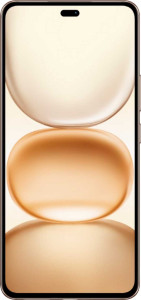
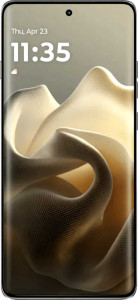
In terms of physical footprint, the Honor Power is the larger of the two devices, measuring 163.7 × 76.7 mm compared to the Motorola Edge 60 Pro at 160.7 × 73.1 mm. That translates to a meaningfully wider and taller frame, which can affect one-handed usability. The difference in volume — 100.45 cm³ versus 96.33 cm³ — confirms the Honor Power occupies noticeably more space in hand and pocket. Thickness is essentially a draw at 8 mm and 8.2 mm respectively, with no practical real-world difference between the two.

Where the gap becomes more significant is weight. The Edge 60 Pro comes in at 186 g, a full 23 g lighter than the Honor Power's 209 g. Over a day of extended use — scrolling, calls, navigation — that difference is perceptible. Lighter devices cause less fatigue during prolonged holding, and paired with its more compact dimensions, the Edge 60 Pro simply feels more manageable as a daily driver.

The most meaningful differentiator in this group, however, is water protection. The Honor Power is rated as water resistant, which typically implies protection against splashes and light exposure, while the Edge 60 Pro carries a waterproof rating — a stronger, more reliable standard that offers confidence in more demanding scenarios like rain, poolside use, or accidental submersion. Neither phone has a rugged build or folding form factor. Overall, the Motorola Edge 60 Pro holds a clear design advantage: it is lighter, more compact, and offers superior water protection.

Display:
Display type OLED/AMOLED OLED/AMOLED
screen size 6.78" 6.7"
pixel density 437 ppi 444 ppi
resolution 1224 x 2700 px 1220 x 2712 px
refresh rate 120Hz 120Hz
has branded damage-resistant glass
supports HDR10
supports HDR10+
supports Dolby Vision
Has a secondary screen
has a touch screen

Both phones share a strong display foundation: OLED/AMOLED panels, a 120Hz refresh rate, and near-identical screen sizes of 6.78″ and 6.7″ respectively. Pixel density is also essentially equivalent — 437 ppi on the Honor Power versus 444 ppi on the Edge 60 Pro — meaning sharpness is indistinguishable to the human eye on either device. For everyday use, these two screens will feel remarkably similar in terms of smoothness and clarity.

The differentiators emerge in the details. The Edge 60 Pro adds HDR10+ support on top of the HDR10 that both phones share. HDR10+ enables dynamic metadata — brightness and contrast are adjusted scene-by-scene rather than fixed for the entire video — which results in more nuanced and accurate tone mapping when watching compatible content. It is a meaningful upgrade for media consumption, though its real-world impact depends on how often the user streams HDR10+ encoded content.

Perhaps more practically significant is that the Edge 60 Pro features branded damage-resistant glass, while the Honor Power does not. In daily use, this translates directly to better scratch and drop resistance for the screen — a tangible durability advantage that most users will appreciate over the life of the device. Taken together, the Motorola Edge 60 Pro has the display edge: it matches the Honor Power on all core metrics while pulling ahead on both content quality support and screen protection.

Performance:
internal storage 512GB 512GB
RAM 12GB 12GB
Chipset (SoC) name Qualcomm Snapdragon 7 Gen 3 MediaTek Dimensity 8350
GPU name Adreno 720 Mali G615 MC6
CPU speed 1 x 2.63 & 3 x 2.4 & 4 x 1.8 GHz 1 x 3.35 & 3 x 3.2 & 4 x 2.2 GHz
GPU clock speed 950 MHz 1400 MHz
Has integrated LTE
RAM speed 3200 MHz 8533 MHz
semiconductor size 4 nm 4 nm
Supports 64-bit
DirectX version DirectX 12 DirectX 12
Has integrated graphics
Uses big.LITTLE technology
Has TrustZone
maximum memory bandwidth 25.6 GB/s 68.2 GB/s
maximum memory amount 16GB 24GB
DDR memory version 5 5

On the surface, both phones look evenly matched — identical 12GB of RAM, 512GB of storage, the same 4nm manufacturing process, and DDR5 memory. But dig into the underlying silicon and a clear performance gap opens up. The Edge 60 Pro's MediaTek Dimensity 8350 runs its prime core at 3.35 GHz, with performance cores at 3.2 GHz, versus the Honor Power's Snapdragon 7 Gen 3 peaking at 2.63 GHz. Higher clock speeds translate directly into snappier app launches, faster processing of demanding tasks, and more headroom under sustained load.

The memory subsystem tells an even starker story. The Edge 60 Pro's RAM operates at 8533 MHz with a maximum memory bandwidth of 68.2 GB/s, compared to 3200 MHz and 25.6 GB/s on the Honor Power — more than double the throughput. In practice, this means the Edge 60 Pro can feed data to its CPU and GPU far more rapidly, which benefits multitasking, gaming texture streaming, and any workload that is memory-bound. Its GPU also runs at a significantly higher clock of 1400 MHz versus 950 MHz, which points to a meaningful advantage in graphics-intensive scenarios.

The Motorola Edge 60 Pro wins this category decisively. While the Honor Power is no slouch for everyday tasks, the Edge 60 Pro's substantially faster CPU clocks, superior GPU speed, dramatically higher memory bandwidth, and a higher maximum memory ceiling of 24GB collectively position it as the stronger performer — particularly for gaming, intensive multitasking, and future-proofing.
Cameras:
megapixels (main camera) 50 & 5 MP 50 & 50 & 10 MP
Has a dual-lens (or multi-lens) main camera
megapixels (front camera) 16MP 50MP
has built-in optical image stabilization
video recording (main camera) 2160 x 30 fps 2160 x 30 fps
Has a dual-tone LED flash
number of flash LEDs 1 1
has a BSI sensor
has a CMOS sensor
has continuous autofocus when recording movies
Has phase-detection autofocus for photos
supports slow-motion video recording
has a built-in HDR mode
has manual exposure
has a flash
optical zoom 0x 3x
has manual ISO
has a serial shot mode
has manual focus
has a front camera
Has laser autofocus
Shoots 360° panorama
has manual white balance
has touch autofocus
has manual shutter speed
can create panoramas in-camera
wide aperture (front camera) 2.5f 2f
Has timelapse function
Has a front-facing LED flash
has a dual-lens (or multi-lens) front camera
supports HDR10 recording
supports Dolby Vision recording
has a front-facing camera under the display
Has a RGB LED flash
has 3D photo/video recording capabilities

The camera systems diverge significantly in scope. The Honor Power fields a dual-lens rear setup at 50 + 5 MP, while the Edge 60 Pro deploys a triple-lens array at 50 + 50 + 10 MP. That third lens on the Motorola, combined with its 3x optical zoom, is a meaningful real-world differentiator — optical zoom preserves image quality at a distance in a way that digital cropping simply cannot match. The Honor Power offers 0x optical zoom, meaning any zoom is purely digital and comes at the cost of sharpness. For users who frequently shoot subjects at a distance — events, wildlife, travel — this gap matters considerably.

The selfie camera tells a similar story. The Edge 60 Pro's front shooter clocks in at 50 MP with a wider f/2.0 aperture, versus the Honor Power's 16 MP at f/2.5. More megapixels allow for greater detail and more flexible cropping in portrait shots, while the wider aperture lets in more light — an advantage in low-light selfie scenarios. For users who prioritize video calls, social content, or portrait photography, this is a notable gap.

Where the two phones are evenly matched is in their shared feature set: both offer OIS, 4K/30fps video, phase-detection autofocus, slow-motion, HDR mode, and a full suite of manual controls. The fundamentals are solid on both devices. Still, the Motorola Edge 60 Pro wins the camera category clearly — its triple-lens system with optical zoom and its far superior front camera give it a versatility and capability advantage that the Honor Power cannot offset with its more modest setup.

Operating system:
Android version Android 15 Android 15
has clipboard warnings
has location privacy options
has camera/microphone privacy options
has Mail Privacy Protection
has theme customization
can block app tracking
blocks cross-site tracking
has on-device machine learning
has notification permissions
has media picker
Can play games while they download
has dark mode
has Wi-Fi password sharing
has battery health check
has an extra dim mode
has focus modes
has dynamic theming
can offload apps
Has customizable notifications
has Live Text
has full-page screenshots
supports split screen
gets direct OS updates
has PiP
Can be used as a PC
Has sharing intents
has a child lock
Supports widgets
Is free and open source
Has offline voice recognition
has voice commands
Tracks the current position of a mobile device
is a multi-user system
has Quick Start

This is one of the closest matchups in the entire comparison. Both phones run Android 15 and share an identical feature set across privacy controls, productivity tools, and customization options — from dynamic theming and split-screen multitasking to on-device machine learning, offline voice recognition, and Picture-in-Picture. For the vast majority of users, the day-to-day software experience on either device will be functionally indistinguishable.

Scanning the full spec list, only a single difference emerges: the Edge 60 Pro supports PC mode, meaning it can be used as a desktop computing environment when connected to an external display. This feature caters to a specific type of power user — someone who wants to consolidate their mobile and desktop workflows into one device. It is not a feature most buyers will use daily, but for those who travel light or want a portable workstation, it adds genuine utility that the Honor Power simply cannot provide.

Given how thoroughly matched these two phones are on software, the Edge 60 Pro takes a narrow win here solely on the basis of PC mode support. It is a modest advantage in practical terms, but it is the only differentiator the data provides, and it does expand the device's versatility in a meaningful way for the right user.

Battery:
battery power 8000 mAh 6000 mAh
has wireless charging
Supports fast charging
charging speed 66W 90W
has a removable battery
has a battery level indicator
has a rechargeable battery

Battery capacity is where the Honor Power makes its strongest case in this entire comparison. Its 8000 mAh cell is a genuinely exceptional size for a smartphone — 2000 mAh larger than the Edge 60 Pro's already-generous 6000 mAh. A bigger battery directly translates to more hours between charges, and at this scale the difference is not marginal. Heavy users who struggle to get through a full day on most phones may find the Honor Power comfortably stretches to two days, making it a compelling option for travelers, commuters, or anyone with limited access to outlets.

The Edge 60 Pro responds with two charging advantages of its own. Its 90W wired charging speed outpaces the Honor Power's 66W, meaning it can replenish a larger percentage of its battery in a shorter time — useful when you need a quick top-up before heading out. More distinctively, it supports wireless charging, a convenience feature the Honor Power entirely lacks. For users who have invested in wireless charging pads at home or at the office, this is a daily quality-of-life advantage.

Ultimately, which phone wins here depends on the user's priority. For raw endurance and maximizing time away from a charger, the Honor Power wins decisively with its outsized battery. But if charging flexibility and speed matter more — particularly wireless charging — the Edge 60 Pro holds a practical edge. As a pure battery category verdict, capacity is the primary metric, and the Honor Power's 8000 mAh lead is too substantial to overlook.

Audio:
has a socket for a 3.5 mm audio jack
has stereo speakers
has aptX Adaptive
Has a radio

The audio specs here are sparse, and the two phones share most of what is on offer: both drop the 3.5mm headphone jack, both deliver stereo speakers, and neither includes a built-in radio. For speaker-based listening, the experience on paper is equivalent — stereo output on both devices means spatial separation for media and games rather than the flat mono sound of a single driver.

The one differentiator is the Edge 60 Pro's support for aptX Adaptive, a Bluetooth audio codec that dynamically adjusts bitrate to balance audio quality and latency. Compared to standard Bluetooth audio, it can deliver higher-resolution wireless sound and lower latency — benefits that are most noticeable with compatible wireless headphones during music playback or when audio sync matters, such as during gaming or video watching. The Honor Power lacks this codec, meaning it is limited to more standard Bluetooth audio transmission when using wireless headphones.

This is a narrow category with limited data points, but the verdict is clear: the Edge 60 Pro holds the audio advantage thanks to aptX Adaptive. It is not a dramatic gap for casual listeners, but for users who invest in quality wireless audio gear, it is the more capable of the two.

Connectivity & Features:
release date April 2025 April 2025
has 5G support
Wi-Fi version Wi-Fi 4 (802.11n), Wi-Fi 5 (802.11ac), Wi-Fi 6 (802.11ax) Wi-Fi 6E (802.11ax)
SIM cards 2 SIM 1 SIM, 1 eSIM
has an external memory slot
Has USB Type-C
USB version 2 2
has NFC
Has a fingerprint scanner
has emergency SOS via satellite
has crash detection
is DLNA-certified
has a gyroscope
supports ANT+
Has a heart rate monitor
has GPS
has a compass
supports Wi-Fi
Has an infrared sensor
has an accelerometer
has a cellular module
Has a barometer
has an HDMI output
Uses 3D facial recognition
Has an iris scanner
Stylus included
supports Galileo
Has motion tracking
Has optical tracking
Has a built-in projector

Across most of this category, the two phones are in lockstep — both offer 5G, NFC, USB Type-C (USB 2.0), dual-band GPS with Galileo support, and an identical sensor suite covering gyroscope, accelerometer, and compass. For everyday connectivity needs, users of either device will find no meaningful gaps.

Two differences are worth examining. The first is Wi-Fi: the Honor Power supports up to Wi-Fi 6 (802.11ax), while the Edge 60 Pro steps up to Wi-Fi 6E, which extends Wi-Fi 6 capabilities into the 6 GHz frequency band. In practical terms, Wi-Fi 6E offers access to a less congested spectrum — particularly useful in dense urban environments or apartment buildings with many competing networks — and can deliver higher throughput when connected to a compatible router. The second difference is SIM configuration: the Honor Power takes two physical SIMs, whereas the Edge 60 Pro pairs one physical SIM with one eSIM. Physical dual-SIM suits users in markets where swapping local SIM cards is common, while eSIM offers cleaner remote provisioning and is increasingly supported by major carriers globally.

Neither difference is dramatic enough to declare a runaway winner, but on balance the Edge 60 Pro holds a slight connectivity edge. Its Wi-Fi 6E support is the more forward-looking standard, and eSIM compatibility adds practical flexibility for frequent travelers. The Honor Power's dual physical SIM slot is a genuine advantage in specific use cases, but as a broader connectivity package, the Edge 60 Pro is marginally more capable.

Miscellaneous:
has a video light
Has sapphire glass display
Has a curved display
Has an e-paper display

This is a lean spec group with only one meaningful differentiator. Both phones share a video light and skip sapphire glass and e-paper displays — none of which is surprising at this tier. The sole distinguishing feature is that the Edge 60 Pro sports a curved display, while the Honor Power uses a flat panel.

Curved screens are largely a matter of personal preference and aesthetic philosophy. Proponents appreciate the premium, wrap-around look and the way edges blend into the frame, lending the device a sleeker in-hand feel. Critics point out that curved displays can introduce unintended touch inputs near the edges and make screen protectors harder to apply securely. Neither outcome is objectively superior — it comes down to what the user values in a device's form factor.

Given the limited data in this group, this category is effectively a near-tie. The curved display on the Edge 60 Pro is the only distinction, and whether it registers as an advantage or a drawback is entirely subjective. Users who prize a modern, sculpted aesthetic will favor the Motorola; those who prefer practical flatness will find the Honor Power's display geometry more appealing.

Comparison Summary & Verdict

After a thorough comparison, both phones share a solid foundation — OLED displays with 120Hz refresh rates, Android 15, 512GB storage, and 5G connectivity — but diverge sharply in their strengths. The Honor Power stands out with its enormous 8000 mAh battery, making it the clear choice for users who need all-day and beyond endurance without worrying about wireless charging or a desktop mode. On the other hand, the Motorola Edge 60 Pro excels in nearly every performance metric, offering a faster chipset, a significantly better 50MP triple-camera system with 3x optical zoom, a 50MP front camera, 90W fast charging with wireless charging support, HDR10+, and a curved display with damage-resistant glass. It also doubles as a PC via its desktop mode. Choose the Honor Power for unmatched battery life; choose the Motorola Edge 60 Pro for a more feature-rich, performance-driven experience.

Honor Power
Buy Honor Power if...

Buy the Honor Power if maximizing battery life is your top priority — its 8000 mAh capacity is unmatched here. It also suits users who prefer a larger screen and wider form factor at a potentially lower price point.

Motorola Edge 60 Pro
Buy Motorola Edge 60 Pro if...

Buy the Motorola Edge 60 Pro if you want a more powerful all-around smartphone, with a faster processor, a versatile triple-camera system with 3x optical zoom, a 50MP selfie camera, 90W wired and wireless charging, and PC desktop mode.