Honor Tablet GT
OnePlus Pad 3

Honor Tablet GT OnePlus Pad 3

Overview

Welcome to our in-depth spec comparison between the Honor Tablet GT and the OnePlus Pad 3. Both tablets arrive with a 144Hz LCD IPS display, a bundled stylus, and integrated LTE, but they diverge significantly when it comes to raw processing power, display size, and overall form factor. Whether you value a compact and lightweight build or a larger, more immersive screen paired with flagship-grade performance, this side-by-side breakdown will help you find the right fit for your needs.

Common Features

  • Both tablets include a stylus in the box.
  • Neither tablet has a detachable keyboard.
  • Neither tablet has a backlit keyboard.
  • Neither tablet offers any water resistance rating.
  • Neither tablet supports tilt sensitivity for the stylus.
  • Both tablets use an LCD IPS display panel.
  • Both tablets support a 144Hz refresh rate.
  • Neither tablet features damage-resistant branded glass.
  • Both tablets have a typical brightness of 500 nits.
  • Neither tablet has a sapphire glass display.
  • Neither tablet supports HDR10+.
  • Both tablets have a touchscreen.
  • Both tablets come with 512GB of internal storage.
  • Neither tablet has an external memory slot.
  • Both tablets support 64-bit processing.
  • Both tablets have integrated LTE.
  • Both tablets use big.LITTLE CPU technology.
  • Both tablets support DirectX 12.
  • Both tablets have integrated graphics.
  • Both tablets have an 8-thread CPU.
  • Both tablets have a 13 MP main camera.
  • Both tablets have an 8 MP front camera.
  • Both tablets can record main camera video at 2160p 30fps.
  • Both tablets have a flash.
  • Both tablets support HDR mode in-camera.
  • Neither tablet can create panoramas in-camera.
  • Both tablets support touch autofocus.
  • Neither tablet supports aptX, LDAC, aptX Low Latency, aptX Adaptive, or aptX Lossless.
  • Both tablets have stereo speakers.
  • Neither tablet has a 3.5mm audio jack.
  • Neither tablet has a radio.
  • Both tablets support fast charging.
  • Neither tablet supports wireless charging.
  • Both tablets have a battery level indicator.
  • Both tablets have a rechargeable, non-removable battery.
  • Neither tablet has Mail Privacy Protection.
  • Both tablets support on-device machine learning.
  • Both tablets have clipboard warnings.
  • Both tablets have location privacy options.
  • Both tablets have camera and microphone privacy options.
  • Both tablets can block app tracking.
  • Neither tablet blocks cross-site tracking.
  • Both tablets support split-screen multitasking.
  • Both tablets use DDR5 memory.

Main Differences

  • Weight is 480g on Honor Tablet GT and 675g on OnePlus Pad 3.
  • Thickness is 6.1mm on Honor Tablet GT and 6mm on OnePlus Pad 3.
  • Width is 259.1mm on Honor Tablet GT and 289.6mm on OnePlus Pad 3.
  • Height is 176.1mm on Honor Tablet GT and 209.7mm on OnePlus Pad 3.
  • Volume is 278.33 cm³ on Honor Tablet GT and 364.37 cm³ on OnePlus Pad 3.
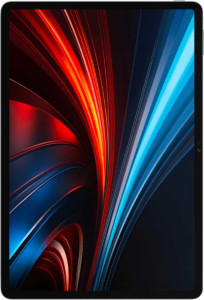
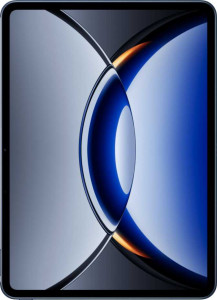
  • Screen size is 11.5″ on Honor Tablet GT and 13.2″ on OnePlus Pad 3.
  • Resolution is 2800 x 1840 px on Honor Tablet GT and 3392 x 2400 px on OnePlus Pad 3.
  • Pixel density is 291 ppi on Honor Tablet GT and 315 ppi on OnePlus Pad 3.
  • Anti-reflection coating is present on OnePlus Pad 3 but not available on Honor Tablet GT.
  • HDR10 support is present on Honor Tablet GT but not available on OnePlus Pad 3.
  • Dolby Vision support is present on OnePlus Pad 3 but not available on Honor Tablet GT.
  • RAM is 12GB on Honor Tablet GT and 16GB on OnePlus Pad 3.
  • The chipset is MediaTek Dimensity 8350 on Honor Tablet GT and Qualcomm Snapdragon 8 Elite on OnePlus Pad 3.
  • The GPU is Mali G615 MC6 on Honor Tablet GT and Adreno 830 on OnePlus Pad 3.
  • CPU speed is 1 x 3.35 & 3 x 3.2 & 4 x 2.2 GHz on Honor Tablet GT and 2 x 4.32 & 6 x 3.53 GHz on OnePlus Pad 3.
  • Geekbench 6 multi-core score is 4700 on Honor Tablet GT and 10059 on OnePlus Pad 3.
  • Geekbench 6 single-core score is 1536 on Honor Tablet GT and 3234 on OnePlus Pad 3.
  • Semiconductor size is 4nm on Honor Tablet GT and 3nm on OnePlus Pad 3.
  • GPU clock speed is 1400 MHz on Honor Tablet GT and 1100 MHz on OnePlus Pad 3.
  • RAM speed is 8533 MHz on Honor Tablet GT and 5300 MHz on OnePlus Pad 3.
  • L3 cache is 4MB on Honor Tablet GT and 8MB on OnePlus Pad 3.
  • Maximum memory bandwidth is 68.2 GB/s on Honor Tablet GT and 85.1 GB/s on OnePlus Pad 3.
  • Memory channels count is 4 on Honor Tablet GT and 2 on OnePlus Pad 3.
  • Slow-motion video recording is supported on Honor Tablet GT but not available on OnePlus Pad 3.
  • aptX HD support is present on OnePlus Pad 3 but not available on Honor Tablet GT.
  • Battery capacity is 10100 mAh on Honor Tablet GT and 12140 mAh on OnePlus Pad 3.
  • Wi-Fi 7 (802.11be) support is present on OnePlus Pad 3 but not available on Honor Tablet GT.
  • USB version is 2.0 on Honor Tablet GT and 3.2 on OnePlus Pad 3.
  • Bluetooth version is 5.2 on Honor Tablet GT and 5.4 on OnePlus Pad 3.
  • A compass is present on OnePlus Pad 3 but not available on Honor Tablet GT.
Specs Comparison
Honor Tablet GT

Honor Tablet GT

OnePlus Pad 3

OnePlus Pad 3

Design:
weight 480 g 675 g
thickness 6.1 mm 6 mm
width 259.1 mm 289.6 mm
height 176.1 mm 209.7 mm
volume 278.327811 cm³ 364.37472 cm³
Stylus included
Has a detachable keyboard
Has a backlit keyboard
water resistance None None
Has tilt sensitivity

The most striking design difference between these two tablets is weight and footprint. The Honor Tablet GT comes in at 480 g compared to the OnePlus Pad 3's 675 g — a difference of nearly 200 grams that is immediately noticeable during extended one-handed use or reading sessions. The Honor is also physically smaller across every dimension, with a volume of 278.3 cm³ versus 364.4 cm³ for the OnePlus, making it meaningfully more compact and easier to slip into a bag. For users who prioritize portability and fatigue-free handheld use, this gap is significant.

Despite the size difference, both tablets share an almost identical thinness — 6.1 mm for the Honor and 6.0 mm for the OnePlus — so neither has a meaningful edge in slimness. They also match on accessory features: both include a stylus and neither offers a detachable or backlit keyboard, and both lack any water resistance rating. Tilt sensitivity, a premium stylus feature useful for shading in drawing apps, is absent on both devices.

Overall, the Honor Tablet GT has a clear design advantage for users who value a lighter, more portable form factor. The OnePlus Pad 3's larger body implies a bigger display, which may appeal to users who prioritize screen real estate over portability, but purely from a handling and carry perspective, the Honor is the easier device to live with day to day.

Display:
screen size 11.5" 13.2"
resolution 2800 x 1840 px 3392 x 2400 px
pixel density 291 ppi 315 ppi
Display type LCD, IPS LCD, IPS
refresh rate 144Hz 144Hz
has branded damage-resistant glass
has anti-reflection coating
supports HDR10
brightness (typical) 500 nits 500 nits
has a touch screen
Has sapphire glass display
supports HDR10+
supports Dolby Vision
Has an e-paper display

Screen size and resolution are where these two tablets diverge most meaningfully. The OnePlus Pad 3 sports a larger 13.2″ panel at 3392 x 2400 px, while the Honor Tablet GT offers an 11.5″ screen at 2800 x 1840 px. Both are IPS LCD displays with a smooth 144Hz refresh rate, so motion clarity and touch responsiveness are equally fluid. The pixel density gap — 315 ppi on the OnePlus versus 291 ppi on the Honor — is real but modest; at typical tablet viewing distances, both screens will appear sharp to most users.

The more consequential differentiators lie in the surrounding display features. The OnePlus Pad 3 includes an anti-reflection coating, which meaningfully reduces glare in bright or outdoor environments — a practical advantage the Honor lacks entirely. The Honor, on the other hand, carries HDR10 support, while the OnePlus counters with Dolby Vision, a more sophisticated HDR format with dynamic metadata that can deliver better scene-by-scene tone mapping on compatible content. Neither tablet reaches high peak brightness, with both rated at just 500 nits typical — making the anti-reflection coating on the OnePlus even more valuable in compensating for that limitation outdoors.

On balance, the OnePlus Pad 3 holds a display edge for most use cases. Its larger canvas, slightly sharper image, anti-reflection coating, and Dolby Vision support collectively make it the stronger choice for media consumption and productivity. The Honor Tablet GT is no slouch, but its display feature set is more basic, better suited to users for whom the compact size and lighter weight from the Design category take priority over outright screen quality.

Performance:
internal storage 512GB 512GB
RAM 12GB 16GB
Chipset (SoC) name MediaTek Dimensity 8350 Qualcomm Snapdragon 8 Elite
GPU name Mali G615 MC6 Adreno 830
CPU speed 1 x 3.35 & 3 x 3.2 & 4 x 2.2 GHz 2 x 4.32 & 6 x 3.53 GHz
Geekbench 6 result (multi) 4700 10059
Geekbench 6 result (single) 1536 3234
has an external memory slot
semiconductor size 4 nm 3 nm
Supports 64-bit
Has integrated LTE
Uses big.LITTLE technology
DirectX version DirectX 12 DirectX 12
Has integrated graphics
GPU clock speed 1400 MHz 1100 MHz
CPU threads 8 threads 8 threads
RAM speed 8533 MHz 5300 MHz
Has TrustZone
maximum memory amount 24GB 24GB
Android version Android 15 Android 15
Uses HMP
L3 cache 4 MB 8 MB
maximum memory bandwidth 68.2 GB/s 85.1 GB/s
memory channels 4 2
OpenCL version 2 3

This is one of the most lopsided performance matchups a spec comparison can produce. The OnePlus Pad 3 runs on the Snapdragon 8 Elite — built on a 3 nm process — while the Honor Tablet GT relies on the Dimensity 8350 at 4 nm. That process difference matters less than the raw benchmark gap: the OnePlus scores 10,059 multi-core and 3,234 single-core in Geekbench 6, versus 4,700 multi-core and 1,536 single-core for the Honor. In practical terms, the OnePlus is roughly twice as fast — a gap large enough to be felt in demanding games, video editing, and heavy multitasking, not just synthetic tests.

Memory tells a nuanced story. The OnePlus ships with 16 GB of RAM versus 12 GB on the Honor, and its 8 MB L3 cache is double the Honor's 4 MB, both of which help sustain performance under load. However, the Honor counters with faster RAM speed at 8533 MHz compared to the OnePlus's 5300 MHz, and it uses 4 memory channels versus 2 on the OnePlus, giving it a higher per-channel bandwidth advantage. Despite this, the OnePlus achieves greater overall memory bandwidth at 85.1 GB/s versus 68.2 GB/s, meaning its architecture extracts more throughput in practice.

Both tablets share 512 GB of storage, Android 15, and no expandable memory slot, so those factors are a wash. The OnePlus Pad 3 wins this category decisively — its Snapdragon 8 Elite chip represents a flagship-tier silicon generation above the Honor's mid-to-upper-range Dimensity 8350. For users who push their tablet hard with gaming, creative workloads, or intensive multitasking, the performance gap here is genuinely significant.
Cameras:
megapixels (main camera) 13 MP 13 MP
megapixels (front camera) 8MP 8MP
video recording (main camera) 2160 x 30 fps 2160 x 30 fps
has a flash
has a front camera
has a built-in HDR mode
can create panoramas in-camera
supports slow-motion video recording
has touch autofocus
optical zoom 0x 0x
has a BSI sensor
has manual white balance
has a CMOS sensor
supports HDR10 recording
has continuous autofocus when recording movies
supports Dolby Vision recording
Has a front-facing LED flash
number of flash LEDs 1 1
has manual ISO
has a video light
Shoots 360° panorama
has a serial shot mode
has built-in optical image stabilization
has 3D photo/video recording capabilities
Has a dual-tone LED flash
has manual focus
Has a RGB LED flash
has manual exposure
has manual shutter speed

Rarely does a camera comparison come down to a single spec, but that is precisely the case here. Both tablets carry identical 13 MP main cameras and 8 MP front cameras, shoot at the same 4K 30fps maximum video resolution, and share the same feature set across autofocus, manual controls, HDR mode, flash, and video light. Neither offers optical zoom, optical image stabilization, a BSI sensor, or any advanced video format like HDR10 or Dolby Vision recording.

The only differentiator in the entire camera specification set is slow-motion video recording — supported on the Honor Tablet GT and absent on the OnePlus Pad 3. For most tablet users, cameras are a secondary concern used for document scanning, video calls, or occasional snapshots, so slow-motion is unlikely to be a deciding factor. That said, it is the one capability the Honor offers that the OnePlus does not.

For this group, the Honor Tablet GT holds a narrow technical edge solely due to slow-motion support, but in practical terms this is essentially a tie. Neither device is positioned as a photography-first tablet, and the identical core camera hardware means real-world photo and video output should be virtually indistinguishable between the two.

Audio:
has aptX
has aptX HD
has LDAC
has aptX Low Latency
has aptX Adaptive
has aptX Lossless
has stereo speakers
has a socket for a 3.5 mm audio jack
Has a radio

Audio hardware is nearly identical across these two tablets — both feature stereo speakers, no 3.5 mm headphone jack, and no radio. For wired headphone users, the omission of a jack on both devices means an adapter or Bluetooth headphones are required either way. The stereo speaker parity means neither tablet has a built-in advantage for media playback through the device itself.

The sole differentiator is aptX HD support on the OnePlus Pad 3, which the Honor Tablet GT lacks entirely. aptX HD is a high-resolution Bluetooth audio codec that transmits at higher bitrates than standard Bluetooth audio, delivering noticeably improved clarity and dynamic range when paired with compatible wireless headphones. For users who listen through quality Bluetooth headphones and own aptX HD-compatible audio gear, this is a genuine advantage — though it only applies in that specific use case.

The OnePlus Pad 3 edges ahead in this category on the strength of aptX HD alone. That said, the real-world impact is conditional: users who rely primarily on the built-in speakers or use non-aptX HD headphones will experience no practical difference between the two tablets in audio output quality.

Battery:
battery power 10100 mAh 12140 mAh
Supports fast charging
has wireless charging
has a battery level indicator
has a rechargeable battery
has a removable battery

Battery capacity is where size and weight trade-offs from the Design category begin to make more sense. The OnePlus Pad 3 packs a 12,140 mAh cell versus 10,100 mAh in the Honor Tablet GT — a roughly 20% larger reserve that, all else being equal, translates to meaningfully longer time between charges. For a device used heavily for streaming, productivity, or gaming sessions away from a power source, that extra headroom is a tangible day-to-day benefit.

Beyond capacity, both tablets are effectively identical in battery feature terms: both support fast charging, neither offers wireless charging, and both have non-removable rechargeable cells. The absence of wireless charging on both is worth noting for users who prioritize that convenience, but it is a shared limitation rather than a differentiator.

The OnePlus Pad 3 holds a clear battery advantage by virtue of its larger capacity alone. It is worth contextualizing this against the Performance group, however — its Snapdragon 8 Elite chip is significantly more powerful than the Honor's Dimensity 8350, meaning the larger battery also has a more demanding processor to feed. The Honor's smaller battery paired with a less power-hungry chip may partially close the real-world endurance gap, but based strictly on the provided specs, the OnePlus carries more energy capacity.

Connectivity & Features:
release date April 2025 June 2025
Wi-Fi version Wi-Fi 4 (802.11n), Wi-Fi 5 (802.11ac), Wi-Fi 6 (802.11ax) Wi-Fi 6 (802.11ax), Wi-Fi 5 (802.11ac), Wi-Fi 4 (802.11n), Wi-Fi 7 (802.11be)
has Mail Privacy Protection
has on-device machine learning
has clipboard warnings
has location privacy options
has camera/microphone privacy options
can block app tracking
blocks cross-site tracking
supports split screen
has Live Text
has notification permissions
has full-page screenshots
has Quick Start
has theme customization
has Wi-Fi password sharing
has PiP
Can play games while they download
has an extra dim mode
can offload apps
has focus modes
has media picker
has dynamic theming
has dark mode
has battery health check
Has USB Type-C
has a cellular module
has 5G support
is a multi-user system
gets direct OS updates
has GPS
has a child lock
has an HDMI output
has NFC
Has a fingerprint scanner
USB version 2 3.2
Supports widgets
Bluetooth version 5.2 5.4
has a gyroscope
Is free and open source
Has offline voice recognition
has a compass
supports Wi-Fi
Has sharing intents
Has customizable notifications
Uses 3D facial recognition
supports Galileo
Has a barometer
has an accelerometer
has voice commands
Has an iris scanner
Has a built-in projector
supports Ethernet
Has an infrared sensor
Tracks the current position of a mobile device

Across a broad and largely identical feature set, three hardware-level connectivity specs separate these two tablets. Most consequentially, the OnePlus Pad 3 supports Wi-Fi 7 (802.11be) while the Honor Tablet GT tops out at Wi-Fi 6 (802.11ax). Wi-Fi 7 delivers significantly higher theoretical throughput and lower latency on compatible routers — relevant for 4K streaming, large file transfers, and cloud gaming where network headroom matters. The OnePlus also carries USB 3.2 versus the Honor's USB 2.0, a gap that is easy to underestimate: transferring large video files or using the tablet as an external display becomes dramatically faster with USB 3.2, while USB 2.0 imposes a hard ceiling that frustrates many modern workflows.

Bluetooth is a narrower gap — version 5.4 on the OnePlus versus 5.2 on the Honor — with modest improvements to connection stability and power efficiency at the margins. The OnePlus also includes a compass, absent on the Honor, which enables proper map orientation in navigation apps without cellular GPS; a small but practical addition. Both tablets are otherwise feature-matched across software capabilities, privacy controls, multi-user support, split screen, sensors like accelerometer and gyroscope, and software conveniences like Picture-in-Picture and dark mode.

The OnePlus Pad 3 wins this category, and the margin is more meaningful than it might first appear. Wi-Fi 7 and USB 3.2 are not incremental upgrades — they represent real generational leaps in data throughput that users will encounter in everyday scenarios. The Honor Tablet GT's connectivity profile is perfectly functional, but the OnePlus is the more future-ready device across the board here.

Miscellaneous:
DDR memory version 5 5

The Miscellaneous group contains a single data point: both the Honor Tablet GT and the OnePlus Pad 3 use LPDDR5 memory. This is a modern, power-efficient RAM standard that offers strong bandwidth and reduced energy consumption compared to its predecessor, and its presence on both devices confirms neither cuts corners on memory architecture at the module level.

This is a straightforward tie — there is no differentiator here whatsoever. Any performance distinctions between the two tablets in memory-related tasks come down to the RAM capacity, speed, and channel configuration already covered in the Performance group, not the DDR generation itself.

Comparison Summary & Verdict

After examining every specification, these two tablets clearly target different kinds of users. The Honor Tablet GT stands out as the lighter, more compact option at just 480g, and its faster RAM speed of 8533 MHz combined with a higher GPU clock of 1400 MHz make it a competitive mid-range choice for everyday productivity and media consumption. The OnePlus Pad 3, on the other hand, is in a different league for performance, posting a Geekbench 6 multi-core score of 10059 versus 4700, a larger 13.2″ display with Dolby Vision and anti-reflection coating, a bigger 12140 mAh battery, Wi-Fi 7, and a newer USB 3.2 port. Users who want a portable, budget-conscious tablet for casual use will find the Honor Tablet GT more than adequate, while power users, gamers, and creative professionals who demand top-tier performance and a premium display experience will be far better served by the OnePlus Pad 3.

Honor Tablet GT
Buy Honor Tablet GT if...

Buy the Honor Tablet GT if you want a lighter, more portable tablet at a mid-range performance level, and you prefer a higher GPU clock speed with faster RAM for everyday tasks.

OnePlus Pad 3
Buy OnePlus Pad 3 if...

Buy the OnePlus Pad 3 if you want flagship-level performance, a larger Dolby Vision display with anti-reflection coating, a bigger battery, Wi-Fi 7, and USB 3.2 connectivity.