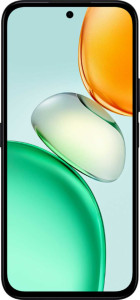
Honor X5c
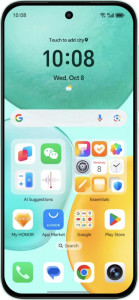
Honor X6c

Honor X5c Honor X6c

Overview

Welcome to our detailed spec comparison between the Honor X5c and the Honor X6c. Both devices share the same MediaTek Helio G81 Ultra chipset and run Android 15, making them close siblings on paper — but a closer look reveals meaningful gaps in areas like camera resolution, display refresh rate, RAM, and everyday convenience features. Whether you are prioritizing value or a more capable all-round experience, this comparison will help you decide which Honor fits your needs best.

Common Features

  • Neither the Honor X5c nor the Honor X6c has a rugged build.
  • Neither the Honor X5c nor the Honor X6c can be folded.
  • Damage-resistant branded glass is not available on either product.
  • HDR10 support is not available on either product.
  • HDR10+ support is not available on either product.
  • Always-On Display is not available on either product.
  • Dolby Vision support is not available on either product.
  • Neither product has a secondary screen.
  • Both the Honor X5c and Honor X6c have a touch screen.
  • Both devices are powered by the MediaTek Helio G81 Ultra chipset.
  • Both devices use the Mali G52 MP2 GPU.
  • Both devices share the same CPU speed of 2 x 2 and 6 x 1.8 GHz.
  • Both devices score 1391 on Geekbench 6 multi-core and 420 on single-core.
  • Both devices score 1300 on Geekbench 5 multi-core and 350 on single-core.
  • Integrated LTE is present on both the Honor X5c and Honor X6c.
  • Neither device has a dual-lens or multi-lens main camera.
  • The front camera is 5MP on both the Honor X5c and Honor X6c.
  • Neither device has built-in optical image stabilization.
  • Both devices record video at a maximum of 1080p at 30 fps.
  • Both devices run Android 15.
  • Clipboard warnings are present on both the Honor X5c and Honor X6c.
  • Location privacy options are available on both devices.
  • Camera and microphone privacy options are available on both devices.
  • Mail Privacy Protection is not available on either product.
  • Theme customization is supported on both the Honor X5c and Honor X6c.
  • App tracking can be blocked on both devices.
  • Cross-site tracking blocking is not available on either product.
  • Neither device supports wireless charging.
  • Fast charging is supported on both the Honor X5c and Honor X6c.
  • Both devices come with a charger included.
  • Neither device has a removable battery.
  • A battery level indicator is present on both devices.
  • Both devices have a rechargeable battery.
  • A 3.5mm audio jack is present on both the Honor X5c and Honor X6c.
  • Stereo speakers are not available on either product.
  • aptX support is not available on either product.
  • LDAC support is not available on either product.
  • aptX Adaptive support is not available on either product.
  • aptX Lossless support is not available on either product.
  • Neither device supports 5G.
  • Both devices support dual SIM cards.
  • Both devices use Bluetooth version 5.1.
  • An external memory slot is available on both the Honor X5c and Honor X6c.
  • Both devices have a USB Type-C port with USB version 2.
  • Download speed is 300 MBits/s and upload speed is 100 MBits/s on both devices.
  • A video light is present on both the Honor X5c and Honor X6c.
  • Sapphire glass display is not available on either product.
  • Neither device has a curved display.
  • Neither device has an e-paper display.

Main Differences

  • Water resistance is not present on the Honor X5c but the Honor X6c is water resistant.
  • Weight is 186 g on the Honor X5c and 199 g on the Honor X6c.
  • Thickness is 7.9 mm on the Honor X5c and 8.4 mm on the Honor X6c.
  • Width is 77 mm on the Honor X5c and 75.6 mm on the Honor X6c.
  • Height is 167 mm on the Honor X5c and 164 mm on the Honor X6c.
  • Volume is 101.5861 cm³ on the Honor X5c and 104.14656 cm³ on the Honor X6c.
  • The display type is LCD on the Honor X5c and LCD with IPS panel on the Honor X6c.
  • Screen size is 6.74″ on the Honor X5c and 6.61″ on the Honor X6c.
  • Pixel density is 260 ppi on the Honor X5c and 266 ppi on the Honor X6c.
  • Resolution is 720 x 1600 px on the Honor X5c and 720 x 1604 px on the Honor X6c.
  • Refresh rate is 90Hz on the Honor X5c and 120Hz on the Honor X6c.
  • Internal storage is 128GB on the Honor X5c and 256GB on the Honor X6c.
  • RAM is 4GB on the Honor X5c and 8GB on the Honor X6c.
  • The main camera is 13 MP on the Honor X5c and 50 MP on the Honor X6c.
  • Battery capacity is 5260 mAh on the Honor X5c and 5300 mAh on the Honor X6c.
  • Charging speed is 15W on the Honor X5c and 35W on the Honor X6c.
  • aptX HD support is present on the Honor X5c but not available on the Honor X6c.
  • A built-in radio is present on the Honor X5c but not available on the Honor X6c.
  • NFC support is not present on the Honor X5c but is available on the Honor X6c.
Specs Comparison
Honor X5c

Honor X5c

Honor X6c

Honor X6c

Design:
water resistance None Water resistant
weight 186 g 199 g
thickness 7.9 mm 8.4 mm
width 77 mm 75.6 mm
height 167 mm 164 mm
volume 101.5861 cm³ 104.14656 cm³
has a rugged build
can be folded

In terms of physical form, the Honor X5c is the slimmer and lighter of the two, measuring 7.9 mm thick and weighing 186 g, compared to the X6c's 8.4 mm and 199 g. That 13-gram difference is noticeable during extended one-handed use, and the thinner profile makes the X5c easier to pocket. The X6c is also marginally more compact in height and width, but its overall volume is slightly larger due to the added thickness, so the X5c wins on pure ergonomic comfort.

The single most meaningful differentiator in this group is water resistance: the X6c offers it, while the X5c has none at all. Even a basic level of water resistance provides real-world peace of mind against rain, splashes, or accidental spills — situations that could permanently damage the X5c. Neither phone carries a rugged build or a foldable form factor, so outside of water protection, both follow a standard, conventional design approach.

Overall, the X6c has the clear design edge for most users: the addition of water resistance is a practical durability advantage that outweighs the X5c's marginal gains in thinness and weight. The X5c is the better pick only if physical lightness is a top priority and the device will never be exposed to moisture.

Display:
Display type LCD LCD, IPS
screen size 6.74" 6.61"
pixel density 260 ppi 266 ppi
resolution 720 x 1600 px 720 x 1604 px
refresh rate 90Hz 120Hz
has branded damage-resistant glass
supports HDR10
supports HDR10+
Always-On Display
supports Dolby Vision
Has a secondary screen
has a touch screen

Both phones use LCD panels and share near-identical 720p resolutions, resulting in very similar pixel densities — 260 ppi on the X5c versus 266 ppi on the X6c. The difference is imperceptible in daily use, so sharpness is effectively a wash. The X5c's screen is slightly larger at 6.74″ compared to the X6c's 6.61″, which gives it a modest edge for media consumption and reading, though neither display supports HDR10 or Dolby Vision, keeping both firmly in the budget tier for color and contrast performance.

The most consequential difference here is refresh rate. The X6c runs at 120Hz versus the X5c's 90Hz, and this gap is genuinely felt in everyday interactions — scrolling through feeds, navigating menus, and in-game motion all appear noticeably smoother at 120Hz. The X6c also specifies an IPS panel type, which typically means better viewing angles and more accurate color reproduction compared to a generic LCD, adding another layer of display quality advantage. Neither phone features damage-resistant glass, so both are equally vulnerable to scratches.

The X6c takes the display edge despite its smaller screen. The higher refresh rate and IPS panel technology meaningfully improve the day-to-day visual experience in ways that the X5c's extra screen real estate does not fully compensate for. Users who prioritize smooth, responsive visuals will find the X6c's screen more satisfying to use.

Performance:
internal storage 128GB 256GB
RAM 4GB 8GB
Chipset (SoC) name MediaTek Helio G81 Ultra MediaTek Helio G81 Ultra
GPU name Mali G52 MP2 Mali G52 MP2
CPU speed 2 x 2 & 6 x 1.8 GHz 2 x 2 & 6 x 1.8 GHz
Geekbench 6 result (multi) 1391 1391
Geekbench 6 result (single) 420 420
Geekbench 5 result (multi) 1300 1300
Geekbench 5 result (single) 350 350
Has integrated LTE
RAM speed 1800 MHz 1800 MHz
semiconductor size 12 nm 12 nm
Supports 64-bit
DirectX version DirectX 12 DirectX 12
Has integrated graphics
OpenGL version 3.2 3.2
OpenGL ES version 3.2 3.2
Uses big.LITTLE technology
CPU threads 8 threads 8 threads
Has TrustZone
maximum memory bandwidth 13.41 GB/s 13.41 GB/s
OpenCL version 2 2
memory channels 2 2
L2 cache 0.3 MB 0.3 MB
eMMC version 5.1 5.1
maximum memory amount 8GB 8GB
GPU execution units 2 2
GPU turbo 950 MHz 950 MHz
number of transistors 5500 million 5500 million
Thermal Design Power (TDP) 5W 5W
DDR memory version 4 4
shading units 32 32
turbo clock speed 2GHz 2GHz
L3 cache 1 MB 1 MB

At the core, these two phones are silicon twins. Both run on the MediaTek Helio G81 Ultra chipset with identical CPU configurations, GPU, clock speeds, and benchmark scores — Geekbench 6 multi-core lands at 1391 for both. This means raw processing performance, app launch times, and gaming capability are completely indistinguishable between the two in practice.

Where they diverge is in memory and storage. The X6c doubles up on both fronts: 8GB of RAM versus 4GB, and 256GB of internal storage versus 128GB. The RAM difference is the more impactful of the two — 8GB allows the system to keep significantly more apps active in the background without reloading them, which translates to a smoother multitasking experience and better sustained performance over time. The extra storage, meanwhile, means more room for photos, apps, and media before the user hits capacity constraints.

The X6c holds a clear performance edge despite sharing the same processor. More RAM directly improves the day-to-day feel of a phone in ways that benchmark scores do not capture, and doubling the storage adds long-term headroom. For users who multitask, install many apps, or shoot lots of photos, the X6c's configuration is meaningfully more capable.

Cameras:
megapixels (main camera) 13 MP 50 MP
Has a dual-lens (or multi-lens) main camera
megapixels (front camera) 5MP 5MP
has built-in optical image stabilization
video recording (main camera) 1080 x 30 fps 1080 x 30 fps
Has a dual-tone LED flash
number of flash LEDs 1 1
has a BSI sensor
has a CMOS sensor
has continuous autofocus when recording movies
Has phase-detection autofocus for photos
supports slow-motion video recording
has a built-in HDR mode
has manual exposure
has a flash
optical zoom 0x 0x
has manual ISO
has a serial shot mode
has manual focus
has a front camera
Has laser autofocus
Shoots 360° panorama
has manual white balance
shoots raw
has touch autofocus
has manual shutter speed
can create panoramas in-camera
wide aperture (front camera) 2.2f 2.2f
Has a front-facing LED flash
has a dual-lens (or multi-lens) front camera
supports HDR10 recording
supports Dolby Vision recording
has a front-facing camera under the display
Has a RGB LED flash
has 3D photo/video recording capabilities

The camera systems on these two phones are identical in almost every respect — same video ceiling of 1080p at 30fps, same single-lens layout front and back, same 5MP front camera, and the same feature set covering phase-detection autofocus, HDR mode, slow-motion, and manual controls for exposure and ISO. The one exception is stark: the X6c's main sensor clocks in at 50MP versus the X5c's 13MP.

That resolution gap carries real consequences for still photography. A 50MP sensor captures considerably more detail, giving users the ability to crop aggressively without losing clarity — useful for subjects at a distance or for printing at larger sizes. It also provides more data for the image processing pipeline to work with in HDR and low-light scenarios. That said, neither phone has optical image stabilization or a BSI sensor, which limits low-light performance regardless of resolution, and both are capped at the same video quality ceiling, so the megapixel advantage does not extend to video.

The X6c wins the camera comparison by a significant margin on the strength of its 50MP main sensor alone. With every other camera feature being equal, the resolution advantage is the only differentiator — but it is a meaningful one for users who care about photo detail, cropping flexibility, or future-proofing their shots.

Operating system:
Android version Android 15 Android 15
has clipboard warnings
has location privacy options
has camera/microphone privacy options
has Mail Privacy Protection
has theme customization
can block app tracking
blocks cross-site tracking
has on-device machine learning
has notification permissions
has media picker
Can play games while they download
has dark mode
has Wi-Fi password sharing
has battery health check
has an extra dim mode
has focus modes
has dynamic theming
can offload apps
Has customizable notifications
has Live Text
has full-page screenshots
supports split screen
gets direct OS updates
has PiP
Can be used as a PC
Has sharing intents
has a child lock
Supports widgets
Is free and open source
Has offline voice recognition
has voice commands
Tracks the current position of a mobile device
is a multi-user system
has Quick Start

From a software standpoint, the Honor X5c and X6c are completely identical. Both ship with Android 15 and share an exact feature set — there is not a single differentiating data point across the entire spec group. Privacy tools, customization options, productivity features, and accessibility modes are all present on both devices in equal measure.

The shared software highlights are worth noting: both phones offer solid privacy controls including location, camera, and microphone permissions alongside app tracking blockers. Productivity-oriented users will appreciate the inclusion of split-screen multitasking, Picture-in-Picture, dynamic theming, and offline voice recognition on both models. Neither phone receives direct OS updates from Google, which is a shared limitation that may affect long-term software support for both equally.

This category is a complete tie. A buyer's software experience will be indistinguishable between the two devices, and the operating system should play no role in the decision between them.

Battery:
battery power 5260 mAh 5300 mAh
has wireless charging
Supports fast charging
charging speed 15W 35W
comes with a charger
has a removable battery
has a battery level indicator
has a rechargeable battery

Battery capacity is virtually identical between the two phones — 5260 mAh on the X5c versus 5300 mAh on the X6c. A 40 mAh gap is negligible in practice and will produce no meaningful difference in screen-on time or daily endurance. Both are large cells by budget phone standards, well-suited to lasting a full day of moderate to heavy use.

Charging speed is where the two diverge sharply. The X6c supports 35W fast charging compared to the X5c's 15W — more than double the wattage. At 35W, a depleted battery can realistically reach a usable charge level in roughly 30–40 minutes, while the X5c's 15W will take considerably longer to deliver the same result. For users who charge opportunistically — during a commute, a lunch break, or between meetings — this difference has a tangible daily impact. Both phones include a charger in the box and lack wireless charging, so the wired charging speed is the only variable that matters here.

The X6c wins the battery category on the strength of its 35W charging alone. With equal real-world endurance from near-identical capacities, the X6c's dramatically faster replenishment is a practical convenience advantage that users will notice every time they plug in.

Audio:
has a socket for a 3.5 mm audio jack
has stereo speakers
has aptX
has LDAC
has aptX HD
has aptX Adaptive
has aptX Lossless
Has a radio

Shared audio foundations are modest on both devices: each has a 3.5mm headphone jack — a welcome inclusion at this price tier — but neither offers stereo speakers, meaning audio output from the built-in speaker is mono on both. For wireless audio over Bluetooth, neither phone supports aptX, LDAC, or aptX Adaptive, keeping wireless listening quality at a standard level on both.

Two meaningful differences separate them. The X5c supports aptX HD, a high-definition Bluetooth audio codec that delivers better-than-CD quality audio to compatible wireless headphones — a genuine advantage for audiophiles using supported gear. The X6c lacks this codec entirely. Flipping the advantage, the X5c also includes a built-in FM radio, useful for users in areas with strong broadcast coverage who want a no-data-required listening option. The X6c offers neither of these features.

The X5c holds the audio edge in this group. AptX HD support meaningfully raises the ceiling for wireless listening quality, and the FM radio adds a functional bonus absent from the X6c. For users who care about audio fidelity through Bluetooth headphones, the X5c is the stronger choice here.

Connectivity & Features:
release date October 2025 June 2025
has 5G support
Wi-Fi version Wi-Fi 5 (802.11ac), Wi-Fi 4 (802.11n) Wi-Fi 4 (802.11n), Wi-Fi 5 (802.11ac)
SIM cards 2 SIM 2 SIM
Bluetooth version 5.1 5.1
has an external memory slot
Has USB Type-C
USB version 2 2
has NFC
download speed 300 MBits/s 300 MBits/s
upload speed 100 MBits/s 100 MBits/s
Has a fingerprint scanner
has emergency SOS via satellite
has crash detection
is DLNA-certified
has a gyroscope
supports ANT+
Has a heart rate monitor
has GPS
has a compass
supports Wi-Fi
Has an infrared sensor
has an accelerometer
has a cellular module
Has a barometer
has an HDMI output
Uses 3D facial recognition
Has an iris scanner
Stylus included
supports Galileo
Has motion tracking
Has optical tracking
Has a built-in projector

The connectivity foundations of these two phones are nearly identical — both support dual-SIM, Wi-Fi 5, Bluetooth 5.1, USB Type-C (USB 2.0), expandable storage via microSD, GPS with Galileo, and a fingerprint scanner. Neither reaches 5G, and both share the same cellular download and upload speed ceilings, so mobile network performance is equal across the board.

The sole differentiator in this entire group is NFC, which the X6c has and the X5c lacks entirely. NFC enables contactless payments — allowing the phone to function as a digital wallet at any tap-to-pay terminal — as well as quick Bluetooth pairing with compatible accessories and data exchange with NFC tags. For users who rely on mobile payments as part of their daily routine, its absence on the X5c is a genuine functional gap rather than a minor omission.

The X6c wins this category strictly on the basis of NFC. Every other connectivity spec is matched between the two, making NFC the single deciding factor — and one that increasingly matters as contactless payments become a mainstream expectation.

Miscellaneous:
has a video light
Has sapphire glass display
Has a curved display
Has an e-paper display

The miscellaneous spec group offers nothing to separate the Honor X5c and X6c. Every data point in this category — video light, display type variants, and panel construction — is identical between the two devices. Neither features sapphire glass, a curved display, or an e-paper screen, and both include a video light.

This is a complete tie. The provided specs in this group carry no differentiating weight and should not factor into a purchase decision between the two phones.

Comparison Summary & Verdict

After reviewing every specification, a clear picture emerges for each device. The Honor X5c is the leaner, lighter option — it is thinner, slightly wider, and notably lighter at just 186 g, making it comfortable for extended use. It also retains a built-in FM radio and aptX HD audio, and its larger 6.74″ screen may appeal to media viewers. However, the Honor X6c pulls ahead in several important areas: it offers water resistance, a significantly faster 120Hz display, double the RAM at 8GB, double the storage at 256GB, a much more capable 50 MP main camera, faster 35W charging, and NFC for contactless payments. For users who want a dependable everyday smartphone with stronger performance headroom and modern features, the Honor X6c is the more future-proof choice. The Honor X5c remains a solid pick for budget-conscious buyers who value a lighter form factor and audio extras.

Honor X5c
Buy Honor X5c if...

Buy the Honor X5c if you prefer a lighter, slimmer phone with a larger screen, FM radio, and aptX HD audio support, and do not need advanced camera performance or NFC.

Honor X6c
Buy Honor X6c if...

Buy the Honor X6c if you want a more capable all-round device with a 50 MP camera, 120Hz display, 8GB RAM, 256GB storage, water resistance, NFC, and faster 35W charging.