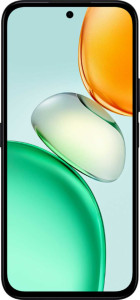
Honor X5c
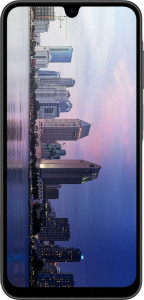
Samsung Galaxy A26 5G

Honor X5c Samsung Galaxy A26 5G

Overview

Welcome to our in-depth spec comparison between the Honor X5c and the Samsung Galaxy A26 5G. These two Android 15 smartphones share some common ground, yet diverge sharply across key battlegrounds including display quality, raw processing performance, camera capabilities, and connectivity. Whether you prioritize value-focused fundamentals or a more feature-rich experience, this side-by-side breakdown will help you determine which device truly fits your needs.

Common Features

  • Neither product has a rugged build.
  • Neither product can be folded.
  • HDR10 support is not available on either product.
  • HDR10+ support is not available on either product.
  • Dolby Vision support is not available on either product.
  • Neither product has a secondary screen.
  • Both products have a touch screen.
  • Both products have integrated LTE.
  • Both products support 64-bit processing.
  • Both products use DirectX 12.
  • Both products have integrated graphics.
  • Both products use big.LITTLE technology.
  • Both products have 8 CPU threads.
  • Both products have TrustZone support.
  • Both products support OpenCL version 2.
  • Neither product has a dual-tone LED flash.
  • Both products have a single flash LED.
  • Both products have a CMOS sensor.
  • Both products support continuous autofocus when recording movies.
  • Both products have phase-detection autofocus for photos.
  • Both products support slow-motion video recording.
  • Both products have a built-in HDR mode.
  • Both products run Android 15.
  • Both products have clipboard warnings.
  • Both products have location privacy options.
  • Both products have camera and microphone privacy options.
  • Mail Privacy Protection is not available on either product.
  • Both products support theme customization.
  • Both products can block app tracking.
  • Cross-site tracking blocking is not available on either product.
  • Neither product supports wireless charging.
  • Both products support fast charging.
  • Neither product has a removable battery.
  • Both products have a battery level indicator.
  • Both products have a rechargeable battery.
  • Neither product has stereo speakers.
  • aptX support is not available on either product.
  • LDAC support is not available on either product.
  • aptX Adaptive support is not available on either product.
  • aptX Lossless support is not available on either product.
  • Both products support 2 SIM cards.
  • Both products have an external memory slot.
  • Both products have USB Type-C.
  • Both products use USB version 2.
  • Both products have a fingerprint scanner.
  • Emergency SOS via satellite is not available on either product.
  • Crash detection is not available on either product.
  • Neither product is DLNA-certified.
  • Both products have a video light.
  • Neither product has a sapphire glass display.
  • Neither product has a curved display.
  • Neither product has an e-paper display.

Main Differences

  • Water resistance is absent on Honor X5c but the Samsung Galaxy A26 5G is waterproof.
  • Weight is 186 g on Honor X5c and 200 g on Samsung Galaxy A26 5G.
  • Thickness is 7.9 mm on Honor X5c and 7.7 mm on Samsung Galaxy A26 5G.
  • Width is 77 mm on Honor X5c and 77.5 mm on Samsung Galaxy A26 5G.
  • Height is 167 mm on Honor X5c and 164 mm on Samsung Galaxy A26 5G.
  • Volume is 101.5861 cm³ on Honor X5c and 97.867 cm³ on Samsung Galaxy A26 5G.
  • Display type is LCD on Honor X5c and OLED/AMOLED on Samsung Galaxy A26 5G.
  • Screen size is 6.74″ on Honor X5c and 6.7″ on Samsung Galaxy A26 5G.
  • Pixel density is 260 ppi on Honor X5c and 385 ppi on Samsung Galaxy A26 5G.
  • Resolution is 720 x 1600 px on Honor X5c and 1080 x 2340 px on Samsung Galaxy A26 5G.
  • Refresh rate is 90Hz on Honor X5c and 120Hz on Samsung Galaxy A26 5G.
  • Damage-resistant glass is not present on Honor X5c but is available on Samsung Galaxy A26 5G.
  • Always-On Display is not available on Honor X5c but is present on Samsung Galaxy A26 5G.
  • Internal storage is 128GB on Honor X5c and 256GB on Samsung Galaxy A26 5G.
  • RAM is 4GB on Honor X5c and 8GB on Samsung Galaxy A26 5G.
  • Chipset is MediaTek Helio G81 Ultra on Honor X5c and Samsung Exynos 1380 on Samsung Galaxy A26 5G.
  • GPU is Mali G52 MP2 on Honor X5c and Mali G68 MP5 on Samsung Galaxy A26 5G.
  • CPU speed is 2 x 2 & 6 x 1.8 GHz on Honor X5c and 4 x 2.4 & 4 x 2 GHz on Samsung Galaxy A26 5G.
  • Geekbench 6 multi-core score is 1391 on Honor X5c and 2758 on Samsung Galaxy A26 5G.
  • Geekbench 6 single-core score is 420 on Honor X5c and 1007 on Samsung Galaxy A26 5G.
  • RAM speed is 1800 MHz on Honor X5c and 3200 MHz on Samsung Galaxy A26 5G.
  • Semiconductor size is 12 nm on Honor X5c and 5 nm on Samsung Galaxy A26 5G.
  • Maximum memory bandwidth is 13.41 GB/s on Honor X5c and 51.2 GB/s on Samsung Galaxy A26 5G.
  • Main camera resolution is 13 MP on Honor X5c and 50 & 8 & 2 MP on Samsung Galaxy A26 5G.
  • A multi-lens main camera is absent on Honor X5c but present on Samsung Galaxy A26 5G.
  • Front camera resolution is 5MP on Honor X5c and 13MP on Samsung Galaxy A26 5G.
  • Optical image stabilization is not available on Honor X5c but is present on Samsung Galaxy A26 5G.
  • Main camera video recording is 1080p at 30 fps on Honor X5c and 2160p at 30 fps on Samsung Galaxy A26 5G.
  • Battery capacity is 5260 mAh on Honor X5c and 5000 mAh on Samsung Galaxy A26 5G.
  • Charging speed is 15W on Honor X5c and 25W on Samsung Galaxy A26 5G.
  • A charger is included in the box with Honor X5c but not with Samsung Galaxy A26 5G.
  • A 3.5 mm audio jack is present on Honor X5c but absent on Samsung Galaxy A26 5G.
  • aptX HD support is available on Honor X5c but not on Samsung Galaxy A26 5G.
  • A radio is present on Honor X5c but absent on Samsung Galaxy A26 5G.
  • 5G support is absent on Honor X5c but present on Samsung Galaxy A26 5G.
  • Bluetooth version is 5.1 on Honor X5c and 5.3 on Samsung Galaxy A26 5G.
  • NFC is not available on Honor X5c but is present on Samsung Galaxy A26 5G.
  • Download speed is 300 MBits/s on Honor X5c and 3790 MBits/s on Samsung Galaxy A26 5G.
  • Upload speed is 100 MBits/s on Honor X5c and 1280 MBits/s on Samsung Galaxy A26 5G.
  • A gyroscope is absent on Honor X5c but present on Samsung Galaxy A26 5G.
  • A compass is absent on Honor X5c but present on Samsung Galaxy A26 5G.
Specs Comparison
Honor X5c

Honor X5c

Samsung Galaxy A26 5G

Samsung Galaxy A26 5G

Design:
water resistance None Waterproof
weight 186 g 200 g
thickness 7.9 mm 7.7 mm
width 77 mm 77.5 mm
height 167 mm 164 mm
volume 101.5861 cm³ 97.867 cm³
has a rugged build
can be folded

The most consequential difference in this category is water resistance. The Samsung Galaxy A26 5G is rated waterproof, while the Honor X5c offers no water resistance at all. In practical terms, this means the Galaxy A26 5G can survive accidental splashes, rain, or a drop in a sink, whereas the X5c is vulnerable to any moisture exposure — a significant real-world durability gap, especially for everyday carry.

On physical dimensions, the two phones are closely matched but not identical. The X5c is notably lighter at 186 g versus the A26 5G's 200 g — a 14 g difference that is noticeable during extended single-handed use or long calls. However, the A26 5G is slightly more compact overall: it is 3 mm shorter in height and has a smaller total volume (97.9 cm³ vs 101.6 cm³), making it marginally easier to pocket despite its heavier weight. Thickness is virtually a draw at 7.7 mm vs 7.9 mm. Neither phone has a rugged build or a foldable form factor.

Overall, the Galaxy A26 5G holds a clear design advantage due to its waterproofing — a feature with direct, everyday impact that the X5c simply cannot match. The X5c's lighter weight is a real but secondary benefit; it makes the phone easier to hold, but it does not compensate for the lack of any moisture protection.

Display:
Display type LCD OLED/AMOLED
screen size 6.74" 6.7"
pixel density 260 ppi 385 ppi
resolution 720 x 1600 px 1080 x 2340 px
refresh rate 90Hz 120Hz
has branded damage-resistant glass
supports HDR10
supports HDR10+
Always-On Display
supports Dolby Vision
Has a secondary screen
has a touch screen

The panel technology gap here is substantial. The Galaxy A26 5G uses an OLED/AMOLED display, which delivers true blacks, richer contrast, and more vibrant colors by lighting pixels individually — while the Honor X5c relies on LCD, which uses a backlight and inherently cannot match OLED's depth or color saturation. For media consumption, browsing, or anything visually demanding, this is a meaningful everyday difference that is immediately visible to the naked eye.

Sharpness and motion fluidity further widen the gap. The A26 5G's 385 ppi pixel density versus the X5c's 260 ppi means text and fine details appear noticeably crisper on the Samsung — the difference is especially apparent when reading small text or viewing detailed photos. The A26 5G also pushes a 120Hz refresh rate against the X5c's 90Hz, resulting in smoother scrolling and more responsive touch feel. On top of this, the A26 5G includes branded damage-resistant glass and an Always-On Display — the former protects against scratches and drops, the latter lets users glance at time and notifications without waking the screen, neither of which the X5c offers.

Across every meaningful display metric, the Galaxy A26 5G holds a decisive advantage. The Honor X5c has a marginally larger screen at 6.74″ versus 6.7″, but that fractional difference is irrelevant against the A26 5G's superior panel technology, significantly higher pixel density, faster refresh rate, and added durability glass.

Performance:
internal storage 128GB 256GB
RAM 4GB 8GB
Chipset (SoC) name MediaTek Helio G81 Ultra Samsung Exynos 1380
GPU name Mali G52 MP2 Mali G68 MP5
CPU speed 2 x 2 & 6 x 1.8 GHz 4 x 2.4 & 4 x 2 GHz
Geekbench 6 result (multi) 1391 2758
Geekbench 6 result (single) 420 1007
Geekbench 5 result (multi) 1300 2634
Geekbench 5 result (single) 350 780
Has integrated LTE
RAM speed 1800 MHz 3200 MHz
semiconductor size 12 nm 5 nm
Supports 64-bit
DirectX version DirectX 12 DirectX 12
Has integrated graphics
Uses big.LITTLE technology
CPU threads 8 threads 8 threads
Has TrustZone
maximum memory bandwidth 13.41 GB/s 51.2 GB/s
OpenCL version 2 2
memory channels 2 4
maximum memory amount 8GB 8GB
Thermal Design Power (TDP) 5W 5W
DDR memory version 4 5
L3 cache 1 MB 4 MB

The silicon foundation tells the story clearly. The Galaxy A26 5G runs on Samsung's Exynos 1380, built on a modern 5 nm process, while the Honor X5c uses the MediaTek Helio G81 Ultra on an older 12 nm node. A smaller process node means more transistors per mm², translating directly into better performance per watt and improved thermal efficiency. The benchmark numbers confirm this: the A26 5G scores 2758 versus the X5c's 1391 in Geekbench 6 multi-core — roughly double the throughput — and the single-core gap is even wider at 1007 vs 420. Single-core performance is particularly relevant for everyday responsiveness, meaning app launches, UI animations, and web rendering all feel significantly snappier on the Samsung.

Memory architecture amplifies this advantage further. The A26 5G pairs 8 GB of DDR5 RAM running at 3200 MHz with a maximum memory bandwidth of 51.2 GB/s across four memory channels. The X5c offers 4 GB of DDR4 at 1800 MHz with just 13.4 GB/s bandwidth — less than a quarter of the Samsung's throughput. In practice, this means the A26 5G can hold far more apps in memory simultaneously, multitask without reloading, and feed its GPU data much faster. Storage follows the same pattern: 256 GB on the A26 5G versus 128 GB on the X5c, doubling available space for apps, photos, and media.

Across every performance dimension — raw CPU speed, benchmark scores, RAM capacity, memory bandwidth, and storage — the Galaxy A26 5G holds a commanding and unambiguous advantage. The Honor X5c's chipset is adequate for light daily use, but users who multitask, game, or simply want a phone that stays responsive over time will find the A26 5G in a meaningfully different performance class.

Cameras:
megapixels (main camera) 13 MP 50 & 8 & 2 MP
Has a dual-lens (or multi-lens) main camera
megapixels (front camera) 5MP 13MP
has built-in optical image stabilization
video recording (main camera) 1080 x 30 fps 2160 x 30 fps
Has a dual-tone LED flash
number of flash LEDs 1 1
has a BSI sensor
has a CMOS sensor
has continuous autofocus when recording movies
Has phase-detection autofocus for photos
supports slow-motion video recording
has a built-in HDR mode
has manual exposure
has a flash
optical zoom 0x 0x
has manual ISO
has a serial shot mode
has manual focus
has a front camera
Has laser autofocus
Shoots 360° panorama
has manual white balance
shoots raw
has touch autofocus
has manual shutter speed
can create panoramas in-camera
wide aperture (front camera) 2.2f 2.2f
Has timelapse function
Has a front-facing LED flash
has a dual-lens (or multi-lens) front camera
supports HDR10 recording
supports Dolby Vision recording
has a front-facing camera under the display
Has a RGB LED flash
has 3D photo/video recording capabilities

Camera hardware diverges sharply between these two phones. The Galaxy A26 5G features a triple rear camera system anchored by a 50 MP main sensor, complemented by an 8 MP and a 2 MP lens, while the Honor X5c has a single 13 MP rear shooter. More megapixels alone do not guarantee better photos, but the A26 5G's main sensor captures nearly four times the raw detail, giving it far more flexibility for cropping and preserving quality in challenging lighting. The multi-lens setup also adds versatility — different focal lengths or shooting modes — that the X5c simply cannot replicate.

Two other hardware differences carry significant real-world weight. The A26 5G includes optical image stabilization (OIS), which physically compensates for hand movement during shots and is especially valuable in low light or when recording video — the X5c has no OIS at all. On video, the gap is equally stark: the A26 5G records at 4K (2160p) at 30 fps, while the X5c tops out at 1080p at 30 fps. For anyone who shoots video on their phone, this is a direct quality ceiling difference. The front camera follows suit: 13 MP on the A26 5G versus 5 MP on the X5c, a meaningful gap for selfies and video calls.

Where the two phones are genuinely comparable is in their shared shooting feature set — both offer phase-detection autofocus, HDR mode, slow-motion, timelapse, and manual controls like ISO and white balance. These shared capabilities are a baseline, however, and do not offset the hardware gap. The Galaxy A26 5G holds a clear and comprehensive camera advantage, outperforming the Honor X5c in sensor resolution, lens versatility, stabilization, and maximum video quality.

Operating system:
Android version Android 15 Android 15
has clipboard warnings
has location privacy options
has camera/microphone privacy options
has Mail Privacy Protection
has theme customization
can block app tracking
blocks cross-site tracking
has on-device machine learning
has notification permissions
has media picker
Can play games while they download
has dark mode
has Wi-Fi password sharing
has battery health check
has an extra dim mode
has focus modes
has dynamic theming
can offload apps
Has customizable notifications
has Live Text
has full-page screenshots
supports split screen
gets direct OS updates
has PiP
Can be used as a PC
Has sharing intents
has a child lock
Supports widgets
Is free and open source
Has offline voice recognition
has voice commands
Tracks the current position of a mobile device
is a multi-user system
has Quick Start

This is a rare case of a complete spec-for-spec tie. Both the Honor X5c and the Galaxy A26 5G ship with Android 15 and share an identical feature set across every single data point in this category — from privacy controls like location and camera/microphone permissions, to productivity tools like split-screen, picture-in-picture, and widgets, to quality-of-life features like dark mode, dynamic theming, battery health check, and offline voice recognition.

The breadth of shared features is worth noting for users coming from older Android versions or other platforms. Both phones support on-device machine learning, customizable notifications, full-page screenshots, app offloading, and a child lock — covering privacy, usability, and family-safety bases comprehensively. Neither phone gets direct OS updates (meaning updates are routed through the manufacturer rather than Google directly), which is a shared limitation relevant to long-term software support expectations.

Based strictly on the provided data, this category is a complete draw. Every capability present on one phone is present on the other, and every missing feature is absent from both. A user's OS experience will be shaped more by each manufacturer's custom Android skin than by any difference in the underlying feature set listed here.

Battery:
battery power 5260 mAh 5000 mAh
has wireless charging
Supports fast charging
charging speed 15W 25W
comes with a charger
has a removable battery
has a battery level indicator
has a rechargeable battery

Battery capacity favors the Honor X5c, which packs a 5260 mAh cell compared to the Galaxy A26 5G's 5000 mAh. The 260 mAh difference is modest — in real-world use it might translate to roughly 20–30 extra minutes of screen-on time — so this is a marginal edge rather than a transformative one. Both batteries are non-removable and rechargeable, as is standard for modern smartphones.

Charging speed, however, swings decisively the other way. The A26 5G supports 25W fast charging versus the X5c's 15W — a difference that meaningfully affects how quickly you can top up and get back to using the phone. At 25W, the A26 5G can recover a meaningful portion of its battery in a short window, whereas the X5c's slower rate means longer waits for the same result. One practical caveat: the X5c comes with a charger in the box, while the A26 5G does not — an immediate out-of-pocket consideration for buyers who do not already own a compatible 25W adapter.

This category is a genuine trade-off rather than a clean win for either side. The X5c offers a slightly larger battery and includes a charger at no extra cost; the A26 5G charges significantly faster once you have the right adapter. Users who prioritize topping up quickly will lean toward the Galaxy A26 5G, while those who want maximum runtime between charges and a complete out-of-box experience may find the Honor X5c more practical.

Audio:
has a socket for a 3.5 mm audio jack
has stereo speakers
has aptX
has LDAC
has aptX HD
has aptX Adaptive
has aptX Lossless
Has a radio

Audio is one of the few categories where the Honor X5c holds a clear and unambiguous advantage. Most notably, it retains a 3.5 mm headphone jack — a feature the Galaxy A26 5G omits entirely. For users who own wired headphones or earphones, this is a direct compatibility issue: the A26 5G requires a USB-C adapter or a switch to Bluetooth audio, adding friction and potential extra cost. The X5c also includes a built-in FM radio, a small but genuinely useful feature for users who want access to local broadcasts without consuming mobile data — again, entirely absent on the A26 5G.

On wireless audio quality, the X5c supports aptX HD, a Bluetooth codec capable of transmitting high-resolution audio at up to 576 kbps — noticeably higher fidelity than standard Bluetooth audio for compatible headphones. The Galaxy A26 5G supports none of the listed high-quality Bluetooth codecs, meaning wireless audio is limited to the baseline SBC or AAC standards. For listeners using aptX HD-compatible headphones, this is a tangible difference in perceived audio quality.

Neither phone offers stereo speakers, which is a shared limitation worth flagging for media consumption. Still, based strictly on the provided data, the Honor X5c wins this category outright — its headphone jack preserves wired compatibility, its aptX HD support raises the ceiling for wireless listening, and its FM radio adds a connectivity option the A26 5G lacks entirely.

Connectivity & Features:
release date October 2025 March 2025
has 5G support
Wi-Fi version Wi-Fi 5 (802.11ac), Wi-Fi 4 (802.11n) Wi-Fi 4 (802.11n), Wi-Fi 5 (802.11ac)
SIM cards 2 SIM 2 SIM
Bluetooth version 5.1 5.3
has an external memory slot
Has USB Type-C
USB version 2 2
has NFC
download speed 300 MBits/s 3790 MBits/s
upload speed 100 MBits/s 1280 MBits/s
Has a fingerprint scanner
has emergency SOS via satellite
has crash detection
is DLNA-certified
has a gyroscope
supports ANT+
Has a heart rate monitor
has GPS
has a compass
supports Wi-Fi
Has an infrared sensor
has an accelerometer
has a cellular module
Has a barometer
has an HDMI output
Uses 3D facial recognition
Has an iris scanner
Stylus included
supports Galileo
Has motion tracking
Has optical tracking
Has a built-in projector

The connectivity gap between these two phones is substantial, and it starts with cellular. The Galaxy A26 5G supports 5G; the Honor X5c does not, topping out at 4G LTE with a maximum download speed of 300 Mbits/s versus the A26 5G's 3790 Mbits/s. For users in areas with 5G coverage, this is not merely a future-proofing consideration — it is an immediate, real-world difference in download speeds, streaming quality, and network responsiveness. The A26 5G also has NFC, enabling contactless payments and quick device pairing, while the X5c lacks it entirely — a meaningful omission for users who rely on mobile payments.

Bluetooth tells a similar story. The A26 5G runs Bluetooth 5.3 against the X5c's 5.1, bringing improved connection stability, slightly better range, and more efficient power consumption when connected to wireless peripherals. On sensors, the A26 5G adds a gyroscope and a compass that the X5c does not have. The gyroscope matters for gaming, AR applications, and image stabilization assistance, while the compass enables accurate map orientation — both are features users often miss only once they need them.

Both phones share a solid common baseline: dual SIM, USB Type-C, expandable storage via microSD, a fingerprint scanner, GPS with Galileo support, accelerometer, and Wi-Fi 5. These shared features cover everyday essentials well, but they do not offset the A26 5G's advantages elsewhere. The Galaxy A26 5G holds a decisive edge in connectivity — its 5G support, NFC, newer Bluetooth, and additional sensors collectively represent a more capable and future-ready feature set.
Miscellaneous:
has a video light
Has sapphire glass display
Has a curved display
Has an e-paper display

The miscellaneous specs for these two phones are identical across every data point provided. Both the Honor X5c and the Galaxy A26 5G have a video light, and neither features sapphire glass, a curved display, or an e-paper display — all of which are niche premium or specialist features rarely found outside flagship or purpose-built devices.

This category is a complete draw by the data. There are no differentiators here that would influence a purchase decision between the two phones.

Comparison Summary & Verdict

After examining every spec, a clear picture emerges. The Samsung Galaxy A26 5G is the stronger all-round performer, offering a sharper OLED display at 120Hz, a significantly more powerful Exynos 1380 chipset, a versatile multi-lens camera with optical image stabilization, 5G connectivity, NFC, and waterproofing — making it ideal for users who demand a capable, future-ready daily driver. The Honor X5c, on the other hand, carves out its own niche: it is lighter, ships with a charger in the box, retains a 3.5 mm headphone jack, includes a radio, and packs a larger 5260 mAh battery — appealing to users who value simplicity, audio versatility, and longer battery endurance on a tighter budget.

Honor X5c
Buy Honor X5c if...

Buy the Honor X5c if you want a lighter phone that includes a charger in the box, retains a 3.5 mm headphone jack and FM radio, and offers a larger battery — all at a more accessible price point.

Samsung Galaxy A26 5G
Buy Samsung Galaxy A26 5G if...

Buy the Samsung Galaxy A26 5G if you want a sharper OLED screen with a 120Hz refresh rate, significantly faster performance, 5G support, NFC, waterproofing, and a more capable multi-lens camera system.