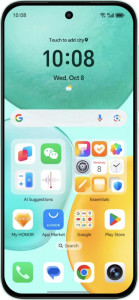
Honor X6c
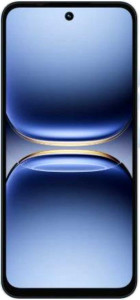
Tecno Spark 40C

Honor X6c Tecno Spark 40C

Overview

When choosing between the Honor X6c and the Tecno Spark 40C, shoppers face a genuinely close contest between two budget-friendly Android 15 smartphones sharing the same chipset and storage configuration. Yet beneath the surface, the two devices diverge in meaningful ways — from camera resolution and battery capacity to audio features and connectivity options. This detailed spec comparison breaks down exactly where each phone pulls ahead, helping you decide which one truly fits your needs.

Common Features

  • Both phones are water resistant with an IP64 ingress protection rating.
  • Both have a thickness of 8.4 mm.
  • Neither phone has a rugged build.
  • Neither phone can be folded.
  • Both feature an LCD IPS display with a 120Hz refresh rate.
  • Neither phone has branded damage-resistant glass.
  • HDR10, HDR10+, and Dolby Vision support are not available on either phone.
  • Always-On Display is not available on either phone.
  • Both phones are powered by the MediaTek Helio G81 Ultra chipset with a Mali G52 MP2 GPU.
  • Both phones come with 8GB of RAM and 256GB of internal storage.
  • Both scored 1391 on Geekbench 6 multi-core and 420 on single-core.
  • Both phones run Android 15.
  • Both phones support fast charging and have a non-removable rechargeable battery.
  • Wireless charging is not available on either phone.
  • Both phones have a main camera with an f/1.8 aperture and record video at 1080p 30fps.
  • Neither phone has optical image stabilization or a BSI sensor.
  • Both phones support Wi-Fi 4 and Wi-Fi 5, dual SIM, USB Type-C, and have a fingerprint scanner.
  • Neither phone supports 5G or emergency SOS via satellite.
  • Both phones have a video light but neither has a curved or e-paper display.
  • Clipboard warnings, location privacy options, camera and microphone privacy options, theme customization, and app tracking blocking are available on both phones.

Main Differences

  • Width is 75.6 mm on Honor X6c and 77 mm on Tecno Spark 40C.
  • Height is 164 mm on Honor X6c and 165.6 mm on Tecno Spark 40C.
  • Volume is 104.15 cm³ on Honor X6c and 107.11 cm³ on Tecno Spark 40C.
  • Screen size is 6.61″ on Honor X6c and 6.67″ on Tecno Spark 40C.
  • Pixel density is 266 ppi on Honor X6c and 263 ppi on Tecno Spark 40C.
  • Resolution is 720 x 1604 px on Honor X6c and 720 x 1600 px on Tecno Spark 40C.
  • Main camera resolution is 50 MP on Honor X6c and 13 MP on Tecno Spark 40C.
  • Front camera resolution is 5 MP on Honor X6c and 8 MP on Tecno Spark 40C.
  • Battery capacity is 5300 mAh on Honor X6c and 6000 mAh on Tecno Spark 40C.
  • Charging speed is 35W on Honor X6c and 18W on Tecno Spark 40C.
  • A 3.5 mm audio jack is present on Honor X6c but not available on Tecno Spark 40C.
  • Stereo speakers are available on Tecno Spark 40C but not on Honor X6c.
  • NFC is available on Honor X6c but not on Tecno Spark 40C.
Specs Comparison
Honor X6c

Honor X6c

Tecno Spark 40C

Tecno Spark 40C

Design:
water resistance Water resistant Water resistant
thickness 8.4 mm 8.4 mm
width 75.6 mm 77 mm
height 164 mm 165.6 mm
volume 104.14656 cm³ 107.11008 cm³
Ingress Protection (IP) rating IP64 IP64
has a rugged build
can be folded

Both the Honor X6c and the Tecno Spark 40C share an identical 8.4 mm thickness and the same IP64 rating, meaning both are equally slim in hand and equally protected against dust and water splashes — neither has an edge in slimness or environmental protection.

Where a subtle difference emerges is in overall footprint and volume. The Spark 40C is marginally taller (165.6 mm vs 164 mm) and wider (77 mm vs 75.6 mm), resulting in a slightly larger overall volume (107.11 cm³ vs 104.15 cm³). In practice, this means the Honor X6c will feel fractionally more compact and easier to grip, particularly for users with smaller hands or those who prefer one-handed use.

Neither device features a rugged build or foldable form factor. Overall, the Honor X6c holds a slight edge in design ergonomics due to its more compact dimensions, though the difference is modest enough that most users will not find it decisive on its own.

Display:
Display type LCD, IPS LCD, IPS
screen size 6.61" 6.67"
pixel density 266 ppi 263 ppi
resolution 720 x 1604 px 720 x 1600 px
refresh rate 120Hz 120Hz
has branded damage-resistant glass
supports HDR10
supports HDR10+
Always-On Display
supports Dolby Vision
Has a secondary screen
has a touch screen

At their core, these two displays are nearly identical: both use an LCD IPS panel, run at a smooth 120Hz refresh rate, and top out at 720p resolution — meaning neither offers the sharpness of a 1080p screen, but the 120Hz cadence does ensure fluid scrolling and responsive touch interactions that punch above the typical budget-tier expectation.

The numbers diverge only marginally in size and pixel density. The Spark 40C has a slightly larger 6.67″ screen versus the Honor X6c's 6.61″, but the X6c actually edges ahead on pixel density at 266 ppi compared to 263 ppi — a direct consequence of fitting a similar resolution into a smaller panel. In practice, neither difference is perceptible to the naked eye; both will look equally sharp in everyday use.

With no HDR support, no Always-On Display, and no damage-resistant glass on either device, there are no hidden differentiators lurking below the surface. This category is effectively a tie — the choice between these two displays comes down to a personal preference for a marginally larger screen (Spark 40C) versus a fractionally more compact one (Honor X6c), with no meaningful quality gap between them.

Performance:
internal storage 256GB 256GB
RAM 8GB 8GB
Chipset (SoC) name MediaTek Helio G81 Ultra MediaTek Helio G81 Ultra
GPU name Mali G52 MP2 Mali G52 MP2
CPU speed 2 x 2 & 6 x 1.8 GHz 2 x 2 & 6 x 1.8 GHz
Geekbench 6 result (multi) 1391 1391
Geekbench 6 result (single) 420 420
Geekbench 5 result (multi) 1300 1300
Geekbench 5 result (single) 350 350
Has integrated LTE
RAM speed 1800 MHz 1800 MHz
semiconductor size 12 nm 12 nm
Supports 64-bit
DirectX version DirectX 12 DirectX 12
Has integrated graphics
OpenGL version 3.2 3.2
OpenGL ES version 3.2 3.2
Uses big.LITTLE technology
CPU threads 8 threads 8 threads
Has TrustZone
maximum memory bandwidth 13.41 GB/s 13.41 GB/s
OpenCL version 2 2
memory channels 2 2
L2 cache 0.3 MB 0.3 MB
eMMC version 5.1 5.1
maximum memory amount 8GB 8GB
GPU execution units 2 2
GPU turbo 950 MHz 950 MHz
number of transistors 5500 million 5500 million
Thermal Design Power (TDP) 5W 5W
DDR memory version 4 4
shading units 32 32
turbo clock speed 2GHz 2GHz
L3 cache 1 MB 1 MB

Performance is a non-debate here: both phones are powered by the exact same MediaTek Helio G81 Ultra chipset, paired with identical 8GB of RAM and 256GB of internal storage. Every measurable benchmark — Geekbench 6 single-core (420), multi-core (1391), GPU configuration, memory bandwidth, and TDP — is a carbon copy between the two devices.

The Helio G81 Ultra is a capable mid-range chip built on a 12 nm process, suited for everyday tasks, casual gaming, and smooth multitasking. The 8GB of RAM provides comfortable headroom for keeping multiple apps open, and the eMMC 5.1 storage standard, while not the fastest available, is adequate for this segment. Neither phone will struggle with daily use, but neither will excel at sustained heavy workloads or demanding 3D gaming either.

This category is a complete tie — down to the last transistor. Any performance difference a user might perceive between these two phones in real life would be attributable to software optimization or thermal management, neither of which is reflected in the provided specs.

Cameras:
megapixels (main camera) 50 MP 13 MP
wide aperture (main camera) 1.8f 1.8f
Has a dual-lens (or multi-lens) main camera
megapixels (front camera) 5MP 8MP
has built-in optical image stabilization
video recording (main camera) 1080 x 30 fps 1080 x 30 fps
Has a dual-tone LED flash
number of flash LEDs 1 1
has a BSI sensor
has a CMOS sensor
has continuous autofocus when recording movies
Has phase-detection autofocus for photos
supports slow-motion video recording
has a built-in HDR mode
has manual exposure
has a flash
optical zoom 0x 0x
has manual ISO
has a serial shot mode
has manual focus
has a front camera
Has laser autofocus
Shoots 360° panorama
has manual white balance
shoots raw
has touch autofocus
has manual shutter speed
can create panoramas in-camera
Has a front-facing LED flash
has a dual-lens (or multi-lens) front camera
supports HDR10 recording
supports Dolby Vision recording
has a front-facing camera under the display
Has a RGB LED flash
has 3D photo/video recording capabilities

The camera specs reveal the most meaningful split between these two devices so far. The Honor X6c's main sensor resolves at 50 MP versus the Tecno Spark 40C's 13 MP — a substantial gap that translates to significantly more detail in daylight shots, greater cropping flexibility, and generally crisper images when conditions are favorable. Both share the same f/1.8 aperture and max out at 1080p 30fps video, so the advantage stays firmly on the resolution side.

The front camera flips the dynamic partially. The Spark 40C counters with an 8MP selfie shooter against the X6c's 5MP — a meaningful difference for users who prioritize video calls or self-portraits. A higher-resolution front camera captures more facial detail and handles crops more gracefully, which matters for social media use.

The feature set is otherwise a mirror image: both offer phase-detection autofocus, HDR mode, manual controls for ISO and exposure, slow-motion recording, and panorama support. Given these shared capabilities, the Honor X6c holds a clear overall camera edge thanks to its far superior main sensor resolution, while the Spark 40C offers a modest counter-advantage for selfie-focused users. For most photography use cases, the X6c's 50 MP rear camera is the more impactful differentiator.

Operating system:
Android version Android 15 Android 15
has clipboard warnings
has location privacy options
has camera/microphone privacy options
has Mail Privacy Protection
has theme customization
can block app tracking
blocks cross-site tracking
has on-device machine learning
has notification permissions
has media picker
Can play games while they download
has dark mode
has Wi-Fi password sharing
has battery health check
has an extra dim mode
has focus modes
has dynamic theming
can offload apps
Has customizable notifications
has Live Text
has full-page screenshots
supports split screen
gets direct OS updates
has PiP
Can be used as a PC
Has sharing intents
has a child lock
Supports widgets
Is free and open source
Has offline voice recognition
has voice commands
Tracks the current position of a mobile device
is a multi-user system
has Quick Start

Running Android 15 on both devices, the software experience is identical across every tracked data point — from privacy controls like camera/microphone permissions and app tracking blockers, to usability features like dark mode, dynamic theming, split-screen multitasking, and Picture-in-Picture. Neither phone receives direct OS updates, which is a shared limitation worth noting for users who prioritize long-term software support.

The privacy toolkit on both is reasonably modern: location controls, clipboard warnings, and on-device machine learning are all present, offering a solid baseline for users concerned about data handling. The absence of cross-site tracking protection and Mail Privacy Protection on both devices is equally shared, so no advantage is created there either.

This category is a complete tie — the spec data does not reveal a single differentiating feature between the two. Any software distinctions a user might encounter in practice, such as differences in UI skin or pre-installed apps, fall outside what the provided specs address. On paper, the operating system experience is indistinguishable.

Battery:
battery power 5300 mAh 6000 mAh
has wireless charging
Supports fast charging
charging speed 35W 18W
has a removable battery
has a battery level indicator
has a rechargeable battery

Battery is where these two devices make genuinely different trade-offs. The Tecno Spark 40C packs a larger 6000 mAh cell versus the Honor X6c's 5300 mAh — a 13% capacity advantage that, on equivalent hardware (which these two largely share), translates to meaningfully longer time between charges. For heavy users or those in areas with limited charging access, that extra headroom is a tangible benefit.

The Honor X6c fights back on charging speed, however. Its 35W fast charging is nearly double the Spark 40C's 18W, meaning it replenishes significantly faster when plugged in. A rough implication: the X6c can recover a meaningful portion of its battery in a short charging window, partially offsetting its smaller capacity for users who charge opportunistically throughout the day.

Neither phone supports wireless charging, so the choice here comes down to usage pattern. Users who rarely find themselves near a charger will prefer the Spark 40C's 6000 mAh endurance advantage, while those who charge frequently and value speed will appreciate the X6c's 35W top-up capability. On raw battery longevity alone, the Tecno Spark 40C holds the edge.

Audio:
has a socket for a 3.5 mm audio jack
has stereo speakers
has aptX
has LDAC
has aptX HD
has aptX Adaptive
has aptX Lossless
Has a radio

Audio presents a classic trade-off rather than a clear-cut winner. The Honor X6c retains a 3.5mm headphone jack — a feature increasingly rare at this price tier — while the Tecno Spark 40C drops the jack entirely but steps up with stereo speakers. These two choices cater to fundamentally different listening habits.

For users who rely on wired headphones or earphones, the X6c's jack eliminates the need for an adapter and typically delivers better audio quality than Bluetooth for private listening. The Spark 40C's stereo speaker setup, on the other hand, produces wider, more immersive sound during media consumption — watching videos, gaming, or playing music out loud all benefit noticeably from dual-channel output compared to a single mono speaker.

Neither device supports high-resolution Bluetooth codecs like aptX or LDAC, so wireless audio quality is equal and unremarkable on both. The verdict depends entirely on use case: the Honor X6c suits wired-audio loyalists, while the Tecno Spark 40C has the edge for speaker-first, hands-free listeners. Neither holds an absolute overall advantage — this is a direct lifestyle trade-off.

Connectivity & Features:
release date June 2025 July 2025
has 5G support
Wi-Fi version Wi-Fi 4 (802.11n), Wi-Fi 5 (802.11ac) Wi-Fi 4 (802.11n), Wi-Fi 5 (802.11ac)
SIM cards 2 SIM 2 SIM
Has USB Type-C
has NFC
download speed 300 MBits/s 300 MBits/s
upload speed 100 MBits/s 100 MBits/s
Has a fingerprint scanner
has emergency SOS via satellite
has crash detection
is DLNA-certified
supports ANT+
Has a heart rate monitor
has GPS
supports Wi-Fi
Has an infrared sensor
has an accelerometer
has a cellular module
Has a barometer
has an HDMI output
Uses 3D facial recognition
Has an iris scanner
Stylus included
supports Galileo
Has motion tracking
Has optical tracking
Has a built-in projector

Across the bulk of connectivity specs, these two phones are evenly matched: both support Wi-Fi 5, dual SIM, USB Type-C, GPS with Galileo, fingerprint scanning, and identical LTE speeds of 300 Mbps down / 100 Mbps up. Neither offers 5G, which is expected at this price point but worth noting for buyers planning to hold onto their device as 5G networks expand.

The sole differentiator in this category is NFC, which the Honor X6c carries and the Tecno Spark 40C does not. NFC enables contactless payments, quick Bluetooth pairing, and data transfer between compatible devices — functionality that has become increasingly relevant as tap-to-pay adoption grows globally. Its absence on the Spark 40C is a concrete feature gap, not merely a spec-sheet detail.

The Honor X6c takes a clear edge here on the strength of its NFC support alone. For users who use mobile payments or frequently interact with NFC-enabled accessories or tags, this distinction is meaningful. For those who never use contactless payments and rely purely on wireless and cellular connectivity, the two phones are functionally identical in this category.

Miscellaneous:
has a video light
Has sapphire glass display
Has a curved display
Has an e-paper display

The miscellaneous specs offer nothing to separate these two devices. Both include a video light, and neither features a sapphire glass display, curved screen, or e-paper display — a uniform set of absences and inclusions that produces no differentiation whatsoever.

This category is a complete tie. With only four data points and every single one matching, there is no basis to favor either phone here. Buyers can set this spec group aside entirely when making their decision.

Comparison Summary & Verdict

Both the Honor X6c and the Tecno Spark 40C are built on identical foundations — the same MediaTek Helio G81 Ultra chipset, 8GB of RAM, 256GB of storage, and Android 15 — making performance a non-factor in this decision. The Honor X6c stands out with its superior 50 MP main camera, faster 35W charging, NFC support, and a handy 3.5 mm headphone jack, making it the stronger pick for users who value imaging, quick top-ups, and versatile connectivity. The Tecno Spark 40C counters with a larger 6000 mAh battery, stereo speakers, and a higher-resolution 8 MP selfie camera, appealing to those who prioritize all-day endurance and a richer media experience. Neither phone is an outright winner — your choice simply comes down to what matters more to you.

Honor X6c
Buy Honor X6c if...

Buy the Honor X6c if you want a higher-resolution main camera, faster 35W charging, NFC, and a 3.5 mm headphone jack for maximum everyday versatility.

Tecno Spark 40C
Buy Tecno Spark 40C if...

Buy the Tecno Spark 40C if long battery life is your top priority, or if you prefer stereo speakers and a sharper front camera for selfies and media consumption.