Honor X70
Xiaomi Poco X7

Honor X70 Xiaomi Poco X7

Overview

Welcome to our in-depth comparison of the Honor X70 and the Xiaomi Poco X7, two competitive mid-range smartphones that share a surprising amount of common ground while diverging sharply in a few critical areas. Both devices bring OLED displays, 5G connectivity, and 120Hz refresh rates to the table, yet they take very different approaches to battery capacity, camera systems, and display features. Read on to discover which one better fits your needs.

Common Features

  • Both phones are waterproof and share the same water resistance classification.
  • Neither phone has a rugged build.
  • Neither phone can be folded.
  • Both displays use OLED/AMOLED panel technology.
  • Both displays support a 120Hz refresh rate.
  • Both displays feature branded damage-resistant glass.
  • HDR10 support is available on both phones.
  • Neither phone has a secondary screen.
  • Both phones have a touchscreen.
  • Both phones come with 12GB of RAM and 512GB of internal storage.
  • Both phones integrate LTE connectivity.
  • Both chips are manufactured on a 4nm semiconductor process.
  • Both phones support 64-bit processing.
  • Both phones support DirectX 12.
  • Both phones include integrated graphics.
  • Both phones use big.LITTLE CPU architecture.
  • Both main cameras record video at 2160p at 30fps.
  • Dual-tone LED flash is not present on either phone.
  • Both phones use a CMOS image sensor.
  • Continuous autofocus during video recording is supported on both phones.
  • Phase-detection autofocus for photos is available on both phones.
  • Slow-motion video recording is supported on both phones.
  • A built-in HDR photo mode is available on both phones.
  • Manual exposure control is available on both phones.
  • Both operating systems include clipboard warnings.
  • Location privacy options are available on both phones.
  • Camera and microphone privacy options are available on both phones.
  • Mail Privacy Protection is not available on either phone.
  • Theme customization is supported on both phones.
  • App tracking can be blocked on both phones.
  • Cross-site tracking blocking is not available on either phone.
  • On-device machine learning is present on both phones.
  • Fast charging is supported on both phones.
  • Neither phone has a removable battery.
  • A battery level indicator is present on both phones.
  • Both phones have rechargeable batteries.
  • Neither phone includes a 3.5mm audio jack.
  • Stereo speakers are present on both phones.
  • aptX audio is supported on both phones.
  • aptX Lossless audio is not supported on either phone.
  • Neither phone has a built-in radio.
  • 5G connectivity is available on both phones.
  • Both phones support Wi-Fi 4, Wi-Fi 5, and Wi-Fi 6.
  • Both phones have dual SIM card slots.
  • Neither phone has an external memory slot.
  • Both phones feature a USB Type-C port with USB 2.0.
  • NFC is available on both phones.
  • Both phones include a fingerprint scanner.
  • Both phones have a video light.
  • Neither phone has a sapphire glass display.
  • Neither phone has an e-paper display.

Main Differences

  • Weight is 199g on the Honor X70 and 185.5g on the Xiaomi Poco X7.
  • Thickness is 7.8mm on the Honor X70 and 8.4mm on the Xiaomi Poco X7.
  • Width is 76.1mm on the Honor X70 and 74.4mm on the Xiaomi Poco X7.
  • Height is 161.9mm on the Honor X70 and 162.3mm on the Xiaomi Poco X7.
  • Volume is 96.10 cm³ on the Honor X70 and 101.43 cm³ on the Xiaomi Poco X7.
  • The IP rating is IP69 on the Honor X70 and IP68 on the Xiaomi Poco X7.
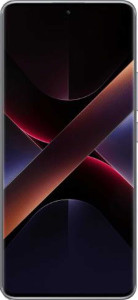
  • Screen size is 6.79″ on the Honor X70 and 6.67″ on the Xiaomi Poco X7.
  • Pixel density is 427 ppi on the Honor X70 and 446 ppi on the Xiaomi Poco X7.
  • Resolution is 1200 x 2640 px on the Honor X70 and 1220 x 2712 px on the Xiaomi Poco X7.
  • Typical brightness is 1800 nits on the Honor X70 and 1200 nits on the Xiaomi Poco X7.
  • HDR10+ support is present on the Xiaomi Poco X7 but not available on the Honor X70.
  • Always-On Display is available on the Xiaomi Poco X7 but not on the Honor X70.
  • Dolby Vision support is present on the Xiaomi Poco X7 but not on the Honor X70.
  • A curved display is featured on the Xiaomi Poco X7 but not on the Honor X70.
  • The AnTuTu benchmark score is 750,000 on the Honor X70 and 728,840 on the Xiaomi Poco X7.
  • The chipset is the Qualcomm Snapdragon 6 Gen 4 on the Honor X70 and the MediaTek Dimensity 7300 on the Xiaomi Poco X7.
  • The GPU is the Adreno 810 on the Honor X70 and the Mali G615 MC2 on the Xiaomi Poco X7.
  • CPU speed is 1 x 2.3 & 3 x 2.2 & 4 x 1.8 GHz on the Honor X70 and 4 x 2.5 & 4 x 2 GHz on the Xiaomi Poco X7.
  • GPU clock speed is 800 MHz on the Honor X70 and 1047 MHz on the Xiaomi Poco X7.
  • RAM speed is 2750 MHz on the Honor X70 and 6400 MHz on the Xiaomi Poco X7.
  • The main camera is a single 50MP lens on the Honor X70, while the Xiaomi Poco X7 has a triple camera system of 50MP, 8MP, and 2MP.
  • The main camera aperture is f/1.9 on the Honor X70 and f/1.5, f/2.2, and f/2.4 on the Xiaomi Poco X7.
  • A multi-lens main camera is present on the Xiaomi Poco X7 but not on the Honor X70.
  • The front camera is 8MP on the Honor X70 and 20MP on the Xiaomi Poco X7.
  • Optical image stabilization is built into the Honor X70 but is not available on the Xiaomi Poco X7.
  • The Honor X70 has 1 flash LED while the Xiaomi Poco X7 has 2 flash LEDs.
  • A BSI sensor is used on the Honor X70 but not on the Xiaomi Poco X7.
  • Front camera aperture is f/2 on the Honor X70 and f/2.2 on the Xiaomi Poco X7.
  • HDR10 video recording is supported on the Xiaomi Poco X7 but not on the Honor X70.
  • The Honor X70 runs Android 15 while the Xiaomi Poco X7 runs Android 14.
  • App offloading is available on the Honor X70 but not on the Xiaomi Poco X7.
  • Battery capacity is 8300 mAh on the Honor X70 and 5110 mAh on the Xiaomi Poco X7.
  • Wireless charging is supported on the Honor X70 but not on the Xiaomi Poco X7.
  • Wired charging speed is 80W on the Honor X70 and 90W on the Xiaomi Poco X7.
  • LDAC audio is supported on the Xiaomi Poco X7 but not on the Honor X70.
  • aptX HD audio is available on the Xiaomi Poco X7 but not on the Honor X70.
  • aptX Adaptive audio is supported on the Honor X70 but not on the Xiaomi Poco X7.
  • Bluetooth version is 5.2 on the Honor X70 and 5.4 on the Xiaomi Poco X7.
  • Download speed is 2900 Mbits/s on the Honor X70 and 3270 Mbits/s on the Xiaomi Poco X7.
  • Upload speed is 1600 Mbits/s on the Honor X70 and 3270 Mbits/s on the Xiaomi Poco X7.
Specs Comparison
Honor X70

Honor X70

Xiaomi Poco X7

Xiaomi Poco X7

Design:
water resistance Waterproof Waterproof
weight 199 g 185.5 g
thickness 7.8 mm 8.4 mm
width 76.1 mm 74.4 mm
height 161.9 mm 162.3 mm
volume 96.100602 cm³ 101.431008 cm³
Ingress Protection (IP) rating IP69 IP68
has a rugged build
can be folded

Both the Honor X70 and the Xiaomi Poco X7 share a waterproof build and a non-rugged, non-foldable form factor, so the real story in this group is in the finer details. The most meaningful differentiator is the IP rating: the X70 carries an IP69 certification, while the Poco X7 is rated IP68. In practice, IP68 covers prolonged submersion in still water, which is sufficient for most everyday scenarios like rain or accidental splashes. IP69, however, additionally protects against high-pressure, high-temperature water jets — a meaningfully stronger standard that gives the Honor X70 a real-world edge for users who work in demanding environments or simply want extra peace of mind.

On ergonomics, the two phones make different trade-offs. The Poco X7 is noticeably lighter at 185.5 g versus the X70's 199 g — a roughly 13.5 g difference that becomes perceptible during extended one-handed use. Conversely, the X70 is thinner at 7.8 mm compared to the Poco X7's 8.4 mm, and its overall volume (96.1 cm³ vs. 101.4 cm³) is smaller despite being heavier, suggesting a denser, more compact construction. The Poco X7 is also slightly narrower at 74.4 mm, which some users with smaller hands may prefer for grip comfort.

Overall, the Honor X70 holds a clear advantage in water resistance thanks to its superior IP69 rating, and its slimmer, lower-volume chassis is a plus for pocket feel. However, if weight is a priority, the Poco X7's lighter frame gives it an ergonomic edge for day-to-day handling. Users in environments where water exposure could be intense should lean toward the X70; those prioritizing a lighter device for casual use will find the Poco X7 more comfortable over long periods.

Display:
Display type OLED/AMOLED OLED/AMOLED
screen size 6.79" 6.67"
pixel density 427 ppi 446 ppi
resolution 1200 x 2640 px 1220 x 2712 px
refresh rate 120Hz 120Hz
brightness (typical) 1800 nits 1200 nits
has branded damage-resistant glass
supports HDR10
supports HDR10+
Always-On Display
supports Dolby Vision
Has a secondary screen
has a touch screen

The foundation is identical: both phones use an OLED/AMOLED panel with a 120Hz refresh rate, damage-resistant glass, and HDR10 support, so neither has a structural display disadvantage. Where they diverge meaningfully is in size versus sharpness. The Honor X70's larger 6.79″ screen gives it more real estate for media and reading, but the Poco X7 counters with a higher pixel density of 446 ppi versus 427 ppi — a difference subtle enough that most users won't notice it in daily use, though it edges the Poco X7 ahead for fine text rendering and detailed imagery.

The single most impactful differentiator here is brightness. The Honor X70 reaches 1800 nits of typical brightness compared to the Poco X7's 1200 nits — a 50% advantage that translates directly to far better legibility under direct sunlight. For users who spend significant time outdoors, this gap is genuinely consequential, not just a spec sheet win. On the other hand, the Poco X7 punches back with a richer HDR feature set: it supports HDR10+ and Dolby Vision, both of which the X70 lacks. These standards enable dynamic, scene-by-scene tone mapping on compatible streaming content, resulting in more nuanced highlights and shadows when watching supported video.

The Poco X7 also includes an Always-On Display, a convenience feature for at-a-glance notifications that the X70 omits. Taken together, the Poco X7 is the stronger choice for media consumption and feature depth, while the Honor X70's brightness advantage makes it the better outdoor companion. The edge here goes to the Poco X7 for most indoor and mixed-use scenarios, but users who frequently use their phone in bright sunlight may find the X70's display more practical day-to-day.

Performance:
internal storage 512GB 512GB
RAM 12GB 12GB
AnTuTu benchmark score 750000 728840
Chipset (SoC) name Qualcomm Snapdragon 6 Gen 4 MediaTek Dimensity 7300
GPU name Adreno 810 Mali G615 MC2
CPU speed 1 x 2.3 & 3 x 2.2 & 4 x 1.8 GHz 4 x 2.5 & 4 x 2 GHz
GPU clock speed 800 MHz 1047 MHz
Has integrated LTE
RAM speed 2750 MHz 6400 MHz
semiconductor size 4 nm 4 nm
Supports 64-bit
DirectX version DirectX 12 DirectX 12
Has integrated graphics
Uses big.LITTLE technology
CPU threads 8 threads 8 threads
maximum memory amount 16GB 16GB
DDR memory version 5 5

At a glance, these two phones look nearly identical on paper — same 512GB storage, same 12GB RAM, same 4nm fabrication, and matching DDR5 memory. The benchmark scores reinforce this closeness: the Honor X70's Snapdragon 6 Gen 4 scores approximately 750,000 on AnTuTu versus the Poco X7's Dimensity 7300 at around 728,840 — a gap of roughly 3%, which is imperceptible in everyday tasks like browsing, streaming, or social media. For general use, both chips will feel equally fluid.

Dig deeper, however, and the two platforms make different architectural bets. The Snapdragon 6 Gen 4 uses an asymmetric cluster configuration with varying clock speeds across its cores, while the Dimensity 7300 runs a more straightforward layout with its top four cores reaching 2.5 GHz — higher peak CPU clocks that could give it a slight edge in short-burst, single-threaded workloads. On the GPU side, the Poco X7's Mali G615 MC2 runs at a notably higher clock of 1047 MHz compared to the Adreno 810's 800 MHz, though GPU performance depends heavily on architecture efficiency, not clock speed alone. The X70 does have a meaningful RAM speed advantage: 2750 MHz versus the Poco X7's 6400 MHz — wait, the Poco X7 actually leads here with significantly faster RAM bandwidth at 6400 MHz, which can benefit memory-intensive tasks like loading large assets in games or rapid multitasking.

In practice, neither phone offers a decisive performance lead for typical users. The Honor X70 edges ahead in overall benchmark throughput, but the Poco X7's faster RAM and higher GPU clock give it targeted advantages in memory-heavy and graphics-intensive scenarios. This group is effectively a near-tie, with the X70 holding a marginal overall edge — though the margin is too slim to be a deciding factor on its own.

Cameras:
megapixels (main camera) 50 MP 50 & 8 & 2 MP
wide aperture (main camera) 1.9f 1.5 & 2.2 & 2.4f
Has a dual-lens (or multi-lens) main camera
megapixels (front camera) 8MP 20MP
has built-in optical image stabilization
video recording (main camera) 2160 x 30 fps 2160 x 30 fps
Has a dual-tone LED flash
number of flash LEDs 1 2
has a BSI sensor
has a CMOS sensor
has continuous autofocus when recording movies
Has phase-detection autofocus for photos
supports slow-motion video recording
has a built-in HDR mode
has manual exposure
has a flash
optical zoom 0x 0x
has manual ISO
has a serial shot mode
has manual focus
has a front camera
Has laser autofocus
Shoots 360° panorama
has manual white balance
shoots raw
has touch autofocus
has manual shutter speed
can create panoramas in-camera
wide aperture (front camera) 2f 2.2f
Has timelapse function
Has a front-facing LED flash
has a dual-lens (or multi-lens) front camera
supports HDR10 recording
supports Dolby Vision recording
has a front-facing camera under the display
Has a RGB LED flash
has 3D photo/video recording capabilities

The rear camera story is one of contrasting philosophies. The Honor X70 goes all-in on a single 50MP lens, pairing it with optical image stabilization (OIS) and a BSI sensor — both of which improve low-light performance and reduce motion blur, particularly in handheld or video scenarios. The Poco X7, by contrast, fields a triple-camera system (50MP + 8MP + 2MP) and foregoes OIS entirely. Its main lens, however, boasts a significantly wider f/1.5 aperture compared to the X70's f/1.9 — a meaningful optical advantage that allows considerably more light in, which is especially impactful for night photography. Whether the X70's OIS or the Poco X7's wider aperture delivers better low-light results is a genuine trade-off, but the Poco X7's additional lenses give it versatility the X70 simply cannot match.

The selfie camera gap is more clear-cut. The Poco X7 offers a 20MP front camera versus the X70's 8MP, a substantial resolution advantage that benefits detail retention, cropping flexibility, and video calls. The Poco X7 also supports HDR10 video recording, which expands dynamic range in captured footage — a feature the X70 lacks. Its dual-LED flash array (versus the X70's single LED) can also produce more balanced, natural-looking artificial lighting.

The Honor X70 makes a credible case for users who prioritize stability and sensor quality in a single-camera setup, but the Poco X7 holds a clear overall advantage in this group. Its wider main aperture, multi-lens flexibility, vastly superior front camera, and HDR10 video support collectively make it the stronger imaging device based strictly on the provided specs.

Operating system:
Android version Android 15 Android 14
has clipboard warnings
has location privacy options
has camera/microphone privacy options
has Mail Privacy Protection
has theme customization
can block app tracking
blocks cross-site tracking
has on-device machine learning
has notification permissions
has media picker
Can play games while they download
has dark mode
has Wi-Fi password sharing
has battery health check
has an extra dim mode
has focus modes
has dynamic theming
can offload apps
Has customizable notifications
has Live Text
has full-page screenshots
supports split screen
gets direct OS updates
has PiP
Can be used as a PC
Has sharing intents
has a child lock
Supports widgets
Is free and open source
Has offline voice recognition
has voice commands
Tracks the current position of a mobile device
is a multi-user system
has Quick Start

Strip away the nearly identical feature lists and two differences emerge. The Honor X70 ships with Android 15, one full version ahead of the Poco X7's Android 14. In practical terms, this means the X70 arrives with more recent security patches, any behavioral or privacy refinements introduced in Android 15, and — critically — a longer runway before it reaches end-of-support. For users who plan to keep their phone for several years, starting on a newer OS version is a meaningful long-term advantage.

The second differentiator is app offloading, a feature present on the X70 but absent on the Poco X7. Offloading allows the system to automatically remove an app's installation files while preserving its data, freeing up storage without losing progress or settings. On a 512GB device this may rarely be urgent, but it remains a useful housekeeping tool for users who accumulate many apps over time. Everything else — privacy controls, multitasking features like split screen and picture-in-picture, dark mode, dynamic theming, and widget support — is functionally equivalent across both devices.

This group's edge goes to the Honor X70. The newer Android version alone tips the balance, offering a more current software foundation and longer relevance, and the addition of app offloading further distinguishes it from an otherwise near-identical software profile.

Battery:
battery power 8300 mAh 5110 mAh
has wireless charging
Supports fast charging
charging speed 80W 90W
has a removable battery
has a battery level indicator
has a rechargeable battery

Few spec comparisons are as lopsided as this one. The Honor X70 houses a massive 8300 mAh battery — nearly 63% larger than the Poco X7's 5110 mAh cell. To put that in perspective, 5100 mAh is already considered a large battery by current smartphone standards, making the X70's capacity genuinely exceptional. For heavy users, travelers, or anyone who regularly goes a full day or more without access to a charger, this difference is transformative: the X70 is realistically a multi-day device under moderate use, while the Poco X7 operates in the more conventional one-to-two-day range.

The charging picture partially offsets this gap. The Poco X7 supports 90W fast charging versus the X70's 80W, meaning it can replenish its smaller battery more quickly in absolute terms — bridging some of the endurance gap for users near a power source. The Honor X70 also adds wireless charging, a convenience the Poco X7 entirely omits. For users who charge overnight on a wireless pad or at a desk, this is a meaningful quality-of-life advantage.

The Honor X70 wins this group decisively. Its battery capacity lead is so substantial that it defines the device's character as an endurance-first phone, and wireless charging adds further flexibility. The Poco X7's slightly faster wired charging is a reasonable consolation but does not come close to closing the gap for users who prioritize time between charges.

Audio:
has a socket for a 3.5 mm audio jack
has stereo speakers
has aptX
has LDAC
has aptX HD
has aptX Adaptive
has aptX Lossless
Has a radio

With no headphone jack on either device, Bluetooth audio codec support becomes the defining factor for wired-averse listeners — and this is precisely where the two phones diverge. Both support the baseline aptX codec, but their premium codec choices go in opposite directions. The Poco X7 supports LDAC and aptX HD, while the Honor X70 counters with aptX Adaptive. These are not interchangeable: each codec requires a compatible receiver to activate, so the ″better″ option depends entirely on what headphones or earbuds the user already owns or plans to buy.

In terms of what each codec delivers: LDAC, developed by Sony, transmits at up to 990 kbps and is widely supported across Sony's own audio ecosystem as well as many third-party hi-res wireless headphones. aptX HD offers similar high-resolution wireless audio at up to 576 kbps and is common in a broad range of premium headphones. aptX Adaptive, meanwhile, is a newer, more dynamic standard that adjusts bitrate in real time based on connection conditions, prioritizing either low latency or audio quality as needed — making it particularly compelling for gaming and mixed-use scenarios, though its hardware support is currently less widespread than LDAC.

This group is a near-tie that resolves based on ecosystem fit. The Poco X7's LDAC and aptX HD support casts a wider net across existing high-quality wireless audio hardware, giving it a broader compatibility advantage for audiophile-grade listening today. The X70's aptX Adaptive is a forward-looking choice with latency benefits, but its narrower device support means fewer users will actually unlock its potential. For most listeners, the Poco X7 holds a modest practical edge in wireless audio quality.

Connectivity & Features:
release date July 2025 January 2025
has 5G support
Wi-Fi version Wi-Fi 4 (802.11n), Wi-Fi 5 (802.11ac), Wi-Fi 6 (802.11ax) Wi-Fi 4 (802.11n), Wi-Fi 5 (802.11ac), Wi-Fi 6 (802.11ax)
SIM cards 2 SIM 2 SIM
Bluetooth version 5.2 5.4
has an external memory slot
Has USB Type-C
USB version 2 2
has NFC
download speed 2900 MBits/s 3270 MBits/s
upload speed 1600 MBits/s 3270 MBits/s
Has a fingerprint scanner
has emergency SOS via satellite
has crash detection
is DLNA-certified
has a gyroscope
supports ANT+
Has a heart rate monitor
has GPS
has a compass
supports Wi-Fi
Has an infrared sensor
has an accelerometer
has a cellular module
Has a barometer
has an HDMI output
Uses 3D facial recognition
Has an iris scanner
Stylus included
supports Galileo
Has motion tracking
Has optical tracking
Has a built-in projector

Across most of this spec group, the two phones are effectively identical — both offer 5G, dual SIM, Wi-Fi 6, NFC, USB Type-C, infrared sensor, and the same core sensor suite including GPS, gyroscope, and compass. Given how much ground they share, the meaningful differences come down to just a few data points. The most striking is cellular upload speed: the Poco X7 supports up to 3270 Mbits/s upload versus the Honor X70's 1600 Mbits/s — more than double. For most users this won't matter day-to-day, but for anyone who regularly uploads large files, streams live video, or works in bandwidth-intensive environments, the Poco X7's modem has a clear throughput advantage. Its download ceiling of 3270 Mbits/s also edges out the X70's 2900 Mbits/s, though this gap is narrower.

The Poco X7 also carries a newer Bluetooth 5.4 implementation compared to the X70's Bluetooth 5.2. The generational step brings incremental improvements in connection reliability and efficiency, though in practice the real-world difference between these two versions is subtle for typical use cases like audio streaming or peripheral pairing. Neither phone offers an external memory slot or upgrades the USB connection beyond USB 2.0, which is a shared limitation worth noting for users who transfer large files via cable.

This group's edge belongs to the Poco X7, driven primarily by its substantially higher upload speeds and marginally newer Bluetooth version. The connectivity foundation is near-identical otherwise, but for users who push cellular data in both directions — not just downloading — the Poco X7's modem headroom is a tangible advantage.

Miscellaneous:
has a video light
Has sapphire glass display
Has a curved display
Has an e-paper display

This is a lean spec group with limited room for differentiation. Both phones share a video light and forgo sapphire glass — the latter being a premium material reserved for flagship-tier devices, so its absence is expected at this price segment. The one distinguishing feature here is that the Poco X7 sports a curved display, while the Honor X70 uses a flat panel.

Curved displays are largely a matter of personal preference. They can lend a device a more premium, sculptured aesthetic and may feel more natural in-hand along the edges, but they also introduce trade-offs: screen protectors are harder to apply and fit properly, and accidental edge touches can occasionally register unintended inputs. Flat displays, conversely, are more practical for case compatibility and everyday durability.

Based strictly on the provided specs, this group is essentially a tie in functional terms — neither design choice is objectively superior. The Poco X7's curved display is the only differentiator, and whether it counts as an advantage depends entirely on the user's aesthetic preferences and tolerance for the associated practical trade-offs.

Comparison Summary & Verdict

After a thorough comparison, both the Honor X70 and the Xiaomi Poco X7 prove themselves as capable mid-range contenders, but they cater to distinctly different priorities. The Honor X70 stands out with its enormous 8300 mAh battery and wireless charging support, a significantly brighter 1800-nit display, a higher IP69 water resistance rating, optical image stabilization, and Android 15 out of the box, making it the stronger pick for users who demand endurance and durability. The Xiaomi Poco X7, on the other hand, appeals to those who value a richer display experience with Always-On Display, Dolby Vision, and HDR10+ support, a more versatile triple-camera system with a wider f/1.5 aperture, a sharper front camera at 20MP, a higher GPU clock speed, faster RAM, and superior audio codec support including LDAC and aptX HD. Neither phone is a universal winner, but your ideal choice comes down to whether you prioritize raw battery stamina or a feature-rich multimedia and camera experience.

Honor X70
Buy Honor X70 if...

Buy the Honor X70 if you prioritize exceptional battery life with its massive 8300 mAh capacity and wireless charging, a brighter display, superior water resistance, and optical image stabilization.

Xiaomi Poco X7
Buy Xiaomi Poco X7 if...

Buy the Xiaomi Poco X7 if you want a richer display experience with Always-On Display and Dolby Vision, a more versatile triple-camera setup, a sharper 20MP selfie camera, and premium audio codec support including LDAC and aptX HD.