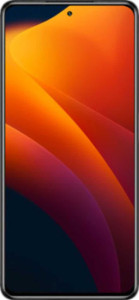
Connectivity splits interestingly between these two phones, with each holding exclusive advantages in different areas. The Honor X7d 4G is the only one of the pair to include NFC, which enables contactless payments, transit card emulation, and quick device pairing — a feature with growing everyday utility that the Hot 60 Pro simply cannot replicate. On the flip side, the Infinix Hot 60 Pro brings a newer Bluetooth 5.4 versus the Honor's Bluetooth 5.0, offering improved connection stability and efficiency, alongside a notably higher cellular download speed of 650 Mbps compared to the Honor's 390 Mbps — a meaningful gap for users in areas with strong LTE networks who frequently stream or download large files.
The sensor loadout also diverges in the Hot 60 Pro's favor in two respects. It includes a gyroscope, which the Honor lacks — relevant for augmented reality apps, immersive gaming, and accurate motion-based navigation. It also carries an infrared sensor, allowing it to function as a universal remote control for TVs and home appliances, a niche but genuinely useful feature the Honor does not offer. Both phones share the same Wi-Fi standards, dual-SIM support, USB Type-C 2.0, fingerprint scanner, GPS with Galileo support, compass, and accelerometer.
Neither phone supports 5G, so both are capped at 4G LTE for the foreseeable future. Overall, this group does not produce a clean winner — it hinges on user priorities. The Honor X7d 4G wins for NFC-dependent users, while the Hot 60 Pro holds the edge in cellular speed, Bluetooth version, and sensor versatility. On aggregate, the Hot 60 Pro claims slightly more ground across this category.