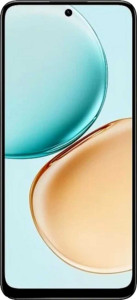
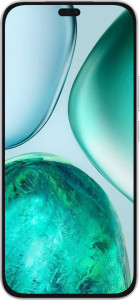
Panel technology is where these two phones diverge most dramatically. The X7d 5G uses an LCD IPS display, while the X8c steps up to an OLED/AMOLED panel — a fundamental difference that shapes the entire visual experience. OLED screens produce true blacks by switching off individual pixels, delivering higher contrast, punchier colors, and better power efficiency when displaying dark content, none of which an LCD can replicate regardless of tuning. For media consumption, browsing, or anything with a dark UI, the X8c's display will look noticeably more vivid.
Resolution compounds this gap further. The X8c resolves at 1080 x 2412 px with a pixel density of 394 ppi, versus the X7d 5G's 720 x 1610 px at just 261 ppi. That 133 ppi difference is not subtle — text, icons, and fine image detail will appear visibly sharper on the X8c at normal viewing distances. Both screens share a 120Hz refresh rate, so scrolling smoothness is equal between them. The X8c also supports an Always-On Display, a convenience the X7d 5G lacks, enabling at-a-glance notifications without waking the screen — a feature made practical precisely because OLED panels can light individual pixels at minimal power cost.
The X7d 5G's one counterpoint is its branded damage-resistant glass, which the X8c does not carry — a meaningful durability advantage for drop-prone users. That said, on pure display quality, the X8c wins this category decisively: its OLED panel, significantly higher pixel density, and Always-On Display support represent a generational step above the X7d 5G's LCD screen.