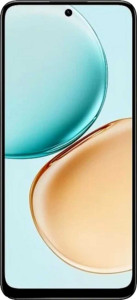
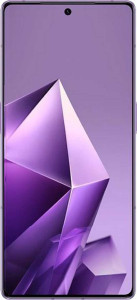
The display is where the gap between these two phones becomes most pronounced. The Infinix Note 50 Pro 4G uses an OLED/AMOLED panel, while the Honor X7d 5G relies on an LCD IPS screen — a fundamental technology difference that shapes the entire visual experience. OLED delivers true blacks, higher contrast, and more vivid colors because each pixel generates its own light, whereas LCD requires a backlight that limits contrast and color depth. For media consumption, browsing, or anything involving dark content, the Infinix's panel will look richer and more engaging by design.
The resolution advantage compounds this further. The Infinix renders at 1080 x 2436 px with a pixel density of 393 ppi, compared to the Honor's 720 x 1610 px at just 261 ppi. That is a substantial sharpness difference — text, icons, and fine details will appear noticeably crisper on the Infinix. The Infinix also edges ahead on the refresh rate at 144Hz versus the Honor's 120Hz, translating to marginally smoother scrolling and animations, though the real-world difference between these two rates is subtle. The Infinix additionally supports an Always-On Display, a convenience feature the Honor lacks entirely.
The Honor X7d 5G's only display-category counterpoint is its branded damage-resistant glass, which the Infinix does not offer — a meaningful durability consideration for users prone to drops. That said, on sheer display quality, the Infinix Note 50 Pro 4G holds a commanding advantage across panel technology, resolution, and pixel density, making it the clear winner in this category for anyone who prioritizes screen experience.