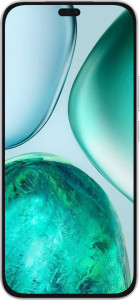
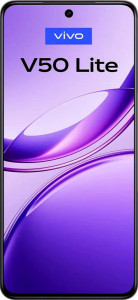
Both phones share a remarkably similar display foundation: OLED/AMOLED panels, a 1080p resolution, a 120Hz refresh rate, and Always-On Display support. That shared OLED technology means both deliver true blacks, vivid colors, and strong contrast ratios — a clear step above LCD alternatives at this price tier. The 120Hz refresh rate ensures smooth scrolling and responsive touch input on both devices, leaving little to separate them on fluidity.
The differences, while present, are subtle. The Vivo V50 Lite 4G has a marginally larger screen at 6.77″ versus 6.7″, but this gap is imperceptible in everyday use. Pixel density is virtually identical — 394 ppi on the Honor X8c versus 388 ppi on the Vivo — meaning sharpness will look the same to the naked eye on both. The more tangible differentiator is peak brightness: the Vivo edges ahead at 1300 nits versus the Honor's 1200 nits. That 100-nit advantage gives the Vivo slightly better legibility in direct sunlight, which is a real-world benefit for outdoor use.
This is one of the closest display matchups possible, but the Vivo V50 Lite 4G holds a narrow edge primarily due to its higher brightness ceiling. Neither device supports HDR10, HDR10+, or Dolby Vision, so content HDR capabilities are off the table for both. For most users the displays will feel essentially equivalent, but those who spend significant time outdoors will find the Vivo's brighter panel a genuine, if modest, advantage.