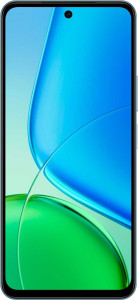
Honor X8c
Vivo Y39 5G

Honor X8c Vivo Y39 5G

Overview

Welcome to our in-depth specification comparison between the Honor X8c and the Vivo Y39 5G. These two mid-range Android smartphones share some common ground — including an IP64 water-resistant build, a 120Hz display, and 8GB of RAM — yet they take noticeably different paths when it comes to display quality, camera capabilities, and connectivity. Read on to explore how each device stacks up across design, performance, battery, and more.

Common Features

  • Both phones have an IP64 ingress protection rating, making them water resistant.
  • Neither phone has a rugged build.
  • Neither phone can be folded.
  • Both phones have a 120Hz display refresh rate.
  • Neither phone has branded damage-resistant glass.
  • Neither phone supports HDR10, HDR10+, or Dolby Vision.
  • Both phones have a touchscreen and no secondary screen.
  • Both phones come with 8GB of RAM.
  • Both phones support 64-bit processing and use big.LITTLE technology with 8 CPU threads.
  • Both phones have integrated LTE, integrated graphics, support DirectX 12, and OpenGL ES 3.2.
  • Both phones feature a dual-lens main camera.
  • Both phones support 1080p at 30fps video recording on the main camera.
  • Both phones have a CMOS sensor, phase-detection autofocus, continuous autofocus during recording, and slow-motion video support.
  • Both phones run Android 15.
  • Both phones include clipboard warnings, location privacy options, and camera/microphone privacy options.
  • Both phones support theme customization and can block app tracking.
  • Neither phone supports wireless charging, but both support fast charging.
  • Neither phone has a removable battery, and both have a rechargeable battery with a battery level indicator.
  • Neither phone has stereo speakers, aptX, LDAC, or a radio.
  • Both phones support Wi-Fi 4 and Wi-Fi 5, have dual SIM slots, USB Type-C (USB 2.0), a fingerprint scanner, and no external memory slot.

Main Differences

  • Weight is 174g on Honor X8c while Vivo Y39 5G weighs 8.1g according to the provided data.
  • Thickness is 7.1mm on Honor X8c and 8.1mm on Vivo Y39 5G.
  • Width is 74.6mm on Honor X8c and 76.3mm on Vivo Y39 5G.
  • Height is 161.1mm on Honor X8c and 165.7mm on Vivo Y39 5G.
  • Display type is OLED/AMOLED on Honor X8c and LCD IPS on Vivo Y39 5G.
  • Pixel density is 394 ppi on Honor X8c and 264 ppi on Vivo Y39 5G.
  • Resolution is 1080 x 2412 px on Honor X8c and 720 x 1608 px on Vivo Y39 5G.
  • Always-On Display is available on Honor X8c but not on Vivo Y39 5G.
  • Internal storage is 512GB on Honor X8c and 256GB on Vivo Y39 5G.
  • The chipset is Qualcomm Snapdragon 685 4G on Honor X8c and Qualcomm Snapdragon 4 Gen 2 on Vivo Y39 5G.
  • The semiconductor size is 6nm on Honor X8c and 4nm on Vivo Y39 5G.
  • GPU is Adreno 610 on Honor X8c and Adreno 613 on Vivo Y39 5G, with GPU clock speeds of 1260 MHz and 955 MHz respectively.
  • RAM speed is 2133 MHz (DDR4) on Honor X8c and 3200 MHz (DDR5) on Vivo Y39 5G.
  • Main camera resolution is 108 & 5 MP on Honor X8c and 50 & 2 MP on Vivo Y39 5G.
  • Front camera resolution is 50MP on Honor X8c and 8MP on Vivo Y39 5G.
  • Optical image stabilization is present on Honor X8c but not available on Vivo Y39 5G.
  • Battery capacity is 5000 mAh on Honor X8c and 6500 mAh on Vivo Y39 5G.
  • Charging speed is 35W on Honor X8c and 44W on Vivo Y39 5G.
  • A 3.5mm audio jack is not present on Honor X8c but is available on Vivo Y39 5G.
  • 5G support is not available on Honor X8c but is present on Vivo Y39 5G.
  • NFC is not available on Honor X8c but is present on Vivo Y39 5G.
  • Download speed is 390 Mbits/s on Honor X8c and 2500 Mbits/s on Vivo Y39 5G.
  • Bluetooth version is 5.0 on Honor X8c and 5.1 on Vivo Y39 5G.
Specs Comparison
Honor X8c

Honor X8c

Vivo Y39 5G

Vivo Y39 5G

Design:
water resistance Water resistant Water resistant
weight 174 g 8.1 g
thickness 7.1 mm 8.1 mm
width 74.6 mm 76.3 mm
height 161.1 mm 165.7 mm
volume 85.328226 cm³ 102.407571 cm³
Ingress Protection (IP) rating IP64 IP64
has a rugged build
can be folded

Both the Honor X8c and the Vivo Y39 5G share an IP64 rating, meaning neither is fully waterproof but both can handle dust and water splashes from any direction — a useful real-world assurance for accidental spills or light rain. Neither device offers a rugged build or a foldable form factor, so they sit squarely in the mainstream candybar smartphone category.

Where they diverge meaningfully is in their physical footprint. The Vivo Y39 5G is noticeably larger across every physical dimension — taller at 165.7 mm vs. 161.1 mm, wider at 76.3 mm vs. 74.6 mm, and thicker at 8.1 mm vs. 7.1 mm — resulting in a substantially greater volume of 102.4 cm³ compared to the Honor X8c′s 85.3 cm³. That volume difference of roughly 17 cm³ is significant: it typically reflects a larger battery or display housed inside, but it also means the Vivo will feel bulkier and may be harder to grip one-handed, especially for users with smaller hands.

On overall design compactness, the Honor X8c has a clear edge: it is slimmer, smaller, and meaningfully more pocket-friendly. Both phones are water-resistant at the same protection level, so that dimension is a tie. Users who prioritize a sleek, manageable form factor will find the Honor X8c the more ergonomic choice, while those drawn to the Vivo Y39 5G may be trading compactness for whatever internal components justify its larger chassis.

Display:
Display type OLED/AMOLED LCD, IPS
screen size 6.7" 6.68"
pixel density 394 ppi 264 ppi
resolution 1080 x 2412 px 720 x 1608 px
refresh rate 120Hz 120Hz
has branded damage-resistant glass
supports HDR10
supports HDR10+
Always-On Display
supports Dolby Vision
Has a secondary screen
has a touch screen

The display category is where these two phones diverge most sharply. The Honor X8c uses an OLED/AMOLED panel while the Vivo Y39 5G relies on an LCD IPS screen — a fundamental technology gap that affects everyday use in multiple ways. OLED panels produce true blacks by switching off individual pixels, delivering far greater contrast and more vibrant colors than LCD can achieve. For watching videos, browsing photos, or using dark mode, the Honor X8c′s screen will look noticeably richer and more immersive.

Resolution compounds this advantage. The Honor X8c renders at 1080 x 2412 px — a full HD+ panel — translating to a pixel density of 394 ppi. The Vivo Y39 5G, by contrast, offers only 720 x 1608 px at 264 ppi, which is an HD-level resolution. That 130 ppi gap is visible to the naked eye: text and fine detail appear crisper and less pixelated on the Honor, particularly when reading small fonts or viewing high-resolution images. Both screens are nearly identical in physical size at around 6.7 inches and both run at a smooth 120Hz refresh rate, so motion fluidity is equally matched.

The Honor X8c also supports an Always-On Display — a feature the Vivo Y39 5G lacks — allowing glanceable information like time and notifications without fully waking the screen, a convenience that pairs naturally with OLED′s power efficiency on dark pixels. Overall, the Honor X8c holds a decisive display advantage: superior panel technology, significantly higher resolution, and an exclusive AOD feature, making it the clear winner for users who value screen quality.

Performance:
internal storage 512GB 256GB
RAM 8GB 8GB
Chipset (SoC) name Qualcomm Snapdragon 685 4G Qualcomm Snapdragon 4 Gen 2
GPU name Adreno 610 Adreno 613
CPU speed 4 x 2.8 & 4 x 1.9 GHz 2 x 2.3 & 6 x 2 GHz
GPU clock speed 1260 MHz 955 MHz
Has integrated LTE
RAM speed 2133 MHz 3200 MHz
semiconductor size 6 nm 4 nm
Supports 64-bit
DirectX version DirectX 12 DirectX 12
Has integrated graphics
OpenGL ES version 3.2 3.2
Uses big.LITTLE technology
CPU threads 8 threads 8 threads
Has TrustZone
OpenCL version 2 2
eMMC version 5.1 5.1
maximum memory amount 16GB 16GB
DDR memory version 4 5

Chipset architecture tells a nuanced story here. The Vivo Y39 5G runs on the Snapdragon 4 Gen 2 built on a 4 nm process node, while the Honor X8c carries the Snapdragon 685 on a 6 nm node. That two-nanometer gap matters: a smaller process means the Vivo′s chip is more energy-efficient and thermally cooler under sustained workloads, which translates to better performance consistency over time and less battery drain during demanding tasks. The Snapdragon 4 Gen 2 is also a more modern design, and its CPU configuration — with all cores running at relatively close speeds — lends itself to balanced multi-threaded performance. The Honor′s 685 posts higher peak clock speeds on its performance cores at 2.8 GHz, but raw clock speed on an older architecture does not straightforwardly outpace a newer, more efficient design.

Memory bandwidth is another area where the Vivo pulls ahead. Its DDR5 RAM running at 3200 MHz offers significantly more bandwidth than the Honor′s DDR4 at 2133 MHz, which benefits GPU-assisted tasks, multitasking, and faster app loading. On the GPU side, the Adreno 613 in the Vivo is a newer generation than the Honor′s Adreno 610, even though the Honor′s GPU runs at a higher clock of 1260 MHz versus 955 MHz — a higher clock on an older GPU does not necessarily outperform a newer architecture at lower clocks. The one area the Honor X8c wins outright is storage: 512 GB versus the Vivo′s 256 GB, which is a meaningful practical advantage for users who store large amounts of media locally without relying on cloud services.

Taking the picture as a whole, the Vivo Y39 5G has the performance edge in chip efficiency, memory technology, and architectural modernity — areas that affect everyday smoothness and longevity. The Honor X8c counters with double the internal storage, which is a real differentiator for storage-heavy users, but it cannot overcome the Vivo′s more future-proof silicon foundation.

Cameras:
megapixels (main camera) 108 & 5 MP 50 & 2 MP
wide aperture (main camera) 2.2 & 1.8f 2.4 & 1.8f
Has a dual-lens (or multi-lens) main camera
megapixels (front camera) 50MP 8MP
has built-in optical image stabilization
video recording (main camera) 1080 x 30 fps 1080 x 30 fps
Has a dual-tone LED flash
number of flash LEDs 1 2
has a BSI sensor
has a CMOS sensor
has continuous autofocus when recording movies
Has phase-detection autofocus for photos
supports slow-motion video recording
has a built-in HDR mode
has manual exposure
has a flash
optical zoom 0x 0x
has manual ISO
has a serial shot mode
has manual focus
has a front camera
Has laser autofocus
Shoots 360° panorama
has manual white balance
shoots raw
has touch autofocus
has manual shutter speed
can create panoramas in-camera
wide aperture (front camera) 2.1f 2f
Has a front-facing LED flash
has a dual-lens (or multi-lens) front camera
supports HDR10 recording
supports Dolby Vision recording
has a front-facing camera under the display
Has a RGB LED flash
has 3D photo/video recording capabilities

The Honor X8c features a dual-lens main camera with 108 MP and 5 MP sensors, while the Vivo Y39 5G has a 50 MP and 2 MP dual-lens main camera. The Honor X8c's main camera has wide apertures of f/2.2 and f/1.8, while the Vivo Y39 5G has f/2.4 and f/1.8 apertures for its lenses.

On the front, the Honor X8c boasts a 50 MP front camera with a f/2.1 wide aperture, whereas the Vivo Y39 5G offers a significantly lower 8 MP front camera with a f/2.0 aperture. Both phones support video recording at 1080p at 30 fps, but only the Honor X8c has built-in optical image stabilization (OIS) for smoother video capture.

Both devices offer a variety of camera features, such as continuous autofocus during video recording, phase-detection autofocus for photos, manual exposure, manual ISO, and serial shot mode. However, the Honor X8c includes additional capabilities like a front camera with a higher resolution, built-in HDR mode, and a touch autofocus feature. Neither device has laser autofocus, shoots raw images, or supports HDR10 or Dolby Vision recording.

Operating system:
Android version Android 15 Android 15
has clipboard warnings
has location privacy options
has camera/microphone privacy options
has Mail Privacy Protection
has theme customization
can block app tracking
blocks cross-site tracking
has on-device machine learning
has notification permissions
has media picker
Can play games while they download
has dark mode
has Wi-Fi password sharing
has battery health check
has an extra dim mode
has focus modes
has dynamic theming
can offload apps
Has customizable notifications
has Live Text
has full-page screenshots
supports split screen
gets direct OS updates
has PiP
Can be used as a PC
Has sharing intents
has a child lock
Supports widgets
Is free and open source
Has offline voice recognition
has voice commands
Tracks the current position of a mobile device
is a multi-user system
has Quick Start

Both the Honor X8c and Vivo Y39 5G run Android 15 and share a wide range of operating system features. These include clipboard warnings, location privacy options, camera/microphone privacy options, theme customization, and the ability to block app tracking. Both phones also support media pickers, can play games while they download, and feature dark mode, customizable notifications, and full-page screenshots.

Additionally, both devices have on-device machine learning, support split-screen, PiP (Picture-in-Picture), and offer offline voice recognition with voice commands. They also track the current position of the device, support widgets, and function as multi-user systems. However, neither phone provides Mail Privacy Protection, Quick Start, or Wi-Fi password sharing. The Honor X8c includes extra dim mode, while the Vivo Y39 5G has no value listed for this feature.

Despite having the same Android version, neither device receives direct OS updates, and both support dynamic theming, app offloading, and a child lock. Both phones also allow for sharing intents, but neither can be used as a PC. Overall, their operating system capabilities are almost identical, with very few differences between the two devices.

Battery:
battery power 5000 mAh 6500 mAh
has wireless charging
Supports fast charging
charging speed 35W 44W
has a removable battery
has a battery level indicator
has a rechargeable battery

The Honor X8c is equipped with a 5000 mAh battery, while the Vivo Y39 5G has a larger 6500 mAh battery. Both devices support fast charging, but the Vivo Y39 5G has a faster charging speed of 44W compared to the 35W charging speed of the Honor X8c.

Neither phone offers wireless charging or removable batteries. Both feature a rechargeable battery and include a battery level indicator to keep track of charge status.

Overall, the Vivo Y39 5G offers a higher battery capacity and faster charging, but both phones share similar charging features otherwise.

Audio:
has a socket for a 3.5 mm audio jack
has stereo speakers
has aptX
has LDAC
has aptX HD
has aptX Adaptive
has aptX Lossless
Has a radio

The Honor X8c does not include a 3.5 mm audio jack or stereo speakers, while the Vivo Y39 5G offers a 3.5 mm audio jack, but also lacks stereo speakers. Both phones do not support aptX, LDAC, aptX HD, aptX Adaptive, or aptX Lossless audio codecs, and neither has a radio feature.

In terms of audio, the key difference is that the Vivo Y39 5G provides a traditional 3.5 mm audio jack, while the Honor X8c does not.

Both devices share a similar lack of advanced audio features like stereo speakers or high-quality wireless audio support.

Connectivity & Features:
release date January 2025 March 2025
has 5G support
Wi-Fi version Wi-Fi 4 (802.11n), Wi-Fi 5 (802.11ac) Wi-Fi 4 (802.11n), Wi-Fi 5 (802.11ac)
SIM cards 2 SIM 2 SIM
Bluetooth version 5 5.1
has an external memory slot
Has USB Type-C
USB version 2 2
has NFC
download speed 390 MBits/s 2500 MBits/s
upload speed 150 MBits/s 900 MBits/s
Has a fingerprint scanner
has emergency SOS via satellite
has crash detection
is DLNA-certified
has a gyroscope
supports ANT+
Has a heart rate monitor
has GPS
has a compass
supports Wi-Fi
Has an infrared sensor
has an accelerometer
has a cellular module
Has a barometer
has an HDMI output
Uses 3D facial recognition
Has an iris scanner
Stylus included
supports Galileo
Has motion tracking
Has optical tracking
Has a built-in projector

The Honor X8c does not support 5G, while the Vivo Y39 5G is 5G-enabled, offering much faster download speeds of 2500 MBits/s compared to the Honor X8c’s 390 MBits/s. The Vivo Y39 5G also has a higher upload speed of 900 MBits/s, while the Honor X8c offers 150 MBits/s.

Both devices support Wi-Fi 4 (802.11n) and Wi-Fi 5 (802.11ac), use Bluetooth 5, and include USB Type-C with USB version 2. Neither phone has an external memory slot, NFC, or infrared sensor. Both devices feature a fingerprint scanner, gyroscope, accelerometer, GPS, and compass. The Honor X8c supports Galileo, while the Vivo Y39 5G shares this feature and adds NFC support, which the Honor X8c lacks.

In terms of other connectivity and features, both phones have a cellular module and offer standard features like SIM card support (2 SIMs), but neither includes advanced options like motion tracking, optical tracking, or a built-in projector. Both phones also lack emergency SOS via satellite and crash detection features.

Miscellaneous:
has a video light
Has sapphire glass display
Has a curved display
Has an e-paper display

Both the Honor X8c and Vivo Y39 5G include a video light feature, which can help in low-light conditions for photography or video recording. Neither device has sapphire glass, a curved display, or an e-paper display, meaning both phones share similar design features in this category.

There are no significant differences in the miscellaneous features between the two devices. Both have the same video light capability and lack the more premium or specialized display technologies like sapphire glass or curved screens.

In summary, both phones offer basic but useful lighting features without advanced display enhancements.

Comparison Summary & Verdict

After a thorough look at the specs, both phones serve different types of users well. The Honor X8c stands out with its superior OLED display at 394 ppi, a high-resolution 108MP main camera and 50MP selfie camera, optical image stabilization, and an Always-On Display — making it a strong pick for those who prioritize visual quality and photography. The Vivo Y39 5G, on the other hand, counters with a larger 6500 mAh battery, faster 44W charging, 5G connectivity, NFC support, a 3.5mm headphone jack, and a more modern 4nm chipset with DDR5 RAM — giving it a clear edge for users who value longevity, future-proof connectivity, and everyday versatility.

Honor X8c
Buy Honor X8c if...

Buy the Honor X8c if you prioritize a sharper OLED display, higher-resolution cameras with optical image stabilization, and more internal storage at 512GB.

Vivo Y39 5G
Buy Vivo Y39 5G if...

Buy the Vivo Y39 5G if you want 5G connectivity, a larger battery with faster charging, NFC support, and a 3.5mm headphone jack for everyday versatility.