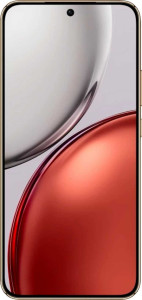
Honor X9d 5G
Tecno Camon 40 Pro 5G

Honor X9d 5G Tecno Camon 40 Pro 5G

Overview

Welcome to our in-depth spec comparison between the Honor X9d 5G and the Tecno Camon 40 Pro 5G. Both phones share a number of impressive traits — including IP68 waterproofing, OLED displays, and 5G connectivity — yet they take notably different approaches when it comes to battery capacity, camera configuration, and overall performance hardware. Read on to see how these two mid-range contenders stack up across every major specification category.

Common Features

  • Both phones are waterproof with an IP68 ingress protection rating.
  • Neither phone has a rugged build.
  • Neither phone can be folded.
  • Both phones feature an OLED/AMOLED display type.
  • HDR10+ support is not available on either phone.
  • Always-On Display is available on both phones.
  • Dolby Vision support is not available on either phone.
  • Neither phone has a secondary screen.
  • Both phones have a touchscreen.
  • Both phones come with 12GB of RAM.
  • Both phones have integrated LTE.
  • Both chips are built on a 4 nm semiconductor process.
  • Both phones support 64-bit processing.
  • Both phones support DirectX 12.
  • Both phones have integrated graphics.
  • Both phones use big.LITTLE technology.
  • Both phones have 8 CPU threads.
  • Both main cameras feature a dual-lens setup with optical image stabilization.
  • Neither main camera has a BSI sensor, but both have a CMOS sensor.
  • Both phones support continuous autofocus during video recording.
  • Both phones support phase-detection autofocus for photos.
  • Both phones support slow-motion video recording.
  • Both phones have a built-in HDR mode.
  • Both phones run Android 15.
  • Both phones display clipboard warnings.
  • Both phones offer location privacy options.
  • Both phones offer camera and microphone privacy options.
  • Mail Privacy Protection is not available on either phone.
  • Both phones support theme customization.
  • Both phones can block app tracking.
  • Cross-site tracking blocking is not available on either phone.
  • Neither phone supports wireless charging, but both support fast charging.
  • Neither phone has a removable battery.
  • Both phones have a battery level indicator and a rechargeable battery.
  • Neither phone has a 3.5mm audio jack.
  • Both phones have stereo speakers.
  • LDAC support is not available on either phone.
  • aptX Lossless support is not available on either phone.
  • Both phones support 5G connectivity.
  • Both phones have dual SIM card slots.
  • Both phones use Bluetooth 5.2.
  • Neither phone has an external memory slot.
  • Both phones have USB Type-C with USB 2.0.
  • Both phones have NFC.
  • Both phones have a fingerprint scanner.
  • Both phones include a video light.
  • Neither phone has a sapphire glass display.
  • Neither phone has an e-paper display.

Main Differences

  • Weight is 193 g on Honor X9d 5G and 179 g on Tecno Camon 40 Pro 5G.
  • Thickness is 7.8 mm on Honor X9d 5G and 7.3 mm on Tecno Camon 40 Pro 5G.
  • Width is 76.1 mm on Honor X9d 5G and 74.6 mm on Tecno Camon 40 Pro 5G.
  • Height is 161.9 mm on Honor X9d 5G and 164.3 mm on Tecno Camon 40 Pro 5G.
  • Volume is 96.10 cm³ on Honor X9d 5G and 89.47 cm³ on Tecno Camon 40 Pro 5G.
  • Screen size is 6.79″ on Honor X9d 5G and 6.78″ on Tecno Camon 40 Pro 5G.
  • Pixel density is 427 ppi on Honor X9d 5G and 393 ppi on Tecno Camon 40 Pro 5G.
  • Resolution is 1200 x 2640 px on Honor X9d 5G and 1080 x 2463 px on Tecno Camon 40 Pro 5G.
  • Refresh rate is 120Hz on Honor X9d 5G and 144Hz on Tecno Camon 40 Pro 5G.
  • Damage-resistant glass is present on Honor X9d 5G but not available on Tecno Camon 40 Pro 5G.
  • HDR10 support is present on Tecno Camon 40 Pro 5G but not available on Honor X9d 5G.
  • Internal storage is 512GB on Honor X9d 5G and 256GB on Tecno Camon 40 Pro 5G.
  • The chipset is Qualcomm Snapdragon 6 Gen 4 on Honor X9d 5G and MediaTek Dimensity 7300 on Tecno Camon 40 Pro 5G.
  • The GPU is Adreno 810 on Honor X9d 5G and Mali G615 MC2 on Tecno Camon 40 Pro 5G.
  • CPU speed is 1 x 2.3 & 3 x 2.2 & 4 x 1.8 GHz on Honor X9d 5G and 4 x 2.5 & 4 x 2 GHz on Tecno Camon 40 Pro 5G.
  • GPU clock speed is 800 MHz on Honor X9d 5G and 1047 MHz on Tecno Camon 40 Pro 5G.
  • RAM speed is 2750 MHz on Honor X9d 5G and 6400 MHz on Tecno Camon 40 Pro 5G.
  • Main camera resolution is 108 & 5 MP on Honor X9d 5G and 50 & 8 MP on Tecno Camon 40 Pro 5G.
  • Front camera resolution is 16MP on Honor X9d 5G and 50MP on Tecno Camon 40 Pro 5G.
  • Main camera video recording goes up to 2160p at 30 fps on Honor X9d 5G and 2160p at 60 fps on Tecno Camon 40 Pro 5G.
  • A dual-tone LED flash is present on Tecno Camon 40 Pro 5G but not available on Honor X9d 5G.
  • The number of flash LEDs is 1 on Honor X9d 5G and 2 on Tecno Camon 40 Pro 5G.
  • Battery capacity is 8300 mAh on Honor X9d 5G and 5200 mAh on Tecno Camon 40 Pro 5G.
  • Charging speed is 66W on Honor X9d 5G and 45W on Tecno Camon 40 Pro 5G.
  • aptX support is present on Honor X9d 5G but not available on Tecno Camon 40 Pro 5G.
  • aptX HD support is present on Honor X9d 5G but not available on Tecno Camon 40 Pro 5G.
  • aptX Adaptive support is present on Honor X9d 5G but not available on Tecno Camon 40 Pro 5G.
  • A built-in radio is available on Tecno Camon 40 Pro 5G but not present on Honor X9d 5G.
  • Wi-Fi versions supported are Wi-Fi 4, Wi-Fi 5, and Wi-Fi 6 on Honor X9d 5G, while Tecno Camon 40 Pro 5G supports only Wi-Fi 4 and Wi-Fi 5.
  • Download speed reaches 2900 MBits/s on Honor X9d 5G and 3270 MBits/s on Tecno Camon 40 Pro 5G.
  • Upload speed reaches 1600 MBits/s on Honor X9d 5G and 3270 MBits/s on Tecno Camon 40 Pro 5G.
  • A curved display is present on Tecno Camon 40 Pro 5G but not available on Honor X9d 5G.
Specs Comparison
Honor X9d 5G

Honor X9d 5G

Tecno Camon 40 Pro 5G

Tecno Camon 40 Pro 5G

Design:
water resistance Waterproof Waterproof
weight 193 g 179 g
thickness 7.8 mm 7.3 mm
width 76.1 mm 74.6 mm
height 161.9 mm 164.3 mm
volume 96.100602 cm³ 89.474494 cm³
Ingress Protection (IP) rating IP68 IP68
has a rugged build
can be folded

Both phones share the same fundamental design credentials: an IP68 waterproof rating, no rugged build, and no folding form factor. IP68 is the gold standard for consumer water resistance, meaning both devices can survive submersion beyond casual splashes — a genuinely useful feature that puts them ahead of many budget-tier rivals.

Where they diverge is in physical ergonomics. The Tecno Camon 40 Pro 5G is meaningfully more compact in the hand: at 179 g and 7.3 mm thick, it is 14 g lighter and 0.5 mm slimmer than the Honor X9d 5G, which weighs 193 g and measures 7.8 mm thick. The Tecno is also narrower at 74.6 mm versus 76.1 mm, and its total volume of 89.5 cm³ is noticeably smaller than the Honor's 96.1 cm³. In practice, a 14 g difference is perceptible during prolonged one-handed use, and the slimmer, narrower profile makes the Tecno easier to pocket and grip. The Honor X9d is slightly shorter at 161.9 mm versus 164.3 mm, but that 2.4 mm height advantage does little to offset the more impactful weight and girth differences.

On design, the Tecno Camon 40 Pro 5G has a clear edge. It delivers the same IP68 protection in a lighter, slimmer, and more pocketable package. The Honor X9d 5G is not a poorly built phone by any measure, but users who prioritize comfort and portability will find the Tecno the more refined choice here.

Display:
Display type OLED/AMOLED OLED/AMOLED
screen size 6.79" 6.78"
pixel density 427 ppi 393 ppi
resolution 1200 x 2640 px 1080 x 2463 px
refresh rate 120Hz 144Hz
has branded damage-resistant glass
supports HDR10
supports HDR10+
Always-On Display
supports Dolby Vision
Has a secondary screen
has a touch screen

Both phones use an OLED/AMOLED panel at virtually identical screen sizes (6.79″ vs 6.78″), so the display technology baseline is the same — deep blacks, vibrant colors, and power-efficient rendering of dark content. They also both feature an Always-On Display and a standard touch interface, so day-to-day interaction parity is high at a glance.

The meaningful differences emerge when you dig into resolution and motion. The Honor X9d 5G renders at 1200 x 2640 px, translating to a noticeably sharper 427 ppi, versus the Tecno Camon 40 Pro's 1080 x 2463 px at 393 ppi. That 34 ppi gap is perceptible — fine text, UI detail, and photo clarity will look crisper on the Honor. The Honor also has branded damage-resistant glass, which the Tecno lacks entirely; over time, this is a real-world durability advantage that reduces the risk of everyday scratches. Flipping the script, the Tecno counters with a 144Hz refresh rate against the Honor's 120Hz, meaning scrolling and animations appear marginally smoother. For most users the difference between 120Hz and 144Hz is subtle, but gamers and those sensitive to motion will notice it. The Tecno also supports HDR10, enabling richer tone-mapped content on compatible streaming platforms — something the Honor X9d misses entirely.

This group is a genuine trade-off. The Honor X9d holds the edge in sharpness and physical screen protection, which matter more in sustained everyday use. The Tecno Camon 40 Pro counters with a higher refresh rate and HDR10 support, favouring media consumption and fluid interaction. Users who prioritize visual fidelity and durability should lean toward the Honor; those who stream HDR content or value the smoothest possible motion should favour the Tecno.

Performance:
internal storage 512GB 256GB
RAM 12GB 12GB
Chipset (SoC) name Qualcomm Snapdragon 6 Gen 4 MediaTek Dimensity 7300
GPU name Adreno 810 Mali G615 MC2
CPU speed 1 x 2.3 & 3 x 2.2 & 4 x 1.8 GHz 4 x 2.5 & 4 x 2 GHz
GPU clock speed 800 MHz 1047 MHz
Has integrated LTE
RAM speed 2750 MHz 6400 MHz
semiconductor size 4 nm 4 nm
Supports 64-bit
DirectX version DirectX 12 DirectX 12
Has integrated graphics
Uses big.LITTLE technology
CPU threads 8 threads 8 threads
maximum memory amount 16GB 16GB
DDR memory version 5 5

At the silicon level, both phones are built on a 4nm process with 8-thread big.LITTLE CPUs, 12GB of DDR5 RAM, and identical DirectX 12 and 64-bit support — so their architectural foundations are closely matched. The divergence lies in the specific chipsets and how those chips allocate resources. The Honor X9d 5G runs on the Qualcomm Snapdragon 6 Gen 4 with a tri-cluster CPU (1 x 2.3 GHz + 3 x 2.2 GHz + 4 x 1.8 GHz), while the Tecno Camon 40 Pro 5G uses the MediaTek Dimensity 7300 with a dual-cluster layout (4 x 2.5 GHz + 4 x 2.0 GHz). The Tecno's peak CPU clock of 2.5 GHz edges out the Honor's 2.3 GHz, which can translate to slightly snappier single-core bursts in demanding tasks.

The GPU picture favors the Tecno more decisively. Its Mali G615 MC2 runs at 1047 MHz versus the Adreno 810's 800 MHz — a 30% clock speed advantage that suggests the Tecno has more raw graphics headroom for gaming and GPU-accelerated workloads. RAM bandwidth also swings heavily in the Tecno's direction: its memory runs at 6400 MHz compared to the Honor's 2750 MHz, meaning data moves between RAM and the processor far faster on the Tecno, which benefits multitasking, large app loads, and sustained performance under pressure. On the other hand, the Honor X9d ships with 512GB of internal storage — double the Tecno's 256GB — a significant practical advantage for users who store large media libraries or avoid cloud storage.

Performance here is a split verdict. The Tecno Camon 40 Pro holds the edge in processing speed and graphics capability, with its higher GPU clock and substantially faster RAM pointing toward smoother gaming and more responsive multitasking. The Honor X9d counters with twice the onboard storage, which is a long-term quality-of-life advantage that storage-hungry users should not overlook. For raw compute performance, the Tecno leads; for everyday storage comfort, the Honor wins.

Cameras:
megapixels (main camera) 108 & 5 MP 50 & 8 MP
Has a dual-lens (or multi-lens) main camera
megapixels (front camera) 16MP 50MP
has built-in optical image stabilization
video recording (main camera) 2160 x 30 fps 2160 x 60 fps
Has a dual-tone LED flash
number of flash LEDs 1 2
has a BSI sensor
has a CMOS sensor
has continuous autofocus when recording movies
Has phase-detection autofocus for photos
supports slow-motion video recording
has a built-in HDR mode
has manual exposure
has a flash
optical zoom 0x 0x
has manual ISO
has a serial shot mode
has manual focus
has a front camera
Has laser autofocus
Shoots 360° panorama
has manual white balance
has touch autofocus
has manual shutter speed
can create panoramas in-camera
wide aperture (front camera) 2.5f 2.5f
Has timelapse function
Has a front-facing LED flash
has a dual-lens (or multi-lens) front camera
supports HDR10 recording
supports Dolby Vision recording
has a front-facing camera under the display
Has a RGB LED flash
has 3D photo/video recording capabilities

The camera systems on these two phones share a solid common foundation — dual-lens rear setups, OIS, phase-detection autofocus, 4K video, and a full suite of manual controls — but the specifics reveal notably different priorities. The Honor X9d 5G leads with a 108MP primary sensor, which captures significantly more raw detail than the Tecno Camon 40 Pro's 50MP main lens. In good light, that extra resolution allows for aggressive cropping while retaining usable detail, and it can simulate zoom in the absence of optical zoom on either phone. The Tecno's secondary lens is slightly more versatile at 8MP versus the Honor's 5MP, though the practical difference there is minor.

Where the Tecno pulls meaningfully ahead is in video and selfie capability. Its 4K at 60fps recording versus the Honor's cap of 4K at 30fps is a genuine upgrade for video-focused users — 60fps footage is noticeably smoother and holds up much better when stabilized or slowed down in post. The Tecno also wins convincingly on selfies with a 50MP front camera, compared to the Honor's 16MP — a three-fold resolution advantage that produces far more detailed self-portraits and more flexibility for cropping. Rounding out the Tecno's video and shooting edge, it features a dual-tone LED flash with two LEDs versus the Honor's single-LED unit, which improves color accuracy and coverage in flash photography.

The verdict depends on shooting style. The Honor X9d's 108MP main sensor makes it the stronger choice for detail-oriented rear photography in well-lit conditions. But the Tecno Camon 40 Pro takes a broader overall camera edge — its superior 4K60 video, dramatically higher-resolution front camera, and better flash hardware make it the more well-rounded imaging device, particularly for content creators and selfie-focused users.

Operating system:
Android version Android 15 Android 15
has clipboard warnings
has location privacy options
has camera/microphone privacy options
has Mail Privacy Protection
has theme customization
can block app tracking
blocks cross-site tracking
has on-device machine learning
has notification permissions
has media picker
Can play games while they download
has dark mode
has Wi-Fi password sharing
has battery health check
has an extra dim mode
has focus modes
has dynamic theming
can offload apps
Has customizable notifications
has Live Text
has full-page screenshots
supports split screen
gets direct OS updates
has PiP
Can be used as a PC
Has sharing intents
has a child lock
Supports widgets
Is free and open source
Has offline voice recognition
has voice commands
Tracks the current position of a mobile device
is a multi-user system
has Quick Start

This is a rare case of complete parity. Both the Honor X9d 5G and the Tecno Camon 40 Pro 5G run Android 15 and share an identical feature set across every single tracked operating system specification — from privacy controls (location, camera/microphone, app tracking) and productivity tools (split screen, Picture-in-Picture, widgets) to quality-of-life features like dark mode, dynamic theming, battery health checks, and offline voice recognition.

Notably, neither phone receives direct OS updates — both rely on manufacturer-mediated update pipelines, which typically means slower rollouts and shorter support windows than devices that get updates straight from Google. This is a shared limitation worth keeping in mind for long-term ownership. Equally, neither supports Wi-Fi password sharing or cross-site tracking blocks, and neither can function as a PC substitute — again, identical constraints on both sides.

On software, this comparison is a complete tie. No differentiator exists in the provided data, and choosing between these two phones based on their operating system alone is not possible — every feature, privacy option, and capability is mirrored exactly. Buyers should let the other specification groups drive their decision here.

Battery:
battery power 8300 mAh 5200 mAh
has wireless charging
Supports fast charging
charging speed 66W 45W
has a removable battery
has a battery level indicator
has a rechargeable battery

Battery capacity is where the Honor X9d 5G makes its most commanding statement across this entire comparison. Its 8300 mAh cell is an exceptionally large battery by any standard — nearly 60% larger than the Tecno Camon 40 Pro's 5200 mAh. In practical terms, a 5200 mAh battery already comfortably covers a full day of mixed use for most people; an 8300 mAh unit pushes that well into two-day territory for average users, and makes it a compelling choice for heavy users, frequent travellers, or anyone in situations where charging access is limited.

Charging speed partially offsets the gap. The Honor tops up at 66W versus the Tecno's 45W, meaning that despite having a dramatically larger battery to fill, the Honor recharges at a faster rate — a combination that is genuinely difficult to fault. The Tecno's 45W is still respectable fast charging, but it is outgunned on both capacity and refill speed here. Neither phone supports wireless charging, so both are equally constrained to wired top-ups.

The Honor X9d 5G wins this category decisively. The 3100 mAh capacity advantage is not marginal — it represents a fundamentally different endurance class, and the faster charging speed only reinforces that lead. For users who rank battery life as a top priority, the Honor X9d makes a near-unanswerable case here.

Audio:
has a socket for a 3.5 mm audio jack
has stereo speakers
has aptX
has LDAC
has aptX HD
has aptX Adaptive
has aptX Lossless
Has a radio

Shared ground between these two is limited to stereo speakers and the absence of a 3.5mm headphone jack — both phones are wired-headphone-unfriendly and rely on Bluetooth or USB-C for personal audio. For wireless listening, however, the gap is substantial. The Honor X9d 5G supports aptX, aptX HD, and aptX Adaptive — a full Qualcomm codec stack that delivers progressively higher audio quality over Bluetooth. aptX Adaptive in particular is the current flagship standard, offering low-latency, high-resolution wireless audio that dynamically adjusts bitrate for stability. The Tecno Camon 40 Pro supports none of these codecs, meaning it is limited to standard Bluetooth audio quality regardless of how capable the connected headphones are.

The Tecno's lone differentiator is its built-in FM radio, which the Honor lacks entirely. This is a niche but genuinely useful feature for users in markets with strong FM broadcast infrastructure, or anyone who wants signal-independent audio without consuming mobile data. It is a practical convenience, though it appeals to a narrower audience than high-fidelity wireless audio.

For most users — particularly those who own or plan to invest in quality Bluetooth headphones — the Honor X9d 5G wins this group clearly. Its aptX Adaptive support is a meaningful real-world advantage that the Tecno simply cannot match. The Tecno's FM radio is a worthwhile exclusive feature, but it does not compensate for the absence of any high-quality wireless audio codec.

Connectivity & Features:
release date September 2025 March 2025
has 5G support
Wi-Fi version Wi-Fi 4 (802.11n), Wi-Fi 6 (802.11ax), Wi-Fi 5 (802.11ac) Wi-Fi 4 (802.11n), Wi-Fi 5 (802.11ac)
SIM cards 2 SIM 2 SIM
Bluetooth version 5.2 5.2
has an external memory slot
Has USB Type-C
USB version 2 2
has NFC
download speed 2900 MBits/s 3270 MBits/s
upload speed 1600 MBits/s 3270 MBits/s
Has a fingerprint scanner
has emergency SOS via satellite
has crash detection
is DLNA-certified
has a gyroscope
supports ANT+
Has a heart rate monitor
has GPS
has a compass
supports Wi-Fi
Has an infrared sensor
has an accelerometer
has a cellular module
Has a barometer
has an HDMI output
Uses 3D facial recognition
Has an iris scanner
Stylus included
supports Galileo
Has motion tracking
Has optical tracking
Has a built-in projector

Connectivity is another closely contested category, with both phones covering the essentials identically: 5G, dual SIM, NFC, USB Type-C, Bluetooth 5.2, fingerprint scanner, GPS with Galileo support, infrared sensor, gyroscope, and accelerometer. For the vast majority of everyday use cases, these two phones are functionally equivalent in how they connect to the world around them.

The meaningful divergences are in Wi-Fi and cellular throughput. The Honor X9d 5G supports Wi-Fi 6 (802.11ax), while the Tecno Camon 40 Pro tops out at Wi-Fi 5 (802.11ac). Wi-Fi 6 delivers better performance in congested environments — busy offices, airports, or homes with many connected devices — along with improved power efficiency. That is a tangible long-term advantage for the Honor. Flipping the advantage, the Tecno leads on cellular speeds: it posts 3270 Mbits/s symmetrically for both download and upload, against the Honor's 2900 Mbits/s download and a notably lower 1600 Mbits/s upload. The Tecno's upload speed advantage is particularly relevant for users who frequently send large files, stream live video, or rely on cloud backups over mobile data.

This group ends in a nuanced split. The Honor X9d edges ahead for home and office users who will benefit from Wi-Fi 6 on a modern router. The Tecno Camon 40 Pro holds the advantage for mobile-first users who depend heavily on cellular uploads. Neither phone has a sweeping overall lead — the right choice comes down to which connectivity scenario matters more to the individual user.
Miscellaneous:
has a video light
Has sapphire glass display
Has a curved display
Has an e-paper display

This is a lean spec group with limited data, but it does surface one genuine differentiator. Both phones share a video light and neither features sapphire glass or an e-paper display — so those points cancel out entirely. The sole distinction is that the Tecno Camon 40 Pro 5G has a curved display, while the Honor X9d 5G uses a flat panel.

A curved screen is primarily an aesthetic and ergonomic choice. It gives the device a more premium, seamless look from the front and can make edge-to-edge swiping feel more natural. The trade-off is that curved displays are more susceptible to accidental edge touches, harder to apply screen protectors to, and more costly to replace if cracked. The Honor's flat display, by contrast, is more practical for case compatibility and screen protection, and some users simply prefer the unambiguous geometry of a flat panel.

Whether the curved display on the Tecno counts as an advantage is a matter of personal preference rather than objective performance. Users who value premium aesthetics and a refined in-hand feel will appreciate it; those who prioritize repairability and accessory compatibility may prefer the Honor's flat screen. On the data available here, this group does not produce a clear functional winner — it is a stylistic distinction only.

Comparison Summary & Verdict

After examining every specification, both phones prove themselves capable mid-range 5G devices, but each shines in a different area. The Honor X9d 5G stands out with its massive 8300 mAh battery, larger 512GB internal storage, damage-resistant glass, Wi-Fi 6 support, and premium aptX Adaptive audio — making it the stronger choice for power users who prioritize endurance and connectivity. The Tecno Camon 40 Pro 5G, on the other hand, counters with a smoother 144Hz refresh rate, a superior 50MP front camera, faster 60fps 4K video, a curved display, higher GPU clock speed, and significantly faster RAM — appealing to users who value a more fluid visual experience and selfie-focused photography. Neither phone is a clear overall winner; the right choice ultimately depends on what matters most to you.

Honor X9d 5G
Buy Honor X9d 5G if...

Buy the Honor X9d 5G if you need exceptional battery life with its massive 8300 mAh cell, more internal storage, Wi-Fi 6 support, and premium aptX Adaptive audio quality.

Tecno Camon 40 Pro 5G
Buy Tecno Camon 40 Pro 5G if...

Buy the Tecno Camon 40 Pro 5G if you prioritize a smoother 144Hz display, a high-resolution 50MP front camera, and faster 4K 60fps video recording.