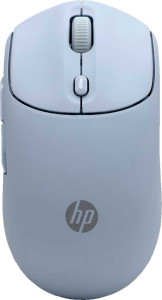
HP 400 Quiet Wireless Mouse
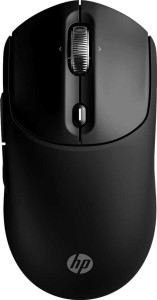
HP 700 Rechargeable Wireless Mouse

HP 400 Quiet Wireless Mouse HP 700 Rechargeable Wireless Mouse

Overview

Welcome to our detailed specification comparison between the HP 400 Quiet Wireless Mouse and the HP 700 Rechargeable Wireless Mouse. Both are productivity-focused, ambidextrous mice sharing the same polling rate and DPI range, yet they take very different approaches when it comes to battery design, button configuration, and overall weight. Read on to discover which of these two wireless mice best fits your workflow and desk setup.

Common Features

  • Both mice have a polling rate of 125 Hz.
  • Both mice have a maximum DPI of 6000.
  • Both mice have a minimum DPI of 1200.
  • Adjustable DPI is supported on both mice.
  • Both mice are classified as productivity type.
  • Both mice support 2.4GHz wireless, Bluetooth, and USB connections.
  • Neither mouse has onboard memory profiles.
  • Both mice use Bluetooth version 5.
  • Gesture support is not available on either mouse.
  • Both mice come with a 1-year warranty.
  • Neither mouse has a DPI switching button.
  • Neither mouse has a profile switching button.
  • Both mice have an ambidextrous orientation.
  • RGB lighting is not available on either mouse.
  • Neither mouse has a thumb scroll wheel.
  • Neither mouse has extra weights.
  • Both mice have a thickness of 40 mm.
  • Both mice have a height of 118 mm.

Main Differences

  • Battery life is 17520 hours on HP 400 Quiet Wireless Mouse and 730 hours on HP 700 Rechargeable Wireless Mouse.
  • The HP 400 Quiet Wireless Mouse has a removable battery, while the HP 700 Rechargeable Wireless Mouse does not.
  • The number of buttons is 5 on HP 400 Quiet Wireless Mouse and 8 on HP 700 Rechargeable Wireless Mouse.
  • The number of side buttons is 5 on HP 400 Quiet Wireless Mouse and 2 on HP 700 Rechargeable Wireless Mouse.
  • The number of programmable buttons is 2 on HP 400 Quiet Wireless Mouse and 7 on HP 700 Rechargeable Wireless Mouse.
  • Weight is 110 g on HP 400 Quiet Wireless Mouse and 60 g on HP 700 Rechargeable Wireless Mouse.
  • A tilting scroll wheel is present on HP 700 Rechargeable Wireless Mouse but not available on HP 400 Quiet Wireless Mouse.
  • Volume is 287.92 cm³ on HP 400 Quiet Wireless Mouse and 283.2 cm³ on HP 700 Rechargeable Wireless Mouse.
  • Width is 61 mm on HP 400 Quiet Wireless Mouse and 60 mm on HP 700 Rechargeable Wireless Mouse.
Specs Comparison
HP 400 Quiet Wireless Mouse

HP 400 Quiet Wireless Mouse

HP 700 Rechargeable Wireless Mouse

HP 700 Rechargeable Wireless Mouse

Performance:
polling rate 125 Hz 125 Hz
maximum DPI 6000 DPI 6000 DPI
minimum DPI 1200 DPI 1200 DPI
has adjustable DPI

In terms of raw performance specs, the HP 400 Quiet Wireless Mouse and the HP 700 Rechargeable Wireless Mouse are identical across every measured dimension. Both operate at a 125 Hz polling rate, meaning the cursor position is reported to the computer 125 times per second — a standard figure for everyday office and general-use mice that is adequate for productivity tasks but falls short of the higher polling rates favored by competitive gamers.

Both mice share the same 1200–6000 DPI range with adjustable DPI, giving users flexibility to switch between precise, slow cursor movement for detailed work and faster sweeping motion for larger displays. A 6000 DPI ceiling is more than sufficient for most users, including those on high-resolution or multi-monitor setups, though it is not aimed at the ultra-high-sensitivity demands of esports peripherals.

Since every performance specification is a perfect match between the two, this category is a tie. Neither mouse holds any measurable tracking or responsiveness advantage over the other. A buyer's decision should therefore rest entirely on other factors — such as battery design, build, or ergonomics — rather than performance.

General info:
Type Productivity Productivity
connection type 2.4GHz wireless, Bluetooth, USB 2.4GHz wireless, Bluetooth, USB
onboard memory profiles 0 0
Bluetooth version 5 5
has gesture support
Battery life 17520 hours 730 hours
has a removable battery
warranty period 1 years 1 years
release date May 2025 May 2025

Both mice are squarely positioned as productivity tools, sharing the same tri-mode connectivity — 2.4GHz wireless, Bluetooth 5, and USB — which makes either a flexible choice for switching between devices or pairing with a USB receiver. Bluetooth 5 specifically brings reliable range and a stable connection with minimal latency, an upgrade over older Bluetooth standards that is genuinely noticeable in day-to-day use.

Where the two diverge significantly is battery life and battery design. The HP 400 Quiet is rated for a remarkable 17,520 hours of use with a removable battery, meaning it runs on replaceable cells that can be swapped out instantly — no downtime required. The HP 700 Rechargeable, by contrast, offers just 730 hours and uses a built-in, non-removable battery. While ″rechargeable″ is a convenient feature that eliminates buying replacement batteries, 730 hours is dramatically lower than its counterpart, and once the battery degrades over charge cycles, it cannot be replaced.

The verdict here clearly favors the HP 400 Quiet from a longevity and convenience standpoint. The gap in rated battery life is not marginal — it is roughly 24 times longer between interventions. Users who dislike interruptions or want a mouse that will remain serviceable for many years will find the removable-battery model considerably more practical. Both carry the same 1-year warranty, so that factor offers no differentiation.

Buttons:
number of buttons 5 8
number of side buttons 5 2
number of programmable buttons 2 7
has a DPI switching button
has a profile switching button

Button layout is one of the more telling differences between these two mice. The HP 700 Rechargeable comes with 8 total buttons, of which an impressive 7 are programmable — giving power users substantial room to assign shortcuts, macros, or application-specific commands. For anyone working across complex software environments, that level of customization can meaningfully reduce reliance on keyboard shortcuts and accelerate workflow.

The HP 400 Quiet, meanwhile, offers 5 buttons total with only 2 programmable. Notably, all 5 of its buttons are classified as side buttons, which is an unusual configuration worth paying attention to — it suggests a design emphasis on thumb-accessible controls rather than top-panel buttons. Still, with just 2 programmable options, customization headroom is limited compared to its counterpart.

Neither mouse includes a dedicated DPI or profile switching button, so on-the-fly sensitivity adjustments are off the table for both. Overall, the HP 700 Rechargeable holds a clear edge in this category — its combination of more total buttons and a far higher programmable count makes it the stronger choice for users who want a customizable, efficiency-oriented mouse. The HP 400 Quiet is better suited to those who prefer a simpler, minimal-button experience.

Design:
Orientation Ambidextrous Ambidextrous
weight 110 g 60 g
has RGB lighting
has a tilting scroll wheel
has a thumb scroll wheel
has extra weights
volume 287.92 cm³ 283.2 cm³
thickness 40 mm 40 mm
height 118 mm 118 mm
width 61 mm 60 mm

From a physical standpoint, these two mice are nearly twins — both ambidextrous, both measuring 118 × 61 mm with a 40 mm thickness, and occupying virtually the same volume. Users switching between the two would notice no meaningful difference in grip or hand positioning. Neither model features RGB lighting or extra weights, keeping the aesthetic clean and the design firmly focused on function over flair.

The most striking divergence in this category is weight. The HP 700 Rechargeable comes in at just 60 g, while the HP 400 Quiet weighs nearly twice as much at 110 g. In practice, a lighter mouse reduces wrist and arm fatigue during extended sessions — a meaningful advantage for users who spend long hours at a desk. The 50 g difference is well within the range that most users can feel immediately upon picking the mouse up.

The HP 700 also includes a tilting scroll wheel, which enables horizontal scrolling without moving the mouse — a genuine productivity feature for working with wide spreadsheets, timelines, or panoramic documents. Taken together, the lighter build and tilting scroll wheel give the HP 700 Rechargeable a clear design edge, particularly for users who prioritize comfort and navigation versatility over the course of a full workday.

Comparison Summary & Verdict

After reviewing all available specifications, both mice serve productivity users well but cater to distinctly different needs. The HP 400 Quiet Wireless Mouse stands out with its extraordinary 17520-hour battery life and removable battery, making it an ideal companion for users who prioritize uninterrupted, long-term usage without the worry of recharging. Its heavier 110 g build and 5 side buttons also suit users who prefer a more tactile, feature-rich side panel. On the other hand, the HP 700 Rechargeable Wireless Mouse appeals to those who value a lighter 60 g frame, a tilting scroll wheel, and a higher count of 7 programmable buttons, offering greater customization potential for power users who frequently switch between tasks. Neither mouse includes RGB lighting or gesture support, keeping both firmly in the focused productivity category.

HP 400 Quiet Wireless Mouse
Buy HP 400 Quiet Wireless Mouse if...

Buy the HP 400 Quiet Wireless Mouse if you need an exceptionally long battery life and prefer the flexibility of a removable, replaceable battery for worry-free extended use.

HP 700 Rechargeable Wireless Mouse
Buy HP 700 Rechargeable Wireless Mouse if...

Buy the HP 700 Rechargeable Wireless Mouse if you want a lighter mouse with more programmable buttons and a tilting scroll wheel for a highly customizable productivity setup.