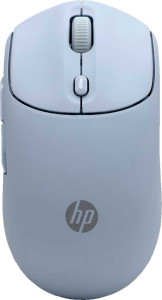
HP 400 Quiet Wireless Mouse
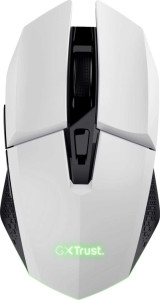
Trust GXT 1108W Vylax

HP 400 Quiet Wireless Mouse Trust GXT 1108W Vylax

Overview

In this detailed specification comparison, we pit the HP 400 Quiet Wireless Mouse against the Trust GXT 1108W Vylax — two wireless mice designed with very different users in mind. From their contrasting approaches to battery life and connectivity to key differences in button layout and design ergonomics, this comparison digs into every spec that matters to help you make a confident, informed choice.

Common Features

  • Both products support adjustable DPI.
  • Neither product has onboard memory profiles.
  • Neither product has gesture support.
  • Neither product has a profile switching button.
  • Neither product has a tilting scroll wheel.
  • Neither product has a thumb scroll wheel.
  • Neither product has extra weights.

Main Differences

  • Polling rate is 125 Hz on HP 400 Quiet Wireless Mouse and 1000 Hz on Trust GXT 1108W Vylax.
  • Maximum DPI is 6000 DPI on HP 400 Quiet Wireless Mouse and 4800 DPI on Trust GXT 1108W Vylax.
  • Minimum DPI is 1200 DPI on HP 400 Quiet Wireless Mouse and 800 DPI on Trust GXT 1108W Vylax.
  • HP 400 Quiet Wireless Mouse is a productivity mouse, while Trust GXT 1108W Vylax is a gaming mouse.
  • Connection type is 2.4GHz wireless, Bluetooth, and USB on HP 400 Quiet Wireless Mouse and 2.4GHz wireless only on Trust GXT 1108W Vylax.
  • Battery life is 17520 hours on HP 400 Quiet Wireless Mouse and 80 hours on Trust GXT 1108W Vylax.
  • A removable battery is available on HP 400 Quiet Wireless Mouse but not on Trust GXT 1108W Vylax.
  • Warranty period is 1 year on HP 400 Quiet Wireless Mouse and 2 years on Trust GXT 1108W Vylax.
  • Number of buttons is 5 on HP 400 Quiet Wireless Mouse and 6 on Trust GXT 1108W Vylax.
  • Number of side buttons is 5 on HP 400 Quiet Wireless Mouse and 2 on Trust GXT 1108W Vylax.
  • Number of programmable buttons is 2 on HP 400 Quiet Wireless Mouse and 0 on Trust GXT 1108W Vylax.
  • A DPI switching button is present on Trust GXT 1108W Vylax but not available on HP 400 Quiet Wireless Mouse.
  • HP 400 Quiet Wireless Mouse is ambidextrous, while Trust GXT 1108W Vylax is right-handed only.
  • Weight is 110 g on HP 400 Quiet Wireless Mouse and 92 g on Trust GXT 1108W Vylax.
  • RGB lighting is present on Trust GXT 1108W Vylax but not available on HP 400 Quiet Wireless Mouse.
  • Volume is 287.92 cm³ on HP 400 Quiet Wireless Mouse and 385.14 cm³ on Trust GXT 1108W Vylax.
  • Thickness is 40 mm on HP 400 Quiet Wireless Mouse and 42 mm on Trust GXT 1108W Vylax.
  • Height is 118 mm on HP 400 Quiet Wireless Mouse and 131 mm on Trust GXT 1108W Vylax.
  • Width is 61 mm on HP 400 Quiet Wireless Mouse and 70 mm on Trust GXT 1108W Vylax.
Specs Comparison
HP 400 Quiet Wireless Mouse

HP 400 Quiet Wireless Mouse

Trust GXT 1108W Vylax

Trust GXT 1108W Vylax

Performance:
polling rate 125 Hz 1000 Hz
maximum DPI 6000 DPI 4800 DPI
minimum DPI 1200 DPI 800 DPI
has adjustable DPI

The most consequential difference in this group is the polling rate: the Trust GXT 1108W Vylax reports its position to the PC at 1000 Hz, eight times more frequently than the HP 400 Quiet's 125 Hz. In practice, this means the Vylax delivers significantly lower cursor latency and smoother tracking — a tangible advantage for fast-paced tasks or gaming, where responsiveness is critical.

On maximum sensitivity, the HP 400 Quiet edges ahead with 6000 DPI versus the Vylax's 4800 DPI, and its minimum floor is slightly higher at 1200 DPI compared to 800 DPI. The broader low-end range of the Vylax is arguably more useful in practice — lower DPI settings offer finer control for precision work — while the HP's higher ceiling matters only in niche scenarios like ultra-high-resolution multi-monitor setups. Both mice support adjustable DPI, so users can tune sensitivity to preference on either device.

Overall, the Trust GXT 1108W Vylax holds a clear performance edge in this group. Its 1000 Hz polling rate is the dominant differentiator: no DPI ceiling advantage can compensate for the fundamental input-latency gap that an 8× polling rate difference creates. The HP 400 Quiet's specs suggest it is optimized for everyday office use where responsiveness is less critical, while the Vylax is better suited to users who demand snappier, more precise cursor response.

General info:
Type Productivity Gaming
connection type 2.4GHz wireless, Bluetooth, USB 2.4GHz wireless
onboard memory profiles 0 0
has gesture support
Battery life 17520 hours 80 hours
has a removable battery
warranty period 1 years 2 years
release date May 2025 June 2025

Battery life is where these two mice diverge most dramatically. The HP 400 Quiet's rated 17,520 hours — equivalent to roughly two years of continuous use — dwarfs the Vylax's 80 hours. This gap is largely a consequence of their intended use cases: the HP is a productivity mouse designed to run quietly in the background, while the Vylax is a gaming mouse pushing higher polling rates that consume far more power. Practically speaking, the HP will rarely need charging, whereas the Vylax requires regular top-ups. The HP also softens the inconvenience of those rare charging moments with a removable battery, meaning a quick swap keeps you going instantly — the Vylax offers no such option.

Connectivity tells a similar story of differing priorities. The HP supports 2.4GHz wireless, Bluetooth, and wired USB — three modes that make it highly versatile across laptops, desktops, and multi-device workflows. The Vylax is limited to 2.4GHz wireless only, which is sufficient for a dedicated gaming setup but restricts flexibility elsewhere. Neither mouse includes onboard memory profiles or gesture support, so those are non-factors here.

Weighing everything in this group, the HP 400 Quiet holds a meaningful overall edge — its vastly longer battery life, removable battery, and multi-mode connectivity make it the more practical and flexible device for general use. The Vylax counters with a 2-year warranty versus the HP's 1-year coverage, which is a genuine advantage in terms of long-term purchase confidence, but it is not enough to offset the HP's broader strengths in this category.
Buttons:
number of buttons 5 6
number of side buttons 5 2
number of programmable buttons 2 0
has a DPI switching button
has a profile switching button

At first glance, the button layouts of these two mice reflect their respective identities. The Trust GXT 1108W Vylax includes a dedicated DPI switching button — a staple of gaming mice that lets users instantly toggle between sensitivity presets mid-session without breaking focus. The HP 400 Quiet lacks this, which is a minor but real omission for anyone who frequently shifts between tasks requiring different cursor speeds.

Where the HP punches back is in customizability and side button count. It offers 2 programmable buttons compared to the Vylax's zero, meaning HP users can assign macros or shortcuts to streamline their workflow — a meaningful advantage for productivity. The HP also features 5 side buttons versus the Vylax's 2, providing considerably more physical controls to work with, whether mapped or used as-is.

Neither mouse supports profile switching, so that is a wash. On balance, this group is a genuine trade-off rather than a clear win for either side: the Vylax serves gamers better with its on-the-fly DPI control, while the HP is more appealing to power users who want more buttons they can tailor to their workflow. The ″better″ choice here depends entirely on how you intend to use the mouse.

Design:
Orientation Ambidextrous Right-handed
weight 110 g 92 g
has RGB lighting
has a tilting scroll wheel
has a thumb scroll wheel
has extra weights
volume 287.92 cm³ 385.14 cm³
thickness 40 mm 42 mm
height 118 mm 131 mm
width 61 mm 70 mm

Size and weight paint a clear picture of how differently these mice are designed to be used. The Trust GXT 1108W Vylax is noticeably larger — 131 mm tall and 70 mm wide against the HP 400 Quiet's 118 mm × 61 mm — and its volume of 385 cm³ versus the HP's 288 cm³ confirms it is a substantially bulkier device built to fill a full palm grip. At 92 g, however, the Vylax is meaningfully lighter than the HP's 110 g, which is a notable achievement given its larger chassis. For extended gaming sessions, that lighter hand feel can reduce fatigue noticeably.

Handedness is a significant practical differentiator. The HP is ambidextrous, making it a viable choice for left-handed users and shared workstations alike. The Vylax is strictly right-handed, which immediately disqualifies it for a portion of users. On aesthetics, the Vylax brings RGB lighting to the table — a deliberate nod to gaming setups where visual flair matters — while the HP opts for a clean, lighting-free design more in keeping with a professional office environment.

Neither mouse offers tilt wheel, thumb scroll wheel, or adjustable weights, so those features are off the table for both. In terms of design, the ″winner″ is firmly context-dependent: left-handed users or those in shared environments will find the HP 400 Quiet far more accommodating, while right-handed users who prioritize a lighter, larger-bodied mouse with RGB aesthetics will gravitate toward the Vylax.

Comparison Summary & Verdict

After reviewing all the specifications, the two mice serve clearly distinct audiences. The HP 400 Quiet Wireless Mouse stands out for productivity-focused users who need exceptional battery longevity — an extraordinary 17520 hours — along with versatile connectivity via 2.4GHz wireless, Bluetooth, and USB, plus an ambidextrous design that suits both hands. The Trust GXT 1108W Vylax, on the other hand, is built for gamers who demand a snappier 1000 Hz polling rate, RGB lighting, and a dedicated DPI switching button, all in a lighter 92 g frame. Neither mouse is objectively superior — the right choice depends entirely on whether your priority is all-day office productivity or a more immersive gaming-oriented experience.

HP 400 Quiet Wireless Mouse
Buy HP 400 Quiet Wireless Mouse if...

Buy the HP 400 Quiet Wireless Mouse if you need a versatile, ambidextrous mouse with extraordinary battery life and multi-device connectivity via Bluetooth, 2.4GHz wireless, and USB for everyday productivity.

Trust GXT 1108W Vylax
Buy Trust GXT 1108W Vylax if...

Buy the Trust GXT 1108W Vylax if you are a gamer who prioritizes a high 1000 Hz polling rate, RGB lighting, a dedicated DPI switching button, and a lighter build optimized for right-handed use.