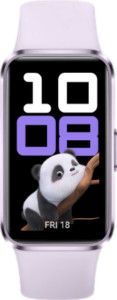
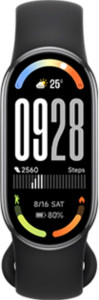
Both bands share the same display technology (OLED/AMOLED), a 60Hz refresh rate, Always-On Display support, and a 5 ATM water resistance rating, so neither holds an edge on those fronts. The real split in this group comes down to screen real estate versus physical footprint. The Xiaomi Smart Band 10 sports a noticeably larger 1.72″ panel at a sharper 326 ppi and a taller 212 × 520 px resolution, meaning more content fits on screen at once and text or graphics will appear visibly crisper. The Huawei Band 10 counters with a 1.47″ screen at 282 ppi — still a respectable density, but the difference is perceptible side by side.
The trade-off is physical bulk. The Huawei is meaningfully slimmer at 8.99 mm thick versus the Xiaomi's 11.8 mm, and its total volume (9.71 cm³ vs 12.39 cm³) tells the same story — the Xiaomi is roughly 27% bulkier. The Huawei is also slightly lighter at 15 g compared to 15.95 g, though that ~1 g gap is negligible in practice. Interestingly, the Xiaomi is narrower (22.54 mm vs 24.86 mm), so its extra bulk is driven by height and especially thickness rather than wrist width.
Neither device uses sapphire glass or branded damage-resistant glass, so scratch durability is a shared weakness. Overall, the Xiaomi Smart Band 10 has a clear edge for users who prioritize display quality and screen size, while the Huawei Band 10 suits those who prefer a slimmer, lower-profile form factor that sits flatter on the wrist.