Huawei FreeArc
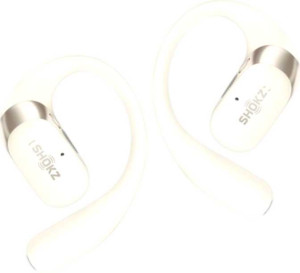
Shokz OpenFit 2

Huawei FreeArc Shokz OpenFit 2

Overview

When choosing between the Huawei FreeArc and the Shokz OpenFit 2, you are looking at two compelling open-ear wireless earbuds that share a lot of common ground — yet differ in some meaningful ways. This comparison dives into the key battlegrounds of battery life, sound frequency range, water resistance, and connectivity to help you decide which pair best suits your lifestyle and listening needs.

Common Features

  • Both products have an open-ear fit design.
  • Neither product has wires or cables.
  • Neither product is a neckband earbud.
  • Both products include wingtips.
  • Neither product has RGB lighting.
  • Both products feature stereo speakers.
  • Neither product has a UV light.
  • Neither product has a display.
  • Neither product has active noise cancellation (ANC).
  • Neither product has passive noise reduction.
  • Neither product supports spatial audio.
  • Neither product has Dolby Atmos.
  • Neither product has a neodymium magnet.
  • Both products take 1 hour to charge.
  • Neither product supports wireless charging.
  • Both products have a battery level indicator.
  • Both products have a rechargeable battery.
  • Both products use USB Type-C.
  • Neither product has fast pairing.
  • Both products support multipoint connection with up to 2 devices.
  • Both products have a find device feature.
  • Both products support fast charging.
  • Both products have a mute function.
  • Both products can be used as a headset.
  • Both products have a control panel placed on the device.
  • Both products have a noise-canceling microphone.

Main Differences

  • The Ingress Protection rating is IP57 on Huawei FreeArc and IP55 on Shokz OpenFit 2.
  • Huawei FreeArc is waterproof while Shokz OpenFit 2 is only water resistant.
  • The weight is 17.8 g on Huawei FreeArc and 18.8 g on Shokz OpenFit 2.
  • The lowest frequency is 20 Hz on Huawei FreeArc and 50 Hz on Shokz OpenFit 2.
  • The highest frequency is 20000 Hz on Huawei FreeArc and 16000 Hz on Shokz OpenFit 2.
  • Battery life is 7 hours on Huawei FreeArc and 11 hours on Shokz OpenFit 2.
  • Battery life of the charging case is 21 hours on Huawei FreeArc and 37 hours on Shokz OpenFit 2.
  • Battery power is 55 mAh on Huawei FreeArc and 56 mAh on Shokz OpenFit 2.
  • Charging case battery power is 510 mAh on Huawei FreeArc and 600 mAh on Shokz OpenFit 2.
  • The Bluetooth version is 5.2 on Huawei FreeArc and 5.4 on Shokz OpenFit 2.
  • In/on-ear detection is present on Huawei FreeArc but not available on Shokz OpenFit 2.
Specs Comparison
Huawei FreeArc

Huawei FreeArc

Shokz OpenFit 2

Shokz OpenFit 2

Design:
Fit Open-ear Open-ear
Ingress Protection (IP) rating IP57 IP55
water resistance Waterproof Water resistant
weight 17.8 g 18.8 g
has no wires or cables
are neckband earbuds
wingtips included
has RGB lighting
has stereo speakers
has UV light
Has a display

Both the Huawei FreeArc and the Shokz OpenFit 2 share the same fundamental design philosophy: open-ear, truly wireless earbuds with wingtips for secure fit and stereo speakers — making them direct competitors in the same product category. Neither adds gimmicks like RGB lighting or a display, keeping the focus squarely on audio and wearability.

Where the two diverge meaningfully is in water protection and weight. The FreeArc carries an IP57 rating versus the OpenFit 2's IP55. In practical terms, IP57 means the FreeArc can withstand brief submersion in water up to 1 meter, while IP55 only guarantees protection against low-pressure water jets from any direction — a real difference if you swim or get caught in heavy rain. On weight, the FreeArc is marginally lighter at 17.8 g compared to 18.8 g, a 1-gram difference that is unlikely to be perceptible during casual use but could matter over very long wear sessions.

Overall, the Huawei FreeArc holds a clear design edge in this group, driven primarily by its superior ingress protection. For users who exercise in wet conditions or want extra peace of mind around water, the higher IP rating is a tangible, real-world advantage rather than a spec-sheet footnote.

Sound quality:
has active noise cancellation (ANC)
has passive noise reduction
lowest frequency 20 Hz 50 Hz
highest frequency 20000 Hz 16000 Hz
supports spatial audio
has Dolby Atmos
has Dirac Virtuo
has a neodymium magnet

Neither earbud offers ANC, passive noise reduction, spatial audio, or any premium audio processing — a natural trade-off for the open-ear form factor, where acoustic isolation is inherently limited by design. The meaningful differentiator in this group comes down entirely to frequency response.

The Huawei FreeArc covers 20 Hz – 20,000 Hz, which matches the full theoretical range of human hearing. The Shokz OpenFit 2 manages 50 Hz – 16,000 Hz — a noticeably narrower window on both ends. The low-end gap is particularly relevant: bass frequencies between 20 Hz and 50 Hz account for the deep rumble in music and the physical weight of kick drums and bass lines. Losing that range means the OpenFit 2 may sound comparatively thinner or lighter in the low end. On the high end, roll-off above 16 kHz trims the uppermost shimmer and air in high-resolution audio, which is less critical but still audible to sensitive listeners.

On paper, the Huawei FreeArc holds a clear advantage in sound quality specs for this group. A wider rated frequency range does not guarantee better tuning in practice, but it does signal broader hardware capability — and for users who prioritize musical fullness over a stripped-back profile, the FreeArc's specifications are the stronger starting point.

Power:
Battery life 7 hours 11 hours
Battery life of charging case 21 hours 37 hours
charge time 1 hours 1 hours
battery power 55 mAh 56 mAh
battery power (charging case) 510mAh 600mAh
has wireless charging
Has a solar power battery
has a battery level indicator
has a rechargeable battery

Battery capacity in the earbuds themselves is virtually identical — 55 mAh for the FreeArc versus 56 mAh for the OpenFit 2 — yet their real-world endurance tells a very different story. The Shokz OpenFit 2 delivers 11 hours of playback per charge compared to the FreeArc's 7 hours, a 57% advantage that points to more efficient internal power management rather than a hardware capacity lead. For a full workday of listening without reaching for the case, the OpenFit 2 clears that bar comfortably; the FreeArc falls short.

The gap widens further at the case level. The OpenFit 2's 600 mAh case extends total available playback to 37 hours, while the FreeArc's 510 mAh case tops out at 21 hours. In practice, that means the OpenFit 2 can sustain roughly three and a half days of heavy use before needing a wall outlet, versus under three for the FreeArc. Both charge in the same 1 hour, and both include a battery level indicator — so neither has an edge on convenience features.

The Shokz OpenFit 2 wins this category decisively. Despite nearly identical earbud battery sizes, it extracts significantly more playtime from both the earbuds and the case, making it the stronger choice for users who prioritize going longer between charges.

Connectivity:
has fast pairing
Has USB Type-C
Bluetooth version 5.2 5.4
has LDAC
has LDHC
has Bluetooth LE Audio
has aptX Adaptive
has aptX Low Latency
has aptX HD
has aptX
has aptX Lossless
has aptX Voice
has Auracast
maximum Bluetooth range 10 m 10 m
supports Bluetooth pairing using NFC
Can be used wirelessly
has AAC

Connectivity is largely a tie between these two earbuds, with one notable exception. Both share the same 10 m Bluetooth range, USB-C charging, AAC codec support, and an identical absence of advanced codecs like LDAC, aptX, or LE Audio. Neither supports NFC pairing or Auracast, so the feature parity here is extensive.

The single differentiator is Bluetooth version: the Shokz OpenFit 2 runs Bluetooth 5.4 versus the FreeArc's 5.2. In practice, 5.4 brings incremental improvements in connection stability, interference handling, and energy efficiency over 5.2 — meaningful in congested wireless environments like offices or gyms, but unlikely to produce a night-and-day difference for most users. Neither version unlocks LE Audio here, so the codec ceiling remains the same for both.

The Shokz OpenFit 2 holds a slim edge thanks to its newer Bluetooth version, but this is a marginal advantage in a group where the two products are otherwise functionally identical. For the vast majority of users, connectivity will feel indistinguishable between them.

Features:
release date February 2025 January 2025
has ambient sound mode
has in/on-ear detection
has find device feature
Supports fast charging
multipoint count 2 2
can read notifications
has a mute function
can be used as a headset
control panel placed on a device
Has voice prompts
travel bag is included
Has an in-line control panel
Has a temperature sensor
Has a built-in camera remote control function

Across most practical features, these two earbuds are remarkably well-matched. Both support fast charging, two-device multipoint connectivity, on-device controls, voice prompts, a mute function, headset use for calls, a find-device feature, and even include a travel bag — a level of feature parity that makes choosing between them on this basis genuinely difficult.

The single differentiator is in/on-ear detection, which the Huawei FreeArc includes and the Shokz OpenFit 2 does not. This sensor automatically pauses playback when the earbuds are removed and resumes when they are put back in — a small but genuinely useful convenience that reduces battery drain and removes the need to manually pause before stepping away. It is a quality-of-life feature that, once used regularly, becomes easy to miss when absent.

The Huawei FreeArc takes a narrow edge here solely due to in/on-ear detection. It is not a transformative advantage, but in a group where everything else is equal, it is the one feature that meaningfully improves day-to-day usability.

Microphone:
has a noise-canceling microphone

With only one data point available for this group, the conclusion is straightforward: both the Huawei FreeArc and the Shokz OpenFit 2 include a noise-canceling microphone. This means both are equipped to filter out ambient sound during calls — a meaningful baseline for open-ear earbuds, which are inherently more exposed to environmental noise than in-ear designs.

This is a complete tie based on the available specs. No further differentiation can be drawn between the two products in this category.

Comparison Summary & Verdict

Both the Huawei FreeArc and the Shokz OpenFit 2 are capable open-ear earbuds with solid shared fundamentals: fast charging, multipoint connectivity, a noise-canceling microphone, and a wireless design. However, their differences tell two distinct stories. The Huawei FreeArc stands out with a wider frequency range (20–20,000 Hz), stronger IP57 waterproof rating, a lighter build at 17.8 g, and handy in/on-ear detection, making it a great pick for active users who want broader audio fidelity and better water protection. The Shokz OpenFit 2, on the other hand, wins decisively on battery endurance — delivering 11 hours of playback and 37 hours from its charging case — and sports the newer Bluetooth 5.4 standard. If longevity between charges is your top priority, the Shokz OpenFit 2 is the stronger choice.

Huawei FreeArc
Buy Huawei FreeArc if...

Buy the Huawei FreeArc if you want stronger waterproof protection (IP57), a wider sound frequency range, a lighter fit, and the convenience of in/on-ear detection.

Shokz OpenFit 2
Buy Shokz OpenFit 2 if...

Buy the Shokz OpenFit 2 if long battery life is your top priority, offering 11 hours of playback and up to 37 hours total with its charging case, plus the latest Bluetooth 5.4.