Huawei FreeArc
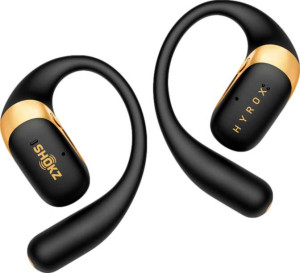
Shokz OpenFit 2 Plus

Huawei FreeArc Shokz OpenFit 2 Plus

Overview

When choosing between the Huawei FreeArc and the Shokz OpenFit 2 Plus, you are looking at two open-ear wireless earbuds that share a surprisingly similar foundation yet diverge in some meaningful ways. Both offer a cable-free, open-ear experience with stereo sound, fast charging, and dual-device multipoint connectivity. The real debate centres around battery endurance, water resistance, and a handful of smart features that could tip the scales depending on how and where you use them.

Common Features

  • Both products have an open-ear fit design.
  • Neither product has wires or cables.
  • Neither product is a neckband earbud design.
  • Both products include wingtips.
  • Neither product has RGB lighting.
  • Both products have stereo speakers.
  • Neither product has a UV light.
  • Neither product has a display.
  • Neither product has active noise cancellation.
  • Neither product has passive noise reduction.
  • Both products have a lowest frequency of 20 Hz and a highest frequency of 20000 Hz.
  • Spatial audio is not supported on either product.
  • Dolby Atmos is not available on either product.
  • Neither product has a solar power battery.
  • Both products have a battery level indicator.
  • Both products have a rechargeable battery.
  • Neither product supports fast pairing.
  • Both products have USB Type-C connectivity.
  • Neither product supports LDAC, LDHC, Bluetooth LE Audio, aptX Adaptive, aptX Low Latency, or aptX HD.
  • Neither product has an ambient sound mode.
  • Both products have a find device feature.
  • Both products support fast charging.
  • Both products support multipoint connection with 2 devices simultaneously.
  • Neither product can read notifications.
  • Both products have a mute function.
  • Both products can be used as a headset.
  • Both products have a control panel placed on the device.
  • Both products have a noise-canceling microphone.

Main Differences

  • The ingress protection rating is IP57 on Huawei FreeArc and IP55 on Shokz OpenFit 2 Plus.
  • The Huawei FreeArc is fully waterproof while the Shokz OpenFit 2 Plus is only water resistant.
  • The weight is 17.8 g on Huawei FreeArc and 18.8 g on Shokz OpenFit 2 Plus.
  • Battery life is 7 hours on Huawei FreeArc and 11 hours on Shokz OpenFit 2 Plus.
  • The battery life of the charging case is 21 hours on Huawei FreeArc and 37 hours on Shokz OpenFit 2 Plus.
  • Charge time is 1 hour on Huawei FreeArc and 2 hours on Shokz OpenFit 2 Plus.
  • Wireless charging is supported on Shokz OpenFit 2 Plus but not available on Huawei FreeArc.
  • AAC support is present on Huawei FreeArc but not available on Shokz OpenFit 2 Plus.
  • In/on-ear detection is present on Huawei FreeArc but not available on Shokz OpenFit 2 Plus.
Specs Comparison
Huawei FreeArc

Huawei FreeArc

Shokz OpenFit 2 Plus

Shokz OpenFit 2 Plus

Design:
Fit Open-ear Open-ear
Ingress Protection (IP) rating IP57 IP55
water resistance Waterproof Water resistant
weight 17.8 g 18.8 g
has no wires or cables
are neckband earbuds
wingtips included
has RGB lighting
has stereo speakers
has UV light
Has a display

Both the Huawei FreeArc and the Shokz OpenFit 2 Plus share the same fundamental design philosophy: open-ear, truly wireless earbuds with wingtips for secure fit and stereo playback. For users, this means neither sacrifices situational awareness for audio immersion, and both are built for active, on-the-go use without cables or neckbands getting in the way.

The most meaningful differentiator in this group is water resistance. The FreeArc carries an IP57 rating, classifying it as fully waterproof — meaning it can withstand immersion in water up to 1 meter for 30 minutes. The OpenFit 2 Plus, rated IP55, is only water resistant, protecting against low-pressure water jets from any direction but not submersion. In practice, the FreeArc is the safer choice for swimming, heavy rain, or intense sweat sessions, while the OpenFit 2 Plus covers everyday splashes and workouts adequately.

On weight, the FreeArc is marginally lighter at 17.8 g versus 18.8 g, a 1g difference that is unlikely to be perceptible during wear. Overall, the Huawei FreeArc holds a clear edge in this group strictly due to its superior ingress protection rating, making it the more durable and versatile option for users who prioritize resilience against water exposure.

Sound quality:
has active noise cancellation (ANC)
has passive noise reduction
lowest frequency 20 Hz 20 Hz
highest frequency 20000 Hz 20000 Hz
supports spatial audio
has Dolby Atmos
has Dirac Virtuo
has a neodymium magnet

Across every measurable sound quality specification provided, the Huawei FreeArc and the Shokz OpenFit 2 Plus are identical. Both cover the full standard audible range of 20 Hz to 20,000 Hz, meaning neither is tuned to favor a narrower frequency band — on paper, each is capable of reproducing the complete spectrum of human hearing.

Neither earphone offers ANC, passive noise reduction, spatial audio, Dolby Atmos, or Dirac Virtuo processing. For open-ear designs this is largely expected — the form factor inherently prioritizes ambient sound awareness over isolation, so the absence of ANC is a design trade-off rather than an omission. The lack of any spatial or immersive audio processing does mean neither product enhances stereo staging beyond what the source material provides.

Based strictly on the available specs, this category is a complete tie. There is no differentiator between the two products here, and a user choosing between them on sound quality specifications alone has no objective basis to favor one over the other.

Power:
Battery life 7 hours 11 hours
Battery life of charging case 21 hours 37 hours
charge time 1 hours 2 hours
has wireless charging
Has a solar power battery
has a battery level indicator
has a rechargeable battery

Battery life is where the Shokz OpenFit 2 Plus pulls decisively ahead. It delivers 11 hours of playback per charge compared to the FreeArc's 7 hours — a 57% advantage that translates directly into fewer interruptions during long commutes, travel days, or extended workouts. With the charging case factored in, the gap widens further: 37 total hours for the OpenFit 2 Plus versus 21 hours for the FreeArc, meaning users can go significantly longer between needing a wall outlet.

The trade-off is charging speed. The FreeArc replenishes in 1 hour, half the time of the OpenFit 2 Plus's 2 hours. For users who frequently find themselves in short charging windows, this is a meaningful convenience. The OpenFit 2 Plus partially compensates with wireless charging support — a feature the FreeArc lacks entirely — which adds flexibility for users already invested in a Qi charging ecosystem.

On balance, the Shokz OpenFit 2 Plus holds a clear edge in this category. Its substantially longer battery life — both per session and total with the case — outweighs the FreeArc's faster wired charge time for most use cases, and wireless charging only adds to its versatility.

Connectivity:
has fast pairing
Has USB Type-C
has LDAC
has LDHC
has Bluetooth LE Audio
has aptX Adaptive
has aptX Low Latency
has aptX HD
has aptX
has aptX Lossless
has aptX Voice
has Auracast
maximum Bluetooth range 10 m 10 m
supports Bluetooth pairing using NFC
Can be used wirelessly
has AAC

The connectivity profiles of these two earbuds are nearly identical, with one notable exception. Both share a 10 m maximum Bluetooth range, USB-C charging, and wireless operation, while neither supports advanced codecs like LDAC, aptX, or Bluetooth LE Audio — meaning both rely on the standard SBC baseline as the fallback transmission codec.

The single differentiator here is AAC support, which the Huawei FreeArc offers and the Shokz OpenFit 2 Plus does not. AAC is Apple's preferred Bluetooth audio codec and delivers meaningfully better audio quality over SBC when paired with an iPhone or iPad, reducing compression artifacts and improving overall fidelity. For Android users the benefit is less consistent, as AAC encoding efficiency varies by device. Users in Apple's ecosystem will get a tangible audio quality uplift from the FreeArc that the OpenFit 2 Plus simply cannot match on the wireless side.

Given this, the Huawei FreeArc has a narrow but real edge in connectivity for iOS users specifically. For Android users the two products are effectively equivalent in this category, as neither offers any high-resolution wireless codec beyond the standard baseline.

Features:
release date February 2025 October 2025
has ambient sound mode
has in/on-ear detection
has find device feature
Supports fast charging
multipoint count 2 2
can read notifications
has a mute function
can be used as a headset
control panel placed on a device
Has voice prompts
travel bag is included
Has an in-line control panel
Has a temperature sensor
Has a built-in camera remote control function

Feature parity between these two earbuds is high. Both support multipoint connection to two devices simultaneously, fast charging, on-device controls, voice prompts, a mute function, headset use for calls, a find-device feature, and even include a travel bag — a convenience that not all earbuds at this level provide.

The only differentiator in this group is in/on-ear detection, which the Huawei FreeArc has and the Shokz OpenFit 2 Plus lacks. This sensor automatically pauses playback when an earbud is removed and resumes when it is put back on — a small but genuinely useful quality-of-life feature that reduces the friction of quick, real-world interruptions like conversations or announcements.

The Huawei FreeArc holds a modest edge here solely on the strength of in/on-ear detection. It is not a transformative advantage, but for users who frequently remove one earbud during the day, it is a tangible daily convenience the OpenFit 2 Plus does not offer. In every other respect, the two products are functionally equivalent in this category.

Microphone:
has a noise-canceling microphone

Both the Huawei FreeArc and the Shokz OpenFit 2 Plus equip a noise-canceling microphone, which is a meaningful inclusion for open-ear earbuds. Since this form factor provides no passive isolation from ambient sound, a noise-canceling mic helps ensure that call recipients hear the speaker clearly rather than the surrounding environment — particularly useful in noisy outdoor or commuting scenarios.

With only a single shared data point available for this category, there is no basis to differentiate between the two products. This is a complete tie, and users who prioritize call clarity can consider both options equally matched on microphone capability as specified.

Comparison Summary & Verdict

After a thorough look at the specs, both earbuds deliver a solid open-ear experience, but they cater to slightly different priorities. The Huawei FreeArc stands out with its superior IP57 waterproof rating, lighter 17.8 g build, faster 1-hour charge time, AAC audio support, and in/on-ear detection — making it a strong pick for active users who need quick top-ups and reliable water protection. The Shokz OpenFit 2 Plus, on the other hand, dominates on battery life with 11 hours of playback and a 37-hour charging case, adds the convenience of wireless charging, though it charges fully in 2 hours. If endurance and charging flexibility matter most to you, the Shokz is the clear choice; if you want a lighter, faster-charging, and more water-resistant earbud, the Huawei FreeArc is the one to pick.

Huawei FreeArc
Buy Huawei FreeArc if...

Buy the Huawei FreeArc if you want a lighter, fully waterproof earbud with faster charging and in/on-ear detection for a more responsive everyday experience.

Shokz OpenFit 2 Plus
Buy Shokz OpenFit 2 Plus if...

Buy the Shokz OpenFit 2 Plus if long battery life and wireless charging convenience are your top priorities, with 11 hours of playback and a 37-hour charging case to keep you going.