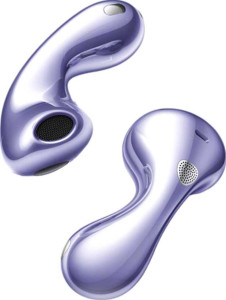
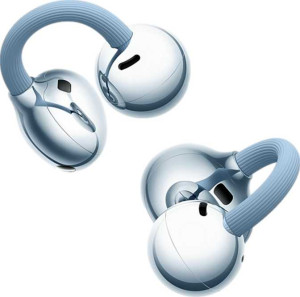
Active noise cancellation is where these two products diverge most sharply. The FreeBuds 6 includes ANC, which actively samples and counters ambient sound — a meaningful feature for commuters, open offices, or anyone trying to focus in noisy environments. The FreeClip 2 has no ANC and, given its open-ear design, no passive noise reduction either. This is not necessarily a flaw for the FreeClip 2 — open-ear earbuds are intentionally designed to let sound in — but users expecting any noise isolation from the FreeClip 2 will not find it here.
Frequency response tells an interesting story. The FreeBuds 6 reaches down to 14 Hz and up to 48,000 Hz, well beyond the standard human hearing range of 20 Hz–20 kHz. The extended low end adds subtle sub-bass depth, and the high-frequency ceiling, while inaudible directly, can benefit from reduced phase distortion in the audible range. The FreeClip 2 covers a more conventional 20 Hz–20,000 Hz range — perfectly adequate for standard listening but without the same headroom. Additionally, the FreeBuds 6 supports spatial audio, which creates a more immersive, three-dimensional soundstage particularly noticeable with compatible content. The FreeClip 2 offers no equivalent feature.
Across every measurable sound quality dimension in this data set, the FreeBuds 6 holds a clear advantage: broader frequency response, ANC, and spatial audio support versus none of the above on the FreeClip 2. The FreeClip 2's open-ear identity explains some of these omissions, but the gap is real and significant for audio-focused buyers.