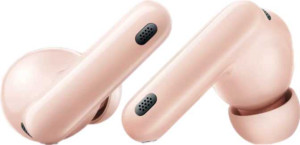
Huawei FreeBuds 7i
Huawei FreeBuds SE 4

Huawei FreeBuds 7i Huawei FreeBuds SE 4

Overview

Welcome to our detailed spec comparison between the Huawei FreeBuds 7i and the Huawei FreeBuds SE 4. Both are fully wireless, ANC-equipped in-ear buds sharing the same IP54 rating and Bluetooth 5.4, yet they differ in meaningful ways across battery endurance, audio codec support, and smart convenience features. Read on to find out which one is the right fit for your lifestyle.

Common Features

  • Both products use an in-ear fit.
  • Both products carry an IP54 ingress protection rating.
  • Both products are sweat resistant.
  • Neither product uses wires or cables.
  • Neither product is a neckband earbud design.
  • Neither product includes wingtips.
  • Neither product features RGB lighting.
  • Both products have stereo speakers.
  • Both products support active noise cancellation (ANC).
  • Both products offer passive noise reduction.
  • Both products share a frequency range of 20 Hz to 20000 Hz.
  • Dolby Atmos support is not available on either product.
  • Dirac Virtuo support is not available on either product.
  • Neither product uses a neodymium magnet.
  • Wireless charging is not available on either product.
  • Neither product has a solar power battery.
  • Both products have a battery level indicator.
  • Both products have a rechargeable battery.
  • Fast pairing is not available on either product.
  • Both products feature a USB Type-C connection.
  • Both products use Bluetooth version 5.4.
  • LDHC support is not available on either product.
  • Bluetooth LE Audio support is not available on either product.
  • aptX Adaptive support is not available on either product.
  • aptX Low Latency support is not available on either product.
  • aptX HD support is not available on either product.
  • Both products have an ambient sound mode.
  • Both products include a find device feature.
  • Both products support fast charging.
  • Neither product can read notifications.
  • Neither product has a built-in translator.
  • Both products have a mute function.
  • Both products can be used as a headset.
  • Both products have a control panel placed on the device.
  • Both products are equipped with 6 microphones.
  • Both products feature a noise-canceling microphone.

Main Differences

  • Weight is 10.8 g on the Huawei FreeBuds 7i and 8.6 g on the Huawei FreeBuds SE 4.
  • Driver unit size is 11 mm on the Huawei FreeBuds 7i and 10 mm on the Huawei FreeBuds SE 4.
  • Spatial audio support is present on the Huawei FreeBuds 7i but not available on the Huawei FreeBuds SE 4.
  • Battery life is 8 hours on the Huawei FreeBuds 7i and 10 hours on the Huawei FreeBuds SE 4.
  • Battery life of the charging case is 27 hours on the Huawei FreeBuds 7i and 40 hours on the Huawei FreeBuds SE 4.
  • Charge time is 1.5 hours on the Huawei FreeBuds 7i and 1 hour on the Huawei FreeBuds SE 4.
  • LDAC support is present on the Huawei FreeBuds 7i but not available on the Huawei FreeBuds SE 4.
  • In/on-ear detection is present on the Huawei FreeBuds 7i but not available on the Huawei FreeBuds SE 4.
Specs Comparison
Huawei FreeBuds 7i

Huawei FreeBuds 7i

Huawei FreeBuds SE 4

Huawei FreeBuds SE 4

Design:
Fit In-ear In-ear
Ingress Protection (IP) rating IP54 IP54
water resistance Sweat resistant Sweat resistant
weight 10.8 g 8.6 g
has no wires or cables
are neckband earbuds
wingtips included
has RGB lighting
has stereo speakers
has UV light
Has a display

In terms of design fundamentals, the Huawei FreeBuds 7i and FreeBuds SE 4 share a near-identical blueprint: both are fully wireless, in-ear earbuds with an IP54 ingress protection rating, meaning they can handle sweat and light moisture splashes equally well. Neither model includes wingtips, RGB lighting, a display, or a UV light, so the physical feature set is essentially the same across the board.

The one tangible differentiator within this group is weight. The FreeBuds SE 4 comes in at 8.6 g per earbud, versus 10.8 g for the FreeBuds 7i — a difference of roughly 2.2 g per side. While that may sound minor on paper, lighter earbuds typically reduce ear fatigue during extended listening sessions and tend to feel more secure in the ear without relying on a physical anchor like wingtips. For users who wear their earbuds for hours at a stretch, this distinction is genuinely meaningful.

From a pure design standpoint, the FreeBuds SE 4 holds a clear edge thanks to its lighter build, while both products are otherwise evenly matched on protection rating, form factor, and feature set.

Sound quality:
has active noise cancellation (ANC)
has passive noise reduction
driver unit size 11 mm 10 mm
lowest frequency 20 Hz 20 Hz
highest frequency 20000 Hz 20000 Hz
supports spatial audio
has Dolby Atmos
has Dirac Virtuo
has a neodymium magnet

Both the FreeBuds 7i and FreeBuds SE 4 cover the full standard audible range of 20 Hz to 20,000 Hz and come equipped with active noise cancellation alongside passive noise reduction — a solid foundation for everyday listening. Where they begin to diverge is in driver size: the FreeBuds 7i uses an 11 mm driver compared to the SE 4's 10 mm. A larger driver can move more air, which often translates to a fuller low-end response and greater overall sound pressure, though the real-world audible difference at this scale is subtle and highly dependent on tuning.

The more consequential distinction is spatial audio support. The FreeBuds 7i offers it; the FreeBuds SE 4 does not. Spatial audio creates a three-dimensional soundstage effect, making music, movies, and games feel more immersive and expansive rather than confined to a narrow stereo image inside the head. For users who consume a lot of video content or want a more enveloping listening experience, this is a meaningful real-world upgrade.

The FreeBuds 7i holds a clear edge in this category. The marginally larger driver is a minor point, but the addition of spatial audio is a genuine feature gap that the SE 4 simply cannot match, making the 7i the stronger choice for sound quality.

Power:
Battery life 8 hours 10 hours
Battery life of charging case 27 hours 40 hours
charge time 1.5 hours 1 hours
has wireless charging
Has a solar power battery
has a battery level indicator
has a rechargeable battery

Battery performance is where the FreeBuds SE 4 pulls ahead decisively. Its earbuds last 10 hours on a single charge versus 8 hours for the FreeBuds 7i — a 25% improvement that, in practice, means the SE 4 can comfortably cover a full workday of continuous listening without needing to return to the case. The total system endurance gap is even wider: 40 hours combined (earbuds plus case) for the SE 4 against 27 hours for the 7i, which is a substantial difference for travelers or anyone who goes several days between charges.

Charge time compounds the advantage further. The SE 4 replenishes fully in 1 hour, while the FreeBuds 7i requires 1.5 hours — a 30-minute difference that adds up meaningfully when you are topping up quickly between uses. Neither model supports wireless charging, so both rely solely on wired top-ups, making that faster charge time on the SE 4 a practical everyday benefit.

Across every power metric provided, the FreeBuds SE 4 holds an unambiguous edge — longer earbud life, significantly greater total system endurance, and faster charging. For users who prioritize battery longevity and convenience, the SE 4 is the stronger performer in this category.

Connectivity:
has fast pairing
Has USB Type-C
Bluetooth version 5.4 5.4
has LDAC
has LDHC
has Bluetooth LE Audio
has aptX Adaptive
has aptX Low Latency
has aptX HD
has aptX
has aptX Lossless
has aptX Voice
has Auracast
maximum Bluetooth range 10 m 10 m
supports Bluetooth pairing using NFC
Can be used wirelessly
has AAC

On the connectivity front, these two earbuds are nearly identical: both run Bluetooth 5.4, top out at a 10 m wireless range, charge via USB-C, and support AAC for improved audio streaming quality over standard SBC. Neither offers fast pairing, NFC, or any aptX variant, so the shared baseline is modest but consistent.

The sole differentiator is LDAC, which the FreeBuds 7i supports and the FreeBuds SE 4 does not. LDAC is Sony's high-resolution wireless codec, capable of transmitting audio at up to three times the bitrate of standard Bluetooth codecs. For listeners streaming lossless or high-resolution audio from compatible sources, LDAC preserves significantly more detail in the signal chain — it is one of the few codec differences that can be audibly meaningful, not just a spec-sheet distinction.

The FreeBuds 7i has a clear edge here solely on the strength of LDAC. For casual listeners streaming compressed audio, the gap may go unnoticed; but for audiophile-leaning users or those with hi-res music libraries, that single codec addition makes the 7i the more capable option in this category.

Features:
release date September 2025 August 2025
has ambient sound mode
has in/on-ear detection
has find device feature
Supports fast charging
can read notifications
Has a built-in translator
has a mute function
can be used as a headset
control panel placed on a device
Has voice prompts
travel bag is included
Has an in-line control panel
Has a temperature sensor
Has a built-in camera remote control function

Feature-for-feature, the FreeBuds 7i and FreeBuds SE 4 share a well-rounded common set: ambient sound mode, fast charging, a find-device function, mute, voice prompts, on-device touch controls, headset capability, and even an included travel bag. For the majority of everyday use cases, both earbuds deliver the same functional toolkit.

The only divergence is in/on-ear detection, present on the FreeBuds 7i but absent on the SE 4. This feature automatically pauses playback when an earbud is removed and resumes when it is reinserted — a small but genuinely convenient quality-of-life addition that reduces the need to manually interact with a device during conversations or breaks. Without it, SE 4 users must pause and resume audio manually every time.

The FreeBuds 7i edges ahead in this category on the strength of that single omission. It is not a dramatic gap, but in-ear detection is one of those features that users quickly come to rely on, making its absence on the SE 4 a noticeable everyday trade-off.

Microphone:
number of microphones 6 6
has a noise-canceling microphone

Microphone hardware is a dead heat between these two: both the FreeBuds 7i and FreeBuds SE 4 pack 6 microphones and support noise-canceling mic processing. A six-mic array is a generous configuration at this price tier, enabling more precise beamforming — the ability to isolate the speaker's voice by triangulating sound from multiple pickup points — which directly improves call clarity in noisy environments.

With every provided spec identical across both models, there is no basis within this data to distinguish one from the other. Both should deliver a comparable call and voice-pickup experience on paper.

This category is a complete tie. Users prioritizing call quality can expect equivalent microphone hardware from either earbud, and the decision will need to rest on the differentiators found in other specification groups.

Comparison Summary & Verdict

After examining every specification, a clear picture emerges for each product. The Huawei FreeBuds 7i stands out for audio enthusiasts who want richer wireless fidelity thanks to LDAC support, a slightly larger 11 mm driver, spatial audio, and in/on-ear detection for smarter playback control. The Huawei FreeBuds SE 4, on the other hand, wins decisively on endurance, offering 10 hours of playback and an impressive 40-hour charging case, while also being lighter at 8.6 g and charging faster in just 1 hour. If you are a commuter or traveler who needs all-day battery life above all else, the FreeBuds SE 4 is the more practical choice. If you value audio quality and smart features, the FreeBuds 7i is the stronger performer.

Huawei FreeBuds 7i
Buy Huawei FreeBuds 7i if...

Buy the Huawei FreeBuds 7i if you prioritize higher-quality wireless audio with LDAC support, spatial audio, and in/on-ear detection for a smarter listening experience.

Huawei FreeBuds SE 4
Buy Huawei FreeBuds SE 4 if...

Buy the Huawei FreeBuds SE 4 if you need longer battery life, with up to 10 hours of playback and a 40-hour charging case, in a lighter and faster-charging package.