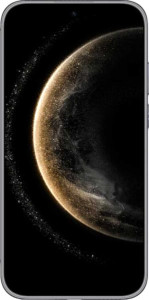
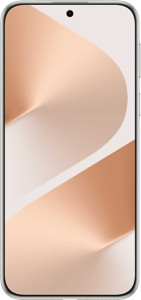
Huawei Mate 70 Air
Huawei Pura 80 256GB

Huawei Mate 70 Air Huawei Pura 80 256GB

Overview

Welcome to our in-depth spec comparison between the Huawei Mate 70 Air and the Huawei Pura 80 256GB, two distinct flagship contenders from Huawei. While they share a strong foundation of 5G connectivity, OLED displays, and fast charging, they diverge significantly when it comes to display size, camera versatility, battery capacity, and performance hardware. Read on to see how these two devices stack up across every major specification.

Common Features

  • Both phones are waterproof and share the same water resistance capability.
  • Neither phone has a rugged build.
  • Neither phone can be folded.
  • Both phones feature an OLED/AMOLED display.
  • Both phones have a 120Hz refresh rate.
  • Both phones have a 300Hz touch sampling rate.
  • Both phones use branded damage-resistant glass on the display.
  • HDR10+ support is not available on either phone.
  • Both phones support Always-On Display.
  • Dolby Vision support is not available on either phone.
  • Neither phone has a secondary screen.
  • Both phones have integrated LTE.
  • Both phones use RAM running at 2750 MHz.
  • Both phones are built on a 7 nm semiconductor process.
  • Both phones support 64-bit processing.
  • Both phones support DirectX 12.
  • Both phones have integrated graphics.
  • Both phones use big.LITTLE CPU technology.
  • Both phones have a multi-lens main camera with built-in optical image stabilization.
  • Both phones support 4K video recording at 30 fps on the main camera.
  • Both phones have two flash LEDs.
  • Neither phone uses a BSI sensor, but both use a CMOS sensor.
  • Both phones support continuous autofocus when recording movies.
  • Both phones support phase-detection autofocus for photos.
  • Both phones have camera and microphone privacy options.
  • Both phones support dark mode.
  • Both phones include a battery health check feature.
  • Both phones have customizable notifications.
  • Both phones support split-screen multitasking.
  • Neither phone receives direct OS updates.
  • Neither phone can be used as a PC.
  • Both phones have sharing intents.
  • Both phones support fast charging at 66W and come with a charger.
  • Neither phone has a removable battery.
  • Both phones have a battery level indicator and a rechargeable battery.
  • Neither phone has a 3.5mm audio jack.
  • Both phones have stereo speakers.
  • aptX, aptX HD, aptX Adaptive, and aptX Lossless are not available on either phone.
  • Neither phone has a radio.
  • Both phones support 5G connectivity.
  • Both phones support Wi-Fi 4, Wi-Fi 5, Wi-Fi 6, and Wi-Fi 7.
  • Both phones have dual SIM card slots.
  • Both phones use Bluetooth 5.2.
  • Neither phone has an external memory slot.
  • Both phones have a USB Type-C port with USB 2.0.
  • Both phones support NFC.
  • Both phones have a video light.
  • Neither phone has a sapphire glass display.
  • Neither phone has a curved or e-paper display.

Main Differences

  • Weight is 208 g on Huawei Mate 70 Air and 211 g on Huawei Pura 80 256GB.
  • Thickness is 6.6 mm on Huawei Mate 70 Air and 8.2 mm on Huawei Pura 80 256GB.
  • Width is 81.5 mm on Huawei Mate 70 Air and 74.4 mm on Huawei Pura 80 256GB.
  • Height is 165 mm on Huawei Mate 70 Air and 157.7 mm on Huawei Pura 80 256GB.
  • Volume is 88.75 cm³ on Huawei Mate 70 Air and 96.21 cm³ on Huawei Pura 80 256GB.
  • IP rating is IP69 on Huawei Mate 70 Air and IP68 on Huawei Pura 80 256GB.
  • Screen size is 7″ on Huawei Mate 70 Air and 6.6″ on Huawei Pura 80 256GB.
  • Pixel density is 437 ppi on Huawei Mate 70 Air and 459 ppi on Huawei Pura 80 256GB.
  • Resolution is 1320 x 2760 px on Huawei Mate 70 Air and 1256 x 2760 px on Huawei Pura 80 256GB.
  • HDR10 support is present on Huawei Mate 70 Air but not available on Huawei Pura 80 256GB.
  • Internal storage is 512GB on Huawei Mate 70 Air and 256GB on Huawei Pura 80 256GB.
  • RAM is 16GB on Huawei Mate 70 Air and 12GB on Huawei Pura 80 256GB.
  • The chipset is HiSilicon Kirin 9020 on Huawei Mate 70 Air and HiSilicon Kirin 9010 on Huawei Pura 80 256GB.
  • The GPU is Maleoon 920 on Huawei Mate 70 Air and Mali-G57 on Huawei Pura 80 256GB.
  • CPU speed is 2 x 2.5 & 6 x 2.15 & 4 x 1.6 GHz on Huawei Mate 70 Air and 1 x 2.3 & 4 x 2.18 & 3 x 1.55 GHz on Huawei Pura 80 256GB.
  • Main camera megapixels are 50 & 12 & 8 MP on Huawei Mate 70 Air and 50 & 13 & 12 MP on Huawei Pura 80 256GB.
  • Main camera wide aperture is f/1.8, f/2.4, f/2.2 on Huawei Mate 70 Air and f/1.4, f/2.2, f/3.4 on Huawei Pura 80 256GB.
  • Front camera resolution is 10.7MP on Huawei Mate 70 Air and 13MP on Huawei Pura 80 256GB.
  • Dual-tone LED flash is present on Huawei Pura 80 256GB but not available on Huawei Mate 70 Air.
  • Optical zoom is 3x on Huawei Mate 70 Air and 5x on Huawei Pura 80 256GB.
  • RAW shooting is supported on Huawei Pura 80 256GB but not available on Huawei Mate 70 Air.
  • Manual shutter speed is available on Huawei Pura 80 256GB but not on Huawei Mate 70 Air.
  • Front camera aperture is f/2.2 on Huawei Mate 70 Air and f/2.0 on Huawei Pura 80 256GB.
  • Battery capacity is 6500 mAh on Huawei Mate 70 Air and 5600 mAh on Huawei Pura 80 256GB.
  • Wireless charging is supported on Huawei Pura 80 256GB but not available on Huawei Mate 70 Air.
  • Reverse wireless charging is supported on Huawei Pura 80 256GB but not available on Huawei Mate 70 Air.
  • LDAC audio support is present on Huawei Pura 80 256GB but not available on Huawei Mate 70 Air.
  • A barometer is present on Huawei Mate 70 Air but not available on Huawei Pura 80 256GB.
Specs Comparison
Huawei Mate 70 Air

Huawei Mate 70 Air

Huawei Pura 80 256GB

Huawei Pura 80 256GB

Design:
water resistance Waterproof Waterproof
weight 208 g 211 g
thickness 6.6 mm 8.2 mm
width 81.5 mm 74.4 mm
height 165 mm 157.7 mm
volume 88.7535 cm³ 96.209616 cm³
Ingress Protection (IP) rating IP69 IP68
has a rugged build
can be folded

The most striking design differentiator between these two Huawei phones is thickness. The Mate 70 Air is a remarkably slim 6.6 mm thin, compared to the Pura 80's 8.2 mm — a gap of 1.6 mm that is immediately perceptible in the hand and pocket. Despite this, the Mate 70 Air is taller (165 mm vs 157.7 mm) and wider (81.5 mm vs 74.4 mm), meaning it trades a larger footprint for a slimmer profile. The Pura 80, by contrast, is more compact and easier to grip one-handed, but feels noticeably thicker. Overall volume actually favors the Mate 70 Air at 88.75 cm³ versus the Pura 80's 96.21 cm³, confirming the Air's slimness more than compensates for its larger face dimensions.

Weight is nearly identical — 208 g vs 211 g — so neither phone holds a meaningful advantage in terms of hand fatigue or portability from a mass perspective alone.

On water resistance, both phones are rated Waterproof, but the Mate 70 Air carries an IP69 rating versus the Pura 80's IP68. IP69 adds protection against high-pressure, high-temperature water jets — a step beyond IP68's standard immersion protection. For most users this distinction is rarely relevant, but it does give the Mate 70 Air a technical edge in durability. Overall, the Mate 70 Air has the design advantage: it is thinner, more water-resistant, and lighter, though users who prefer a narrower, more pocketable width may find the Pura 80's form factor more comfortable to hold.

Display:
Display type OLED/AMOLED OLED/AMOLED
screen size 7" 6.6"
pixel density 437 ppi 459 ppi
resolution 1320 x 2760 px 1256 x 2760 px
refresh rate 120Hz 120Hz
touch sampling rate 300Hz 300Hz
has branded damage-resistant glass
supports HDR10
supports HDR10+
Always-On Display
supports Dolby Vision
Has a secondary screen
has a touch screen

Both phones share a strong display foundation — OLED/AMOLED panels with 120Hz refresh rates, 300Hz touch sampling, Always-On Display, and branded damage-resistant glass. Where they diverge is in size and sharpness. The Mate 70 Air offers a larger 7-inch screen, giving it a clear edge for media consumption, reading, and multitasking. The Pura 80, at 6.6 inches, is more compact but counters with a higher pixel density of 459 ppi versus 437 ppi on the Mate 70 Air — a difference that translates to marginally crisper text and finer detail, though both are well above the threshold where most users can distinguish individual pixels.

A notable content-quality distinction is that the Mate 70 Air supports HDR10, while the Pura 80 does not. In practice, this means the Mate 70 Air can render compatible video content with wider dynamic range — deeper blacks and brighter highlights — on streaming platforms and local media that carry HDR10 metadata. Neither device supports HDR10+ or Dolby Vision, so the gap is modest, but it does favor the Mate 70 Air for video enthusiasts.

Taken together, the Mate 70 Air has the display edge for most use cases: its larger screen and HDR10 support make it the stronger choice for immersive viewing. The Pura 80's slightly higher pixel density is a real but minor counterpoint — meaningful mainly for those who prioritize a sharper, more pocketable display over screen real estate.

Performance:
internal storage 512GB 256GB
RAM 16GB 12GB
Chipset (SoC) name HiSilicon Kirin 9020 HiSilicon Kirin 9010
GPU name Maleoon 920 Mali-G57
CPU speed 2 x 2.5 & 6 x 2.15 & 4 x 1.6 GHz 1 x 2.3 & 4 x 2.18 & 3 x 1.55 GHz
Has integrated LTE
RAM speed 2750 MHz 2750 MHz
semiconductor size 7 nm 7 nm
Supports 64-bit
DirectX version DirectX 12 DirectX 12
Has integrated graphics
OpenGL ES version 3.2 3.2
Uses big.LITTLE technology
maximum memory bandwidth 44 GB/s 44 GB/s
OpenCL version 2 2
Thermal Design Power (TDP) 6W 6W

Under the hood, these two phones share the same manufacturing process (7 nm), RAM speed, memory bandwidth, and TDP — but diverge meaningfully in chip generation and raw resources. The Mate 70 Air runs on the Kirin 9020 with Huawei's own Maleoon 920 GPU, while the Pura 80 uses the older Kirin 9010 paired with an Mali-G57 GPU. The CPU configuration also tells a clear story: the Mate 70 Air fields a 12-core cluster (2+6+4) with higher peak clocks, versus the Pura 80's 8-core setup (1+4+3) — giving the Mate 70 Air more parallelism for demanding workloads like video processing, AI tasks, and sustained multitasking.

The memory gap is equally significant. 16 GB of RAM on the Mate 70 Air versus 12 GB on the Pura 80 means more apps can stay resident in the background without being killed, smoother switching between heavy applications, and better headroom for future software. Storage follows the same pattern: 512 GB versus 256 GB — a practical doubling that matters for users who shoot high-resolution video or keep large local libraries.

The Mate 70 Air has a clear performance advantage across the board in this category. Its newer chipset, more capable GPU, higher core count, extra RAM, and doubled storage all point in the same direction — it is the more future-proof and capable device of the two for users who push their phones hard.

Cameras:
megapixels (main camera) 50 & 12 & 8 MP 50 & 13 & 12 MP
wide aperture (main camera) 1.8 & 2.4 & 2.2f 1.4 & 2.2 & 3.4f
Has a dual-lens (or multi-lens) main camera
megapixels (front camera) 10.7MP 13MP
has built-in optical image stabilization
video recording (main camera) 2160 x 30 fps 2160 x 30 fps
Has a dual-tone LED flash
number of flash LEDs 2 2
has a BSI sensor
has a CMOS sensor
has continuous autofocus when recording movies
Has phase-detection autofocus for photos
supports slow-motion video recording
has a built-in HDR mode
has manual exposure
has a flash
optical zoom 3x 5x
has manual ISO
has a serial shot mode
has manual focus
has a front camera
Has laser autofocus
Shoots 360° panorama
has manual white balance
shoots raw
has touch autofocus
has manual shutter speed
can create panoramas in-camera
wide aperture (front camera) 2.2f 2f
Has timelapse function
Has a front-facing LED flash
has a dual-lens (or multi-lens) front camera
supports HDR10 recording
supports Dolby Vision recording
has a front-facing camera under the display
Has a RGB LED flash
has 3D photo/video recording capabilities

Despite sharing a 50 MP primary sensor and identical video output at 4K 30fps, the camera systems here diverge in ways that matter significantly to serious photographers. The most impactful difference is the main aperture: the Pura 80 opens to f/1.4 versus the Mate 70 Air's f/1.8. A wider aperture admits considerably more light, which translates directly into better low-light performance and shallower depth-of-field for portrait shots. Paired with a 5x optical zoom against the Mate 70 Air's 3x, the Pura 80 offers both more reach and more versatility across shooting distances.

For enthusiast and pro-leaning users, two Pura 80 exclusives stand out: RAW capture and manual shutter speed control. RAW files preserve unprocessed sensor data, giving photographers full latitude in post-production — something the Mate 70 Air simply cannot offer. Manual shutter speed adds creative control over motion blur and exposure, rounding out a more complete manual toolkit. The Pura 80 also has a higher-resolution 13 MP front camera with a slightly wider f/2.0 aperture, compared to the Mate 70 Air's 10.7 MP at f/2.2 — a modest but real selfie advantage.

The Pura 80 wins the camera category decisively. Its wider main aperture, greater optical zoom, RAW support, manual shutter speed, and superior front camera collectively make it the stronger imaging device — especially for users who want creative control beyond point-and-shoot convenience.

Operating system:
has camera/microphone privacy options
has dark mode
has battery health check
Has customizable notifications
supports split screen
gets direct OS updates
Can be used as a PC
Has sharing intents
has a child lock
Supports widgets
has voice commands
Tracks the current position of a mobile device
is a multi-user system

Across every operating system feature in this comparison, the Huawei Mate 70 Air and Pura 80 are a perfect match. Both offer the same set of productivity and usability capabilities — including split-screen multitasking, widgets, customizable notifications, voice commands, and multi-user support — pointing to a shared software platform with no meaningful divergence at this level of specification.

Worth noting for prospective buyers is that neither device receives direct OS updates, a shared limitation that has practical long-term implications for security patches and feature support. This is a known characteristic of Huawei's current software ecosystem and applies equally to both phones — it is not a differentiator, but it is a consideration regardless of which model you choose.

This category is a complete tie. The data provides no basis for preferring one device over the other on software features alone — the decision here will be driven entirely by the hardware differences covered in other specification groups.

Battery:
battery power 6500 mAh 5600 mAh
has wireless charging
Supports fast charging
charging speed 66W 66W
has reverse wireless charging
comes with a charger
has a removable battery
has a battery level indicator
has a rechargeable battery

Battery capacity is where the Mate 70 Air makes a compelling statement: its 6500 mAh cell is a substantial 16% larger than the Pura 80's 5600 mAh. In practical terms, that gap is meaningful — it points to noticeably longer time between charges, particularly for heavy users who stream video, game, or stay on-screen for extended periods. Both phones share the same 66W wired fast charging speed, so topping up from empty takes roughly the same time; the Mate 70 Air simply needs to do it less often.

The Pura 80 counters with two charging features the Mate 70 Air lacks entirely: wireless charging and reverse wireless charging. Wireless charging adds everyday convenience — drop-and-charge on a pad without fumbling for a cable. Reverse wireless charging goes further, letting the Pura 80 act as a charging pad for accessories like earbuds or a smartwatch, which is a genuinely useful feature for users embedded in a compatible ecosystem.

This category comes down to a clear trade-off. The Mate 70 Air holds the endurance advantage with its significantly larger battery, making it the better pick for users who prioritize going longer between charges. The Pura 80, however, offers a more versatile charging ecosystem with wireless and reverse wireless support — features that matter more to users who value convenience and accessory compatibility over raw capacity.

Audio:
has a socket for a 3.5 mm audio jack
has stereo speakers
has aptX
has LDAC
has aptX HD
has aptX Adaptive
has aptX Lossless
Has a radio

For speaker output, these two phones are evenly matched — both drop the 3.5mm headphone jack and both feature stereo speakers, meaning spatial audio for media playback is on the table for either device without needing wireless headphones.

The single differentiator in this category is the Pura 80's support for LDAC, a high-resolution Bluetooth audio codec that transmits up to three times more data than standard Bluetooth audio. For users with LDAC-compatible wireless headphones, this means significantly higher fidelity audio over a wireless connection — closer to wired listening quality. The Mate 70 Air lacks LDAC support entirely, capping wireless audio at standard Bluetooth quality regardless of headphone capability.

The Pura 80 has the edge in audio, and it is a relevant one for audiophiles or anyone who owns high-end wireless headphones. For users who listen primarily through the built-in speakers or are indifferent to wireless audio quality, the two phones are functionally equivalent in this category.

Connectivity & Features:
release date November 2025 June 2025
has 5G support
Wi-Fi version Wi-Fi 4 (802.11n), Wi-Fi 5 (802.11ac), Wi-Fi 6 (802.11ax), Wi-Fi 7 (802.11be) Wi-Fi 4 (802.11n), Wi-Fi 5 (802.11ac), Wi-Fi 6 (802.11ax), Wi-Fi 7 (802.11be)
SIM cards 2 SIM 2 SIM
Bluetooth version 5.2 5.2
has an external memory slot
Has USB Type-C
USB version 2 2
has NFC
Has a fingerprint scanner
has emergency SOS via satellite
has crash detection
is DLNA-certified
has a gyroscope
supports ANT+
Has a heart rate monitor
has GPS
has a compass
supports Wi-Fi
Has an infrared sensor
has an accelerometer
has a cellular module
Has a barometer
has an HDMI output
Uses 3D facial recognition
Has an iris scanner
Stylus included
supports Galileo
Has motion tracking
Has optical tracking
Has a built-in projector

Connectivity-wise, these two phones are remarkably well-aligned. Both support 5G, Wi-Fi 7, Bluetooth 5.2, NFC, and dual SIM — a strong, modern feature set across the board. They also share the same sensor suite for navigation and motion: GPS, Galileo, gyroscope, accelerometer, compass, and infrared sensor are all present on both devices. Satellite emergency SOS is likewise available on each, a safety feature that functions independently of cellular coverage.

The sole differentiator in this entire category is the barometer, which is present on the Mate 70 Air but absent from the Pura 80. A barometer measures atmospheric pressure and contributes to more accurate altitude readings, floor-level detection in navigation apps, and weather trend awareness. It is a niche but real advantage for outdoor and fitness-oriented users who rely on precise elevation data.

This category is effectively a near-tie with a marginal edge to the Mate 70 Air. The barometer is the only differentiator, and its relevance depends heavily on use case — for most users it will not be a deciding factor, but for hikers, cyclists, or anyone using altitude-sensitive apps, it is a meaningful addition the Pura 80 cannot match.

Miscellaneous:
has a video light
Has sapphire glass display
Has a curved display
Has an e-paper display

The miscellaneous specs for these two phones are identical across every data point provided. Both feature a video light, and neither carries a sapphire glass display, curved display, or e-paper display — there is simply nothing in this category that separates them.

This is a complete tie. The data in this group offers no basis for preferring one device over the other, and the decision between the Huawei Mate 70 Air and Pura 80 should rest entirely on the differentiators found in other specification groups.

Comparison Summary & Verdict

After a thorough look at both devices, it is clear that each caters to a different kind of user. The Huawei Mate 70 Air stands out with its larger 7-inch display, slimmer 6.6 mm profile, massive 6500 mAh battery, more powerful Kirin 9020 chipset, 16GB of RAM, and 512GB of storage, making it the better pick for power users and media enthusiasts who want a capable, high-endurance device. The Huawei Pura 80 256GB, on the other hand, wins on camera flexibility with its 5x optical zoom, RAW shooting, manual shutter speed, and wider f/1.4 main aperture, and adds convenience through wireless and reverse wireless charging plus LDAC audio support. Its more compact build and higher pixel density also make it a strong choice for photography-focused users who value portability and advanced imaging features.

Huawei Mate 70 Air
Buy Huawei Mate 70 Air if...

Buy the Huawei Mate 70 Air if you want a larger screen, longer battery life, and stronger raw performance with more storage and RAM.

Huawei Pura 80 256GB
Buy Huawei Pura 80 256GB if...

Buy the Huawei Pura 80 256GB if you prioritize advanced camera features like 5x optical zoom and RAW shooting, or need wireless charging and LDAC audio support.