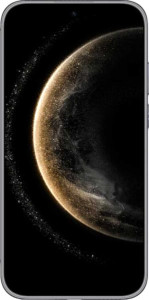
Huawei Mate 70 Air
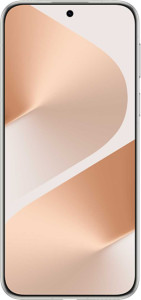
Huawei Pura 80 512GB

Huawei Mate 70 Air Huawei Pura 80 512GB

Overview

Welcome to our in-depth spec comparison of the Huawei Mate 70 Air and the Huawei Pura 80 512GB. Both are premium Huawei smartphones sharing a strong foundation, yet they diverge in meaningful ways across display size, camera versatility, battery capacity, and charging flexibility. Whether you value a slimmer, larger-screened powerhouse or a more photography-focused device with wireless charging, this comparison will help you identify which model best suits your needs.

Common Features

  • Both phones are waterproof.
  • Neither phone has a rugged build.
  • Neither phone can be folded.
  • Both phones feature an OLED/AMOLED display.
  • Both phones have a 120Hz refresh rate.
  • Both phones have a 300Hz touch sampling rate.
  • Both phones feature branded damage-resistant glass.
  • HDR10+ support is not available on either phone.
  • Always-On Display is available on both phones.
  • Dolby Vision support is not available on either phone.
  • Neither phone has a secondary screen.
  • Both phones come with 512GB of internal storage.
  • Both phones have integrated LTE.
  • Both phones use a 7nm semiconductor size.
  • Both phones support 64-bit processing.
  • Both phones support DirectX 12.
  • Both phones have integrated graphics.
  • Both phones support OpenGL ES 3.2.
  • Both phones have a multi-lens main camera with built-in optical image stabilization.
  • Both phones record video at 2160 x 30 fps on the main camera.
  • Both phones use a CMOS sensor.
  • Both phones support continuous autofocus when recording movies.
  • Both phones support phase-detection autofocus for photos.
  • Both phones have camera and microphone privacy options.
  • Both phones support dark mode.
  • Both phones have a battery health check feature.
  • Both phones have customizable notifications.
  • Both phones support split screen.
  • Neither phone gets direct OS updates.
  • Neither phone can be used as a PC.
  • Both phones have sharing intents.
  • Both phones support fast charging at 66W.
  • Both phones come with a charger included.
  • Neither phone has a removable battery.
  • Both phones have a battery level indicator.
  • Neither phone has a 3.5mm audio jack.
  • Both phones feature stereo speakers.
  • aptX support is not available on either phone.
  • Neither phone has a radio.
  • Both phones support 5G.
  • Both phones support Wi-Fi 4, Wi-Fi 5, Wi-Fi 6, and Wi-Fi 7.
  • Both phones have dual SIM card slots.
  • Both phones use Bluetooth 5.2.
  • Neither phone has an external memory slot.
  • Both phones have USB Type-C with USB version 2.
  • Both phones have NFC.
  • Both phones have a video light.
  • Neither phone has a sapphire glass display.
  • Neither phone has a curved display.
  • Neither phone has an e-paper display.

Main Differences

  • Weight is 208g on Huawei Mate 70 Air and 211g on Huawei Pura 80 512GB.
  • Thickness is 6.6mm on Huawei Mate 70 Air and 8.2mm on Huawei Pura 80 512GB.
  • Width is 81.5mm on Huawei Mate 70 Air and 74.4mm on Huawei Pura 80 512GB.
  • Height is 165mm on Huawei Mate 70 Air and 157.7mm on Huawei Pura 80 512GB.
  • Volume is 88.75 cm³ on Huawei Mate 70 Air and 96.21 cm³ on Huawei Pura 80 512GB.
  • The IP rating is IP69 on Huawei Mate 70 Air and IP68 on Huawei Pura 80 512GB.
  • Screen size is 7″ on Huawei Mate 70 Air and 6.6″ on Huawei Pura 80 512GB.
  • Pixel density is 437 ppi on Huawei Mate 70 Air and 459 ppi on Huawei Pura 80 512GB.
  • Resolution is 1320 x 2760 px on Huawei Mate 70 Air and 1256 x 2760 px on Huawei Pura 80 512GB.
  • HDR10 support is present on Huawei Mate 70 Air but not available on Huawei Pura 80 512GB.
  • RAM is 16GB on Huawei Mate 70 Air and 12GB on Huawei Pura 80 512GB.
  • The chipset is HiSilicon Kirin 9020 on Huawei Mate 70 Air and HiSilicon Kirin 9010 on Huawei Pura 80 512GB.
  • The GPU is Maleoon 920 on Huawei Mate 70 Air and Mali-G57 on Huawei Pura 80 512GB.
  • CPU speed is 2 x 2.5 & 6 x 2.15 & 4 x 1.6 GHz on Huawei Mate 70 Air and 1 x 2.3 & 4 x 2.18 & 3 x 1.55 GHz on Huawei Pura 80 512GB.
  • Main camera megapixels are 50 & 12 & 8 MP on Huawei Mate 70 Air and 50 & 13 & 12 MP on Huawei Pura 80 512GB.
  • Main camera wide aperture is f/1.8, f/2.4, f/2.2 on Huawei Mate 70 Air and f/1.4, f/2.2, f/3.4 on Huawei Pura 80 512GB.
  • Front camera resolution is 10.7MP on Huawei Mate 70 Air and 13MP on Huawei Pura 80 512GB.
  • Dual-tone LED flash is present on Huawei Pura 80 512GB but not available on Huawei Mate 70 Air.
  • Optical zoom is 3x on Huawei Mate 70 Air and 5x on Huawei Pura 80 512GB.
  • RAW shooting is supported on Huawei Pura 80 512GB but not available on Huawei Mate 70 Air.
  • Manual shutter speed is available on Huawei Pura 80 512GB but not on Huawei Mate 70 Air.
  • Front camera wide aperture is f/2.2 on Huawei Mate 70 Air and f/2.0 on Huawei Pura 80 512GB.
  • Battery capacity is 6500 mAh on Huawei Mate 70 Air and 5600 mAh on Huawei Pura 80 512GB.
  • Wireless charging is supported on Huawei Pura 80 512GB but not available on Huawei Mate 70 Air.
  • Reverse wireless charging is supported on Huawei Pura 80 512GB but not available on Huawei Mate 70 Air.
  • LDAC audio support is present on Huawei Pura 80 512GB but not available on Huawei Mate 70 Air.
  • A barometer is present on Huawei Mate 70 Air but not available on Huawei Pura 80 512GB.
Specs Comparison
Huawei Mate 70 Air

Huawei Mate 70 Air

Huawei Pura 80 512GB

Huawei Pura 80 512GB

Design:
water resistance Waterproof Waterproof
weight 208 g 211 g
thickness 6.6 mm 8.2 mm
width 81.5 mm 74.4 mm
height 165 mm 157.7 mm
volume 88.7535 cm³ 96.209616 cm³
Ingress Protection (IP) rating IP69 IP68
has a rugged build
can be folded

Both phones share a waterproof build, a non-rugged and non-foldable form factor, and similar weights — 208 g vs 211 g — making neither meaningfully lighter in hand. The more telling divergence lies in their silhouettes: the Mate 70 Air is notably taller and wider (165 × 81.5 mm) compared to the Pura 80's more compact footprint (157.7 × 74.4 mm). Despite its larger surface area, the Mate 70 Air is substantially thinner at 6.6 mm versus 8.2 mm, which translates to a sleeker, more premium feel in the pocket and a lower total volume (88.75 cm³ vs 96.21 cm³). In practice, the Mate 70 Air achieves a large-screen experience while remaining more spatially efficient overall.

On water resistance, both devices are rated waterproof, but the Mate 70 Air holds a IP69 rating versus the Pura 80's IP68. This is a meaningful distinction: IP68 covers sustained immersion in water, while IP69 adds protection against high-pressure, high-temperature water jets — a step up in durability for real-world conditions like heavy rain or rinsing under a tap.

The Mate 70 Air has a clear design edge here. Its dramatically slimmer profile, lower volume, and superior IP69 rating combine to make it the more refined and better-protected of the two — assuming its larger footprint does not conflict with the user's preference for a more pocketable device, where the Pura 80's narrower and shorter chassis gives it a natural one-hand advantage.

Display:
Display type OLED/AMOLED OLED/AMOLED
screen size 7" 6.6"
pixel density 437 ppi 459 ppi
resolution 1320 x 2760 px 1256 x 2760 px
refresh rate 120Hz 120Hz
touch sampling rate 300Hz 300Hz
has branded damage-resistant glass
supports HDR10
supports HDR10+
Always-On Display
supports Dolby Vision
Has a secondary screen
has a touch screen

Both phones use OLED/AMOLED panels with identical 120Hz refresh rates and 300Hz touch sampling, so responsiveness and motion smoothness are equally matched. The more substantive difference is screen size: the Mate 70 Air stretches to 7″ while the Pura 80 sits at 6.6″ — a gap that meaningfully favors the Mate 70 Air for media consumption, multitasking, and reading. Despite the larger canvas, both panels share the same vertical resolution of 2760 pixels, which means the Pura 80 actually achieves a slightly higher pixel density at 459 ppi versus 437 ppi. In practice, both exceed the threshold where individual pixels become imperceptible to the naked eye, so neither holds a visible sharpness advantage in everyday use.

One notable differentiator is HDR support: the Mate 70 Air supports HDR10, while the Pura 80 supports neither HDR10 nor HDR10+. This gives the Mate 70 Air an edge in HDR-graded content — videos and streaming media mastered with HDR metadata will render with greater dynamic range and contrast depth on the Mate 70 Air, assuming the panel can apply tone mapping accordingly. Both devices offer an Always-On Display and branded damage-resistant glass, so durability and ambient notification features are on equal footing.

The Mate 70 Air takes the display edge. Its larger screen and HDR10 support make it the stronger choice for users who prioritize a more immersive visual experience. The Pura 80's marginally higher pixel density is a technical win, but one that has no perceptible real-world impact at these density levels — making it an insufficient counterweight to the Mate 70 Air's broader display advantages.

Performance:
internal storage 512GB 512GB
RAM 16GB 12GB
Chipset (SoC) name HiSilicon Kirin 9020 HiSilicon Kirin 9010
GPU name Maleoon 920 Mali-G57
CPU speed 2 x 2.5 & 6 x 2.15 & 4 x 1.6 GHz 1 x 2.3 & 4 x 2.18 & 3 x 1.55 GHz
Has integrated LTE
RAM speed 2750 MHz 2750 MHz
semiconductor size 7 nm 7 nm
Supports 64-bit
DirectX version DirectX 12 DirectX 12
Has integrated graphics
OpenGL ES version 3.2 3.2
Uses big.LITTLE technology
maximum memory bandwidth 44 GB/s 44 GB/s
OpenCL version 2 2
Thermal Design Power (TDP) 6W 6W

The silicon gap between these two devices is real but nuanced. The Mate 70 Air runs on the Kirin 9020 while the Pura 80 uses the Kirin 9010 — both fabbed on a 7 nm process with identical TDP, memory bandwidth, and API support, indicating they belong to the same generational family. The CPU configuration is where divergence shows: the Mate 70 Air fields a larger core cluster (2+6+4 arrangement with peak cores at 2.5 GHz) compared to the Pura 80's leaner 1+4+3 layout topping out at 2.3 GHz. More cores at higher clocks points to a tangible advantage in sustained multi-threaded workloads — think heavy multitasking, background processing, and compute-intensive apps running simultaneously.

The RAM delta reinforces this picture. The Mate 70 Air ships with 16 GB versus the Pura 80's 12 GB, and while both run at the same 2750 MHz speed, the extra 4 GB translates directly into more apps staying resident in memory and smoother context switching — a difference that becomes noticeable over longer usage sessions. On the GPU side, the Mate 70 Air's Maleoon 920 is Huawei's in-house graphics architecture, while the Pura 80 relies on an Mali-G57. Graphics API support is identical across both, but the architectural lineage of the Maleoon 920 suggests a more recent design optimized for Huawei's own silicon stack.

The Mate 70 Air holds a clear performance edge in this category. Its newer chipset, higher core count, faster peak CPU speed, and substantially larger RAM pool collectively position it as the stronger performer — particularly for power users who push their devices with demanding workloads or expect longevity as software requirements grow over time.

Cameras:
megapixels (main camera) 50 & 12 & 8 MP 50 & 13 & 12 MP
wide aperture (main camera) 1.8 & 2.4 & 2.2f 1.4 & 2.2 & 3.4f
Has a dual-lens (or multi-lens) main camera
megapixels (front camera) 10.7MP 13MP
has built-in optical image stabilization
video recording (main camera) 2160 x 30 fps 2160 x 30 fps
Has a dual-tone LED flash
number of flash LEDs 2 2
has a BSI sensor
has a CMOS sensor
has continuous autofocus when recording movies
Has phase-detection autofocus for photos
supports slow-motion video recording
has a built-in HDR mode
has manual exposure
has a flash
optical zoom 3x 5x
has manual ISO
has a serial shot mode
has manual focus
has a front camera
Has laser autofocus
Shoots 360° panorama
has manual white balance
shoots raw
has touch autofocus
has manual shutter speed
can create panoramas in-camera
wide aperture (front camera) 2.2f 2f
Has timelapse function
Has a front-facing LED flash
has a dual-lens (or multi-lens) front camera
supports HDR10 recording
supports Dolby Vision recording
has a front-facing camera under the display
Has a RGB LED flash
has 3D photo/video recording capabilities

The primary lens aperture tells a compelling story straight away. The Pura 80's main camera opens to f/1.4 compared to the Mate 70 Air's f/1.8 — a full stop wider, meaning significantly more light reaches the sensor in low-light conditions. This is one of the more impactful real-world differentiators in mobile photography, directly affecting night shots and indoor images without flash. The Pura 80 also pulls ahead on telephoto reach, offering 5x optical zoom versus the Mate 70 Air's 3x — a meaningful gap for portraits, distant subjects, and any shooting scenario where cropping in-camera without quality loss matters.

For users who shoot with intent, the Pura 80 compounds its advantage through two additional capabilities absent on the Mate 70 Air: RAW file capture and manual shutter speed control. RAW support preserves unprocessed sensor data, giving photographers full latitude in post-processing — something the Mate 70 Air cannot offer at all. Manual shutter speed opens the door to long-exposure and creative light-trail photography. These are not niche specs; they represent a substantively different ceiling for photographic control. The Pura 80 also edges out the Mate 70 Air on the front camera, pairing a higher-resolution 13 MP sensor with a slightly wider f/2.0 aperture against the Mate 70 Air's 10.7 MP at f/2.2.

The Pura 80 wins the camera category decisively. Across every meaningful axis — low-light capability, telephoto reach, front camera quality, and manual control depth — it outspecifies the Mate 70 Air. The Mate 70 Air's camera system is competent and feature-rich in its own right, but for users who prioritize imaging performance, the Pura 80 is the clear choice.

Operating system:
has camera/microphone privacy options
has dark mode
has battery health check
Has customizable notifications
supports split screen
gets direct OS updates
Can be used as a PC
Has sharing intents
has a child lock
Supports widgets
has voice commands
Tracks the current position of a mobile device
is a multi-user system

Across every single operating system specification provided, the Huawei Mate 70 Air and Pura 80 are a perfect match. Both support the full set of modern software features — split-screen multitasking, customizable notifications, widgets, voice commands, multi-user profiles, child lock, and device tracking — painting a picture of two phones built on the same OS foundation with no differentiation at this level of the stack.

One shared characteristic worth flagging for prospective buyers is that neither device receives direct OS updates. This is a notable limitation regardless of which model is chosen, as it affects long-term software support and security patch delivery — a consideration that applies equally to both and should factor into any purchase decision involving expected ownership duration.

This category is a complete tie. There is no basis in the provided data to favor one device over the other on software features, and any differentiating factors between these two phones must be found in other specification groups.

Battery:
battery power 6500 mAh 5600 mAh
has wireless charging
Supports fast charging
charging speed 66W 66W
has reverse wireless charging
comes with a charger
has a removable battery
has a battery level indicator
has a rechargeable battery

Battery capacity is where the Mate 70 Air asserts a significant advantage: its 6500 mAh cell outpaces the Pura 80's 5600 mAh by nearly 900 mAh — roughly a 16% larger reserve. At identical wired charging speeds of 66W, that extra capacity translates directly into longer time between charges, making the Mate 70 Air a stronger pick for heavy users, travelers, or anyone who regularly pushes through a full day and into a second.

The Pura 80 counters with charging versatility. It supports wireless charging and reverse wireless charging — neither of which the Mate 70 Air offers at all. Wireless charging adds meaningful day-to-day convenience, allowing the phone to top up on a pad without hunting for a cable. Reverse wireless charging goes further, enabling the Pura 80 to act as a power source for other Qi-compatible devices like earbuds or a smartwatch — a practical feature the Mate 70 Air simply cannot replicate.

This category comes down to a genuine trade-off rather than a clean winner. The Mate 70 Air is the better choice for raw endurance, while the Pura 80 offers a more flexible and ecosystem-friendly charging experience. Users who prioritize longevity and rarely need wireless convenience will favor the Mate 70 Air; those embedded in a wireless charging setup or who value the ability to charge accessories on the go will find the Pura 80's feature set more compelling.

Audio:
has a socket for a 3.5 mm audio jack
has stereo speakers
has aptX
has LDAC
has aptX HD
has aptX Adaptive
has aptX Lossless
Has a radio

Shared ground between these two devices is substantial: neither offers a 3.5mm headphone jack, both feature stereo speakers, and neither supports aptX in any of its variants. For most users, the stereo speaker parity means equivalent out-of-box speaker performance, and the absence of a headphone jack equally pushes both toward Bluetooth or USB-C audio solutions.

The one differentiating spec in this category is the Pura 80's support for LDAC — Sony's high-resolution Bluetooth audio codec capable of transmitting up to 990 kbps, roughly three times the bandwidth of standard SBC Bluetooth audio. For users with LDAC-compatible wireless headphones or earbuds, this unlocks near-lossless audio quality over Bluetooth — a meaningful upgrade for audiophiles listening to high-resolution tracks. The Mate 70 Air offers no equivalent high-fidelity wireless codec, capping Bluetooth audio at standard compressed quality.

The Pura 80 takes a narrow but genuine edge in audio. Its LDAC support is only relevant to users with compatible hardware and a preference for high-quality wireless listening — for everyone else, the two phones are effectively identical in this category. But for that specific audience, it is a real and unmatched advantage.

Connectivity & Features:
release date November 2025 June 2025
has 5G support
Wi-Fi version Wi-Fi 4 (802.11n), Wi-Fi 5 (802.11ac), Wi-Fi 6 (802.11ax), Wi-Fi 7 (802.11be) Wi-Fi 4 (802.11n), Wi-Fi 5 (802.11ac), Wi-Fi 6 (802.11ax), Wi-Fi 7 (802.11be)
SIM cards 2 SIM 2 SIM
Bluetooth version 5.2 5.2
has an external memory slot
Has USB Type-C
USB version 2 2
has NFC
Has a fingerprint scanner
has emergency SOS via satellite
has crash detection
is DLNA-certified
has a gyroscope
supports ANT+
Has a heart rate monitor
has GPS
has a compass
supports Wi-Fi
Has an infrared sensor
has an accelerometer
has a cellular module
Has a barometer
has an HDMI output
Uses 3D facial recognition
Has an iris scanner
Stylus included
supports Galileo
Has motion tracking
Has optical tracking
Has a built-in projector

For the vast majority of connectivity features, these two devices are indistinguishable. Both support 5G, Wi-Fi 7, Bluetooth 5.2, NFC, dual SIM, USB Type-C, satellite emergency SOS, and an identical sensor suite including GPS, gyroscope, accelerometer, compass, and infrared. The shared Wi-Fi 7 support is worth highlighting as a forward-looking feature — it delivers higher throughput, lower latency, and better performance in congested environments compared to Wi-Fi 6, benefiting both devices equally as Wi-Fi 7 router adoption grows.

Scanning the full spec set, only one meaningful divergence surfaces: the Mate 70 Air includes a barometer, while the Pura 80 does not. A barometer measures atmospheric pressure and contributes to more accurate altitude readings, benefits weather-aware applications, and can improve GPS vertical positioning. It is not a feature most users will actively seek out, but it does expand the Mate 70 Air's sensor utility for outdoor activities, fitness tracking, and navigation use cases.

This category is effectively a tie with a minor edge to the Mate 70 Air. The barometer is the sole differentiator in an otherwise identical connectivity and features profile — a modest advantage that matters only to a specific subset of users, leaving the broader picture evenly matched across both devices.

Miscellaneous:
has a video light
Has sapphire glass display
Has a curved display
Has an e-paper display

The Miscellaneous category offers no ground for differentiation whatsoever. The Huawei Mate 70 Air and Pura 80 share identical results across every spec here: both have a video light, and neither features sapphire glass, a curved display, or an e-paper display. This is a clean sweep of parity.

This category is a complete tie, and with only four data points — all matching — there is simply nothing in this group that should influence a purchase decision either way. Any meaningful distinction between these two devices must be drawn from other specification categories.

Comparison Summary & Verdict

After examining every spec category, it is clear that both phones serve distinct user profiles. The Huawei Mate 70 Air stands out with its slimmer 6.6mm profile, expansive 7-inch display, massive 6500 mAh battery, higher IP69 rating, and a more powerful Kirin 9020 chipset with 16GB of RAM, making it the better pick for users who prioritize screen real estate, endurance, and raw performance. The Huawei Pura 80 512GB, on the other hand, wins on camera versatility with its wider f/1.4 main aperture, 5x optical zoom, RAW shooting, manual shutter speed, 13MP front camera, and dual-tone flash, while also adding wireless and reverse wireless charging and LDAC audio support, making it the ideal choice for photography enthusiasts and users who value charging flexibility and audio quality.

Huawei Mate 70 Air
Buy Huawei Mate 70 Air if...

Buy the Huawei Mate 70 Air if you want a slimmer phone with a larger 7-inch display, a bigger 6500 mAh battery, a superior IP69 rating, and more RAM and processing power for demanding everyday use.

Huawei Pura 80 512GB
Buy Huawei Pura 80 512GB if...

Buy the Huawei Pura 80 512GB if you prioritize camera performance with 5x optical zoom, RAW shooting, a wider f/1.4 aperture, and manual controls, along with the added convenience of wireless and reverse wireless charging.