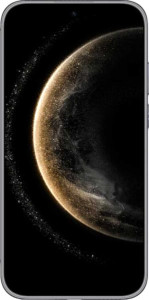
Huawei Mate 70 Air
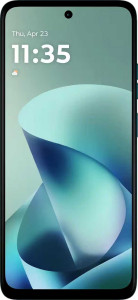
Motorola Moto G57

Huawei Mate 70 Air Motorola Moto G57

Overview

When comparing the Huawei Mate 70 Air and the Motorola Moto G57, two distinct smartphone philosophies come into focus. Both devices share a 120Hz refresh rate and 5G connectivity, yet they diverge sharply across display technology, camera capabilities, battery capacity, and overall performance. Whether you prioritize a premium screen experience or everyday practicality, this head-to-head breakdown will help you decide which device truly fits your needs.

Common Features

  • Neither product has a rugged build.
  • Neither product can be folded.
  • Both products have a 120Hz refresh rate.
  • Both products feature branded damage-resistant glass.
  • HDR10+ support is not available on either product.
  • Dolby Vision support is not available on either product.
  • Neither product has a secondary screen.
  • Both products have a touch screen.
  • Both products have integrated LTE.
  • Both products support 64-bit processing.
  • Both products support DirectX 12.
  • Both products have integrated graphics.
  • Both products use big.LITTLE technology.
  • Both products support OpenCL version 2 and OpenGL ES version 3.2.
  • Both products have a multi-lens main camera.
  • Dual-tone LED flash is not present on either product.
  • Both products have a CMOS sensor.
  • Both products support continuous autofocus when recording movies.
  • Both products have phase-detection autofocus for photos.
  • Both products support slow-motion video recording.
  • Both products have a built-in HDR mode.
  • Both products offer camera and microphone privacy options.
  • Both products have dark mode.
  • Both products include a battery health check feature.
  • Both products have customizable notifications.
  • Both products support split screen.
  • Neither product gets direct OS updates.
  • Neither product can be used as a PC.
  • Both products have sharing intents.
  • Wireless charging is not available on either product.
  • Reverse wireless charging is not available on either product.
  • Neither product has a removable battery.
  • Both products have a battery level indicator.
  • Both products have a rechargeable battery.
  • Both products have stereo speakers.
  • aptX support is not available on either product.
  • LDAC support is not available on either product.
  • Neither product has a radio.
  • Both products have 5G support.
  • Neither product has an external memory slot.
  • Both products feature USB Type-C.
  • Both products use USB version 2.
  • Both products have NFC.
  • Both products have a fingerprint scanner.
  • Crash detection is not available on either product.
  • Neither product is DLNA-certified.
  • Both products have a video light.
  • Neither product has a sapphire glass display.
  • Neither product has a curved display.
  • Neither product has an e-paper display.

Main Differences

  • Water resistance is rated as Waterproof on Huawei Mate 70 Air and Water resistant on Motorola Moto G57.
  • Weight is 208 g on Huawei Mate 70 Air and 210.6 g on Motorola Moto G57.
  • Thickness is 6.6 mm on Huawei Mate 70 Air and 8.6 mm on Motorola Moto G57.
  • Width is 81.5 mm on Huawei Mate 70 Air and 76.5 mm on Motorola Moto G57.
  • Height is 165 mm on Huawei Mate 70 Air and 166.2 mm on Motorola Moto G57.
  • Volume is 88.7535 cm³ on Huawei Mate 70 Air and 109.34298 cm³ on Motorola Moto G57.
  • IP rating is IP69 on Huawei Mate 70 Air and IP64 on Motorola Moto G57.
  • Display type is OLED/AMOLED on Huawei Mate 70 Air and LCD IPS on Motorola Moto G57.
  • Screen size is 7″ on Huawei Mate 70 Air and 6.72″ on Motorola Moto G57.
  • Pixel density is 437 ppi on Huawei Mate 70 Air and 392 ppi on Motorola Moto G57.
  • Resolution is 1320 x 2760 px on Huawei Mate 70 Air and 1080 x 2400 px on Motorola Moto G57.
  • Touch sampling rate is 300Hz on Huawei Mate 70 Air and 120Hz on Motorola Moto G57.
  • HDR10 support is present on Huawei Mate 70 Air but not available on Motorola Moto G57.
  • Always-On Display is available on Huawei Mate 70 Air but not on Motorola Moto G57.
  • Internal storage is 512GB on Huawei Mate 70 Air and 256GB on Motorola Moto G57.
  • RAM is 16GB on Huawei Mate 70 Air and 8GB on Motorola Moto G57.
  • Chipset is HiSilicon Kirin 9020 on Huawei Mate 70 Air and Qualcomm Snapdragon 6s Gen 4 on Motorola Moto G57.
  • CPU speed is 2 x 2.5 & 6 x 2.15 & 4 x 1.6 GHz on Huawei Mate 70 Air and 4 x 2.4 & 4 x 1.8 GHz on Motorola Moto G57.
  • RAM speed is 2750 MHz on Huawei Mate 70 Air and 3200 MHz on Motorola Moto G57.
  • Semiconductor size is 7 nm on Huawei Mate 70 Air and 4 nm on Motorola Moto G57.
  • CPU threads are 12 on Huawei Mate 70 Air and 8 on Motorola Moto G57.
  • Maximum memory bandwidth is 44 GB/s on Huawei Mate 70 Air and 17 GB/s on Motorola Moto G57.
  • Main camera megapixels are 50 & 12 & 8 MP on Huawei Mate 70 Air and 50 & 8 MP on Motorola Moto G57.
  • Main camera wide aperture is f/1.8, f/2.4, f/2.2 on Huawei Mate 70 Air and f/2.2, f/1.8 on Motorola Moto G57.
  • Front camera resolution is 10.7MP on Huawei Mate 70 Air and 8MP on Motorola Moto G57.
  • Optical image stabilization is present on Huawei Mate 70 Air but not available on Motorola Moto G57.
  • Main camera video recording goes up to 2160 x 30 fps on Huawei Mate 70 Air and 1440 x 30 fps on Motorola Moto G57.
  • Number of flash LEDs is 2 on Huawei Mate 70 Air and 1 on Motorola Moto G57.
  • Optical zoom is 3x on Huawei Mate 70 Air and 0x on Motorola Moto G57.
  • Laser autofocus is present on Huawei Mate 70 Air but not available on Motorola Moto G57.
  • Battery capacity is 6500 mAh on Huawei Mate 70 Air and 5200 mAh on Motorola Moto G57.
  • Fast charging is supported on Huawei Mate 70 Air but not on Motorola Moto G57.
  • A charger is included with Huawei Mate 70 Air but not with Motorola Moto G57.
  • A 3.5 mm audio jack is not present on Huawei Mate 70 Air but is available on Motorola Moto G57.
  • Wi-Fi support extends to Wi-Fi 7 (802.11be) on Huawei Mate 70 Air, while Motorola Moto G57 tops out at Wi-Fi 5 (802.11ac).
  • SIM configuration is dual SIM on Huawei Mate 70 Air and 1 SIM plus 1 eSIM on Motorola Moto G57.
  • Bluetooth version is 5.2 on Huawei Mate 70 Air and 5.1 on Motorola Moto G57.
  • Emergency SOS via satellite is available on Huawei Mate 70 Air but not on Motorola Moto G57.
  • An infrared sensor is present on Huawei Mate 70 Air but not on Motorola Moto G57.
  • A barometer is present on Huawei Mate 70 Air but not on Motorola Moto G57.
Specs Comparison
Huawei Mate 70 Air

Huawei Mate 70 Air

Motorola Moto G57

Motorola Moto G57

Design:
water resistance Waterproof Water resistant
weight 208 g 210.6 g
thickness 6.6 mm 8.6 mm
width 81.5 mm 76.5 mm
height 165 mm 166.2 mm
volume 88.7535 cm³ 109.34298 cm³
Ingress Protection (IP) rating IP69 IP64
has a rugged build
can be folded

The most striking physical difference between these two devices is thickness. The Huawei Mate 70 Air measures just 6.6 mm thick, compared to the Motorola Moto G57's 8.6 mm — a 30% difference that is immediately noticeable in the hand and pocket. This also translates directly into total volume: the Mate 70 Air displaces roughly 88.75 cm³ versus the Moto G57's 109.34 cm³, making it a meaningfully more compact device despite being wider (81.5 mm vs 76.5 mm). In real-world use, the Mate 70 Air will feel far sleeker and less bulky, while the Moto G57's narrower frame may appeal to users who prefer a more one-hand-friendly grip.

Weight is essentially a wash — 208 g for the Mate 70 Air versus 210.6 g for the Moto G57 — so neither device has a meaningful ergonomic edge there. Neither phone features a rugged build or a foldable form factor, so both target the same conventional smartphone audience on those fronts.

Where the Mate 70 Air pulls decisively ahead is water protection. Its IP69 rating means it can withstand high-pressure, high-temperature water jets — a significantly more robust standard than the Moto G57's IP64, which covers only splash and light water exposure from any direction. For users who frequently encounter rain, poolside use, or accidental submersion, this is a substantial real-world advantage. Overall, the Mate 70 Air has a clear design edge: it is dramatically thinner, more compact by volume, and offers far superior water protection.

Display:
Display type OLED/AMOLED LCD, IPS
screen size 7" 6.72"
pixel density 437 ppi 392 ppi
resolution 1320 x 2760 px 1080 x 2400 px
refresh rate 120Hz 120Hz
touch sampling rate 300Hz 120Hz
has branded damage-resistant glass
supports HDR10
supports HDR10+
Always-On Display
supports Dolby Vision
Has a secondary screen
has a touch screen

The display technology gap here is significant. The Mate 70 Air uses an OLED/AMOLED panel, which delivers true blacks, superior contrast, and more vibrant colors by lighting pixels individually — while the Moto G57 relies on an LCD IPS panel, which requires a backlight and cannot match OLED's depth or energy efficiency in dark-heavy content. For media consumption, gaming, or simply browsing at night, the Mate 70 Air's screen will look noticeably richer and more immersive.

Screen real estate and sharpness also favor the Mate 70 Air. Its 7-inch panel edges out the Moto G57's 6.72-inch display, and the resolution advantage is even more pronounced: 1320 x 2760 px at 437 ppi versus 1080 x 2400 px at 392 ppi. That 45 ppi difference is perceptible — fine text and detailed images will appear sharper on the Mate 70 Air. Both devices share a 120Hz refresh rate, meaning scrolling and animations feel equally fluid. However, the Mate 70 Air's 300Hz touch sampling rate versus the Moto G57's 120Hz means the former responds to finger input more precisely and with lower latency — a tangible benefit for gaming and fast interactions.

A few extras further separate the two. The Mate 70 Air supports HDR10 and features an Always-On Display, allowing compatible streaming content to render with expanded dynamic range and enabling at-a-glance notifications without fully waking the screen — neither of which the Moto G57 offers. Taken together, the Mate 70 Air holds a commanding advantage across nearly every display dimension: panel technology, resolution, touch responsiveness, and feature set.

Performance:
internal storage 512GB 256GB
RAM 16GB 8GB
Chipset (SoC) name HiSilicon Kirin 9020 Qualcomm Snapdragon 6s Gen 4
CPU speed 2 x 2.5 & 6 x 2.15 & 4 x 1.6 GHz 4 x 2.4 & 4 x 1.8 GHz
Has integrated LTE
RAM speed 2750 MHz 3200 MHz
semiconductor size 7 nm 4 nm
Supports 64-bit
DirectX version DirectX 12 DirectX 12
Has integrated graphics
OpenGL ES version 3.2 3.2
Uses big.LITTLE technology
CPU threads 12 threads 8 threads
maximum memory bandwidth 44 GB/s 17 GB/s
OpenCL version 2 2

Raw multitasking muscle decisively favors the Mate 70 Air. Its 16 GB of RAM is double the Moto G57's 8 GB, meaning it can hold far more apps in memory simultaneously, sustain heavier workloads without slowdown, and handle demanding tasks like video editing or large gaming sessions with considerably more headroom. Storage follows the same pattern — 512 GB versus 256 GB — so users with large media libraries or app collections will rarely feel constrained on the Mate 70 Air.

The memory bandwidth gap is equally telling. The Mate 70 Air's maximum bandwidth of 44 GB/s is more than 2.5 times the Moto G57's 17 GB/s, which means data can flow between the CPU, GPU, and RAM far faster — a real-world benefit in GPU-intensive tasks, high-resolution gaming, and computational workloads. The Mate 70 Air also fields a 12-thread CPU configuration versus the Moto G57's 8 threads, giving it more parallelism for concurrent processes. One nuance worth noting: the Moto G57's Snapdragon 6s Gen 4 is built on a 4 nm process compared to the Kirin 9020's 7 nm, which on paper implies better power efficiency per transistor for the Snapdragon. The Moto G57 also has slightly faster RAM at 3200 MHz versus 2750 MHz.

Taken as a whole, though, the Mate 70 Air holds a clear performance advantage. The process node gap is a legitimate point in the Moto G57's favor, but it is outweighed by the Mate 70 Air's substantial leads in RAM capacity, thread count, and especially memory bandwidth — the metrics that most directly determine how the phone handles real-world sustained performance.

Cameras:
megapixels (main camera) 50 & 12 & 8 MP 50 & 8 MP
wide aperture (main camera) 1.8 & 2.4 & 2.2f 2.2 & 1.8f
Has a dual-lens (or multi-lens) main camera
megapixels (front camera) 10.7MP 8MP
has built-in optical image stabilization
video recording (main camera) 2160 x 30 fps 1440 x 30 fps
Has a dual-tone LED flash
number of flash LEDs 2 1
has a BSI sensor
has a CMOS sensor
has continuous autofocus when recording movies
Has phase-detection autofocus for photos
supports slow-motion video recording
has a built-in HDR mode
has manual exposure
has a flash
optical zoom 3x 0x
has manual ISO
has a serial shot mode
has manual focus
has a front camera
Has laser autofocus
Shoots 360° panorama
has manual white balance
shoots raw
has touch autofocus
has manual shutter speed
can create panoramas in-camera
wide aperture (front camera) 2.2f 2.2f
Has timelapse function
Has a front-facing LED flash
has a dual-lens (or multi-lens) front camera
supports HDR10 recording
supports Dolby Vision recording
has a front-facing camera under the display
Has a RGB LED flash
has 3D photo/video recording capabilities

Several meaningful separators emerge when examining the rear camera systems. Both phones lead with a 50 MP main sensor, but the Mate 70 Air adds a third lens — an 8 MP shooter alongside its 12 MP secondary — giving it greater compositional flexibility. More impactful is the Mate 70 Air's 3x optical zoom versus the Moto G57's complete absence of optical zoom. Optical zoom preserves image quality when closing in on distant subjects; without it, the Moto G57 can only crop digitally, which degrades sharpness. Add in the Mate 70 Air's optical image stabilization (OIS) — absent on the Moto G57 — and the gap widens further: OIS physically compensates for hand movement, producing noticeably steadier photos in low light and smoother handheld video.

Video capabilities reinforce this divide. The Mate 70 Air records at up to 2160p (4K) at 30 fps, while the Moto G57 tops out at 1440p — a full resolution tier below. For anyone capturing footage they intend to view on a large screen or edit professionally, that distinction is real. The Mate 70 Air also includes laser autofocus, which improves focus speed and accuracy in low-light conditions, a feature the Moto G57 lacks.

On the front camera, the Mate 70 Air's 10.7 MP sensor outresolves the Moto G57's 8 MP, which benefits selfie detail and video calls. Both cameras share a broad set of manual controls and shooting modes, so neither has an edge in creative flexibility. Overall, the Mate 70 Air is the stronger camera package by a clear margin, with optical zoom, OIS, 4K video, and laser autofocus collectively offering tangible real-world advantages across photography and videography scenarios.

Operating system:
has camera/microphone privacy options
has dark mode
has battery health check
Has customizable notifications
supports split screen
gets direct OS updates
Can be used as a PC
Has sharing intents
has a child lock
Supports widgets
has voice commands
Tracks the current position of a mobile device
is a multi-user system

Across every measured operating system feature in this group, the Huawei Mate 70 Air and Motorola Moto G57 are in complete lockstep. Both support the core productivity and usability features users have come to expect from a modern smartphone: split-screen multitasking, customizable notifications, widgets, voice commands, and multi-user support all feature on both devices.

Privacy-conscious users will find that neither phone has an edge here either — both include camera and microphone privacy controls, device tracking, and a child lock. Notably, neither device receives direct OS updates, meaning both rely on manufacturer or carrier intermediaries for software patches, which is a shared limitation worth keeping in mind for long-term security considerations.

Based strictly on the provided data, this category is a complete tie. There is no differentiator — every single feature is present on both phones equally. Buyers for whom OS-level functionality is a deciding factor will need to look to other specification groups to distinguish these two devices.

Battery:
battery power 6500 mAh 5200 mAh
has wireless charging
Supports fast charging
has reverse wireless charging
comes with a charger
has a removable battery
has a battery level indicator
has a rechargeable battery

Battery capacity is where the Mate 70 Air posts one of its most tangible advantages across this entire comparison. Its 6500 mAh cell is 25% larger than the Moto G57's 5200 mAh — a difference substantial enough to translate into hours of additional screen-on time under typical daily use. For heavy users or those who travel frequently without easy access to a charger, that gap is genuinely meaningful rather than marginal.

Equally important is how quickly each phone recovers from a depleted battery. The Mate 70 Air supports fast charging, allowing it to top up in a fraction of the time a standard charger would require. The Moto G57 does not support fast charging, which combined with its smaller capacity means users face both shorter endurance and slower replenishment — a compounding disadvantage. Adding to this, the Mate 70 Air comes bundled with a charger in the box, while the Moto G57 does not, placing an immediate additional cost on the buyer.

Neither phone offers wireless or reverse wireless charging, so that is a shared limitation. But on the specs provided, the Mate 70 Air wins this category decisively — it carries more charge, refills faster, and ships with the hardware needed to do so out of the box.

Audio:
has a socket for a 3.5 mm audio jack
has stereo speakers
has aptX
has LDAC
has aptX HD
has aptX Adaptive
has aptX Lossless
Has a radio

Audio is a lean category for both devices, with one practical differentiator standing out. Both phones feature stereo speakers, ensuring that media playback and speakerphone use produce full, directional sound rather than the mono output found on more budget-oriented handsets. Neither device supports advanced Bluetooth audio codecs — aptX, LDAC, aptX HD, and aptX Adaptive are all absent on both — meaning wireless audio quality is limited to standard Bluetooth transmission regardless of which phone you choose.

The sole distinguishing factor is the 3.5 mm headphone jack. The Moto G57 retains it; the Mate 70 Air does not. For users who rely on wired headphones — whether for audio quality, convenience, or to avoid charging a wireless pair — this is a genuine usability advantage for the Moto G57. It also means the Moto G57 can connect to a wider range of audio accessories without an adapter.

In a category with very little to separate them, the Moto G57 claims a narrow but real edge purely by virtue of the headphone jack. For users who have fully transitioned to wireless audio, this is a non-issue and the two phones are effectively tied. But for anyone who still values wired listening, the Moto G57 is the more accommodating option here.

Connectivity & Features:
release date November 2025 November 2025
has 5G support
Wi-Fi version Wi-Fi 4 (802.11n), Wi-Fi 5 (802.11ac), Wi-Fi 6 (802.11ax), Wi-Fi 7 (802.11be) Wi-Fi 4 (802.11n), Wi-Fi 5 (802.11ac)
SIM cards 2 SIM 1 SIM, 1 eSIM
Bluetooth version 5.2 5.1
has an external memory slot
Has USB Type-C
USB version 2 2
has NFC
Has a fingerprint scanner
has emergency SOS via satellite
has crash detection
is DLNA-certified
has a gyroscope
supports ANT+
Has a heart rate monitor
has GPS
has a compass
supports Wi-Fi
Has an infrared sensor
has an accelerometer
has a cellular module
Has a barometer
has an HDMI output
Uses 3D facial recognition
Has an iris scanner
Stylus included
supports Galileo
Has motion tracking
Has optical tracking
Has a built-in projector

Wireless connectivity is where the Mate 70 Air pulls ahead most broadly. It supports up to Wi-Fi 7 (802.11be), the latest and fastest standard, while the Moto G57 tops out at Wi-Fi 5 (802.11ac) — two full generations behind. In practical terms, users with a Wi-Fi 6 or Wi-Fi 7 router will see significantly faster throughput, lower latency, and better performance in congested environments on the Mate 70 Air. The Bluetooth advantage is smaller but consistent: Bluetooth 5.2 versus 5.1, offering marginally improved connection stability and efficiency. Both phones support 5G, NFC, USB Type-C, GPS, and Galileo, so day-to-day essentials are covered equally.

The sensor loadout also diverges in the Mate 70 Air's favor. It includes an infrared sensor — useful for controlling TVs and home appliances directly from the phone — and a barometer for accurate altitude readings and weather sensing, neither of which the Moto G57 carries. Perhaps more significantly, the Mate 70 Air offers emergency SOS via satellite, enabling distress signaling even when cellular coverage is completely unavailable — a potentially critical safety feature for travelers or outdoor users that the Moto G57 entirely lacks.

The Moto G57 counters with eSIM support alongside its physical SIM slot, which adds flexibility for international travelers who want to switch carriers digitally without swapping cards. The Mate 70 Air uses dual physical SIMs instead. Overall though, the Mate 70 Air holds a clear and multi-dimensional connectivity advantage, spanning Wi-Fi generation, satellite safety features, and a richer sensor suite.
Miscellaneous:
has a video light
Has sapphire glass display
Has a curved display
Has an e-paper display

The Miscellaneous category offers no basis for differentiation between these two devices. Every spec in this group — the presence of a video light, the absence of sapphire glass, a curved display, and an e-paper display — is identical across the Huawei Mate 70 Air and the Motorola Moto G57.

This is a complete tie by the provided data. Neither phone carries any feature or omission here that would influence a purchasing decision one way or the other. Buyers should weigh the other specification groups to distinguish between these two devices.

Comparison Summary & Verdict

After examining every specification, it is clear that these two phones target different types of users. The Huawei Mate 70 Air stands out with its large OLED display, 6500 mAh battery with fast charging, triple-camera system with optical zoom and OIS, superior IP69 waterproofing, and a richer connectivity suite including Wi-Fi 7 and satellite SOS — making it the stronger choice for power users who want a premium, feature-packed device. The Motorola Moto G57, on the other hand, offers a more compact build, a 4 nm chip with newer semiconductor architecture, a 3.5 mm headphone jack, and eSIM support, appealing to budget-conscious users who value practical everyday features and modern chip efficiency over flagship extras.

Huawei Mate 70 Air
Buy Huawei Mate 70 Air if...

Buy the Huawei Mate 70 Air if you want a large OLED screen, a bigger battery with fast charging, a versatile triple-camera system with optical zoom, and top-tier waterproofing.

Motorola Moto G57
Buy Motorola Moto G57 if...

Buy the Motorola Moto G57 if you prefer a more compact smartphone with a headphone jack, eSIM support, and a modern 4 nm processor for efficient everyday performance.