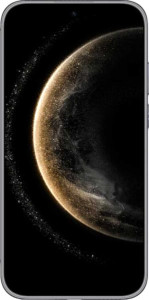
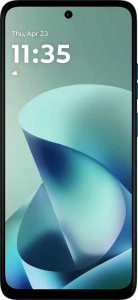
Versatility is where the Mate 70 Air pulls ahead most clearly. It fields a triple rear camera system (50, 12, and 8 MP) against the G57 Power's dual rear setup (50 and 8 MP), adding an extra lens that expands shooting options. More practically impactful is optical zoom: the Mate 70 Air offers 3x optical zoom, while the G57 Power lists 0x — meaning the Motorola relies entirely on digital zoom, which degrades image quality when closing in on distant subjects. For anyone who regularly photographs subjects at a distance, this is a decisive real-world difference.
Two further hardware advantages compound the Mate 70 Air's edge. It includes optical image stabilization (OIS), which physically compensates for hand movement during both photos and video — particularly valuable in low light or when recording while moving. The G57 Power lacks OIS entirely. The Mate 70 Air also adds laser autofocus, which works alongside phase-detection AF to lock focus faster and more reliably in challenging conditions such as low contrast or dim scenes. On the video side, the Mate 70 Air tops out at 2160p at 30 fps (4K), while the G57 Power is capped at 1440p at 30 fps, a meaningful gap for anyone who values high-resolution video capture.
Both phones share a solid common baseline — 50 MP primary sensors, HDR mode, continuous autofocus during recording, manual controls, and slow-motion support. But the Huawei Mate 70 Air holds a clear and multi-layered advantage in this category, with optical zoom, OIS, an additional rear lens, laser autofocus, and 4K video all absent on the G57 Power.