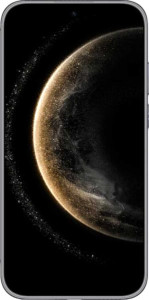
Huawei Mate 70 Air
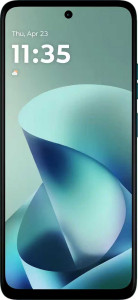
Motorola Moto G57 Power 8GB RAM

Huawei Mate 70 Air Motorola Moto G57 Power 8GB RAM

Overview

Welcome to our in-depth comparison of the Huawei Mate 70 Air and the Motorola Moto G57 Power 8GB RAM. These two smartphones take notably different approaches to key priorities, making the choice between them anything but obvious. From display technology and camera capabilities to battery size versus charging speed, and from processing power to build quality, this head-to-head breakdown examines every major specification to help you decide which device truly fits your needs.

Common Features

  • Neither product has a rugged build.
  • Neither product can be folded.
  • Both products have a 120Hz display refresh rate.
  • Both products feature branded damage-resistant glass.
  • HDR10+ support is not available on either product.
  • Dolby Vision support is not available on either product.
  • Neither product has a secondary screen.
  • Both products have a touch screen.
  • Both products have integrated LTE.
  • Both products support 64-bit processing.
  • Both products use DirectX 12.
  • Both products have integrated graphics.
  • Both products use big.LITTLE technology.
  • Both products support OpenGL ES version 3.2 and OpenCL version 2.
  • Both products have a multi-lens main camera.
  • Neither product has a dual-tone LED flash.
  • Both products have a CMOS sensor.
  • Both products support continuous autofocus when recording movies.
  • Both products have phase-detection autofocus for photos.
  • Both products support slow-motion video recording.
  • Both products have a built-in HDR mode.
  • Both products have camera and microphone privacy options.
  • Both products have dark mode.
  • Both products have a battery health check feature.
  • Both products have customizable notifications.
  • Both products support split screen.
  • Neither product gets direct OS updates.
  • Neither product can be used as a PC.
  • Both products have sharing intents.
  • Wireless charging is not available on either product.
  • Both products support fast charging.
  • Reverse wireless charging is not available on either product.
  • Neither product has a removable battery.
  • Both products have a battery level indicator.
  • Both products have a rechargeable battery.
  • Both products have stereo speakers.
  • aptX support is not available on either product.
  • LDAC support is not available on either product.
  • Neither product has a radio.
  • Both products have 5G support.
  • Neither product has an external memory slot.
  • Both products have USB Type-C with USB version 2.
  • Both products have NFC.
  • Both products have a fingerprint scanner.
  • Crash detection is not available on either product.
  • Neither product is DLNA-certified.
  • Both products have a video light.
  • Neither product has a sapphire glass display.
  • Neither product has a curved display.
  • Neither product has an e-paper display.

Main Differences

  • Water resistance is rated as Waterproof on Huawei Mate 70 Air and Water resistant on Motorola Moto G57 Power 8GB RAM.
  • The IP rating is IP69 on Huawei Mate 70 Air and IP64 on Motorola Moto G57 Power 8GB RAM.
  • Weight is 208 g on Huawei Mate 70 Air and 210.6 g on Motorola Moto G57 Power 8GB RAM.
  • Thickness is 6.6 mm on Huawei Mate 70 Air and 8.6 mm on Motorola Moto G57 Power 8GB RAM.
  • Width is 81.5 mm on Huawei Mate 70 Air and 76.5 mm on Motorola Moto G57 Power 8GB RAM.
  • Height is 165 mm on Huawei Mate 70 Air and 166.2 mm on Motorola Moto G57 Power 8GB RAM.
  • Volume is 88.75 cm³ on Huawei Mate 70 Air and 109.34 cm³ on Motorola Moto G57 Power 8GB RAM.
  • Display type is OLED/AMOLED on Huawei Mate 70 Air and LCD IPS on Motorola Moto G57 Power 8GB RAM.
  • Screen size is 7″ on Huawei Mate 70 Air and 6.72″ on Motorola Moto G57 Power 8GB RAM.
  • Pixel density is 437 ppi on Huawei Mate 70 Air and 392 ppi on Motorola Moto G57 Power 8GB RAM.
  • Resolution is 1320 x 2760 px on Huawei Mate 70 Air and 1080 x 2400 px on Motorola Moto G57 Power 8GB RAM.
  • Touch sampling rate is 300Hz on Huawei Mate 70 Air and 120Hz on Motorola Moto G57 Power 8GB RAM.
  • HDR10 support is present on Huawei Mate 70 Air but not available on Motorola Moto G57 Power 8GB RAM.
  • Always-On Display is available on Huawei Mate 70 Air but not on Motorola Moto G57 Power 8GB RAM.
  • Internal storage is 512GB on Huawei Mate 70 Air and 256GB on Motorola Moto G57 Power 8GB RAM.
  • RAM is 16GB on Huawei Mate 70 Air and 8GB on Motorola Moto G57 Power 8GB RAM.
  • The chipset is HiSilicon Kirin 9020 on Huawei Mate 70 Air and Qualcomm Snapdragon 6s Gen 4 on Motorola Moto G57 Power 8GB RAM.
  • CPU speed is 2 x 2.5 & 6 x 2.15 & 4 x 1.6 GHz on Huawei Mate 70 Air and 4 x 2.4 & 4 x 1.8 GHz on Motorola Moto G57 Power 8GB RAM.
  • RAM speed is 2750 MHz on Huawei Mate 70 Air and 3200 MHz on Motorola Moto G57 Power 8GB RAM.
  • Semiconductor size is 7 nm on Huawei Mate 70 Air and 4 nm on Motorola Moto G57 Power 8GB RAM.
  • CPU thread count is 12 on Huawei Mate 70 Air and 8 on Motorola Moto G57 Power 8GB RAM.
  • Maximum memory bandwidth is 44 GB/s on Huawei Mate 70 Air and 17 GB/s on Motorola Moto G57 Power 8GB RAM.
  • Main camera megapixels are 50 & 12 & 8 MP on Huawei Mate 70 Air and 50 & 8 MP on Motorola Moto G57 Power 8GB RAM.
  • Front camera resolution is 10.7 MP on Huawei Mate 70 Air and 8 MP on Motorola Moto G57 Power 8GB RAM.
  • Optical image stabilization is present on Huawei Mate 70 Air but not available on Motorola Moto G57 Power 8GB RAM.
  • Maximum video recording resolution is 2160 x 30 fps on Huawei Mate 70 Air and 1440 x 30 fps on Motorola Moto G57 Power 8GB RAM.
  • Number of flash LEDs is 2 on Huawei Mate 70 Air and 1 on Motorola Moto G57 Power 8GB RAM.
  • Optical zoom is 3x on Huawei Mate 70 Air and 0x on Motorola Moto G57 Power 8GB RAM.
  • Laser autofocus is present on Huawei Mate 70 Air but not available on Motorola Moto G57 Power 8GB RAM.
  • Battery capacity is 6500 mAh on Huawei Mate 70 Air and 7000 mAh on Motorola Moto G57 Power 8GB RAM.
  • Charging speed is 66W on Huawei Mate 70 Air and 30W on Motorola Moto G57 Power 8GB RAM.
  • A charger is included in the box with Huawei Mate 70 Air but not with Motorola Moto G57 Power 8GB RAM.
  • A 3.5 mm audio jack is present on Motorola Moto G57 Power 8GB RAM but not on Huawei Mate 70 Air.
  • Wi-Fi versions supported are Wi-Fi 4, 5, 6, and 7 on Huawei Mate 70 Air and Wi-Fi 4 and 5 on Motorola Moto G57 Power 8GB RAM.
  • SIM configuration is 2 physical SIM cards on Huawei Mate 70 Air and 1 physical SIM plus 1 eSIM on Motorola Moto G57 Power 8GB RAM.
  • Bluetooth version is 5.2 on Huawei Mate 70 Air and 5.1 on Motorola Moto G57 Power 8GB RAM.
  • Emergency SOS via satellite is available on Huawei Mate 70 Air but not on Motorola Moto G57 Power 8GB RAM.
  • An infrared sensor is present on Huawei Mate 70 Air but not on Motorola Moto G57 Power 8GB RAM.
  • A barometer is present on Huawei Mate 70 Air but not on Motorola Moto G57 Power 8GB RAM.
Specs Comparison
Huawei Mate 70 Air

Huawei Mate 70 Air

Motorola Moto G57 Power 8GB RAM

Motorola Moto G57 Power 8GB RAM

Design:
water resistance Waterproof Water resistant
weight 208 g 210.6 g
thickness 6.6 mm 8.6 mm
width 81.5 mm 76.5 mm
height 165 mm 166.2 mm
volume 88.7535 cm³ 109.34298 cm³
Ingress Protection (IP) rating IP69 IP64
has a rugged build
can be folded

In terms of physical form, the most striking difference between these two phones is thickness. The Huawei Mate 70 Air measures just 6.6 mm thin, compared to the 8.6 mm of the Motorola Moto G57 Power — a 2 mm gap that translates directly into a noticeably more premium, svelte feel in the hand and pocket. This also reflects in their total volume: the Mate 70 Air displaces roughly 88.75 cm³ versus the Moto G57's 109.34 cm³, meaning the Huawei occupies about 19% less space despite having a comparable footprint. Weight is essentially a non-factor here, as both devices sit within 3 grams of each other (~208 g vs ~210.6 g).

Where the design comparison becomes practically significant is water protection. The Mate 70 Air carries an IP69 rating — the highest tier of ingress protection, guarding against high-pressure, high-temperature water jets — while the Moto G57 is rated IP64, which covers only splash and dust resistance with no protection against sustained water exposure. For users who work outdoors, use their phone near water, or simply want peace of mind in rain, the Mate 70 Air's protection is meaningfully superior in real-world scenarios.

Overall, the Huawei Mate 70 Air holds a clear design edge: it is significantly slimmer, more compact by volume, and far better protected against water ingress. The Moto G57 Power is slightly narrower, which some may prefer for one-handed grip, but the advantages of the Mate 70 Air's thinner profile and stronger IP rating outweigh that consideration for most users.

Display:
Display type OLED/AMOLED LCD, IPS
screen size 7" 6.72"
pixel density 437 ppi 392 ppi
resolution 1320 x 2760 px 1080 x 2400 px
refresh rate 120Hz 120Hz
touch sampling rate 300Hz 120Hz
has branded damage-resistant glass
supports HDR10
supports HDR10+
Always-On Display
supports Dolby Vision
Has a secondary screen
has a touch screen

The display technology gap between these two phones is substantial. The Huawei Mate 70 Air uses an OLED/AMOLED panel, which delivers true blacks, higher contrast, and more vibrant colors by lighting pixels individually — while the Moto G57 Power relies on an LCD IPS screen, which depends on a backlight and cannot match OLED's depth or color accuracy. Combined with HDR10 support and an Always-On Display on the Mate 70 Air — both absent on the Moto G57 — the Huawei offers a richer viewing experience for media consumption and everyday glanceability.

Screen size and sharpness also favor the Mate 70 Air: its 7-inch panel at 437 ppi edges out the Moto G57's 6.72-inch screen at 392 ppi, meaning text and images render with noticeably finer detail on the Huawei. Both devices match on 120Hz refresh rate, ensuring equally smooth scrolling and animations. However, the Mate 70 Air pulls significantly ahead on touch responsiveness — its 300Hz touch sampling rate versus the Moto G57's 120Hz means the Huawei registers inputs more than twice as frequently, a difference that gamers and fast typists will feel in practice.

The Huawei Mate 70 Air holds a decisive advantage across nearly every display dimension — panel technology, pixel density, HDR support, Always-On capability, and touch responsiveness. The Moto G57 Power matches only on refresh rate and damage-resistant glass, making the display category a clear win for the Mate 70 Air.

Performance:
internal storage 512GB 256GB
RAM 16GB 8GB
Chipset (SoC) name HiSilicon Kirin 9020 Qualcomm Snapdragon 6s Gen 4
CPU speed 2 x 2.5 & 6 x 2.15 & 4 x 1.6 GHz 4 x 2.4 & 4 x 1.8 GHz
Has integrated LTE
RAM speed 2750 MHz 3200 MHz
semiconductor size 7 nm 4 nm
Supports 64-bit
DirectX version DirectX 12 DirectX 12
Has integrated graphics
OpenGL ES version 3.2 3.2
Uses big.LITTLE technology
CPU threads 12 threads 8 threads
maximum memory bandwidth 44 GB/s 17 GB/s
OpenCL version 2 2

Raw compute capacity strongly favors the Huawei Mate 70 Air. Its HiSilicon Kirin 9020 fields 12 CPU threads against the Snapdragon 6s Gen 4's 8 threads, and the gap widens considerably when looking at memory bandwidth: the Mate 70 Air delivers 44 GB/s versus just 17 GB/s on the Moto G57 Power — a 2.6× difference that translates directly into faster data throughput between the CPU, GPU, and RAM. This makes the Mate 70 Air significantly more capable for sustained workloads like video editing, multitasking, and graphics-intensive applications.

The storage and memory configuration reinforces that lead. The Mate 70 Air ships with 16 GB of RAM and 512 GB of internal storage, doubling the Moto G57's 8 GB RAM and 256 GB on both counts. More RAM means more apps can run simultaneously without being unloaded in the background, while 512 GB of storage accommodates large media libraries and games without compromise. One counterpoint worth noting: the Moto G57's RAM runs at 3200 MHz compared to the Mate 70 Air's 2750 MHz, and its chipset uses a 4 nm fabrication process versus the Kirin's 7 nm — both figures indicate a more modern manufacturing node on the Qualcomm side.

Despite the Snapdragon 6s Gen 4's process node advantage, the Huawei Mate 70 Air commands a clear overall performance edge in this category, driven by its substantially higher memory bandwidth, greater thread count, and double the RAM and storage capacity. The Moto G57 is competitive at its tier, but the Mate 70 Air is in a different league for demanding use cases.

Cameras:
megapixels (main camera) 50 & 12 & 8 MP 50 & 8 MP
wide aperture (main camera) 1.8 & 2.4 & 2.2f 2.2 & 1.8f
Has a dual-lens (or multi-lens) main camera
megapixels (front camera) 10.7MP 8MP
has built-in optical image stabilization
video recording (main camera) 2160 x 30 fps 1440 x 30 fps
Has a dual-tone LED flash
number of flash LEDs 2 1
has a BSI sensor
has a CMOS sensor
has continuous autofocus when recording movies
Has phase-detection autofocus for photos
supports slow-motion video recording
has a built-in HDR mode
has manual exposure
has a flash
optical zoom 3x 0x
has manual ISO
has a serial shot mode
has manual focus
has a front camera
Has laser autofocus
Shoots 360° panorama
has manual white balance
shoots raw
has touch autofocus
has manual shutter speed
can create panoramas in-camera
wide aperture (front camera) 2.2f 2.2f
Has timelapse function
Has a front-facing LED flash
has a dual-lens (or multi-lens) front camera
supports HDR10 recording
supports Dolby Vision recording
has a front-facing camera under the display
Has a RGB LED flash
has 3D photo/video recording capabilities

The rear camera systems share a 50 MP primary sensor as a baseline, but diverge meaningfully from there. The Huawei Mate 70 Air fields a triple-lens setup (50 & 12 & 8 MP) versus the Moto G57 Power's dual-lens (50 & 8 MP) configuration, and crucially, the Huawei adds 3x optical zoom while the Moto G57 offers none. Optical zoom preserves image quality when shooting at distance — digital zoom, by contrast, simply crops and degrades the image. For anyone who regularly photographs subjects at range, this is a tangible, real-world difference. The Mate 70 Air also includes optical image stabilization (OIS), which reduces blur from hand movement during photos and video, and laser autofocus for faster, more reliable subject locking — neither of which the Moto G57 provides.

Video capability is another area where the gap is clear. The Mate 70 Air records at 2160p (4K) at 30 fps, while the Moto G57 tops out at 1440p — a full resolution tier below. For users who want to capture footage with future-proof detail or intend to crop in post-production, 4K recording is a meaningful advantage. Both phones share a solid common feature set for manual controls — ISO, white balance, exposure, focus, HDR mode, slow-motion, and timelapse are present on both — so casual photographers will find either device capable.

Across the key differentiators — lens count, optical zoom, OIS, laser autofocus, video resolution, and front camera resolution (10.7 MP vs 8 MP) — the Huawei Mate 70 Air holds a clear and consistent camera advantage. The Moto G57 Power is a functional shooter, but the Mate 70 Air is the stronger choice for users who prioritize photographic versatility and video quality.
Operating system:
has camera/microphone privacy options
has dark mode
has battery health check
Has customizable notifications
supports split screen
gets direct OS updates
Can be used as a PC
Has sharing intents
has a child lock
Supports widgets
has voice commands
Tracks the current position of a mobile device
is a multi-user system

When it comes to operating system features, the Huawei Mate 70 Air and the Motorola Moto G57 Power are in complete lockstep — every tracked capability is identical across both devices. Both support split-screen multitasking, customizable notifications, widgets, and voice commands, covering the core productivity and personalization features most users rely on daily. Privacy-conscious users will find camera and microphone privacy controls on both, and families benefit from child lock and multi-user support on either device.

Notably, neither phone receives direct OS updates — meaning updates are routed through the manufacturer or carrier rather than pushed straight from the OS developer. This is worth keeping in mind for users who prioritize timely security patches. That said, this is a shared limitation, not a differentiator between the two.

This category is an unambiguous tie. Based strictly on the provided specs, there is no feature advantage on either side — both phones offer an identical OS feature set, and a user's choice here will have no bearing on their software experience.

Battery:
battery power 6500 mAh 7000 mAh
has wireless charging
Supports fast charging
charging speed 66W 30W
has reverse wireless charging
comes with a charger
has a removable battery
has a battery level indicator
has a rechargeable battery

Battery capacity is the one spec category where the Motorola Moto G57 Power takes the lead. Its 7000 mAh cell edges out the Huawei Mate 70 Air's already-generous 6500 mAh — a 500 mAh difference that, all else equal, translates into incrementally longer time between charges. Both are large batteries by any standard, so neither phone should struggle with all-day endurance; the Moto G57 simply offers a modest buffer for heavy users.

Charging speed, however, swings decisively the other way. The Mate 70 Air supports 66W fast charging versus the Moto G57's 30W — more than double the wattage. In practical terms, this means the Huawei can recover from low battery significantly faster, reducing the time tethered to a wall. For users who charge opportunistically throughout the day rather than overnight, faster charging can matter as much as raw capacity. One additional practical note: the Mate 70 Air comes with a charger in the box, while the Moto G57 Power does not — a real-world cost consideration if a 30W adapter is not already on hand.

This category is a genuine trade-off rather than a clean win for either side. The Moto G57 Power holds the edge in raw battery capacity, while the Mate 70 Air counters with much faster charging speed and the added convenience of a bundled charger. Users who prioritize maximum longevity on a single charge will lean toward the Moto G57; those who value rapid top-ups will find the Mate 70 Air more accommodating.

Audio:
has a socket for a 3.5 mm audio jack
has stereo speakers
has aptX
has LDAC
has aptX HD
has aptX Adaptive
has aptX Lossless
Has a radio

Audio specs are largely identical between these two phones, with one exception that will matter to a specific group of users. Both devices feature stereo speakers for wider, more immersive sound compared to a single-speaker setup, and neither supports advanced Bluetooth audio codecs like aptX or LDAC — so wireless audio quality is on equal footing for both.

The sole differentiator is the 3.5 mm headphone jack, which the Motorola Moto G57 Power includes and the Huawei Mate 70 Air omits. For users with wired headphones or earphones — particularly those who value zero-latency listening, consistent audio quality regardless of Bluetooth connection stability, or simply avoid the need to charge yet another accessory — this is a practical advantage. The Mate 70 Air's users would need to rely on a USB-C adapter or wireless headphones instead.

This is a narrow but clear edge for the Moto G57 Power among users who rely on wired audio. For those already committed to wireless listening, the category is effectively a tie, with both phones offering stereo speakers and equivalent Bluetooth audio codec support.

Connectivity & Features:
release date November 2025 November 2025
has 5G support
Wi-Fi version Wi-Fi 4 (802.11n), Wi-Fi 5 (802.11ac), Wi-Fi 6 (802.11ax), Wi-Fi 7 (802.11be) Wi-Fi 4 (802.11n), Wi-Fi 5 (802.11ac)
SIM cards 2 SIM 1 SIM, 1 eSIM
Bluetooth version 5.2 5.1
has an external memory slot
Has USB Type-C
USB version 2 2
has NFC
Has a fingerprint scanner
has emergency SOS via satellite
has crash detection
is DLNA-certified
has a gyroscope
supports ANT+
Has a heart rate monitor
has GPS
has a compass
supports Wi-Fi
Has an infrared sensor
has an accelerometer
has a cellular module
Has a barometer
has an HDMI output
Uses 3D facial recognition
Has an iris scanner
Stylus included
supports Galileo
Has motion tracking
Has optical tracking
Has a built-in projector

Wireless connectivity is where the Huawei Mate 70 Air pulls meaningfully ahead. It supports Wi-Fi 7 (802.11be) in addition to Wi-Fi 4, 5, and 6, while the Moto G57 Power tops out at Wi-Fi 5 (802.11ac) — two full generations behind. Wi-Fi 6 and 7 bring faster throughput, lower latency, and better performance in congested environments like apartments or offices with many connected devices. For users on a modern router, this is a tangible day-to-day advantage. Bluetooth follows the same pattern: the Mate 70 Air runs Bluetooth 5.2 versus the Moto G57's 5.1, a minor but forward-leaning difference in connection stability and efficiency.

Beyond wireless standards, the Mate 70 Air includes several hardware sensors absent on the Moto G57. An infrared sensor lets the phone function as a universal remote for TVs and appliances — a small but genuinely useful feature in everyday home use. A built-in barometer enables more accurate altitude readings and supports weather-related apps. Perhaps most significantly, the Mate 70 Air supports emergency SOS via satellite, allowing distress signals to be sent even without cellular coverage — a potentially life-critical capability the Moto G57 does not offer. SIM configuration differs too: the Moto G57 uses a physical SIM plus eSIM combo, while the Mate 70 Air takes two physical SIM cards, which may suit users in regions where eSIM adoption is limited.

Across connectivity and features, the Huawei Mate 70 Air holds a clear and broad advantage — superior Wi-Fi generation, additional sensors, and satellite emergency communication set it apart. The Moto G57's eSIM support is the one area some users may prefer, but it does not offset the Mate 70 Air's wider feature set.

Miscellaneous:
has a video light
Has sapphire glass display
Has a curved display
Has an e-paper display

The miscellaneous specs for these two phones are identical across every tracked data point. Both feature a video light, and neither has a sapphire glass display, curved display, or e-paper display — leaving no differentiator to analyze in this category.

This is a straightforward tie. Nothing in this spec group should influence a purchasing decision between the Huawei Mate 70 Air and the Motorola Moto G57 Power.

Comparison Summary & Verdict

After a thorough comparison, both devices carve out a clear identity. The Huawei Mate 70 Air impresses with its superior OLED display, higher IP69 waterproofing, triple-lens camera with optical zoom and OIS, 16GB of RAM, faster 66W charging, and a richer connectivity suite including Wi-Fi 7 and satellite SOS — all wrapped in a slimmer, more compact body. It is the stronger choice for users who demand premium multimedia, photography, and performance. The Motorola Moto G57 Power 8GB RAM, on the other hand, counters with a larger 7000 mAh battery, a newer 4nm chipset, a 3.5mm headphone jack, and eSIM support, making it a compelling pick for those who prioritize all-day endurance and everyday practicality at likely a lower price point. Choose the Huawei for a feature-rich premium experience; choose the Motorola if battery longevity and simplicity are your top concerns.

Huawei Mate 70 Air
Buy Huawei Mate 70 Air if...

Buy the Huawei Mate 70 Air if you want a premium OLED display, a versatile triple-lens camera with optical zoom, faster 66W charging, and top-tier waterproofing in a slim design.

Motorola Moto G57 Power 8GB RAM
Buy Motorola Moto G57 Power 8GB RAM if...

Buy the Motorola Moto G57 Power 8GB RAM if you prioritize maximum battery endurance with its 7000 mAh cell, want a headphone jack, or need eSIM support at a more accessible price.