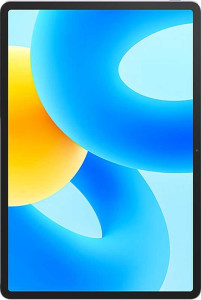
Connectivity is where the gap between these two tablets widens most dramatically. The Galaxy Tab S10 FE supports Wi-Fi 6E, 5G, and a cellular module — none of which are available on the MatePad 11.5 (2025), which is Wi-Fi only and tops out at Wi-Fi 6. Wi-Fi 6E unlocks the less congested 6 GHz band, delivering faster and more stable wireless connections in dense environments like offices or apartments. The practical consequence of the download speed figures is striking: 5100 Mbits/s on the Tab S10 FE versus 1400 Mbits/s on the MatePad, with upload speeds of 1280 Mbits/s versus just 200 Mbits/s. For users who transfer large files, stream high-resolution content, or rely on cloud-based workflows, this is a tangible day-to-day difference. The addition of 5G means the Samsung can also be used as a fully independent connected device away from Wi-Fi — something the MatePad simply cannot do.
Short-range connectivity also favors the Tab S10 FE. Its Bluetooth 5.3 versus the MatePad's Bluetooth 5.0 offers improvements in connection stability, lower latency, and more efficient pairing with peripherals. The Samsung further adds NFC for contactless payments and quick device pairing, and a fingerprint scanner for biometric authentication — both absent on the MatePad. These are not niche features; NFC and fingerprint unlock are daily-use conveniences that meaningfully affect the ownership experience.
Shared features — split screen, dark mode, multi-user support, USB Type-C, voice commands, and position tracking — are plentiful and equal on both devices, which speaks to a solid baseline. But the Samsung Galaxy Tab S10 FE holds an overwhelming advantage in this category. Between 5G, Wi-Fi 6E, faster wireless throughput, NFC, Bluetooth 5.3, and a fingerprint scanner, it is simply a far more connected and versatile device across nearly every dimension that matters.