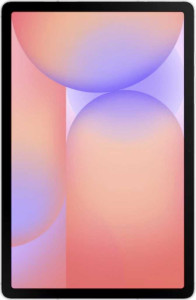
Huawei MatePad 11.5 S (2025)
Samsung Galaxy Tab S10 Lite

Huawei MatePad 11.5 S (2025) Samsung Galaxy Tab S10 Lite

Common Features

  • Both products include a stylus.
  • Neither product has a backlit keyboard.
  • Both products lack water resistance.
  • Neither product has tilt sensitivity.
  • Both products have a touch screen.
  • Both products support HDR10.
  • Both products lack sapphire glass displays.
  • Both products support Dolby Vision.
  • Both products have a front camera.
  • Both products have a built-in HDR mode for the camera.
  • Both products lack panorama creation in-camera.
  • Both products have touch autofocus in the camera.
  • Neither product has optical zoom.
  • Both products have a CMOS sensor in the camera.
  • Both products support stereo speakers.
  • Both products lack a 3.5 mm audio jack.
  • Both products support fast charging.
  • Both products have a rechargeable battery.
  • Both products lack a removable battery.
  • Both products support split screen functionality.

Main Differences

  • The weight of Huawei MatePad 11.5 S (2025) is 515 g, while the Samsung Galaxy Tab S10 Lite weighs 524 g.
  • The thickness of Huawei MatePad 11.5 S (2025) is 6.1 mm, while Samsung Galaxy Tab S10 Lite has a thickness of 6.6 mm.
  • Huawei MatePad 11.5 S (2025) has a width of 261 mm, while Samsung Galaxy Tab S10 Lite is 254.3 mm wide.
  • Huawei MatePad 11.5 S (2025) has a height of 177.3 mm, while Samsung Galaxy Tab S10 Lite has a height of 165.8 mm.
  • Huawei MatePad 11.5 S (2025) has a volume of 282.27933 cm³, while Samsung Galaxy Tab S10 Lite has a volume of 278.275404 cm³.
  • Huawei MatePad 11.5 S (2025) has a detachable keyboard, while Samsung Galaxy Tab S10 Lite does not.
  • The screen size of Huawei MatePad 11.5 S (2025) is 11.5″, while Samsung Galaxy Tab S10 Lite has a screen size of 10.9″.
  • Huawei MatePad 11.5 S (2025) has a resolution of 2800 x 1840 px, while Samsung Galaxy Tab S10 Lite has a resolution of 2112 x 1320 px.
  • Huawei MatePad 11.5 S (2025) has a pixel density of 291 ppi, while Samsung Galaxy Tab S10 Lite has a pixel density of 228 ppi.
  • Huawei MatePad 11.5 S (2025) supports a refresh rate of 144Hz, while Samsung Galaxy Tab S10 Lite supports 90Hz.
  • Huawei MatePad 11.5 S (2025) does not have branded damage-resistant glass, while Samsung Galaxy Tab S10 Lite does.
  • Huawei MatePad 11.5 S (2025) has 512GB of internal storage, while Samsung Galaxy Tab S10 Lite has 256GB.
  • Huawei MatePad 11.5 S (2025) has 12GB of RAM, while Samsung Galaxy Tab S10 Lite has 8GB of RAM.
  • Huawei MatePad 11.5 S (2025) uses the Mali-G57 GPU, while Samsung Galaxy Tab S10 Lite uses the Mali G68 MP5 GPU.
  • Huawei MatePad 11.5 S (2025) has a CPU speed of 1 x 3.13 & 3 x 2.54 & 4 x 2.05 GHz, while Samsung Galaxy Tab S10 Lite's CPU speed is 4 x 2.4 & 4 x 2 GHz.
  • Huawei MatePad 11.5 S (2025) has an external memory slot, while Samsung Galaxy Tab S10 Lite does not.
  • Huawei MatePad 11.5 S (2025) has RAM speed of 2750 MHz, while Samsung Galaxy Tab S10 Lite has RAM speed of 3200 MHz.
  • Huawei MatePad 11.5 S (2025) has a Thermal Design Power (TDP) of 6W, while Samsung Galaxy Tab S10 Lite has a TDP of 5W.
  • Huawei MatePad 11.5 S (2025) has an L3 core of 2 MB/core, while Samsung Galaxy Tab S10 Lite has an L3 core of 4 MB/core.
  • Huawei MatePad 11.5 S (2025) has a maximum memory bandwidth of 44 GB/s, while Samsung Galaxy Tab S10 Lite has 51.2 GB/s.
Specs Comparison
Huawei MatePad 11.5 S (2025)

Huawei MatePad 11.5 S (2025)

Samsung Galaxy Tab S10 Lite

Samsung Galaxy Tab S10 Lite

Design:
weight 515 g 524 g
thickness 6.1 mm 6.6 mm
width 261 mm 254.3 mm
height 177.3 mm 165.8 mm
volume 282.27933 cm³ 278.275404 cm³
Stylus included
Has a detachable keyboard
Has a backlit keyboard
water resistance None None
Has tilt sensitivity

The Huawei MatePad 11.5 S (2025) and Samsung Galaxy Tab S10 Lite are both lightweight tablets, though the MatePad 11.5 S is slightly lighter at 515 g, compared to the Tab S10 Lite's 524 g. In terms of thickness, the MatePad 11.5 S is also slimmer, measuring 6.1 mm, while the Tab S10 Lite is 6.6 mm thick. When it comes to size, the MatePad 11.5 S is larger overall, with dimensions of 261 mm in width and 177.3 mm in height, compared to the Tab S10 Lite’s 254.3 mm in width and 165.8 mm in height. The volume of the MatePad 11.5 S is 282.28 cm³, slightly more than the Tab S10 Lite's 278.28 cm³, reflecting its larger physical size.

Both tablets come with a stylus included, which is a useful addition for tasks like note-taking or drawing. However, only the Huawei MatePad 11.5 S offers a detachable keyboard, while the Samsung Galaxy Tab S10 Lite does not. Neither tablet features a backlit keyboard, nor do they offer water resistance. Additionally, both models lack tilt sensitivity, making them less suitable for certain creative or precision tasks.

Overall, the MatePad 11.5 S is slightly larger and lighter, offering a detachable keyboard, while the Galaxy Tab S10 Lite does not have this feature. However, the overall physical differences between the two are minimal in terms of size and weight.

Display:
screen size 11.5" 10.9"
resolution 2800 x 1840 px 2112 x 1320 px
pixel density 291 ppi 228 ppi
Display type LCD, IPS LCD, IPS
refresh rate 144Hz 90Hz
has branded damage-resistant glass
has anti-reflection coating
supports HDR10
has a touch screen
Has sapphire glass display
supports HDR10+
supports Dolby Vision
Has an e-paper display

The Huawei MatePad 11.5 S (2025) features a larger 11.5-inch display, while the Samsung Galaxy Tab S10 Lite has a slightly smaller 10.9-inch screen. The MatePad 11.5 S also offers a higher resolution of 2800 x 1840 px, compared to the Tab S10 Lite’s 2112 x 1320 px. This results in a higher pixel density for the MatePad 11.5 S at 291 ppi, versus the Tab S10 Lite's 228 ppi. Both devices use LCD, IPS displays, which should provide good color accuracy and wide viewing angles, but the MatePad 11.5 S benefits from a sharper, more detailed display due to its higher resolution and pixel density.

In terms of refresh rate, the MatePad 11.5 S offers a smoother 144Hz, while the Tab S10 Lite is limited to 90Hz. Both tablets have an anti-reflection coating and support touch input, but the MatePad 11.5 S does not feature branded damage-resistant glass, unlike the Galaxy Tab S10 Lite, which does. Neither tablet supports HDR10, HDR10+, Dolby Vision, or has an e-paper display, but the MatePad 11.5 S does have an anti-reflection coating, which is also present on the Tab S10 Lite.

While both displays share similar features, the MatePad 11.5 S stands out with its larger size, higher resolution, and faster refresh rate, while the Tab S10 Lite offers branded damage-resistant glass for additional durability.

Performance:
internal storage 512GB 256GB
RAM 12GB 8GB
GPU name Mali-G57 Mali G68 MP5
CPU speed 1 x 3.13 & 3 x 2.54 & 4 x 2.05 GHz 4 x 2.4 & 4 x 2 GHz
has an external memory slot
semiconductor size 5 nm 5 nm
Supports 64-bit
Has integrated LTE
Uses big.LITTLE technology
DirectX version DirectX 12 DirectX 12
Has integrated graphics
CPU threads 8 threads 8 threads
RAM speed 2750 MHz 3200 MHz
Has TrustZone
Thermal Design Power (TDP) 6W 5W
L3 cache 4 MB 4 MB
L3 core 2 MB/core 4 MB/core
maximum memory bandwidth 44 GB/s 51.2 GB/s
OpenCL version 2 2

The Huawei MatePad 11.5 S (2025) offers more internal storage with 512GB, double the 256GB found in the Samsung Galaxy Tab S10 Lite. It also comes with more RAM, at 12GB, compared to the Tab S10 Lite's 8GB. Both tablets feature powerful GPUs, with the MatePad 11.5 S using the Mali-G57 and the Tab S10 Lite equipped with the Mali G68 MP5. The CPU architecture of both products includes a big.LITTLE setup, but their speeds differ. The MatePad 11.5 S has a higher top speed, with its CPU cores running at 3.13 GHz for one core, 2.54 GHz for three cores, and 2.05 GHz for four cores. The Tab S10 Lite’s CPU peaks at 2.4 GHz for four cores and 2 GHz for the other four. Both devices use a 5 nm semiconductor size and support 64-bit processing.

In terms of memory bandwidth, the Tab S10 Lite has a slight advantage, with a maximum of 51.2 GB/s, compared to the MatePad 11.5 S's 44 GB/s. The MatePad 11.5 S has an external memory slot, which the Tab S10 Lite lacks. Additionally, the MatePad 11.5 S has a higher RAM speed of 2750 MHz, while the Tab S10 Lite runs at 3200 MHz. Both tablets share similar features such as TrustZone support, integrated LTE, DirectX 12, and integrated graphics. The thermal design power (TDP) of the MatePad 11.5 S is 6W, slightly higher than the Tab S10 Lite's 5W, which may suggest a difference in power consumption or heat management.

Both tablets offer strong performance specs overall, with the MatePad 11.5 S providing more storage, RAM, and a slightly faster CPU, while the Tab S10 Lite stands out with a higher memory bandwidth and faster RAM speed.

Cameras:
megapixels (main camera) 13 MP 8 MP
megapixels (front camera) 8MP 5MP
video recording (main camera) 1080 x 30 fps 1080 x 30 fps
has a flash
has a front camera
has a built-in HDR mode
can create panoramas in-camera
has touch autofocus
optical zoom 0x 0x
has a BSI sensor
has manual white balance
has a CMOS sensor
supports HDR10 recording
has continuous autofocus when recording movies
supports Dolby Vision recording
Has a front-facing LED flash
has manual ISO
has a video light
Has timelapse function
Shoots 360° panorama
has a serial shot mode
has built-in optical image stabilization
has 3D photo/video recording capabilities
Has a dual-tone LED flash
has manual focus
Has a RGB LED flash
has manual exposure
has manual shutter speed

The Huawei MatePad 11.5 S (2025) comes with a more powerful main camera, offering 13 MP, compared to the Samsung Galaxy Tab S10 Lite's 8 MP. The MatePad 11.5 S also features an 8 MP front camera, while the Tab S10 Lite's front camera is 5 MP. Both tablets are capable of 1080p video recording at 30 fps, but the MatePad 11.5 S includes a flash for low-light photography, while the Tab S10 Lite does not.

Both devices have a built-in HDR mode, touch autofocus, and continuous autofocus when recording videos. The MatePad 11.5 S includes a video light, while the Tab S10 Lite lacks this feature. Neither tablet supports HDR10 recording or Dolby Vision recording. The MatePad 11.5 S is equipped with a BSI (Backside Illuminated) sensor, while the Tab S10 Lite does not have this feature, potentially affecting low-light performance.

Other notable differences include the presence of manual ISO, manual exposure, and manual white balance in both tablets, though the MatePad 11.5 S offers more advanced features like a timelapse function. Neither device has optical zoom, 3D photo/video recording capabilities, or built-in optical image stabilization. Both tablets have manual focus but lack a manual shutter speed function.

Audio:
has aptX
has aptX HD
has LDAC
has aptX Low Latency
has aptX Adaptive
has aptX Lossless
has stereo speakers
has a socket for a 3.5 mm audio jack
Has a radio

Both the Huawei MatePad 11.5 S (2025) and the Samsung Galaxy Tab S10 Lite come equipped with stereo speakers, providing a similar audio experience in terms of speaker configuration. Neither device supports advanced Bluetooth audio codecs such as aptX, aptX HD, LDAC, aptX Low Latency, aptX Adaptive, or aptX Lossless, indicating a lack of high-end wireless audio features.

Neither tablet includes a 3.5 mm audio jack, meaning users will need to rely on wireless audio solutions or USB-C adapters for wired headphones. Additionally, both devices lack an integrated radio feature, which is common in some portable audio devices.

In terms of audio capabilities, the two tablets are largely identical, with both featuring stereo speakers and similar limitations in wired and advanced wireless audio support.

Battery:
battery power 8800 mAh 8000 mAh
Supports fast charging
has wireless charging
has a battery level indicator
has a rechargeable battery
has a removable battery

The Huawei MatePad 11.5 S (2025) is equipped with a slightly larger 8800 mAh battery, compared to the 8000 mAh battery found in the Samsung Galaxy Tab S10 Lite. Both tablets support fast charging, but neither offers wireless charging. Both devices also feature a battery level indicator and come with rechargeable batteries, though neither has a removable battery.

Overall, while the MatePad 11.5 S has a marginally larger battery, both tablets share similar battery-related features, including fast charging support and non-removable, rechargeable batteries.

Connectivity & Features:
release date August 2025 August 2025
Wi-Fi version Wi-Fi 4 (802.11n), Wi-Fi 5 (802.11ac), Wi-Fi 6 (802.11ax) Wi-Fi 4 (802.11n), Wi-Fi 6 (802.11ax), Wi-Fi 5 (802.11ac)
has camera/microphone privacy options
supports split screen
has dark mode
has battery health check
Has USB Type-C
has a cellular module
has 5G support
is a multi-user system
gets direct OS updates
has GPS
has a child lock
has an HDMI output
has NFC
Has a fingerprint scanner
USB version 3 2
Supports widgets
Bluetooth version 5.2 5.3
has a gyroscope
has a compass
supports Wi-Fi
Has sharing intents
Has customizable notifications
Uses 3D facial recognition
Has a barometer
has an accelerometer
has voice commands
Has an iris scanner
Has a built-in projector
supports Ethernet
Has an infrared sensor
Tracks the current position of a mobile device

The Huawei MatePad 11.5 S (2025) and Samsung Galaxy Tab S10 Lite both support a range of connectivity features, including Wi-Fi 4 (802.11n), Wi-Fi 5 (802.11ac), and Wi-Fi 6 (802.11ax). The MatePad 11.5 S lacks a cellular module and 5G support, while the Tab S10 Lite includes both, providing a potential advantage for mobile data connectivity. Both tablets feature USB Type-C, but the MatePad 11.5 S uses USB version 3, while the Tab S10 Lite uses USB version 2, which may impact transfer speeds. The Bluetooth version also differs slightly, with the MatePad 11.5 S supporting Bluetooth 5.2, while the Tab S10 Lite supports Bluetooth 5.3, offering a more recent iteration of Bluetooth technology.

Both tablets include features like camera/microphone privacy options, split screen support, dark mode, battery health check, and customizable notifications. They also support widgets and have gyroscopes, accelerometers, and voice command capabilities. However, the Tab S10 Lite has a compass, which is not present in the MatePad 11.5 S. Additionally, both devices have GPS and child lock features. Neither tablet offers an HDMI output, NFC, infrared sensor, or built-in projector.

Both tablets have multi-user systems, and neither gets direct OS updates. The MatePad 11.5 S has no cellular module, while the Tab S10 Lite includes one with 5G support, offering more advanced connectivity options for mobile networks. Both tablets track the current position of a mobile device, but the Tab S10 Lite has the added benefit of a compass for additional navigation support.

Comparison Summary

This is a specification comparison between Huawei MatePad 11.5 S (2025) and Samsung Galaxy Tab S10 Lite. Both devices include a stylus, have a touch screen, and lack water resistance and tilt sensitivity. The Huawei MatePad 11.5 S (2025) has a larger display at 11.5″, while the Samsung Galaxy Tab S10 Lite has a smaller 10.9″ screen. The Huawei model offers 512GB of internal storage and 12GB of RAM, compared to the Samsung's 256GB and 8GB. The Huawei tablet supports a refresh rate of 144Hz, while the Samsung device supports 90Hz. Additionally, the Huawei MatePad 11.5 S (2025) has a detachable keyboard, which is not available on the Samsung model.