Huawei MatePad Air (2025)
Huawei MatePad Pro 12.2 (2025)

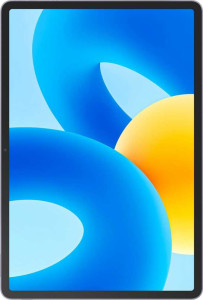
Huawei MatePad Air (2025) Huawei MatePad Pro 12.2 (2025)

Overview

Welcome to our in-depth comparison of the Huawei MatePad Air (2025) and the Huawei MatePad Pro 12.2 (2025) — two premium Android tablets that share a surprising amount of common ground while diverging in some truly meaningful ways. Both tablets arrive with identical storage, RAM, and battery capacity, yet they take very different paths when it comes to display technology, onboard sensors, and charging capabilities. Read on to see which one earns a place in your hands.

Common Features

  • Neither product includes a stylus in the box.
  • Neither product comes with a detachable keyboard.
  • Neither product has a backlit keyboard.
  • Neither product offers water resistance.
  • Tilt sensitivity is not supported on either product.
  • Both products share the same display resolution of 2800 x 1840 px.
  • Both products feature a 144Hz display refresh rate.
  • Neither product uses branded damage-resistant glass.
  • HDR10 support is not available on either product.
  • Both products have a touchscreen display.
  • Neither product has a sapphire glass display.
  • HDR10+ support is not available on either product.
  • Both products come with 512GB of internal storage.
  • Both products are equipped with 12GB of RAM.
  • Both products use the Mali-G57 GPU.
  • Neither product has an external memory slot.
  • Both products are built on a 5 nm semiconductor process.
  • Both products support 64-bit processing.
  • Both products have integrated LTE.
  • Both products use big.LITTLE CPU technology.
  • Both products feature an 8MP front camera.
  • Both products support 4K video recording at 30 fps on the main camera.
  • Both products have a flash.
  • Both products have a front camera.
  • Both products have a built-in HDR mode.
  • Panorama shooting is not available in-camera on either product.
  • Both products support touch autofocus.
  • Neither product offers optical zoom.
  • Neither product supports aptX.
  • Neither product supports aptX HD.
  • Neither product supports LDAC.
  • Neither product supports aptX Low Latency.
  • Neither product supports aptX Adaptive.
  • Neither product supports aptX Lossless.
  • Both products have stereo speakers.
  • Neither product has a 3.5mm audio jack.
  • Both products have a 10100 mAh battery.
  • Wireless charging is not available on either product.
  • Both products have a battery level indicator.
  • Both products have a rechargeable battery.
  • Neither product has a removable battery.
  • Both products support Wi-Fi 4, Wi-Fi 5, Wi-Fi 6, and Wi-Fi 7.
  • Both products offer camera and microphone privacy options.
  • Both products support split-screen multitasking.
  • Both products have a dark mode.
  • Both products include a battery health check feature.
  • Both products have a USB Type-C port.
  • Neither product has a cellular module.
  • Neither product supports 5G.

Main Differences

  • Weight is 555 g on Huawei MatePad Air (2025) and 508 g on Huawei MatePad Pro 12.2 (2025).
  • Thickness is 5.9 mm on Huawei MatePad Air (2025) and 5.5 mm on Huawei MatePad Pro 12.2 (2025).
  • Width is 270 mm on Huawei MatePad Air (2025) and 271.3 mm on Huawei MatePad Pro 12.2 (2025).
  • Height is 183 mm on Huawei MatePad Air (2025) and 182.5 mm on Huawei MatePad Pro 12.2 (2025).
  • Volume is 291.519 cm³ on Huawei MatePad Air (2025) and 272.317375 cm³ on Huawei MatePad Pro 12.2 (2025).
  • Screen size is 12″ on Huawei MatePad Air (2025) and 12.2″ on Huawei MatePad Pro 12.2 (2025).
  • Pixel density is 279 ppi on Huawei MatePad Air (2025) and 275 ppi on Huawei MatePad Pro 12.2 (2025).
  • The display type is LCD IPS on Huawei MatePad Air (2025) and OLED/AMOLED on Huawei MatePad Pro 12.2 (2025).
  • Anti-reflection coating is present on Huawei MatePad Pro 12.2 (2025) but not available on Huawei MatePad Air (2025).
  • An e-paper display is present on Huawei MatePad Pro 12.2 (2025) but not on Huawei MatePad Air (2025).
  • CPU speed is 1 x 3.13 & 3 x 2.54 & 4 x 2.05 GHz on Huawei MatePad Air (2025) and 1 x 2.62 & 3 x 2.15 & 4 x 1.53 GHz on Huawei MatePad Pro 12.2 (2025).
  • The front camera aperture is f/2.2 on Huawei MatePad Air (2025) and f/2.0 on Huawei MatePad Pro 12.2 (2025).
  • Fast charging is supported on Huawei MatePad Air (2025) but not available on Huawei MatePad Pro 12.2 (2025).
  • GPS is present on Huawei MatePad Pro 12.2 (2025) but not available on Huawei MatePad Air (2025).
  • A fingerprint scanner is present on Huawei MatePad Pro 12.2 (2025) but not available on Huawei MatePad Air (2025).
  • A gyroscope is present on Huawei MatePad Pro 12.2 (2025) but not available on Huawei MatePad Air (2025).
  • A compass is present on Huawei MatePad Pro 12.2 (2025) but not available on Huawei MatePad Air (2025).
Specs Comparison
Huawei MatePad Air (2025)

Huawei MatePad Air (2025)

Huawei MatePad Pro 12.2 (2025)

Huawei MatePad Pro 12.2 (2025)

Design:
weight 555 g 508 g
thickness 5.9 mm 5.5 mm
width 270 mm 271.3 mm
height 183 mm 182.5 mm
volume 291.519 cm³ 272.317375 cm³
Stylus included
Has a detachable keyboard
Has a backlit keyboard
water resistance None None
Has tilt sensitivity

Both tablets share a remarkably slim profile, but the MatePad Pro 12.2 holds a measurable edge in physical refinement. At 5.5 mm thick and 508 g, it is noticeably lighter and thinner than the MatePad Air (2025), which measures 5.9 mm and weighs 555 g — a difference of 47 g and 0.4 mm. While those figures may sound marginal on paper, in extended one-handed use or when slipping the device into a bag repeatedly throughout the day, that gap becomes perceptible and favors the Pro.

Footprint-wise, the two devices are nearly identical — widths of 270 mm vs. 271.3 mm and heights of 183 mm vs. 182.5 mm — meaning they occupy essentially the same desk or lap space. However, the volume difference tells a clearer story: the MatePad Air displaces 291.5 cm³ versus the Pro's 272.3 cm³, confirming that the Pro is the more compact engineering achievement despite similar external dimensions.

On accessories and durability, both tablets are on equal footing: neither includes a stylus, neither offers a detachable or backlit keyboard, and neither carries any water resistance rating. These are purely shared omissions with no differentiator between the two. Overall, the MatePad Pro 12.2 (2025) has a clear design advantage — it is lighter, slimmer, and more volume-efficient — making it the better choice for users who prioritize portability and premium build feel.

Display:
screen size 12" 12.2"
resolution 2800 x 1840 px 2800 x 1840 px
pixel density 279 ppi 275 ppi
Display type LCD, IPS OLED/AMOLED
refresh rate 144Hz 144Hz
has branded damage-resistant glass
has anti-reflection coating
supports HDR10
has a touch screen
Has sapphire glass display
supports HDR10+
Has an e-paper display

The most consequential difference here is the panel technology. The MatePad Air (2025) uses an LCD IPS display, while the MatePad Pro 12.2 (2025) steps up to an OLED/AMOLED panel. In practice, this means the Pro delivers true blacks, higher contrast ratios, and more vivid color reproduction — advantages that are immediately visible when watching video content or working with photography. LCD panels, by contrast, rely on a backlight that cannot be fully extinguished, resulting in less punchy blacks and typically lower peak contrast.

Where the two tablets converge is notable: both share the same 2800 x 1840 px resolution and a 144Hz refresh rate, ensuring equally smooth scrolling and responsiveness. Pixel density is virtually identical at 279 ppi versus 275 ppi — a gap too small to perceive in everyday use. The Pro's anti-reflection coating is a meaningful practical bonus, reducing glare in bright or outdoor environments where the Air would struggle more. Additionally, the Pro's e-paper display mode — absent on the Air — is a standout feature for users who read long-form text, offering a paper-like viewing experience that reduces eye strain significantly during extended sessions.

The MatePad Pro 12.2 (2025) wins this category decisively. Its OLED panel alone would be enough to tip the scales, but the combination of anti-reflection coating and an e-paper mode makes its display package meaningfully more versatile and better suited to a wider range of real-world use cases than the Air's LCD screen.

Performance:
internal storage 512GB 512GB
RAM 12GB 12GB
GPU name Mali-G57 Mali-G57
CPU speed 1 x 3.13 & 3 x 2.54 & 4 x 2.05 GHz 1 x 2.62 & 3 x 2.15 & 4 x 1.53 GHz
has an external memory slot
semiconductor size 5 nm 5 nm
Supports 64-bit
Has integrated LTE
Uses big.LITTLE technology
DirectX version DirectX 12 DirectX 12
Has integrated graphics
L2 cache 0.512 MB 0.512 MB
CPU threads 8 threads 8 threads
Supports ECC memory
RAM speed 2750 MHz 2750 MHz
Has TrustZone
L1 cache 64 KB 64 KB
turbo clock speed 3.3GHz 3.3GHz
Thermal Design Power (TDP) 6W 6W
L2 core 0.256 MB/core 0.256 MB/core
L3 cache 4 MB 4 MB
L3 core 2 MB/core 2 MB/core
maximum memory bandwidth 44 GB/s 44 GB/s
OpenGL ES version 3.2 3.2
OpenCL version 2 2

Strip away the surface specs and these two tablets are, in almost every meaningful way, the same machine. Both carry 12GB of RAM, 512GB of internal storage, the same Mali-G57 GPU, identical 5nm fabrication, and a matching 44 GB/s memory bandwidth ceiling. Cache hierarchy, TDP, RAM speed, graphics API support — all identical. For the vast majority of tasks, from multitasking to gaming to creative workloads, users of either device will have an effectively indistinguishable experience.

The one genuine differentiator is CPU clock speed. The MatePad Air (2025) runs its cores at 1 x 3.13 GHz / 3 x 2.54 GHz / 4 x 2.05 GHz, while the MatePad Pro 12.2 (2025) clocks in lower across all core clusters at 1 x 2.62 GHz / 3 x 2.15 GHz / 4 x 1.53 GHz. In sustained CPU-bound workloads — think document rendering, compression tasks, or complex calculations — the Air's higher base frequencies give it a tangible throughput advantage. Curiously, both share the same 3.3 GHz turbo clock, meaning burst performance headroom is equal; the gap only materializes under sustained load where sustained frequencies matter most.

The MatePad Air (2025) earns a narrow but clear performance edge in this category purely on the strength of its higher CPU clock speeds. That said, given how much of the underlying silicon is shared, real-world perceptible differences will be limited to CPU-intensive scenarios. For everyday productivity or media consumption, these two tablets are functionally tied.

Cameras:
megapixels (front camera) 8MP 8MP
video recording (main camera) 2160 x 30 fps 2160 x 30 fps
has a flash
has a front camera
has a built-in HDR mode
can create panoramas in-camera
has touch autofocus
optical zoom 0x 0x
has a BSI sensor
has manual white balance
has a CMOS sensor
supports HDR10 recording
has continuous autofocus when recording movies
supports Dolby Vision recording
Has a front-facing LED flash
number of flash LEDs 1 1
has manual ISO
has a video light
wide aperture (front camera) 2.2f 2f
Shoots 360° panorama
has a serial shot mode
has built-in optical image stabilization
has 3D photo/video recording capabilities
Has a dual-tone LED flash
has manual focus
Has a RGB LED flash
has manual exposure
has manual shutter speed

Tablet cameras are rarely a primary purchase driver, and looking at these two side by side, it is easy to see why the category often gets treated as an afterthought. The MatePad Air (2025) and MatePad Pro 12.2 (2025) are essentially photographically identical: both offer an 8MP front camera, 4K at 30fps video recording, HDR mode, continuous autofocus during video, and a solid manual controls suite covering ISO, white balance, focus, and exposure. For video calls, document scanning, or casual shooting, either tablet performs the same job.

The only measurable difference is the front camera aperture — the Air shoots at f/2.2 while the Pro opens slightly wider at f/2.0. A wider aperture admits more light, which in practical terms means the Pro's selfie camera will perform marginally better in dim environments, producing slightly brighter and cleaner video call images when lighting conditions are less than ideal. It is a subtle advantage, but the only one the data supports.

Given how little separates them, this category is effectively a tie. The Pro's f/2.0 aperture gives it a technical edge in low-light front-camera scenarios, but the gap is too narrow to be a deciding factor for most users. Anyone prioritizing camera capability should treat both tablets as equivalent for practical purposes.

Audio:
has aptX
has aptX HD
has LDAC
has aptX Low Latency
has aptX Adaptive
has aptX Lossless
has stereo speakers
has a socket for a 3.5 mm audio jack
Has a radio

Audio is one area where these two tablets offer no grounds for differentiation whatsoever. Both the MatePad Air (2025) and the MatePad Pro 12.2 (2025) feature stereo speakers, omit a 3.5mm headphone jack, and lack support for any high-resolution Bluetooth audio codec — no aptX, no LDAC, no aptX Adaptive or any of its variants. Wired audio enthusiasts will need a USB-C adapter on either device, and audiophiles streaming to Bluetooth headphones will be limited to standard codec quality on both.

The absence of advanced Bluetooth codecs like LDAC or aptX Adaptive is worth noting for users who own high-end wireless headphones. These codecs enable significantly higher bitrate transmission over Bluetooth, preserving more audio detail than standard SBC or AAC. Neither tablet supports them, meaning premium wireless headphones will not operate at their full potential with either device — a shared limitation that should factor into the decision for audio-focused users.

This category is an unambiguous tie. Every audio-related spec is identical across both tablets, with no advantage on either side. The choice between them should rest entirely on the differentiators found in other spec groups.

Battery:
battery power 10100 mAh 10100 mAh
Supports fast charging
has wireless charging
has a battery level indicator
has a rechargeable battery
has a removable battery

Raw battery capacity is identical here — both tablets carry a 10100 mAh cell, meaning neither has an inherent advantage in how long it runs between charges. All else being equal, users can expect comparable screen-on time from either device under similar workloads.

Where they diverge is charging speed. The MatePad Air (2025) supports fast charging, while the MatePad Pro 12.2 (2025) does not. In daily use, this distinction matters more than it might initially appear. Fast charging can take a tablet from near-empty to a usable charge level in a fraction of the time, making it significantly more practical for users who charge opportunistically — during a meeting break, between flights, or before heading out. The Pro, lacking this feature, will spend considerably more time tethered to a power source to reach the same charge level.

The MatePad Air (2025) takes a clear win in this category. With an equivalent battery capacity but the added convenience of fast charging, it is the more practical choice for anyone who values flexibility in their charging routine. Neither tablet supports wireless charging, so that shared omission does not factor into the outcome.

Connectivity & Features:
release date August 2025 May 2025
Wi-Fi version Wi-Fi 4 (802.11n), Wi-Fi 5 (802.11ac), Wi-Fi 6 (802.11ax), Wi-Fi 7 (802.11be) Wi-Fi 4 (802.11n), Wi-Fi 5 (802.11ac), Wi-Fi 6 (802.11ax), Wi-Fi 7 (802.11be)
has camera/microphone privacy options
supports split screen
has dark mode
has battery health check
Has USB Type-C
has a cellular module
has 5G support
is a multi-user system
gets direct OS updates
has GPS
has a child lock
has an HDMI output
has NFC
Has a fingerprint scanner
USB version 3.2 3.2
Supports widgets
Bluetooth version 5.2 5.2
has a gyroscope
has a compass
supports Wi-Fi
Has sharing intents
Has customizable notifications
Uses 3D facial recognition
supports Galileo
Has a barometer
has an accelerometer
has voice commands
Has an iris scanner
Has a built-in projector
supports Ethernet
Has an infrared sensor
Tracks the current position of a mobile device

Shared connectivity is strong across both tablets — Wi-Fi 7, Bluetooth 5.2, and USB 3.2 are present on each, ensuring fast wireless throughput and modern wired connectivity. Neither device includes cellular, 5G, NFC, or HDMI output, so those omissions are equally irrelevant to any decision between them. Where the comparison gets interesting is in the sensor suite, where the MatePad Pro 12.2 (2025) pulls meaningfully ahead.

The Pro adds GPS, a gyroscope, and a compass — none of which are present on the MatePad Air (2025). GPS enables accurate real-world location tracking without relying on Wi-Fi triangulation, making the Pro a far more capable companion for navigation and location-aware applications. The gyroscope unlocks proper motion sensing, which matters for augmented reality apps, precise screen rotation, and immersive gaming. The compass completes the orientation picture for mapping use cases. On top of all this, the Pro also includes a fingerprint scanner, offering a faster and more secure biometric unlock method that the Air entirely lacks.

The MatePad Pro 12.2 (2025) wins this category clearly. Its additional sensors — particularly GPS and the fingerprint scanner — are not niche features; they are practical, everyday utilities that the Air simply cannot match. Users who rely on navigation, motion-sensitive apps, or convenient biometric security will find the Air's sensor gaps a tangible limitation in real-world use.

Comparison Summary & Verdict

After examining every spec, a clear picture emerges of two tablets built for different priorities. The Huawei MatePad Air (2025) edges ahead with a faster CPU clock speed and fast charging support, making it a compelling choice for users who demand raw performance and quicker top-ups. The Huawei MatePad Pro 12.2 (2025), on the other hand, distinguishes itself with an OLED/AMOLED display, an anti-reflection coating, GPS, a fingerprint scanner, a gyroscope, and a compass — a richer feature set that suits creative professionals and frequent travelers alike. Both tablets share the same 10100 mAh battery, 12 GB of RAM, and 512 GB of storage, so the decision ultimately comes down to whether you prioritize display quality and sensor depth or raw speed and faster charging.

Huawei MatePad Air (2025)
Buy Huawei MatePad Air (2025) if...

Buy the Huawei MatePad Air (2025) if you prioritize a faster processor and fast charging support over a more feature-rich sensor suite.

Huawei MatePad Pro 12.2 (2025)
Buy Huawei MatePad Pro 12.2 (2025) if...

Buy the Huawei MatePad Pro 12.2 (2025) if you want an OLED display with anti-reflection coating, plus built-in GPS, a fingerprint scanner, gyroscope, and compass.