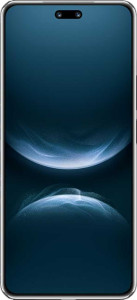
Wireless connectivity is another area where the Nova 14 Pro pulls meaningfully ahead. Most notably, it supports 5G, while the Nova 14i is limited to 4G LTE — a distinction that will matter increasingly as 5G infrastructure expands and data-heavy use cases like streaming and cloud gaming become more common. On Wi-Fi, the gap is equally significant: the Pro supports Wi-Fi 6 and Wi-Fi 7 alongside older standards, while the Nova 14i tops out at Wi-Fi 5. Wi-Fi 6 and 7 deliver higher throughput, lower latency, and better performance in congested environments like offices or apartment buildings with many connected devices. The Pro also runs Bluetooth 5.2 versus the Nova 14i's Bluetooth 5.0, offering marginally improved connection stability and efficiency.
Beyond radio connectivity, the Nova 14 Pro carries two hardware features absent on the Nova 14i: a gyroscope and an infrared sensor. The gyroscope enables more precise motion-based interactions — relevant for gaming, AR applications, and image stabilization — while the infrared sensor allows the phone to function as a universal remote control for TVs and other IR-compatible appliances. Both are practical additions that expand the phone's everyday utility. The two devices are otherwise evenly matched on shared features: dual SIM, NFC, fingerprint scanner, GPS, compass, and USB-C.
The Nova 14 Pro is the clear winner in this category. Its 5G support, newer Wi-Fi standards, gyroscope, and infrared blaster collectively represent a substantially more future-ready and feature-complete connectivity package than what the Nova 14i offers.