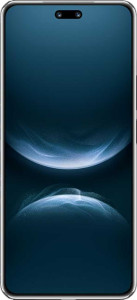
Huawei Nova 14 Pro
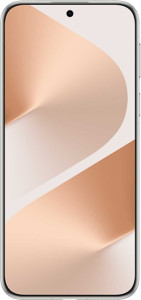
Huawei Pura 80

Huawei Nova 14 Pro Huawei Pura 80

Overview

Welcome to this in-depth spec comparison between the Huawei Nova 14 Pro and the Huawei Pura 80. Both devices share a strong foundation — OLED displays, 12GB RAM, and 5G connectivity — yet they diverge in meaningful ways across water resistance, camera capabilities, chipset architecture, and charging technology. Read on to find out which of these two Huawei smartphones best matches your priorities.

Common Features

  • Neither product has a rugged build.
  • Neither product can be folded.
  • Both products feature an OLED/AMOLED display.
  • Both products have a 120Hz refresh rate.
  • Both products have a 300Hz touch sampling rate.
  • Both products have branded damage-resistant glass.
  • HDR10+ support is not available on either product.
  • Always-On Display is available on both products.
  • Dolby Vision support is not available on either product.
  • Neither product has a secondary screen.
  • Both products come with 12GB of RAM.
  • Both products have integrated LTE.
  • Both products support 64-bit processing.
  • Both products use big.LITTLE technology.
  • Both products have a Thermal Design Power of 6W.
  • Both products feature a multi-lens main camera with optical image stabilization.
  • Both products record main camera video at 2160 x 30 fps.
  • Both products have a CMOS sensor and phase-detection autofocus.
  • Both products support fast charging and come with a charger in the box.
  • Neither product has a removable battery.
  • Both products lack a 3.5mm audio jack but feature stereo speakers.
  • LDAC support is available on both products.
  • Both products support 5G, dual SIM, NFC, USB Type-C, and Bluetooth 5.2.
  • Neither product has an external memory slot.
  • Both products have a fingerprint scanner.
  • Camera and microphone privacy options are available on both products.
  • Dark mode is available on both products.
  • Both products support split screen.
  • Neither product gets direct OS updates.
  • Both products have a video light but neither has a sapphire glass or curved display.

Main Differences

  • Water resistance is rated as water resistant on Huawei Nova 14 Pro and waterproof on Huawei Pura 80.
  • The IP rating is IP65 on Huawei Nova 14 Pro and IP68 on Huawei Pura 80.
  • Weight is 207g on Huawei Nova 14 Pro and 211g on Huawei Pura 80.
  • Thickness is 7.8mm on Huawei Nova 14 Pro and 8.2mm on Huawei Pura 80.
  • Height is 163.4mm on Huawei Nova 14 Pro and 157.7mm on Huawei Pura 80.
  • Screen size is 6.78″ on Huawei Nova 14 Pro and 6.6″ on Huawei Pura 80.
  • Pixel density is 447 ppi on Huawei Nova 14 Pro and 459 ppi on Huawei Pura 80.
  • HDR10 support is present on Huawei Nova 14 Pro but not available on Huawei Pura 80.
  • Internal storage is 512GB on Huawei Nova 14 Pro and 1024GB on Huawei Pura 80.
  • The chipset is HiSilicon Kirin 8000 on Huawei Nova 14 Pro and HiSilicon Kirin 9010 on Huawei Pura 80.
  • The GPU is Maleoon 910 on Huawei Nova 14 Pro and Mali-G57 on Huawei Pura 80.
  • Semiconductor size is 5nm on Huawei Nova 14 Pro and 7nm on Huawei Pura 80.
  • RAM speed is 2200 MHz on Huawei Nova 14 Pro and 2750 MHz on Huawei Pura 80.
  • Main camera megapixels are 50 & 12 & 8 MP on Huawei Nova 14 Pro and 50 & 13 & 12 MP on Huawei Pura 80.
  • Optical zoom is 3x on Huawei Nova 14 Pro and 5x on Huawei Pura 80.
  • The front camera is dual-lens (50 & 8MP) on Huawei Nova 14 Pro, while Huawei Pura 80 has a single 13MP front camera.
  • Dual-tone LED flash is absent on Huawei Nova 14 Pro but present on Huawei Pura 80.
  • Battery capacity is 5500 mAh on Huawei Nova 14 Pro and 5600 mAh on Huawei Pura 80.
  • Wireless charging is not available on Huawei Nova 14 Pro but is supported on Huawei Pura 80.
  • Charging speed is 100W on Huawei Nova 14 Pro and 66W on Huawei Pura 80.
  • aptX support is present on Huawei Nova 14 Pro but not available on Huawei Pura 80.
  • Emergency SOS via satellite is not available on Huawei Nova 14 Pro but is supported on Huawei Pura 80.
Specs Comparison
Huawei Nova 14 Pro

Huawei Nova 14 Pro

Huawei Pura 80

Huawei Pura 80

Design:
water resistance Water resistant Waterproof
weight 207 g 211 g
thickness 7.8 mm 8.2 mm
width 75 mm 74.4 mm
height 163.4 mm 157.7 mm
volume 95.589 cm³ 96.209616 cm³
Ingress Protection (IP) rating IP65 IP68
has a rugged build
can be folded

The most meaningful design difference between these two devices lies in their water protection. The Nova 14 Pro carries an IP65 rating, meaning it can handle sustained low-pressure water jets — fine for rain or a splash, but not submersion. The Pura 80 steps up to IP68, which certifies it against immersion in water at depth for a defined duration. In practical terms, this is the difference between a phone that survives a rainstorm and one you can accidentally drop in a sink or shallow pool without consequence. For users who frequently use their phone outdoors or near water, this is a genuinely meaningful real-world advantage for the Pura 80.

In terms of form factor, the two phones tell slightly different stories. The Nova 14 Pro is notably taller at 163.4 mm versus 157.7 mm for the Pura 80, making the latter noticeably more pocketable and easier to handle one-handed. The Nova 14 Pro compensates with a slimmer profile at 7.8 mm thick compared to the Pura 80's 8.2 mm, so it may feel more elegant in hand despite its taller frame. Weight difference is negligible — just 4 grams separates them — so neither has a practical ergonomic edge there.

Overall, the Pura 80 holds the clearer advantage in this category. Its superior IP68 waterproofing is a significant durability upgrade over the Nova 14 Pro's IP65, and its more compact height makes it easier to use daily. The Nova 14 Pro's slimmer build is a minor point in its favor, but it doesn't offset the more capable water resistance of the Pura 80. Neither device offers a rugged build or a foldable form factor, so those are non-factors here.

Display:
Display type OLED/AMOLED OLED/AMOLED
screen size 6.78" 6.6"
pixel density 447 ppi 459 ppi
resolution 1224 x 2776 px 1256 x 2760 px
refresh rate 120Hz 120Hz
touch sampling rate 300Hz 300Hz
has branded damage-resistant glass
supports HDR10
supports HDR10+
Always-On Display
supports Dolby Vision
Has a secondary screen
has a touch screen

Both phones use OLED/AMOLED panels and share identical refresh and touch sampling rates — 120Hz and 300Hz respectively — so motion smoothness and responsiveness are equal across the board. Where they diverge is screen size and pixel density. The Nova 14 Pro offers a larger 6.78″ display, which translates to more comfortable media consumption and easier text input, while the Pura 80's 6.6″ screen pairs with its more compact body for one-handed usability. Interestingly, the smaller Pura 80 actually edges out the Nova 14 Pro on sharpness, delivering 459 ppi versus 447 ppi — though in practice, both figures sit well above the threshold where individual pixels become visible to the naked eye, so this difference is imperceptible during normal use.

One spec worth flagging is HDR support. The Nova 14 Pro supports HDR10, meaning it can render content with expanded dynamic range when the source material calls for it — useful for streaming platforms that serve HDR-flagged video. The Pura 80 lacks HDR10 support entirely, which is a genuine omission for a premium device. For users who stream a lot of high-quality video content, this gap matters: the Nova 14 Pro will display compatible content with greater contrast depth and color accuracy in those scenarios.

On balance, the Nova 14 Pro takes a meaningful edge in this category. Its HDR10 support is a concrete functional advantage that directly improves the viewing experience with compatible content — something the Pura 80 simply cannot match. The larger screen adds further appeal for media and productivity users. The Pura 80's marginally higher pixel density is technically noted but practically irrelevant at these density levels. Both displays are otherwise well-equipped, but the Nova 14 Pro delivers more where it counts for display quality.

Performance:
internal storage 512GB 1024GB
RAM 12GB 12GB
Chipset (SoC) name HiSilicon Kirin 8000 HiSilicon Kirin 9010
GPU name Maleoon 910 Mali-G57
CPU speed 1 x 2.2 & 3 x 1.5 & 4 x 2 GHz 1 x 2.3 & 4 x 2.18 & 3 x 1.55 GHz
Has integrated LTE
RAM speed 2200 MHz 2750 MHz
semiconductor size 5 nm 7 nm
Supports 64-bit
Has integrated graphics
Uses big.LITTLE technology
Thermal Design Power (TDP) 6W 6W

The silicon story here is genuinely interesting because the two phones trade advantages across different dimensions. The Nova 14 Pro runs on the Kirin 8000 built on a 5nm process node, while the Pura 80 uses the Kirin 9010 on a larger 7nm node. A smaller fabrication process typically translates to greater power efficiency and more transistors in the same die area — meaning the Nova 14 Pro's chip is architecturally more modern at the silicon level, despite carrying a lower model number. Both chips share the same 6W TDP, so thermal behavior should be comparable in sustained workloads.

Where the Pura 80 reasserts itself is in memory bandwidth and raw storage. Its RAM operates at 2750 MHz compared to the Nova 14 Pro's 2200 MHz, a gap that can meaningfully accelerate data-intensive tasks like multitasking, large file handling, and AI-driven features. More strikingly, the Pura 80 ships with 1TB of internal storage — double the Nova 14 Pro's 512GB. For power users who store large media libraries, shoot high-resolution video, or avoid cloud storage, this difference is substantial and unlikely to be ignored.

Declaring a clear winner here depends on what the user values. The Nova 14 Pro holds an edge in process node efficiency with its 5nm chip, which could mean slightly better long-term performance per watt. But the Pura 80 counters with faster RAM and a commanding storage advantage. For most users, the Pura 80's practical benefits — more headroom for files and snappier memory throughput — will carry more day-to-day weight than the architectural edge of a smaller node.

Cameras:
megapixels (main camera) 50 & 12 & 8 MP 50 & 13 & 12 MP
wide aperture (main camera) 1.4 & 2.4 & 2.2f 1.4 & 2.2 & 3.4f
Has a dual-lens (or multi-lens) main camera
megapixels (front camera) 50 & 8MP 13MP
has built-in optical image stabilization
video recording (main camera) 2160 x 30 fps 2160 x 30 fps
Has a dual-tone LED flash
number of flash LEDs 2 2
has a BSI sensor
has a CMOS sensor
has continuous autofocus when recording movies
Has phase-detection autofocus for photos
supports slow-motion video recording
has a built-in HDR mode
has manual exposure
has a flash
optical zoom 3x 5x
has manual ISO
has a serial shot mode
has manual focus
has a front camera
Has laser autofocus
Shoots 360° panorama
has manual white balance
shoots raw
has touch autofocus
has manual shutter speed
can create panoramas in-camera
wide aperture (front camera) 2.2 & 2f 2f
Has timelapse function
Has a front-facing LED flash
has a dual-lens (or multi-lens) front camera
supports HDR10 recording
supports Dolby Vision recording
has a front-facing camera under the display
Has a RGB LED flash
has 3D photo/video recording capabilities

Rear camera hardware is where these two phones diverge most sharply. Both lead with a 50MP f/1.4 primary sensor and OIS, putting them on equal footing for standard shots in good light. The critical split comes with telephoto reach: the Pura 80 delivers 5x optical zoom versus the Nova 14 Pro's 3x. That extra reach is not a marginal improvement — it meaningfully expands the useful range for portraits, wildlife, events, and any scenario where you cannot physically get closer to your subject. The trade-off is that the Pura 80's telephoto lens has a narrower aperture at f/3.4 compared to the Nova 14 Pro's f/2.2 on its third lens, so the Nova 14 Pro gathers more light through its telephoto element. Still, longer optical reach without digital cropping generally produces cleaner, more detailed results at distance.

The selfie camera comparison flips the advantage. The Nova 14 Pro sports a dual front camera system50 & 8MP — giving users both a high-resolution primary and a secondary lens for flexibility in framing or depth. The Pura 80 uses a single 13MP front shooter, which is a notable step down for users who prioritize selfie quality or video calls. Additionally, the Pura 80 includes a dual-tone LED flash on the rear, which helps produce more natural-looking skin tones in flash photography by mixing warm and cool light — a small but practical refinement the Nova 14 Pro lacks.

Taken together, this category is genuinely split by use case. The Pura 80 is the stronger choice for users who shoot at distance, thanks to its superior 5x optical zoom. The Nova 14 Pro is the better pick for selfie-focused users, offering a far more capable dual front camera system. For general photography, the rear systems are closely matched, but the Pura 80's telephoto advantage is the single biggest differentiator in a camera comparison — giving it a slight overall edge for rear versatility.

Operating system:
has camera/microphone privacy options
has dark mode
has battery health check
Has customizable notifications
supports split screen
gets direct OS updates
Can be used as a PC
Has sharing intents
has a child lock
Supports widgets
has voice commands
Tracks the current position of a mobile device
is a multi-user system

Across every operating system feature captured in this dataset, the Huawei Nova 14 Pro and Pura 80 are in complete lockstep. Both support the same privacy controls, multitasking capabilities like split-screen, productivity features such as widgets and voice commands, and user management tools including a child lock and multi-user mode. There is not a single differentiating data point between them in this category.

The one shared characteristic worth flagging for prospective buyers is that neither device receives direct OS updates. This is a meaningful consideration for users who factor long-term software support and security patching into their purchasing decision, as both phones are equally positioned — or equally limited — on that front.

This category is an unambiguous tie. The software feature sets are identical based on the available data, and neither device holds any advantage over the other here. Buyers should weight other spec groups more heavily when deciding between these two phones.

Battery:
battery power 5500 mAh 5600 mAh
has wireless charging
Supports fast charging
charging speed 100W 66W
comes with a charger
has a removable battery
has a battery level indicator
has a rechargeable battery

Battery capacity is virtually identical between the two — 5500 mAh on the Nova 14 Pro versus 5600 mAh on the Pura 80. A 100 mAh difference is negligible in real-world endurance terms; day-to-day battery life will be determined far more by software optimization and screen-on time than by this marginal gap. Both phones include a charger in the box, so neither user is left hunting for accessories.

The substantive split comes down to charging philosophy. The Nova 14 Pro supports 100W wired fast charging, which is a meaningful speed advantage — at that wattage, a near-full charge can realistically be achieved in well under an hour. The Pura 80 charges at 66W, which is still fast by most standards but noticeably slower. However, the Pura 80 counters with wireless charging support — a convenience the Nova 14 Pro lacks entirely. For users who use a charging pad on their desk or nightstand, this is a genuine quality-of-life feature that removes the need to plug in a cable every time.

This category comes down to lifestyle preference rather than one phone being definitively ahead. The Nova 14 Pro is the better pick for users who want the fastest possible top-up when time is short. The Pura 80 suits those who value the effortless convenience of wireless charging as part of their daily routine. Given that wireless charging is an additive capability — the Pura 80 still supports fast wired charging, just at a lower ceiling — it holds a slight overall edge for versatility, even if its wired speeds trail the Nova 14 Pro.

Audio:
has a socket for a 3.5 mm audio jack
has stereo speakers
has aptX
has LDAC
has aptX HD
has aptX Adaptive
has aptX Lossless
Has a radio

Neither phone includes a 3.5mm headphone jack, so both users are committed to wireless or USB-C audio. On the speaker side, the playing field is level — stereo speakers are present on both devices, meaning audio is spatially split across at least two drivers for a wider, more immersive sound compared to a mono setup. The more interesting comparison lives in Bluetooth audio codec support.

Both phones support LDAC, Sony's high-resolution wireless codec that transmits up to three times more data than standard Bluetooth audio. This makes both devices capable of delivering near-lossless audio quality to compatible headphones — a meaningful capability for audiophiles. The Nova 14 Pro, however, adds aptX support on top of that. aptX is Qualcomm's codec standard, widely supported across a broad range of wireless headphones and speakers. Having both LDAC and aptX means the Nova 14 Pro can negotiate a higher-quality connection with a wider variety of Bluetooth audio devices.

The Nova 14 Pro takes a clear, if narrow, edge in this category. Its additional aptX support makes it more compatible with the broader ecosystem of wireless audio hardware, while both phones remain equally capable when paired with LDAC-compatible devices. For users with aptX headphones or speakers, the Nova 14 Pro will achieve better-than-SBC audio quality where the Pura 80 would fall back to a standard codec. It is not a dramatic gap, but it is a real one.

Connectivity & Features:
release date May 2025 June 2025
has 5G support
Wi-Fi version Wi-Fi 4 (802.11n), Wi-Fi 6 (802.11ax), Wi-Fi 5 (802.11ac), Wi-Fi 7 (802.11be) Wi-Fi 4 (802.11n), Wi-Fi 5 (802.11ac), Wi-Fi 6 (802.11ax), Wi-Fi 7 (802.11be)
SIM cards 2 SIM 2 SIM
Bluetooth version 5.2 5.2
has an external memory slot
Has USB Type-C
USB version 2 2
has NFC
Has a fingerprint scanner
has emergency SOS via satellite
has crash detection
is DLNA-certified
has a gyroscope
supports ANT+
Has a heart rate monitor
has GPS
has a compass
supports Wi-Fi
Has an infrared sensor
has an accelerometer
has a cellular module
Has a barometer
has an HDMI output
Uses 3D facial recognition
Has an iris scanner
Stylus included
supports Galileo
Has motion tracking
Has optical tracking
Has a built-in projector

For the vast majority of connectivity features, these two phones are remarkably well-matched. Both support 5G, Wi-Fi 7, Bluetooth 5.2, NFC, and USB Type-C — covering all the bases a modern smartphone user would expect. The sensor suites are identical too, including GPS, gyroscope, accelerometer, compass, and an infrared sensor useful for controlling home appliances. Dual SIM support is present on both, and neither offers expandable storage via a memory card slot.

The single differentiating feature in this entire category is emergency SOS via satellite, which is available on the Pura 80 but absent on the Nova 14 Pro. This capability allows a device to send distress signals and communicate basic emergency information via satellite when no cellular or Wi-Fi network is available — a potentially life-critical function in remote areas, hiking trips, or disaster scenarios. It is a niche feature for everyday urban users, but for anyone who spends time in areas with poor network coverage, it represents a meaningful safety net that the Nova 14 Pro simply cannot provide.

The Pura 80 takes this category by virtue of that single but significant addition. Satellite emergency SOS is not a spec that matters to every user, but when it does matter, no other connectivity feature comes close to replacing it. Everything else here is a draw — the Nova 14 Pro is not disadvantaged in day-to-day connectivity, but the Pura 80 offers a layer of safety coverage that extends beyond the reach of conventional networks.
Miscellaneous:
has a video light
Has sapphire glass display
Has a curved display
Has an e-paper display

The miscellaneous feature set for these two phones is identical across every data point available. Both include a video light — useful for illuminating subjects during video recording in low-light conditions — and neither offers a sapphire glass display, curved screen, or e-paper panel. There is nothing to separate them here.

This category is a complete tie. With no differentiating features on either side, buyers should place no weight on this group when choosing between the Nova 14 Pro and the Pura 80, and focus their decision on the more substantive differences found in other spec categories.

Comparison Summary & Verdict

After a thorough comparison, both phones prove to be capable flagships, but each suits a different type of user. The Huawei Nova 14 Pro stands out with its 100W fast charging, larger 6.78″ screen, HDR10 support, aptX audio, and a dual-lens front camera — making it an excellent choice for media enthusiasts and selfie-focused users who also value rapid battery top-ups. The Huawei Pura 80, on the other hand, excels with its IP68 waterproofing, more powerful Kirin 9010 chipset, 5x optical zoom, 1TB storage, wireless charging, and emergency SOS via satellite — positioning it as the premium, feature-complete option for power users and frequent travellers who demand the best in durability and versatility.

Huawei Nova 14 Pro
Buy Huawei Nova 14 Pro if...

Buy the Huawei Nova 14 Pro if you want a larger display, blazing-fast 100W wired charging, HDR10 support, and a dual-lens front camera for versatile selfies.

Huawei Pura 80
Buy Huawei Pura 80 if...

Buy the Huawei Pura 80 if you prioritize IP68 waterproofing, a more powerful chipset, 5x optical zoom, 1TB storage, wireless charging, and emergency satellite connectivity.