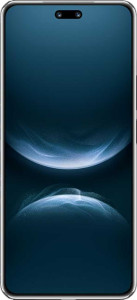
Huawei Nova 14 Pro
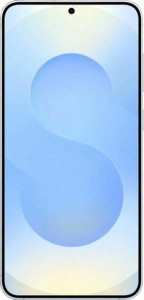
Samsung Galaxy S25

Huawei Nova 14 Pro Samsung Galaxy S25

Overview

The Huawei Nova 14 Pro and Samsung Galaxy S25 represent two distinct philosophies in the premium smartphone space. This comparison puts them head-to-head across the areas that matter most to buyers: display size and quality, raw processing power, camera versatility, and battery performance. Whether you prioritize a larger screen and faster wired charging or a more compact, feature-rich powerhouse, read on to see how every key specification stacks up between these two flagship contenders.

Common Features

  • Neither product has a rugged build.
  • Neither product can be folded.
  • Both products feature an OLED/AMOLED display.
  • Both products have a 120Hz refresh rate.
  • Both products have branded damage-resistant glass.
  • Both products support HDR10.
  • Both products have an Always-On Display.
  • Dolby Vision support is not available on either product.
  • Neither product has a secondary screen.
  • Both products have a touchscreen.
  • Both products come with 512GB of internal storage.
  • Both products have 12GB of RAM.
  • Both products have integrated LTE.
  • Both products support 64-bit processing.
  • Both products use big.LITTLE technology.
  • Both products use multithreading.
  • Both products have a multi-lens main camera with optical image stabilization.
  • Both products have a CMOS sensor.
  • Both products support continuous autofocus when recording movies.
  • Both products have phase-detection autofocus for photos.
  • Both products support slow-motion video recording.
  • Both products have a built-in HDR mode.
  • Camera and microphone privacy options are available on both products.
  • Dark mode is available on both products.
  • Battery health check is available on both products.
  • Customizable notifications are supported on both products.
  • Split screen is supported on both products.
  • Neither product gets direct OS updates.
  • Both products support fast charging.
  • Neither product has a removable battery.
  • Both products have a battery level indicator.
  • Both products have a rechargeable battery.
  • Neither product has a 3.5mm audio jack.
  • Both products have stereo speakers.
  • Both products support aptX and LDAC audio codecs.
  • aptX HD support is not available on either product.
  • Neither product has a built-in radio.
  • Both products support 5G connectivity.
  • Neither product has an external memory slot.
  • Both products have USB Type-C.
  • Both products have NFC.
  • Both products have a fingerprint scanner.
  • Emergency SOS via satellite is not available on either product.
  • Crash detection is not available on either product.
  • Neither product is DLNA-certified.
  • Both products have a video light.
  • Neither product has a sapphire glass display.
  • Neither product has a curved display.
  • Neither product has an e-paper display.

Main Differences

  • Water resistance is rated as water resistant on Huawei Nova 14 Pro and waterproof on Samsung Galaxy S25.
  • Weight is 207g on Huawei Nova 14 Pro and 162g on Samsung Galaxy S25.
  • Thickness is 7.8mm on Huawei Nova 14 Pro and 7.2mm on Samsung Galaxy S25.
  • Width is 75mm on Huawei Nova 14 Pro and 70.5mm on Samsung Galaxy S25.
  • Height is 163.4mm on Huawei Nova 14 Pro and 146.9mm on Samsung Galaxy S25.
  • Volume is 95.589 cm³ on Huawei Nova 14 Pro and 74.57 cm³ on Samsung Galaxy S25.
  • IP rating is IP65 on Huawei Nova 14 Pro and IP68 on Samsung Galaxy S25.
  • Screen size is 6.78″ on Huawei Nova 14 Pro and 6.2″ on Samsung Galaxy S25.
  • Pixel density is 447 ppi on Huawei Nova 14 Pro and 416 ppi on Samsung Galaxy S25.
  • Resolution is 1224 x 2776 px on Huawei Nova 14 Pro and 1080 x 2340 px on Samsung Galaxy S25.
  • Touch sampling rate is 300Hz on Huawei Nova 14 Pro and 240Hz on Samsung Galaxy S25.
  • HDR10+ support is present on Samsung Galaxy S25 but not available on Huawei Nova 14 Pro.
  • The chipset is HiSilicon Kirin 8000 on Huawei Nova 14 Pro and Qualcomm Snapdragon 8 Elite on Samsung Galaxy S25.
  • The GPU is Maleoon 910 on Huawei Nova 14 Pro and Adreno 830 on Samsung Galaxy S25.
  • CPU speed is 1 x 2.2 & 3 x 1.5 & 4 x 2 GHz on Huawei Nova 14 Pro and 2 x 4.47 & 6 x 3.53 GHz on Samsung Galaxy S25.
  • GPU clock speed is 750 MHz on Huawei Nova 14 Pro and 1200 MHz on Samsung Galaxy S25.
  • RAM speed is 2200 MHz on Huawei Nova 14 Pro and 5300 MHz on Samsung Galaxy S25.
  • Semiconductor size is 5nm on Huawei Nova 14 Pro and 3nm on Samsung Galaxy S25.
  • Maximum memory amount is 16GB on Huawei Nova 14 Pro and 24GB on Samsung Galaxy S25.
  • Thermal Design Power (TDP) is 6W on Huawei Nova 14 Pro and 8.2W on Samsung Galaxy S25.
  • DDR memory version is DDR4 on Huawei Nova 14 Pro and DDR5 on Samsung Galaxy S25.
  • Main camera megapixels are 50 & 12 & 8 MP on Huawei Nova 14 Pro and 50 & 12 & 10 MP on Samsung Galaxy S25.
  • Main camera wide aperture is f/1.4, f/2.4, f/2.2 on Huawei Nova 14 Pro and f/1.8, f/2.2, f/2.4 on Samsung Galaxy S25.
  • Front camera megapixels are 50 & 8 MP on Huawei Nova 14 Pro and 12 MP on Samsung Galaxy S25.
  • Main camera video recording tops out at 2160p @ 30fps on Huawei Nova 14 Pro and 4320p @ 30fps on Samsung Galaxy S25.
  • Dual-tone LED flash is present on Samsung Galaxy S25 but not available on Huawei Nova 14 Pro.
  • A BSI sensor is present on Samsung Galaxy S25 but not on Huawei Nova 14 Pro.
  • Laser autofocus is available on Huawei Nova 14 Pro but not on Samsung Galaxy S25.
  • Front camera wide aperture is f/2.2 and f/2.0 on Huawei Nova 14 Pro and f/2.2 on Samsung Galaxy S25.
  • A dual-lens front camera is present on Huawei Nova 14 Pro but not on Samsung Galaxy S25.
  • HDR10 video recording support is present on Samsung Galaxy S25 but not on Huawei Nova 14 Pro.
  • PC mode capability is available on Samsung Galaxy S25 but not on Huawei Nova 14 Pro.
  • Battery capacity is 5500 mAh on Huawei Nova 14 Pro and 4000 mAh on Samsung Galaxy S25.
  • Wireless charging is supported on Samsung Galaxy S25 but not on Huawei Nova 14 Pro.
  • Charging speed is 100W on Huawei Nova 14 Pro and 25W on Samsung Galaxy S25.
  • A charger is included in the box with Huawei Nova 14 Pro but not with Samsung Galaxy S25.
  • aptX Adaptive support is present on Samsung Galaxy S25 but not on Huawei Nova 14 Pro.
  • aptX Lossless support is present on Samsung Galaxy S25 but not on Huawei Nova 14 Pro.
  • Wi-Fi 6E (802.11ax) support is available on Samsung Galaxy S25 but not on Huawei Nova 14 Pro.
  • SIM support is dual SIM only on Huawei Nova 14 Pro and dual SIM plus 2 eSIM on Samsung Galaxy S25.
  • Bluetooth version is 5.2 on Huawei Nova 14 Pro and 5.4 on Samsung Galaxy S25.
  • USB version is USB 2.0 on Huawei Nova 14 Pro and USB 3.2 on Samsung Galaxy S25.
  • ANT+ support is present on Samsung Galaxy S25 but not on Huawei Nova 14 Pro.
  • An infrared sensor is present on Huawei Nova 14 Pro but not on Samsung Galaxy S25.
  • A barometer is present on Samsung Galaxy S25 but not on Huawei Nova 14 Pro.
Specs Comparison
Huawei Nova 14 Pro

Huawei Nova 14 Pro

Samsung Galaxy S25

Samsung Galaxy S25

Design:
water resistance Water resistant Waterproof
weight 207 g 162 g
thickness 7.8 mm 7.2 mm
width 75 mm 70.5 mm
height 163.4 mm 146.9 mm
volume 95.589 cm³ 74.56644 cm³
Ingress Protection (IP) rating IP65 IP68
has a rugged build
can be folded

The most consequential difference in this group is water protection. The Samsung Galaxy S25 carries an IP68 rating, meaning it can withstand full submersion in water — typically up to 1.5 meters for 30 minutes. The Huawei Nova 14 Pro is rated only IP65, which covers protection against low-pressure water jets but not immersion. In practice, this distinction matters: accidental drops in a sink or pool are survivable for the S25, while the Nova 14 Pro offers only splash and rain protection.

Form factor is another area where the two phones diverge sharply. At 207 g, the Nova 14 Pro is noticeably heavier than the S25's 162 g — a 45 g gap that is very perceptible during prolonged one-handed use. The Nova 14 Pro is also taller (163.4 mm vs 146.9 mm), wider (75 mm vs 70.5 mm), and slightly thicker (7.8 mm vs 7.2 mm), resulting in a significantly larger overall volume. This makes the S25 meaningfully easier to pocket and handle day-to-day.

Neither device has a rugged build or a foldable form factor, so those axes offer no differentiation. Overall, the Samsung Galaxy S25 holds a clear design advantage: it is more compact, considerably lighter, and offers superior water protection — three factors that collectively make it the more refined and practical everyday device based strictly on these specs.

Display:
Display type OLED/AMOLED OLED/AMOLED
screen size 6.78" 6.2"
pixel density 447 ppi 416 ppi
resolution 1224 x 2776 px 1080 x 2340 px
refresh rate 120Hz 120Hz
touch sampling rate 300Hz 240Hz
has branded damage-resistant glass
supports HDR10
supports HDR10+
Always-On Display
supports Dolby Vision
Has a secondary screen
has a touch screen

Both phones use OLED/AMOLED panels with a 120Hz refresh rate, damage-resistant glass, and Always-On Display support — so the baseline display experience is strong on either device. The meaningful splits emerge when you dig deeper. The Huawei Nova 14 Pro sports a larger 6.78″ screen with a sharper 447 ppi pixel density and a higher 1224 x 2776 px resolution, compared to the Galaxy S25's 6.2″ panel at 416 ppi and 1080 x 2340 px. In practice, the Nova 14 Pro's extra sharpness is perceptible when reading fine text or viewing detailed images, and the larger canvas benefits media consumption and productivity.

Where the S25 pushes back is in responsiveness and HDR support. Its 240Hz touch sampling rate trails the Nova 14 Pro's 300Hz, meaning the Nova 14 Pro registers touch input more frequently — an advantage most noticeable in fast-paced gaming. However, the S25 uniquely supports HDR10+, which adds dynamic metadata for scene-by-scene brightness optimization. The Nova 14 Pro tops out at HDR10, which uses static metadata. For streaming HDR content on compatible services, the S25 can render more nuanced contrast and highlight detail.

On balance, this group is split by use case. The Nova 14 Pro has a clear edge in raw screen real estate and pixel sharpness, while the Galaxy S25 counters with superior HDR fidelity via HDR10+. Neither wins outright, but users who prioritize display size and clarity will lean toward the Nova 14 Pro, while those who value HDR video quality will find the S25 more capable.

Performance:
internal storage 512GB 512GB
RAM 12GB 12GB
Chipset (SoC) name HiSilicon Kirin 8000 Qualcomm Snapdragon 8 Elite
GPU name Maleoon 910 Adreno 830
CPU speed 1 x 2.2 & 3 x 1.5 & 4 x 2 GHz 2 x 4.47 & 6 x 3.53 GHz
GPU clock speed 750 MHz 1200 MHz
Has integrated LTE
RAM speed 2200 MHz 5300 MHz
semiconductor size 5 nm 3 nm
Supports 64-bit
Has integrated graphics
Uses big.LITTLE technology
maximum memory amount 16GB 24GB
uses multithreading
Thermal Design Power (TDP) 6W 8.2W
DDR memory version 4 5

Storage and base RAM are identical — both phones offer 512GB of internal storage and 12GB of RAM — but the silicon powering them tells very different stories. The Galaxy S25 runs on the Qualcomm Snapdragon 8 Elite, fabbed on a cutting-edge 3nm process, while the Nova 14 Pro uses the HiSilicon Kirin 8000 on a 5nm node. The smaller process on the S25 generally translates to better performance-per-watt and more transistor density, giving it a structural efficiency advantage at the chip level.

The performance gap becomes even more pronounced across several key metrics. The S25's CPU peaks at 4.47 GHz on its prime cores, versus 2.2 GHz on the Nova 14 Pro's fastest core — a substantial clock speed advantage that impacts demanding workloads like gaming, video processing, and AI tasks. The GPU contrast is equally stark: the Adreno 830 runs at 1200 MHz compared to the Maleoon 910's 750 MHz, suggesting considerably higher graphics throughput on the S25. Memory bandwidth also favors Samsung — DDR5 RAM at 5300 MHz versus the Nova 14 Pro's DDR4 at 2200 MHz — meaning the S25 can feed its CPU and GPU data far more rapidly, reducing bottlenecks in multitasking and heavy applications.

The Samsung Galaxy S25 holds a decisive advantage in this category. Its newer process node, dramatically faster CPU and GPU clocks, next-generation memory, and higher maximum RAM ceiling of 24GB (versus 16GB) collectively position it as the significantly more capable performer. The Nova 14 Pro's lower 6W TDP suggests it runs cooler under load, but based solely on the provided specs, the S25 outclasses it in virtually every performance dimension that matters.

Cameras:
megapixels (main camera) 50 & 12 & 8 MP 50 & 12 & 10 MP
wide aperture (main camera) 1.4 & 2.4 & 2.2f 1.8 & 2.2 & 2.4f
Has a dual-lens (or multi-lens) main camera
megapixels (front camera) 50 & 8MP 12MP
has built-in optical image stabilization
video recording (main camera) 2160 x 30 fps 4320 x 30 fps
Has a dual-tone LED flash
number of flash LEDs 2 2
has a BSI sensor
has a CMOS sensor
has continuous autofocus when recording movies
Has phase-detection autofocus for photos
supports slow-motion video recording
has a built-in HDR mode
has manual exposure
has a flash
optical zoom 3x 3x
has manual ISO
has a serial shot mode
has manual focus
has a front camera
Has laser autofocus
Shoots 360° panorama
has manual white balance
shoots raw
has touch autofocus
has manual shutter speed
can create panoramas in-camera
wide aperture (front camera) 2.2 & 2f 2.2f
Has timelapse function
Has a front-facing LED flash
has a dual-lens (or multi-lens) front camera
supports HDR10 recording
supports Dolby Vision recording
has a front-facing camera under the display
Has a RGB LED flash
has 3D photo/video recording capabilities

The rear camera systems are structurally similar — both feature a triple-lens setup with a 50MP main sensor, OIS, 3x optical zoom, phase-detection autofocus, and an identical suite of manual controls including RAW capture. The meaningful divergences start with video: the Galaxy S25 tops out at 8K (4320p) at 30fps, while the Nova 14 Pro caps at 4K (2160p) at 30fps. For videographers, that is a significant ceiling difference. The S25 also adds a BSI sensor, which is designed to capture more light by repositioning the wiring layer — an advantage in low-light photography that the Nova 14 Pro's CMOS-only setup does not explicitly match. The S25 further benefits from a dual-tone LED flash, which produces more natural skin tones by blending warm and cool light; the Nova 14 Pro lacks this.

The Nova 14 Pro strikes back in a couple of areas. It includes laser autofocus, which can lock focus faster and more reliably in low-contrast or dark scenes compared to the S25's phase-detection-only approach. On the selfie side, the Nova 14 Pro fields a dual-lens front camera at 50MP + 8MP, giving users both a high-resolution main selfie shooter and a secondary option — a notable versatility advantage over the S25's single 12MP front camera.

On balance, the Galaxy S25 edges ahead for rear camera capability, led by its 8K video recording, BSI sensor, and dual-tone flash. The Nova 14 Pro counters meaningfully with laser autofocus and a more capable dual-lens selfie system, making it the stronger choice for front-camera-focused users. Those who prioritize video resolution and low-light rear photography will find the S25 the more well-rounded camera phone based strictly on these specs.

Operating system:
has camera/microphone privacy options
has dark mode
has battery health check
Has customizable notifications
supports split screen
gets direct OS updates
Can be used as a PC
Has sharing intents
has a child lock
Supports widgets
has voice commands
Tracks the current position of a mobile device
is a multi-user system

Across virtually every software feature listed, these two phones are in lockstep — both offer dark mode, split-screen multitasking, customizable notifications, widgets, voice commands, child lock, multi-user support, camera and microphone privacy controls, and device tracking. Neither receives direct OS updates according to the provided data, which applies equally to both and is worth noting for long-term software support expectations.

The single differentiator in this group is the Galaxy S25's ability to be used as a PC, a capability the Nova 14 Pro lacks. This feature — often implemented via a desktop mode when connected to an external display — allows the S25 to function as a rudimentary computer, enabling keyboard and mouse input, windowed app navigation, and a more traditional productivity workflow. For users who want to consolidate their devices or occasionally work from a hotel room or monitor without a laptop, this is a tangible real-world advantage.

Given how closely matched the two phones are across all other OS-level features, the Samsung Galaxy S25 takes a narrow but clear edge here solely on the strength of its PC mode capability. It is not a feature every user will rely on, but for those who value device versatility and mobile productivity, it is the only meaningful differentiator this group offers.

Battery:
battery power 5500 mAh 4000 mAh
has wireless charging
Supports fast charging
charging speed 100W 25W
comes with a charger
has a removable battery
has a battery level indicator
has a rechargeable battery

Battery capacity is where the Nova 14 Pro asserts a strong lead. Its 5500 mAh cell is 37.5% larger than the Galaxy S25's 4000 mAh pack — a gap wide enough to translate into a meaningfully longer time between charges under comparable usage conditions. When you factor in that the S25 carries a more power-hungry processor (as seen in the performance group), the Nova 14 Pro's capacity advantage becomes even more practically relevant for heavy users.

The charging story is equally one-sided in the Nova 14 Pro's favor. Its 100W wired fast charging is four times faster than the S25's 25W — meaning the Nova 14 Pro can replenish its larger battery in a fraction of the time it takes the S25 to top up its smaller one. The Nova 14 Pro also includes a charger in the box, while the S25 does not, adding immediate out-of-pocket value. The S25 does counter with wireless charging, a convenience feature the Nova 14 Pro lacks entirely — useful for nightstand or desk pad charging without fumbling for a cable.

On balance, the Huawei Nova 14 Pro holds a clear advantage in this category. Its larger battery and dramatically faster wired charging make it the stronger choice for users who prioritize endurance and quick top-ups. The Galaxy S25 reclaims some ground with wireless charging convenience, but that alone does not offset the significant gaps in capacity and charging speed.

Audio:
has a socket for a 3.5 mm audio jack
has stereo speakers
has aptX
has LDAC
has aptX HD
has aptX Adaptive
has aptX Lossless
Has a radio

The audio foundations are identical: neither phone includes a 3.5mm headphone jack, both feature stereo speakers, and both support aptX and LDAC for high-quality wireless audio over Bluetooth. LDAC in particular is notable, as it supports transmission rates up to three times higher than standard Bluetooth audio codecs, making it the preferred choice for audiophiles using compatible wireless headphones.

The Galaxy S25 pulls ahead with two additional Bluetooth audio codecs the Nova 14 Pro does not support: aptX Adaptive and aptX Lossless. aptX Adaptive is a next-generation codec that dynamically adjusts bitrate based on connection conditions, delivering lower latency and more stable high-quality audio than standard aptX — particularly valuable for gaming and video. aptX Lossless goes further still, enabling CD-quality lossless audio transmission over Bluetooth to compatible headphones, a capability that was previously only achievable with a wired connection.

The Samsung Galaxy S25 takes a clear edge in this category. While both phones share a solid audio baseline, the S25's exclusive support for aptX Adaptive and aptX Lossless gives it a meaningful advantage for users with compatible wireless headphones who care about the highest possible audio fidelity and low-latency performance. The Nova 14 Pro offers nothing in this group that the S25 does not also provide.

Connectivity & Features:
release date May 2025 January 2025
has 5G support
Wi-Fi version Wi-Fi 4 (802.11n), Wi-Fi 6 (802.11ax), Wi-Fi 5 (802.11ac), Wi-Fi 7 (802.11be) Wi-Fi 4 (802.11n), Wi-Fi 6 (802.11ax), Wi-Fi 5 (802.11ac), Wi-Fi 7 (802.11be), Wi-Fi 6E (802.11ax)
SIM cards 2 SIM 2 SIM, 2 eSIM
Bluetooth version 5.2 5.4
has an external memory slot
Has USB Type-C
USB version 2 3.2
has NFC
Has a fingerprint scanner
has emergency SOS via satellite
has crash detection
is DLNA-certified
has a gyroscope
supports ANT+
Has a heart rate monitor
has GPS
has a compass
supports Wi-Fi
Has an infrared sensor
has an accelerometer
has a cellular module
Has a barometer
has an HDMI output
Uses 3D facial recognition
Has an iris scanner
Stylus included
supports Galileo
Has motion tracking
Has optical tracking
Has a built-in projector

Both the Huawei Nova 14 Pro and the Samsung Galaxy S25 support 5G connectivity and feature a variety of connectivity options. Both devices have Wi-Fi 4 (802.11n), Wi-Fi 5 (802.11ac), Wi-Fi 6 (802.11ax), and Wi-Fi 7 (802.11be) support, with the Samsung Galaxy S25 additionally supporting Wi-Fi 6E (802.11ax). Both phones offer NFC, Bluetooth 5.2 on the Huawei and Bluetooth 5.4 on the Samsung, and USB Type-C with the Huawei using USB version 2 and the Samsung using USB version 3.2.

Both devices have dual SIM slots, but the Huawei Nova 14 Pro supports only two physical SIM cards, while the Samsung Galaxy S25 offers two physical SIM cards and two eSIMs for additional flexibility. The Huawei device has a gyroscope, accelerometer, GPS, compass, and infrared sensor, whereas the Samsung Galaxy S25 also includes a barometer, which the Huawei does not have. Additionally, the Samsung supports ANT+, which the Huawei does not.

Neither phone has emergency SOS via satellite, crash detection, DLNA certification, 3D facial recognition, iris scanning, motion tracking, optical tracking, or a built-in projector. Both feature fingerprint scanners and are equipped with cellular modules. Overall, the Samsung Galaxy S25 provides slightly more advanced connectivity options with support for Wi-Fi 6E, USB 3.2, eSIM, and a barometer, while the Huawei Nova 14 Pro covers all essential connectivity features but lacks some of the advanced sensors and flexible SIM options found in the Samsung device.
Miscellaneous:
has a video light
Has sapphire glass display
Has a curved display
Has an e-paper display

Both the Huawei Nova 14 Pro and the Samsung Galaxy S25 are equipped with a video light, providing users with improved lighting for videos in low-light conditions. Neither device features sapphire glass displays, curved displays, or e-paper displays. These attributes are absent from both models, making them similar in terms of display construction and design features.

In summary, the Huawei Nova 14 Pro and the Samsung Galaxy S25 share identical specifications in this group, with both devices including a video light but lacking sapphire glass, curved, or e-paper displays.

Comparison Summary & Verdict

After a thorough spec-by-spec comparison, the right choice comes down to your personal priorities. The Huawei Nova 14 Pro stands out for users who want a larger 6.78-inch display, a bigger 5500 mAh battery with blazing 100W wired charging, a dual-lens front camera, and an included charger in the box. It suits content consumers and heavy users who need all-day power. The Samsung Galaxy S25, on the other hand, excels with its superior Snapdragon 8 Elite chipset, IP68 waterproofing, 8K video recording, wireless charging, PC mode, and a more advanced connectivity suite including USB 3.2 and Bluetooth 5.4. It is the better pick for performance-driven users and those deeply embedded in a connected ecosystem.

Huawei Nova 14 Pro
Buy Huawei Nova 14 Pro if...

Buy the Huawei Nova 14 Pro if you want a larger display, a bigger battery, and the fastest possible wired charging speed, with a charger included in the box.

Samsung Galaxy S25
Buy Samsung Galaxy S25 if...

Buy the Samsung Galaxy S25 if you prioritize top-tier processing performance, IP68 waterproofing, 8K video recording, wireless charging, and a richer connectivity feature set.