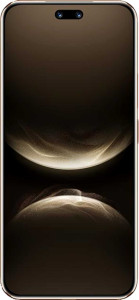
Huawei Nova 14 Ultra
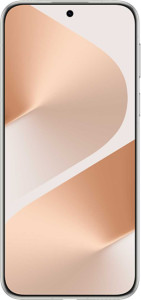
Huawei Pura 80 Pro Plus

Huawei Nova 14 Ultra Huawei Pura 80 Pro Plus

Common Features

  • Both products have a waterproof design with an IP68 rating.
  • Neither product has a rugged build.
  • Both products do not support folding.
  • Both products have OLED/AMOLED display technology.
  • Both products feature a 120Hz refresh rate.
  • Both products support a 300Hz touch sampling rate.
  • Both products have branded damage-resistant glass.
  • Both products support Always-On Display.
  • Both products lack HDR10+ support.
  • Both products have no secondary screen.
  • Both products have a 1024GB internal storage capacity.
  • Both products support integrated LTE.
  • Both products support 64-bit architecture.
  • Both products have integrated graphics.
  • Both products use big.LITTLE technology.
  • Both products have a thermal design power (TDP) of 6W.
  • Both products have a dual-lens main camera.
  • Both products have built-in optical image stabilization for cameras.
  • Both products can record video at 2160 x 30 fps.
  • Both products feature two flash LEDs for the camera.

Main Differences

  • Huawei Nova 14 Ultra weighs 204 g while Huawei Pura 80 Pro Plus weighs 219 g.
  • Huawei Nova 14 Ultra is 7.8 mm thick while Huawei Pura 80 Pro Plus is 8.3 mm thick.
  • Huawei Nova 14 Ultra has a width of 75.6 mm while Huawei Pura 80 Pro Plus has a width of 76.1 mm.
  • Huawei Nova 14 Ultra has a height of 163.4 mm while Huawei Pura 80 Pro Plus has a height of 163 mm.
  • Huawei Nova 14 Ultra has a volume of 96.353712 cm³ while Huawei Pura 80 Pro Plus has a volume of 102.95569 cm³.
  • Huawei Nova 14 Ultra has a 6.81″ screen size while Huawei Pura 80 Pro Plus has a 6.8″ screen size.
  • Huawei Nova 14 Ultra has a pixel density of 460 ppi while Huawei Pura 80 Pro Plus has a pixel density of 459 ppi.
  • Huawei Nova 14 Ultra has a resolution of 1272 x 2860 px while Huawei Pura 80 Pro Plus has a resolution of 1276 x 2848 px.
  • Huawei Nova 14 Ultra supports HDR10 while Huawei Pura 80 Pro Plus does not.
  • Huawei Nova 14 Ultra has 12GB of RAM while Huawei Pura 80 Pro Plus has 16GB of RAM.
  • Huawei Nova 14 Ultra uses the HiSilicon Kirin 8000 chipset while Huawei Pura 80 Pro Plus uses the HiSilicon Kirin 9010 chipset.
  • Huawei Nova 14 Ultra uses the Maleoon 910 GPU while Huawei Pura 80 Pro Plus uses the Mali-G57 GPU.
  • Huawei Nova 14 Ultra has a CPU speed of 1 x 2.2 & 3 x 1.5 & 4 x 2 GHz while Huawei Pura 80 Pro Plus has a CPU speed of 1 x 2.3 & 4 x 2.18 & 3 x 1.55 GHz.
  • Huawei Nova 14 Ultra has a RAM speed of 2200 MHz while Huawei Pura 80 Pro Plus has a RAM speed of 2750 MHz.
  • Huawei Nova 14 Ultra uses a 5 nm semiconductor size while Huawei Pura 80 Pro Plus uses a 7 nm semiconductor size.
  • Huawei Nova 14 Ultra has a 50 & 50 & 13 MP main camera setup while Huawei Pura 80 Pro Plus has a 50 & 48 & 40 MP main camera setup.
  • Huawei Nova 14 Ultra has a 1.4 & 2.2 & 2.2f wide aperture for its main camera while Huawei Pura 80 Pro Plus has a 1.6 & 2.1 & 2.2f wide aperture for its main camera.
  • Huawei Nova 14 Ultra has a 50 & 8MP front camera setup while Huawei Pura 80 Pro Plus has a 13MP front camera.
  • Huawei Nova 14 Ultra does not have a dual-tone LED flash while Huawei Pura 80 Pro Plus has a dual-tone LED flash.
  • Huawei Nova 14 Ultra offers optical zoom of 3.7x while Huawei Pura 80 Pro Plus offers optical zoom of 4x.
  • Huawei Nova 14 Ultra has a 2.2 & 2f wide aperture for its front camera while Huawei Pura 80 Pro Plus has a 2f wide aperture for its front camera.
  • Huawei Nova 14 Ultra has a dual-lens front camera while Huawei Pura 80 Pro Plus has a single-lens front camera.
  • Huawei Pura 80 Pro Plus supports wireless charging while Huawei Nova 14 Ultra does not.
  • Huawei Nova 14 Ultra has aptX support while Huawei Pura 80 Pro Plus does not.
  • Huawei Pura 80 Pro Plus supports emergency SOS via satellite while Huawei Nova 14 Ultra does not.
  • Huawei Pura 80 Pro Plus has a barometer while Huawei Nova 14 Ultra does not.
Specs Comparison
Huawei Nova 14 Ultra

Huawei Nova 14 Ultra

Huawei Pura 80 Pro Plus

Huawei Pura 80 Pro Plus

Design:
water resistance Waterproof Waterproof
weight 204 g 219 g
thickness 7.8 mm 8.3 mm
width 75.6 mm 76.1 mm
height 163.4 mm 163 mm
volume 96.353712 cm³ 102.95569 cm³
Ingress Protection (IP) rating IP68 IP68
has a rugged build
can be folded

Both the Huawei Nova 14 Ultra and the Huawei Pura 80 Pro Plus offer waterproof designs with an IP68 rating, ensuring they are resistant to dust and can withstand submersion in water. In terms of weight, the Nova 14 Ultra is slightly lighter at 204 g compared to the Pura 80 Pro Plus, which weighs 219 g. This makes the Nova 14 Ultra a bit more comfortable for extended use.

The thickness of the Nova 14 Ultra is 7.8 mm, whereas the Pura 80 Pro Plus is a bit thicker at 8.3 mm. This difference is minor but may contribute to a slightly bulkier feel for the Pura 80 Pro Plus. The dimensions are quite similar, with the Nova 14 Ultra measuring 75.6 mm in width and 163.4 mm in height, while the Pura 80 Pro Plus is marginally wider at 76.1 mm and the same height of 163 mm.

Regarding volume, the Nova 14 Ultra has a total volume of 96.35 cm³, while the Pura 80 Pro Plus is slightly larger with a volume of 102.96 cm³, indicating the Pura 80 Pro Plus is a little more spacious in terms of design. Neither phone has a rugged build, and neither is foldable, which suggests both are aimed at standard, durable smartphone designs.

Display:
Display type OLED/AMOLED OLED/AMOLED
screen size 6.81" 6.8"
pixel density 460 ppi 459 ppi
resolution 1272 x 2860 px 1276 x 2848 px
refresh rate 120Hz 120Hz
touch sampling rate 300Hz 300Hz
has branded damage-resistant glass
supports HDR10
supports HDR10+
Always-On Display
supports Dolby Vision
Has a secondary screen
has a touch screen

Both the Huawei Nova 14 Ultra and Huawei Pura 80 Pro Plus feature OLED/AMOLED displays, offering vibrant colors and deep contrasts. The Nova 14 Ultra has a 6.81″ screen, while the Pura 80 Pro Plus is slightly smaller at 6.8″. The pixel density on both is very close, with the Nova 14 Ultra at 460 ppi and the Pura 80 Pro Plus at 459 ppi, meaning both displays are highly detailed and sharp.

The resolution of the two phones is also nearly identical. The Nova 14 Ultra comes with a resolution of 1272 x 2860 px, while the Pura 80 Pro Plus has a slightly different resolution of 1276 x 2848 px, resulting in nearly identical screen clarity and performance.

Both devices support a 120Hz refresh rate and a 300Hz touch sampling rate, making them responsive for gaming and smooth touch interactions. They also both have branded damage-resistant glass, ensuring better protection against scratches and drops. Both devices feature Always-On Displays, but only the Nova 14 Ultra supports HDR10, while the Pura 80 Pro Plus does not. Neither device supports HDR10+ or Dolby Vision, and neither has a secondary screen. Both also have a touch screen, making them fully interactive.

Performance:
internal storage 1024GB 1024GB
RAM 12GB 16GB
Chipset (SoC) name HiSilicon Kirin 8000 HiSilicon Kirin 9010
GPU name Maleoon 910 Mali-G57
CPU speed 1 x 2.2 & 3 x 1.5 & 4 x 2 GHz 1 x 2.3 & 4 x 2.18 & 3 x 1.55 GHz
Has integrated LTE
RAM speed 2200 MHz 2750 MHz
semiconductor size 5 nm 7 nm
Supports 64-bit
Has integrated graphics
Uses big.LITTLE technology
Thermal Design Power (TDP) 6W 6W

Both the Huawei Nova 14 Ultra and Huawei Pura 80 Pro Plus come with a generous 1024GB of internal storage, ensuring ample space for apps, media, and other data. However, the Pura 80 Pro Plus has a slight edge in RAM, offering 16GB compared to the Nova 14 Ultra's 12GB, which could make a difference in multitasking and memory-heavy applications.

In terms of processing power, the Nova 14 Ultra is equipped with the HiSilicon Kirin 8000 chipset, while the Pura 80 Pro Plus features the newer HiSilicon Kirin 9010. The CPU configurations differ slightly as well, with the Nova 14 Ultra having 1 x 2.2 GHz, 3 x 1.5 GHz, and 4 x 2 GHz cores, while the Pura 80 Pro Plus offers 1 x 2.3 GHz, 4 x 2.18 GHz, and 3 x 1.55 GHz cores. These differences could affect the processing speed in certain tasks, but both are designed for efficient performance.

The RAM speeds are also different, with the Nova 14 Ultra running at 2200 MHz and the Pura 80 Pro Plus at 2750 MHz, indicating that the Pura 80 Pro Plus may have faster memory access. Both phones use a 5 nm semiconductor size (Nova 14 Ultra) and a 7 nm semiconductor size (Pura 80 Pro Plus), which impacts power efficiency and heat management. Both devices support 64-bit architecture, have integrated LTE, and feature big.LITTLE technology for optimized power consumption. Both also share the same thermal design power (TDP) of 6W, indicating similar power efficiency in terms of heat generation and energy consumption.

Cameras:
megapixels (main camera) 50 & 50 & 13 MP 50 & 48 & 40 MP
wide aperture (main camera) 1.4 & 2.2 & 2.2f 1.6 & 2.1 & 2.2f
Has a dual-lens (or multi-lens) main camera
megapixels (front camera) 50 & 8MP 13MP
has built-in optical image stabilization
video recording (main camera) 2160 x 30 fps 2160 x 30 fps
Has a dual-tone LED flash
number of flash LEDs 2 2
has a BSI sensor
has a CMOS sensor
has continuous autofocus when recording movies
Has phase-detection autofocus for photos
supports slow-motion video recording
has a built-in HDR mode
has manual exposure
has a flash
optical zoom 3.7x 4x
has manual ISO
has a serial shot mode
has manual focus
has a front camera
Has laser autofocus
Shoots 360° panorama
has manual white balance
shoots raw
has touch autofocus
has manual shutter speed
can create panoramas in-camera
wide aperture (front camera) 2.2 & 2f 2f
Has timelapse function
Has a front-facing LED flash
has a dual-lens (or multi-lens) front camera
supports HDR10 recording
supports Dolby Vision recording
has a front-facing camera under the display
Has a RGB LED flash
has 3D photo/video recording capabilities

Both the Huawei Nova 14 Ultra and Huawei Pura 80 Pro Plus are equipped with impressive multi-lens main cameras. The Nova 14 Ultra features a 50 MP + 50 MP + 13 MP setup, while the Pura 80 Pro Plus has a 50 MP + 48 MP + 40 MP configuration. The Nova 14 Ultra uses a wider aperture on its lenses, with values of 1.4f, 2.2f, and 2.2f, compared to the Pura 80 Pro Plus's slightly narrower 1.6f, 2.1f, and 2.2f. Both devices support optical zoom, but the Nova 14 Ultra offers 3.7x zoom, while the Pura 80 Pro Plus provides 4x zoom, giving it a slight edge in zoom capability.

For front cameras, the Nova 14 Ultra features a dual-lens setup with 50 MP + 8 MP sensors, while the Pura 80 Pro Plus has a single 13 MP front camera. Both devices support similar features, such as built-in optical image stabilization, phase-detection autofocus for photos, and continuous autofocus when recording movies. The Nova 14 Ultra has a dual-tone LED flash, while the Pura 80 Pro Plus features a dual-tone LED flash as well, with both having 2 flash LEDs. Neither phone includes a BSI sensor but both use CMOS sensors.

Both devices support a range of advanced photography features, including manual exposure, manual ISO, serial shot mode, manual shutter speed, touch autofocus, and raw shooting. The Nova 14 Ultra has a front-facing LED flash, while the Pura 80 Pro Plus does not. Neither phone supports HDR10 or Dolby Vision recording, nor do they have 360° photo capabilities. The Nova 14 Ultra can create panoramas in-camera, while the Pura 80 Pro Plus can also create panoramas but does not have a dual-lens front camera for more versatile selfies.

Operating system:
has camera/microphone privacy options
has dark mode
has battery health check
Has customizable notifications
supports split screen
gets direct OS updates
Can be used as a PC
Has sharing intents
has a child lock
Supports widgets
has voice commands
Tracks the current position of a mobile device
is a multi-user system

The Huawei Nova 14 Ultra and Huawei Pura 80 Pro Plus offer very similar operating system features. Both devices include camera/microphone privacy options, dark mode, battery health check, customizable notifications, and support for split screen. They also both lack the ability to receive direct OS updates, cannot be used as a PC, and support sharing intents, child lock, widgets, and voice commands. Additionally, both phones are equipped with a multi-user system and track the current position of the device.

There are no differences between the two products in terms of the operating system features provided. Both devices offer a comprehensive suite of privacy, customization, and usability options, making them similar in this regard.

Battery:
battery power 5500 mAh 5700 mAh
has wireless charging
Supports fast charging
charging speed 100W 100W
comes with a charger
has a removable battery
has a battery level indicator
has a rechargeable battery

The Huawei Nova 14 Ultra and Huawei Pura 80 Pro Plus both offer impressive battery specifications, though there are some differences. The Nova 14 Ultra features a 5500 mAh battery, while the Pura 80 Pro Plus has a slightly larger 5700 mAh battery. Both devices support fast charging at a speed of 100W, ensuring quick recharges. Additionally, both phones come with a charger included and have rechargeable batteries.

One notable difference is that the Pura 80 Pro Plus supports wireless charging, while the Nova 14 Ultra does not. Both phones have a battery level indicator, so users can easily monitor their battery status, and neither device has a removable battery.

Overall, the two phones offer similar charging speeds and battery capacities, with the main distinction being the Pura 80 Pro Plus's ability to charge wirelessly, which the Nova 14 Ultra lacks.

Audio:
has a socket for a 3.5 mm audio jack
has stereo speakers
has aptX
has LDAC
has aptX HD
has aptX Adaptive
has aptX Lossless
Has a radio

Both the Huawei Nova 14 Ultra and Huawei Pura 80 Pro Plus lack a socket for a 3.5 mm audio jack, so users will need to rely on wireless audio solutions or adapters. Both devices are equipped with stereo speakers, providing a richer sound experience compared to mono speakers. The Nova 14 Ultra supports aptX and LDAC for high-quality wireless audio streaming, but it does not support aptX HD, aptX Adaptive, or aptX Lossless. On the other hand, the Pura 80 Pro Plus lacks support for aptX but supports LDAC, while it does not have aptX HD, aptX Adaptive, or aptX Lossless either.

Neither phone features a built-in radio, so users looking for that functionality will need alternative methods. Overall, the audio capabilities of both phones are quite similar, with the main difference being that the Nova 14 Ultra offers aptX support, while the Pura 80 Pro Plus does not.

Connectivity & Features:
release date May 2025 June 2025
has 5G support
Wi-Fi version Wi-Fi 4 (802.11n), Wi-Fi 6 (802.11ax), Wi-Fi 5 (802.11ac), Wi-Fi 7 (802.11be) Wi-Fi 4 (802.11n), Wi-Fi 5 (802.11ac), Wi-Fi 6 (802.11ax), Wi-Fi 7 (802.11be)
SIM cards 2 SIM 2 SIM
Bluetooth version 5.2 5.2
has an external memory slot
Has USB Type-C
USB version 2 3.1
has NFC
Has a fingerprint scanner
has emergency SOS via satellite
has crash detection
is DLNA-certified
has a gyroscope
supports ANT+
Has a heart rate monitor
has GPS
has a compass
supports Wi-Fi
Has an infrared sensor
has an accelerometer
has a cellular module
Has a barometer
has an HDMI output
Uses 3D facial recognition
Has an iris scanner
Stylus included
supports Galileo
Has motion tracking
Has optical tracking
Has a built-in projector

Both the Huawei Nova 14 Ultra and Huawei Pura 80 Pro Plus support 5G connectivity, ensuring fast mobile internet speeds. Both devices feature Wi-Fi 4 (802.11n), Wi-Fi 5 (802.11ac), Wi-Fi 6 (802.11ax), and Wi-Fi 7 (802.11be), offering a broad range of wireless connectivity options. They also both support 2 SIM cards and Bluetooth version 5.2 for wireless communication. The Nova 14 Ultra uses USB version 2, while the Pura 80 Pro Plus offers a faster USB version 3.1.

Both phones lack an external memory slot but are equipped with NFC, a fingerprint scanner, a gyroscope, GPS, a compass, an infrared sensor, an accelerometer, and a cellular module. The Nova 14 Ultra does not have emergency SOS via satellite or a barometer, while the Pura 80 Pro Plus includes emergency SOS via satellite and a barometer, which may be useful for specific situations.

In terms of additional features, both phones support Galileo for navigation, but neither has motion tracking, optical tracking, or a built-in projector. Both phones lack HDMI output and 3D facial recognition, and neither includes a stylus or iris scanner.

Miscellaneous:
has a video light
Has sapphire glass display
Has a curved display
Has an e-paper display

Both the Huawei Nova 14 Ultra and Huawei Pura 80 Pro Plus come with a video light, useful for improving low-light video recording. Neither device features sapphire glass for added display durability, nor do they have a curved display or an e-paper display. These specifications are identical across both models, offering the same set of features in this category.

In summary, both phones offer the same functionalities in the miscellaneous features group, with no differences between them in terms of display technology or additional features like e-paper or curved displays.

Comparison Summary

This is a specification comparison between the Huawei Nova 14 Ultra and the Huawei Pura 80 Pro Plus. Both devices share a waterproof design with an IP68 rating, an OLED/AMOLED display with 120Hz refresh rate, and a dual-lens main camera with optical image stabilization. However, the Huawei Nova 14 Ultra has 12GB of RAM, while the Huawei Pura 80 Pro Plus has 16GB. The Nova 14 Ultra also uses a HiSilicon Kirin 8000 chipset, while the Pura 80 Pro Plus is equipped with the HiSilicon Kirin 9010 chipset. In addition, the Pura 80 Pro Plus supports wireless charging, unlike the Nova 14 Ultra, and features a barometer not present on the Nova 14 Ultra.